Nita Song’s first opening in advertising came through a microphone. She was helping emcee an event for the Korean Grocers Association when she met Bill Imada, the founder of IW Group. He offered her a job. Song had already been volunteering at a nonprofit while in high school; paid work grew out of something she was doing anyway. The beginning was community work, with a commercial career arriving almost as a side effect.
Years later, she would laugh as she recalled how she “grew up at the agency.” There is a pleasing complication in that description. Song also left the agency, became its client, hired it again at another company, and returned in 2000 to help develop its advertising business. Her professional education included both sides of the purchase order. Few relationships in advertising receive quite so thorough a road test.
Today, the Los Angeles executive leads IW Group as president and CEO, while the agency gives her the more expressive title of chief momentum officer. The title invites a smile, but the work behind it is concrete: client management, operations, growth, and a continuing expansion of what the firm can do. Public relations led to advertising; advertising grew into integrated campaigns, experiences, entertainment, and digital work. Song stayed connected to the communities that made the original business possible.
The useful detour
Her career record places an early IW Group role in 1991, followed by a move to AT&T in 1996. At the telecommunications company, she directed communications and community affairs for the Western Region. Regional communications, partnerships, and spokesperson duties put her inside the organization that an agency normally sees from across a conference table.
In 1999, she joined Netsperanto, an internet startup focused on ethnic online communities, as vice president of corporate affairs, marketing, and communications. The subject sounds strikingly current: how people with shared cultural interests find one another online, and how a business serves them. The tools have changed considerably since then. The problem has remained good company.
That sequence helps explain the significance of her return to IW in 2000. She had experience managing accounts, speaking for a corporate client, developing partnerships, and working at a startup. She returned as the agency was building its advertising capabilities. A communications business needed to become useful in more ways, and Song had seen those needs from the buyer’s chair.
- 1991IW Group
Accounts & growth - 1996AT&T
Communications - 1999Netsperanto
Online communities - 2000IW Group
Return to leadership
Her work since that return has been organizational as well as creative. An idea needs people who can develop it, a client willing to support it, and a business able to deliver it. Song’s responsibilities span those connections. The agency’s evolution makes more sense when viewed through those ordinary demands than through a procession of fashionable platform names.

A professor with better credentials than he advertised
Song graduated from the University of Southern California, where she studied journalism and political science. Asked to name a favorite professor, she remembered George Ramos, the Los Angeles Times reporter who taught her journalism class. What stayed with her was his bold storytelling, strong voice, and humor. She learned later about his three Pulitzer Prizes. Apparently the classroom impression had managed perfectly well without the trophy cabinet.
Her favorite piece of career advice was equally economical: “Think and act like an owner.” She describes it as a prompt to take responsibility for work at every scale and to keep finding better solutions. That is an operating principle for someone whose job includes both the ambitious campaign and the less glamorous work that permits it to happen.
“Think and act like an owner.”
Nita Song, on the career advice she remembers
She also describes enjoying the intersection of science and art in creative problem solving. The pleasure, in her account, includes seeing results. Those answers offer a more useful glimpse of her working outlook than any borrowed leadership slogan: a memorable teacher, responsibility for the task at hand, and satisfaction when an idea actually works.
From a particular audience to a wider conversation
IW Group began in 1990 to help American companies reach Asian American consumers. Its early public relations foundation gave it relationships as well as an audience specialization. Song has guided its growth into a broader marketing business. Gold House describes that evolution as extending Asian influence into campaigns with effects beyond the original consumer segment.
The point is especially clear in entertainment. At a 2019 gala, Song recalled IW’s first Warner Bros. film assignment: Inception, in 2010. A film famous for making viewers question the floor beneath their feet had become a practical opening for Asian American movie marketing. Her recollection placed the assignment in a larger story about visibility, opportunity, and the industry’s willingness to reach audiences deliberately.
She was presenting an Influencer Award to Warner Bros.; Terra Potts accepted for the studio. Song connected the studio’s work with greater visibility for Asian and Asian American talent and stories. The occasion brought the commercial and cultural parts of her career into the same room. Marketing a film could also help demonstrate that an audience deserved sustained attention.
After Crazy Rich Asians arrived in 2018, Song argued that the film’s success gave brands a reason to consider Asian consumers both as customers and as people influencing other audiences. That observation matters to her business. A campaign can start with a specific community and travel through the conversations, recommendations, and tastes that community generates. Specificity can give an idea somewhere to begin.
Research earns its seat in the car
A later Lexus assignment shows what that attention looks like in practice. For the 2023 launch of the Lexus TX, IW Group developed Everybody Connects, a campaign aimed at modern Asian American millennial families. Research examined the importance of shared experiences and vehicle space, then informed work for both English-speaking and native-language audiences.
Song appears among the campaign’s credited contributors alongside strategy, analytics, account, creative, production, and media specialists. The credits are a useful corrective to the solitary-executive version of agency life. The resulting campaign won automotive and multicultural gold awards at the 2024 ARF David Ogilvy Awards. Understanding a family’s priorities required several kinds of expertise working together.
Campaign-reported delivery figures in the 2024 award case study. These measure reach and viewing, rather than purchases.
The campaign’s reported delivery included more than 8.8 million unique paid-social users and a 98 percent streaming and connected-TV video completion rate. Those figures describe distribution and viewing. The creative question that preceded them was quieter: which experiences would make the vehicle matter to the families being addressed? Advertising has plenty of room for a large number, provided someone first asks a small, precise question.
The rooms beyond the agency
Song’s community work continued alongside the business. She chaired the board of Asian Americans Advancing Justice - Los Angeles, as recorded in its 2015 annual report. The Koreatown Youth and Community Center lists her on its board in its 2025 annual report. Her public professional affiliations also include the Asian American Advertising Federation and Comcast’s diversity advisory council.
In February 2016, she moderated a CAUSE discussion on women and entrepreneurship at City Club Los Angeles. The panel brought together Mendocino Farms co-founder Ellen Chen, NYX founder Toni Ko, and tokidoki co-founder Pooneh Mohajer. More than 200 people attended. The gathering concerned people who had built quite different businesses, giving the conversation something more substantial than a shared job title.
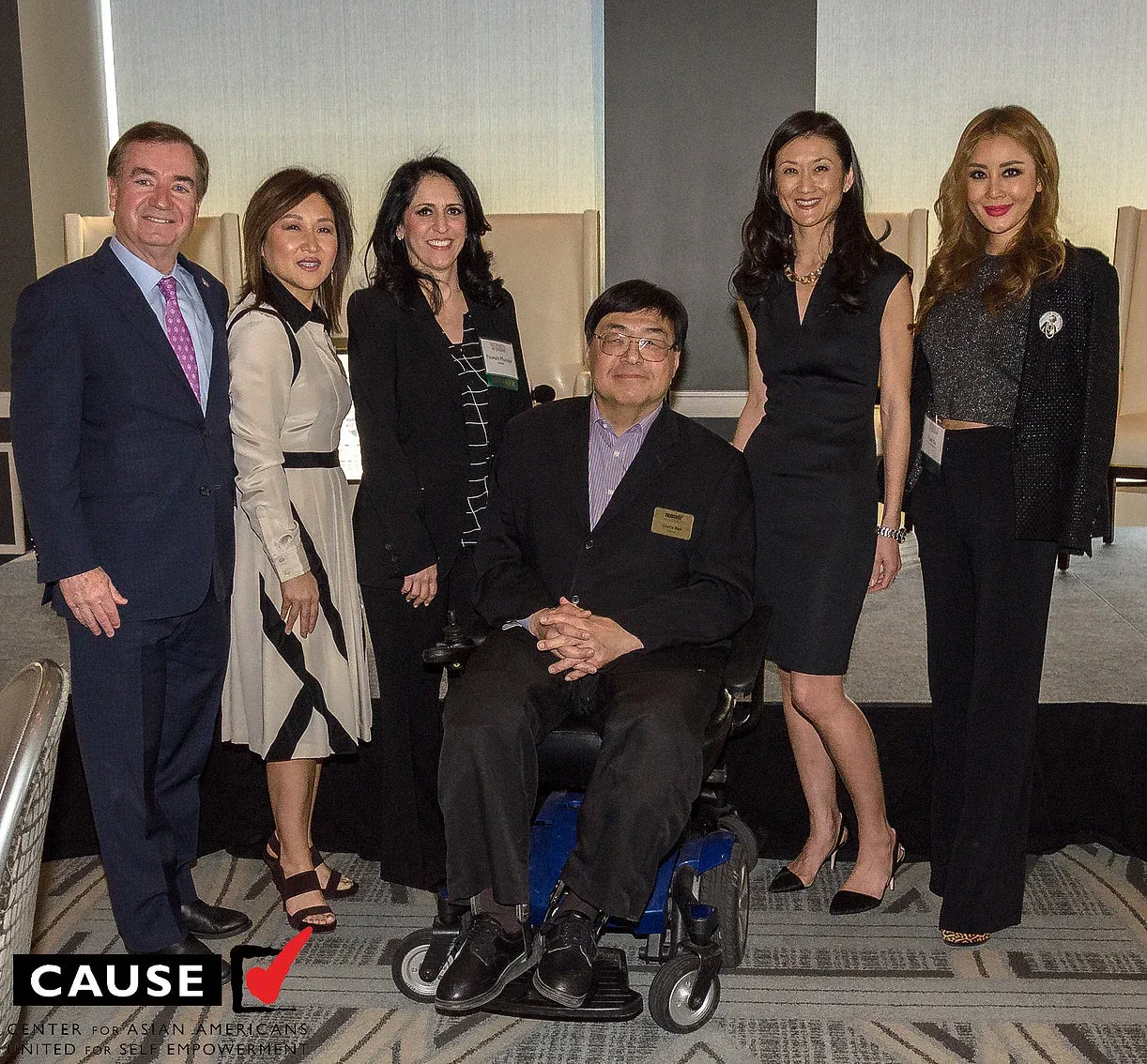
There is a consistent practical interest here: access to the people and experiences that make a career possible. Her participation in the ANA Educational Foundation’s talent program connects the advertising industry with students. Her board work puts her alongside community institutions. These are specific commitments with meeting rooms, responsibilities, and other people attached.
The tools get faster. The question gets older.
IW’s experiments have included internal training in emerging technology and a virtual office announced in 2022 for presentations, meetings, and events. Its current services include AI content systems, production workflows, and organizational training. For Song, introducing a tool also means preparing an agency to use it. The interesting part happens after the announcement, when a team must make it useful.
In 2025, she welcomed Telly Wong’s promotion to chief creative and innovation officer, a newly created role. Her public announcement reflected on sixteen years of watching his work develop. Creative leadership and technical experimentation were being joined in an actual position, with responsibilities for storytelling and digital initiatives. The agency’s willingness to experiment had acquired another place on the organization chart.
The same year brought multicultural agency honors from both Ad Age and ADWEEK. Worldcom’s December account reported $24 million in agency revenue and a roster including McDonald’s, Lexus, Walmart, Disney, and Warner Bros. Discovery. The recognition belonged to the business and its team. For Song, it marked another stage in the long expansion from the firm she had first joined.
Her August 2026 argument about AI brings the career into focus. She contends that widely available tools reduce some advantages of agency size, while relationships and cultural understanding remain valuable. It is an argument about where agencies should invest attention as production becomes easier. Technology can help an organization work; knowing the people it addresses helps it decide what work to do.
The microphone at that early community event feels less incidental in retrospect. It put Song in front of people, doing a useful job, before an agency title entered the picture. Her career has kept returning to that arrangement: a community, an audience, a task worth taking seriously. The platforms will continue their brisk procession. Someone still has to understand the room.