Before Yves Béhar gave an office chair the logic of a suspension bridge, he gave a pair of skis a rather alarming second career. As a teenager in Switzerland, he combined skiing and windsurfing equipment into a contraption for travelling across frozen lakes. It was a personal transport proposal with unusually little separation between the inventor and the consequences. He wanted to do two things he loved at once. Building something was his answer.
That episode makes a useful introduction to the founder of fuseproject. Béhar’s work moves between furniture, electronics, packaging and vehicles, with remarkably little respect for the divisions between their departments. A chair can borrow from civil engineering. A television can reconsider its hours off duty. A pickup can question how much of the street it ought to occupy. The attractive object usually arrives after an inconvenient question.
A basement with possibilities
He grew up in Lausanne, beside Lake Geneva, the oldest of three boys. Swimming was a competitive pursuit; windsurfing became an escape in his teens. He has described the Swiss surroundings as beautiful and calm, qualities that a teenager may appreciate rather more enthusiastically in retrospect. Punk offered another kind of release. Its invitation to make things before receiving permission suited him.
He built furniture, made clothes and experimented with spray paint. A workbench in the basement provided a place for the activity that had been making a mess of his bedroom. In that arrangement, the familiar parental wish for a tidy room accidentally acquired an industrial-design department. The room downstairs was uninviting. The work was the attraction.
There were stories before there were products. Béhar enjoyed fiction and imagined becoming a writer. Objects eventually offered him another medium for expression, one that required drawing and building instead of chapters. The possibility of telling a story through something people could hold gave his interests a direction. The narrative instinct stayed with him; the manuscript became three-dimensional.
Learning to draw the idea
Knowing the destination did not mean possessing the skills. Béhar has recalled being an unexceptional draftsman at school. In his account of studying design, the ability to move an idea from his head onto paper came through sustained practice. The drawings improved because he kept drawing. It is a useful detail in a profession whose finished work can make the labour look suspiciously effortless.
He studied in Europe before moving to ArtCenter’s Pasadena campus, graduating in 1991 with a BS in Product Design. California offered proximity to a computer industry entering domestic life. The question of how technology should behave in a home was becoming a design problem with consequences well beyond the office supply cupboard.
His early work included a job with Bruce Burdick, whose practice crossed furniture, exhibitions and other disciplines. Béhar admired the range of Charles and Ray Eames and George Nelson. A career with several kinds of output was something to pursue deliberately. The connections between research, an object, a film and a brand could become part of the work itself.
He founded fuseproject in San Francisco in 1999. Even its name proposes a joining of things. Industrial design, identity and the experience of using a product would share a conversation. By 2004, Cooper Hewitt had awarded him its National Design Award for Product Design. The museum described a practice built around conceptual narratives and the user’s experience. The former would-be writer had found an audience for his objects.
A child gets the handle
The XO laptop for Nicholas Negroponte’s One Laptop per Child initiative put those ideas under a demanding brief. A computer intended for children in different countries had to make sense away from the assumptions of the corporate desk. Robustness, cost and use outdoors mattered. So did the question of whether a child would want to claim the object as their own.
The resulting machine was green and white, with a carrying handle and antennae that suggested ears. Its rubber keyboard and sunlight-readable display addressed particular conditions of use. Its appearance made the intended owner visible in the design. An adult’s business laptop, reduced in size, would have told a rather different story.
In his TED talk, Béhar recalled lending a prototype to his nephew in Switzerland. Taking it back was difficult. When he returned weeks later, the boy had made a version from paper and cardboard. It is a small anecdote with a precise charm: a computer had prompted someone to build a computer-shaped thing. The response was creative rather than merely acquisitive.
“Design is never done.”
Yves Béhar, TED
The XO belongs to a career in which an object’s emotional effect receives serious attention. Colour and character can help explain who something is for. A handle can communicate ownership as well as portability. These are modest details individually. Together they determine whether an unfamiliar machine feels approachable enough to pick up.
The bridge comes indoors
For Herman Miller, Béhar faced an object familiar enough to be overlooked: the office chair. The company wanted an affordable design that could carry its expectations for engineering, function and environmental responsibility. San Francisco supplied a starting point in the Golden Gate Bridge. Suspension structures accomplish a great deal without filling all the space they span.
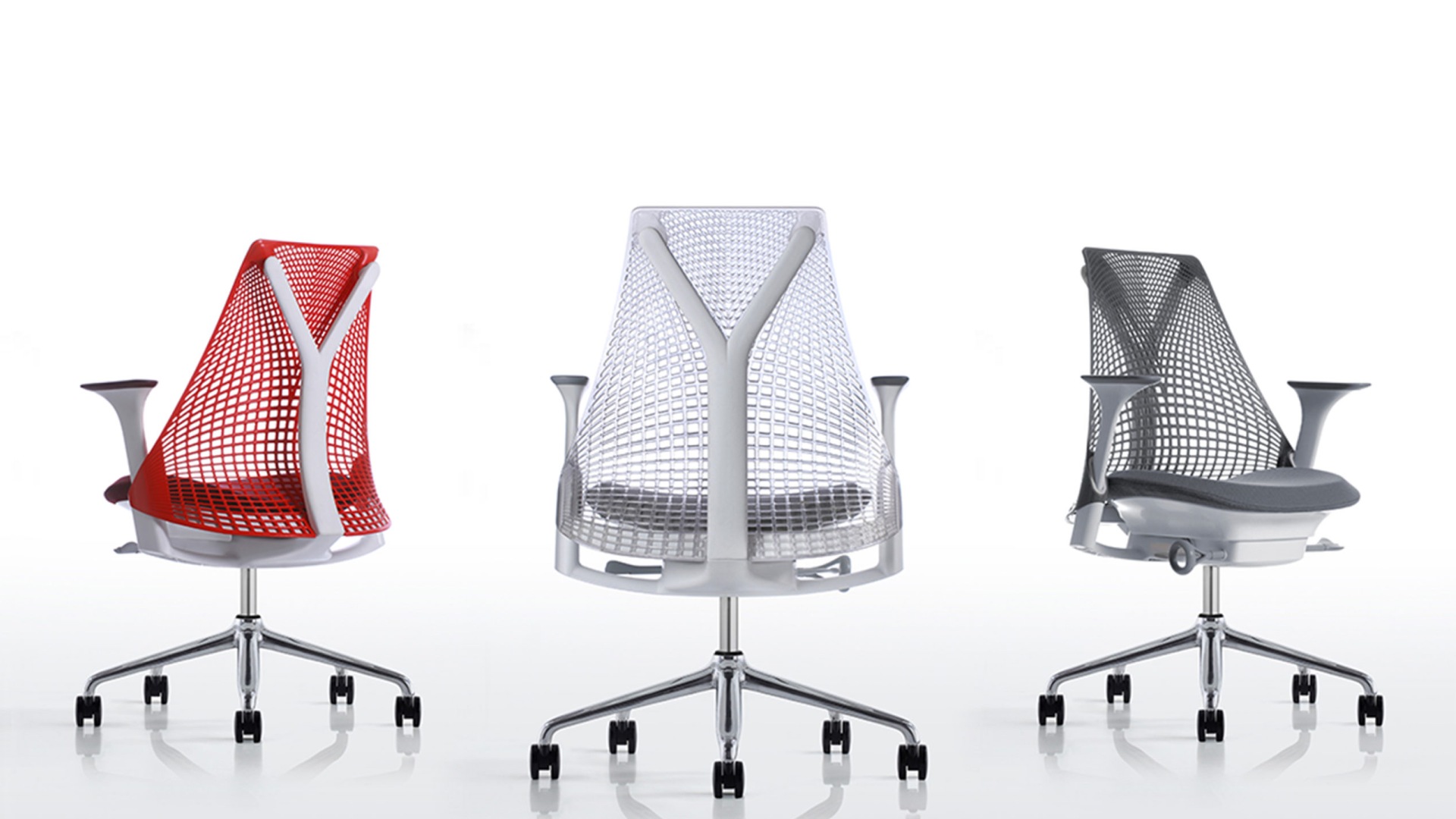
Sayl translated that principle into an unframed back supported by a tower. Its elastomer surface could offer different tension where support or movement was needed. The structure remained visible. Instead of concealing the engineering beneath an upholstered explanation, the chair let it draw the pattern.
The name adds a small nautical joke. Seen from the side, the back recalls a mainsail; the substituted “y” acknowledges the Y-Tower support. A bridge inspired a chair named after a sail. Product nomenclature has survived considerably less coherent journeys.
His relationship with Herman Miller began with an act less mysterious than inspiration. Admiring the Eameses and the company’s design culture, he telephoned to propose working together. That directness sits comfortably beside the experimental streak. There is a time to question a category and a time to find the telephone number.
Other projects asked what could be removed. Puma’s Clever Little Bag combined a reusable bag with a reduced cardboard structure, reconsidering the shoebox and shopping bag together. In its 2011 reporting, Puma said the packaging saved 60 percent of cardboard compared with its conventional shoebox. The useful question extended beyond the object sold to the material required to get it home.
An object’s hours off duty
Samsung The Frame, launched in 2017, started with another ordinary nuisance. A television commands a generous patch of wall even when nobody is watching. Béhar had previously designed furniture to conceal his own screen. With Samsung, the unused hours became part of the product brief.
The Frame could display artwork when it was not being used for programmes. Magnetic bezels, a close wall mounting and the presentation of the image helped establish the picture-frame effect. Sensors adjusted the display to the room’s light and to whether anyone was present. Achieving a quiet appearance required quite a lot of activity behind it.
For Béhar, the collaboration joined hardware and the art platform around one domestic experience. The idea depended on details agreeing with one another. A screen can announce its sophistication through a list of specifications; it can also earn its place by being more agreeable to live beside. The Frame made the latter a subject for engineering.
- 2006 · XOWho gets to own it?
- 2010 · SAYLWhat can support it?
- 2017 · THE FRAMEWhat happens when it rests?
- 2025 · TELO*How much space does it need?
A stake in what happens next
Béhar also reconsidered how a designer gets paid. He has explained that taking equity allowed fuseproject to work with startups unable to afford an extended conventional engagement. The relationship could continue through the messy process of bringing a product into the world. Its name, packaging, website and physical form could develop together.
That arrangement gives practical force to his impatience with styling as a final layer. A partner has reasons to care what happens after the presentation. Béhar’s ventures include August Home and the coworking company Canopy. His responsibilities have reached beyond proposing a shape into helping establish the business around it.
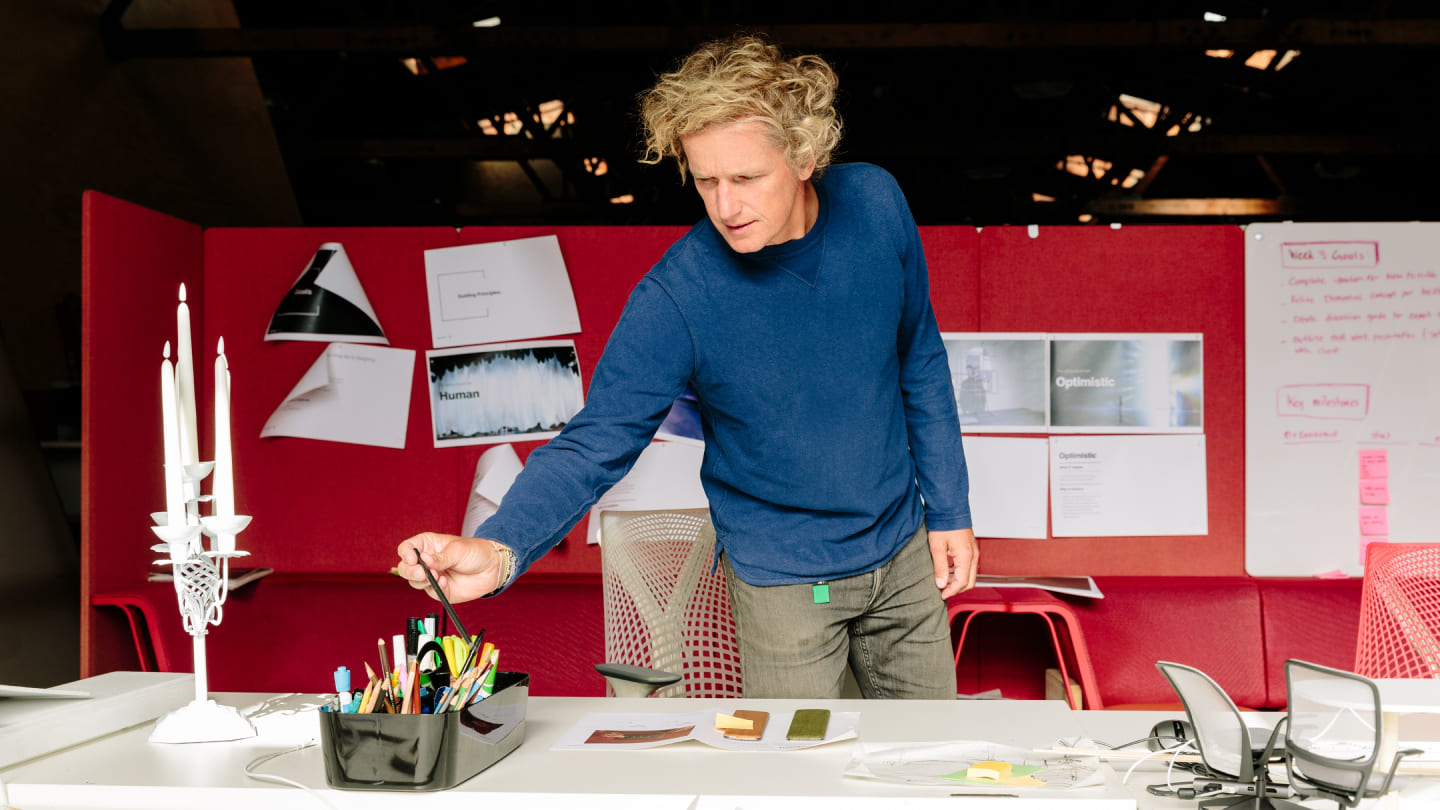
The studio’s social arrangements reflect the same preference for contact. He has described working without a private office, putting work on walls where others can respond. An open practice has architectural consequences. So does a wish to bring different disciplines into the same discussion. The conversation is harder to sustain through a closed door.
Less truck, more room to think
TELO brings this approach to a category accustomed to taking up space. Béhar co-founded the electric-truck company with Forrest North and Jason Marks. The MT1 was conceived with five seats and a five-foot bed within a compact footprint. Fuseproject worked across its name, identity, exterior, interior and digital experience. A drivable pre-production vehicle was unveiled in March 2025.
Its cork interior surfaces and storage arrangements give the design argument physical detail. An electric platform offers different packaging possibilities; the question is how thoroughly a vehicle uses them. A short truck is an appealing proposition for a city, though the passage from prototype to production remains a substantial undertaking.
In June 2026, Béhar was still discussing work on TELO’s interior, alongside Peaks seating and Canopy spaces. His working life now includes a Lisbon studio, where access to craftspeople supports furniture prototyping. The scale changes from a seat to a workspace to a vehicle. The interest in making survives the changes of address.
The basement inventor has acquired clients, collaborators and considerably more complicated briefs. Yet the early impulse is recognisable: notice what an object permits, imagine another possibility, then build enough of it to find out. The teenager wanted to sail on a frozen lake. The designer keeps finding familiar things whose instructions seem open to revision.