A room full of clever people can be a remarkably inefficient machine. Everyone has something to say; quite a few would prefer someone else to begin. Yuanyuan (YY) Zhou, a computer scientist with a professional interest in things that fail, found a business opportunity in that familiar silence. Her students could write code. She wanted them to be able to walk into a conference and leave with a connection, too.
There is a pleasing economy to the idea. Universities spend years preparing people to contribute to a field, then gather them in rooms where an introduction may depend on the seating plan. Zhou helped build Whova around that missing introduction. The co-founder and CEO brought the experience of a professor, conference organizer and repeat entrepreneur to a problem that wears a name badge.
Her own description had none of the usual corporate perfume: “using geeky ways to help geeks like us to know how to socialize.” The “us” does useful work. Zhou placed herself inside the problem she was trying to solve.
Thirty minutes, and a different career
In 2014, Zhou appeared at the Celebration of Women in Computing in Southern California in Carlsbad. She already had a Princeton doctorate and three company ventures behind her, but what she described enjoying about teaching was wonderfully small in scale: a conversation.
“I like how in a 30-minute conversation, you can really help them; you can change their career.”
Yuanyuan Zhou, 2014
That is a good place to begin understanding Whova. A person with useful advice and a person who needs it may already be attending the same event. The practical question is how they find each other. In its early form, the app brought together professional information so attendees could decide whom to approach and arrive with something to discuss. Research interests could become conversation starters.
Zhou also spoke about listening to customers and valuing enthusiasm in a team. Experience mattered, but willingness to learn mattered too. These are rather sensible preferences for someone whose work has crossed storage, operating systems, data mining and event software. A career with that many changes of subject requires a certain tolerance for being a beginner.
Before the name badges, the networked servers
Zhou earned her computer science bachelor’s degree at Peking University in 1992. At Princeton, she completed a master’s degree in 1996 and a doctorate in 2000. Her doctoral thesis, Memory Management for Networked Servers, was supervised by Kai Li and Douglas Clark. The title gives a fair warning: this was a career beginning well below the polished surface of an app.
She worked at NEC Labs and co-founded the storage startup Emphora during the period from 2000 to 2002. From 2002 to 2009, she served on the faculty at the University of Illinois Urbana-Champaign. UC San Diego followed in 2009, where she became the first holder of the Qualcomm Endowed Chair in Mobile Computing.
Her research concerned the reliability of computer systems, among other subjects. Faster hardware is a fine accomplishment, though its charm diminishes when the software stops cooperating. Zhou’s work examined ways to detect defects and recover from failures. It brought data-mining techniques into the search for software problems, turning patterns in programs into clues about where something had gone wrong.
- 1992Peking University
B.S., computer science - 2000Princeton
Ph.D., computer science - 2002–09Illinois
Faculty - 2009UC San Diego
Qualcomm Chair - 2026UC San Diego
Emeritus faculty
A paper she almost left unwritten
One of the more revealing episodes in Zhou’s research career concerns a study that needed a nudge into existence. As multicore processors became more common, programmers had to make software perform work in parallel. That introduced difficult concurrency bugs: trouble arising from the ways different threads of execution interact.
Zhou was presenting other work to Intel when people there suggested publishing her team’s empirical findings about real-world concurrency bugs. They thought the findings would interest both researchers and companies. She took the advice. The resulting 2008 paper, written with Shan Lu, Soyeon Park and Eunsoo Seo, was called Learning from Mistakes: A Comprehensive Study on Real World Concurrency Bug Characteristics.
Fourteen years later, it received an ASPLOS Most Influential Paper Award. The study had found that roughly a third of the concurrency problems examined were inadequately addressed by existing debugging tools. The useful discovery had been sitting inside the work already under way. Zhou’s reaction to the later recognition was delightfully unceremonious: “Initially, I didn’t even intend to write it.”
There is a lesson in the episode about keeping a research agenda open to conversation. Intel’s suggestion changed what reached the page. For a founder building tools to make professional encounters more useful, it is an especially apt footnote.
Three companies, with lessons in between
Emphora was the first venture. Pattern Insight came next, taking Zhou’s interest in finding software problems into a commercial setting. Its Log Insight technology analyzed machine-generated data to help people diagnose operational trouble. In 2012, VMware acquired the Log Insight business and the team behind it.
At a 2014 computing summit, Zhou joked that the transaction had pleased investors because of their return, while she was pleased VMware retained the product’s name. Founders are allowed their small vanities. Naming something, after all, is considerably easier than persuading a large company to keep the name.
There was a less amusing logistical lesson. Pattern Insight’s Bay Area location meant travel back and forth after Zhou moved to San Diego. When Whova came along, she put it in Sorrento Mesa, within easier reach of campus. A founder can have international ambitions and still prefer a manageable journey to the office.
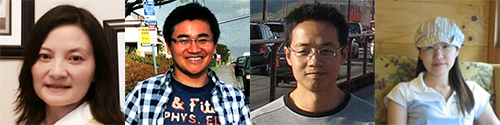
Whova grew from relationships that already existed in her academic work. Xiong had worked with Zhou at Illinois and in San Diego. Park and Sheng had been postdoctoral researchers in her group. Development began in 2013; the company started charging for the service in late 2014. The transition from laboratory colleagues to co-founders gave the new venture a shared history before it had a market history.
Measuring more than a good first impression
In July 2015, Whova reported that its first six months on the market had brought more than 1,000 events and 200,000 attendees across 42 countries. Its customers included TEDx events and universities. The early promise was specific: help people discover useful information about fellow attendees before walking up to them.
By May 2016, the company’s first full year on the market had covered more than 3,000 events in 80 countries, reaching over 350,000 attendees. Those are historical figures, but they show how quickly a concern rooted in academic conferences found applications elsewhere. An unfamiliar room is a fairly portable problem.
The app combined familiar event necessities, such as agendas and maps, with profiles and ways to communicate. Its business-card feature could collect and organize details after an encounter. The useful sequence extended from preparing for a meeting to keeping the connection afterward. A handshake has limited storage capacity; a phone offers more.
Alongside the company, Zhou’s research received the 2015 ACM SIGOPS Mark Weiser Award. The recognition concerned her contributions to detecting and recovering from defects in complex systems. Commercial work and academic work were both present in the same period, with different audiences and different measures of success.
The professor’s other network
Zhou’s academic homepage gives considerable space to former doctoral students and postdoctoral researchers. It names people who became professors, entrepreneurs and engineers. Among the academic alumni are Shan Lu, Lin Tan, Ding Yuan and Tianyin Xu. Among the startup connections are several of the people who helped build Pattern Insight and Whova.
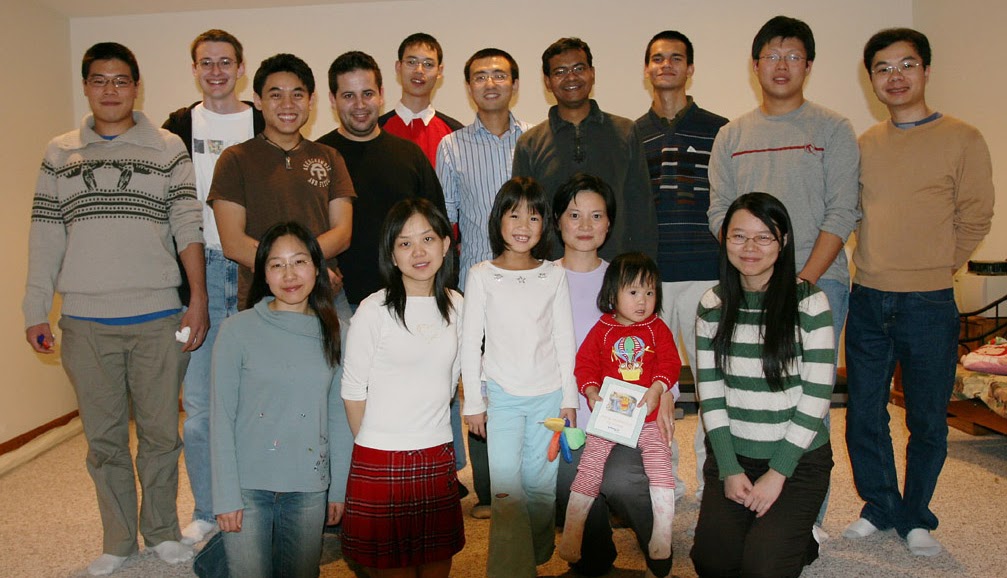
It is a useful counterweight to a founder biography told entirely through companies and awards. A laboratory also produces people who carry its habits elsewhere. Zhou’s public record includes the students who went on to establish research groups of their own, as well as those who chose companies. Those paths give her work a reach that a product launch alone cannot describe.
In 2026, UC San Diego’s systems and networking alumni listing records her move to emeritus faculty; the university directory also lists that title. Her academic career now has another chapter heading. The relationships formed through it remain part of the Whova story.
A little preparation before “hello”
Zhou’s own conference advice is disarmingly practical. Writing in 2016, she identified herself as an introvert and recommended preparing topics before an event, remembering that other people may be shy, and following up afterward. She also saw the meal queue as a chance to begin a conversation. Even waiting for lunch could be put to work.
Whova has since expanded into a broader event-management platform. In February 2025, it introduced its MicroEvents add-on for smaller gatherings, including workshops and networking events. The setting could shrink while the original task remained recognizable: give people a way to organize an encounter and make something useful happen inside it.
Zhou’s career has repeatedly returned to the space between capability and use. A computer needs software that survives its own complexity. A student needs opportunities to bring knowledge into the world. A conference needs more than everyone’s simultaneous presence. Her contribution has been to notice those practical gaps, then spend years working on them. There are worse ambitions than making the next conversation easier to begin.
Continue the conversation
- Explore Whova’s event platform ↗
- Zhou’s academic homepage and research community ↗
- Watch: Learning from my startup mistakes (Chinese) ↗
- Read about the paper she almost didn’t write ↗
- Zhou’s seven tips for attending a conference alone ↗
- Inventor and Mentor: a 2014 conversation ↗
- Whova’s February 2025 MicroEvents announcement ↗
- UC San Diego faculty profile ↗