When Yong Zhang returned to Salary.com in 2016, he brought company. More than two dozen technologists and compensation professionals who had worked there before were coming back with him. For a business devoted to calculating the value of work, it was a pleasingly human transaction: people who knew the machinery were willing to assemble around it again.
The reunion offers a better starting point for understanding Zhang than his latest title. He became chairman and chief executive in December 2025, succeeding his longtime business partner Kent Plunkett. But years before the succession, he had already participated in a more unusual exercise: helping buy back the business he had helped build, then returning to the daily work of running it.
Companies have origin stories. Fewer have convincing second beginnings. Zhang's career contains both, with a cast of colleagues who keep turning up for the next act. The technical executive who joined Salary.com in 2000 now leads its attempt to carry compensation intelligence into recruiting, performance reviews and workforce decisions. The question running through that career is deceptively small: what should work be worth?
A physicist enters the pay business
Zhang's academic route to that question began with physics. He earned a bachelor's degree at Shanghai University of Science and Technology, followed by master's degrees in physics and electrical engineering at the University of Massachusetts Dartmouth. An MBA at Cornell added the language of business to the language of systems. It is an education that spans the thing being measured, the instrument doing the measuring and the organization paying for the instrument.
Before Salary.com, his work included technical leadership and project management at Iconomy.com, which developed private-label e-commerce solutions, and Smart Route System, a traveler information business. He also consulted for capacitor manufacturer Aerovox. These were different settings for making technology useful: online commerce, information about journeys, industrial components. Compensation software would become his much longer engagement.
He became Salary.com's chief technology officer in April 2000. The company had been founded in 1999, when putting information on the internet could still count as a business proposition in its own right. Pay information had a particular attraction. Almost everyone had a personal reason to want it; employers had an organizational reason to need it. A salary number could inform a private negotiation or a decision repeated across an entire workforce.
Zhang's responsibilities widened as the company grew. He joined the board in December 2004, became executive vice president and chief operating officer in June 2006, and added president of global operations in June 2009. From December 2006 he also served as president and CEO of the Chinese subsidiary. Software, operations and international management accumulated in one working life.
The company changes hands. Then comes back.
Salary.com went public in 2007. Its first day of trading followed an offering priced at $10.50 a share; the stock finished that day $2 higher. A compensation company briefly had a conspicuous price of its own. The public-market chapter was followed by a different sequence of ownership: Kenexa acquired Salary.com in 2010, and IBM acquired Kenexa in 2012.
The business had become part of a larger corporate structure. Then its original team found a route back. Working with H.I.G. Capital and Prudential Capital Group, the returning leadership reacquired Salary.com and related compensation offerings from IBM. H.I.G. dates its acquisition to December 2015; the company announced the founding team's return on January 7, 2016.
That sequence matters because it changes the meaning of Zhang's return. This was an operating assignment inside a newly independent business, with products to develop and customers to serve. Buying the company created the opportunity. Running it would determine whether the opportunity amounted to anything. A familiar name over the door could not answer the next customer's question.
In March 2016, Zhang's return was announced with three titles: COO, CTO and president of global operations. His remit covered operations in the United States and China, extending through professional services, compensation data, product strategy, architecture, development and production. Even by the generous standards of executive job descriptions, this was a substantial list. The commas were doing honest work.
The people who knew where everything was
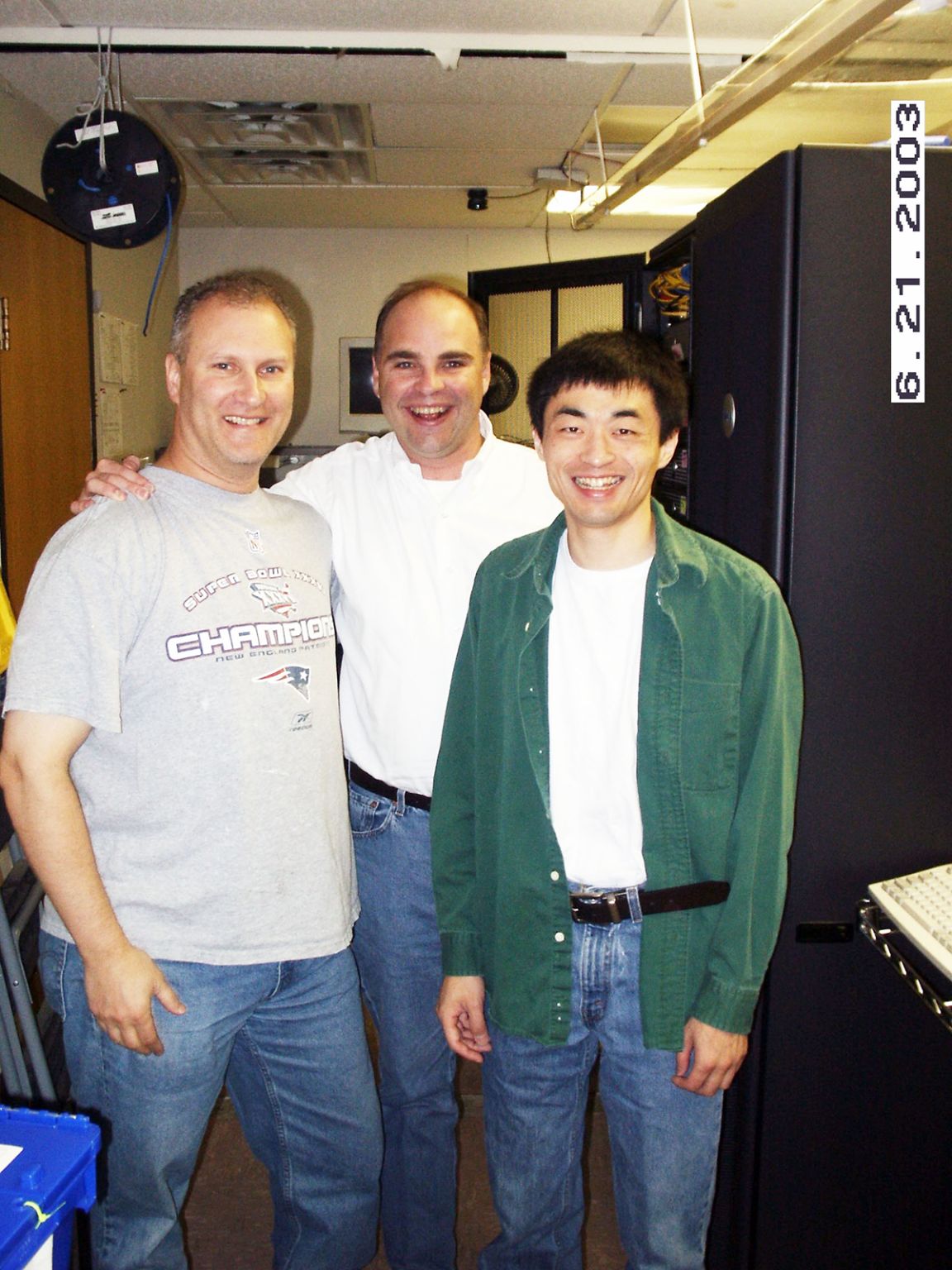
The detail that gives the comeback its character is the returning staff. Zhang came with more than two dozen former Salary.com professionals across technology, products, services, data and production. By the end of the first independent fiscal year, the broader reunion included more than fifty returning leaders and specialists. Institutional memory had acquired a start date.
Consider the practical advantage. A compensation product combines software behavior with judgments about jobs and data. A returning colleague may remember why a feature exists, which customer problem produced it, or where an apparently simple change becomes complicated. Familiarity can save time. It also comes with a duty to notice when the old answer has stopped working.
The returning leadership included Carol Ferrari in marketing and Christopher Fusco in compensation. Mark Szypko, who had remained through the ownership changes, continued in compensation strategy. This was a mix of people coming back and people who had stayed. Zhang's work sat among them, connecting the technical and operational parts of a company rebuilding its independence.
The first year's results supplied something more concrete than reunion sentiment. Salary.com reported adding 650 customers in 2016 to a community of more than 5,000 enterprise companies and small businesses. It introduced mobile and analytics capabilities and held regional events. Those figures describe the company's performance, rather than a personal scorecard for Zhang, but they give the comeback a measurable business setting.
His own professional qualifications also crossed the boundary between software and its subject matter. Alongside the engineering and business degrees, Zhang earned WorldatWork's Certified Compensation Professional and Global Remuneration Professional credentials. The executive responsible for the technology had also studied the discipline it was meant to support. That is a useful arrangement when the product's users know their subject extremely well.
“We enjoy getting it right and making a difference!”
Yong Zhang, on working with his colleagues
A long partnership changes the seating plan
Another investment chapter followed in 2022, when Accel-KKR invested in Salary.com and H.I.G. exited. Zhang, then president, put people and culture among the company's continuing priorities. The emphasis fits the observable pattern of his career: the return involved a group, and the business continued with colleagues whose histories reached back through earlier versions of the company.
By 2025, Salary.com had appeared six times on the Inc. 5000 list, across two widely separated periods. Its placements ran from 2005 through 2007, then from 2023 through 2025. That gap is part of the story. The company's growth record belongs to several chapters, separated by changes in ownership and leadership, rather than one uninterrupted ascent.
On December 2, 2025, Zhang was appointed chairman and CEO. He had most recently been president, chief operating officer and chief revenue officer. Plunkett moved to a board director role, continuing his involvement in strategy. After more than 25 years of shared leadership, the partners were redistributing responsibilities inside a relationship with a considerable history.
Zhang described Plunkett as his longtime friend and business partner. It was a small personal detail inside a corporate announcement, and an illuminating one. The succession joined an existing partnership to a new division of work. Zhang brought knowledge of how the company operated; Plunkett remained connected to its direction. Continuity was built into the arrangement.
Move the pay question to the beginning
In September 2026, the next product chapter arrived with SalaryTalent. Salary.com expanded into talent management, aiming to place its pay information inside the decisions where employees are hired, assessed and managed. The launch included recruiting, candidate sourcing, performance management, workforce management and orchestration of HR agents. Zhang was taking a compensation business into a broader set of working routines.
His argument starts with sequence. An offer, promotion or review can become harder to defend if compensation context arrives after the important choices have already been made. SalaryTalent is intended to bring that context forward. Its underlying job model covers more than 1.4 million leveled job titles, informed by organizations across more than 140 countries. The scale belongs to the data foundation, not a promise that every decision becomes easy.
For Zhang, the ambition connects two kinds of experience: building the systems and understanding the compensation work those systems serve. The technical problem is to deliver relevant information where a decision happens. The human problem remains the decision itself. A salary range does not conduct a conversation for a manager, however much the manager might occasionally wish it would.
That brings the story back to the colleagues who returned in 2016. Zhang now leads a business selling tools for understanding work and keeping people. His own career contains a very tangible episode of people choosing to work together again. There were contracts and investors, job titles and product plans. There were also more than two dozen familiar colleagues, returning to the task.
Continue the conversation
Explore Salary.com, connect with Yong Zhang on LinkedIn, or read about the 2025 leadership transition, the founding team's return and the SalaryTalent launch.