In September 2022, Trophy Games chose a small train game for an experiment. Tiny Rails already had an advertising setup. It worked. The question was whether somebody else could make it work better. The publisher wanted to know what its existing audience might be worth.
- Studios make the games. Yodo1 takes on ad operations, publishing and licensing.
- Start with one title and a measured test before expanding the relationship.
- Revenue gains count alongside app stability and the commercial terms.
Trophy tried Yodo1’s Managed Ad Services, or MAS. According to Yodo1’s account, average revenue per thousand ad impressions rose 30% across iOS and Android. The experiment became a larger relationship. Trophy tested Shipping Manager and Airline Manager next, then expanded across its transport portfolio. What changed the decision was a measurable result on a small game.
There was friction, too. The same case study describes persistent App Not Responding errors, especially in Transit King. Getting Tiny Rails below the relevant threshold took effort. Revenue and reliability had to improve together. The useful lesson is the sequence: pick a contained test, measure it, fix the rough edges, then widen the commitment.
First, teach the skier a new language
Yodo1 began in Beijing in 2011, founded by Henry Fong and James LaLonde, now its co-CEOs. Its early proposition was helping Western developers reach China. That meant entering a market whose stores, payment methods and cultural expectations could turn a successful foreign game into a local disappointment.
Consider Ski Safari. Yodo1’s adaptations reached beyond translated text: Chinese-style buildings, zither music and terracotta-warrior outfits altered the experience. In Fong’s 2014 GDC presentation, the subject was precisely how this Australian game became a Chinese hit.
The financing followed that publishing thesis. Yodo1 raised $2 million in seed funding in 2012, $5 million in Series A financing in April 2013 and $11 million in Series B financing that December. GGV Capital led the latter round, joined by investors including Singtel Innov8, Iris Capital and Pavilion Capital.
The business subsequently widened. Mobile publishing now includes localization, user acquisition, community work and live operations: the continuing updates that give players reasons to return. PC publishing sits under its Spicy Koala label. Developers can bring a game, a target market and a missing capability, rather than assemble every specialty themselves.
US dollars. The three disclosed rounds total $18 million.
One SDK. A continuing job.
MAS applies that division of labor to advertising. A studio integrates a software development kit; Yodo1 manages the mediation configuration and ongoing optimization. Mediation connects competing advertising demand to the game’s available ad space. Someone still has to choose networks, inspect performance and maintain the arrangement. MAS sells relief from that job.
Its alternatives include running Google AdMob, AppLovin MAX or Unity LevelPlay in-house. The distinction is who does the work. A studio with capable advertising specialists may prefer direct control; a small development team may value having those specialists supplied.
ActFirst’s Obsidian Knights makes the method concrete. Its original setup used AdMob mediation with Unity. Yodo1 introduced an AppLovin-based configuration with AdMob and Unity, selecting networks for important markets and considering software size. On less capable devices, ad serving could be deferred or disabled to reduce freezes.
ARPDAU = average revenue per daily active user. Yodo1-reported results; the two lifts describe different stages.
The rollout began with 10% of players to monitor stability, followed by a 50/50 comparison. Yodo1 reports a 26% improvement in average revenue per daily active user during that comparison, then 48% after full rollout. Those are different measurements at different stages. The controlled comparison is the cleaner number to study.
MAS is advertised without an integration charge or monthly subscription. Its agreement defines developer payments after service fees, operating costs and other deductions. “Free to integrate” therefore describes the entry point. The economics belong in the agreement. Eligible developers can receive consolidated Net-10 payments, subject to finalized earnings and a $100 minimum.
Now invite Optimus Prime
Advertising is one route to more revenue. Giving players something new to care about is another. Yodo1’s licensing business brings entertainment properties into games, managing the match, commercial coordination, creative approvals and launch. Its customers include both the studio seeking recognizable characters and the rights holder protecting a valuable fictional world.
In August 2026, Lords Mobile introduced its first Transformers collaboration. Yodo1 worked with developer IGG and Hasbro across commercial discussions, content, localization and approvals. Optimus Prime and Megatron were joined by a Cybertron Battlefield, event technologies and themed resources. The robots had to belong inside a strategy game’s existing routines.
More followed: a Top Heroes collaboration with Stranger Things, announced in September, and a returning Raid Rush event with Terminator 2. Yodo1’s IPverse product supports this work with collaboration research, rankings and AI-assisted matching. Launched in 2025, it turns previous licensing activity into material for choosing the next partnership.
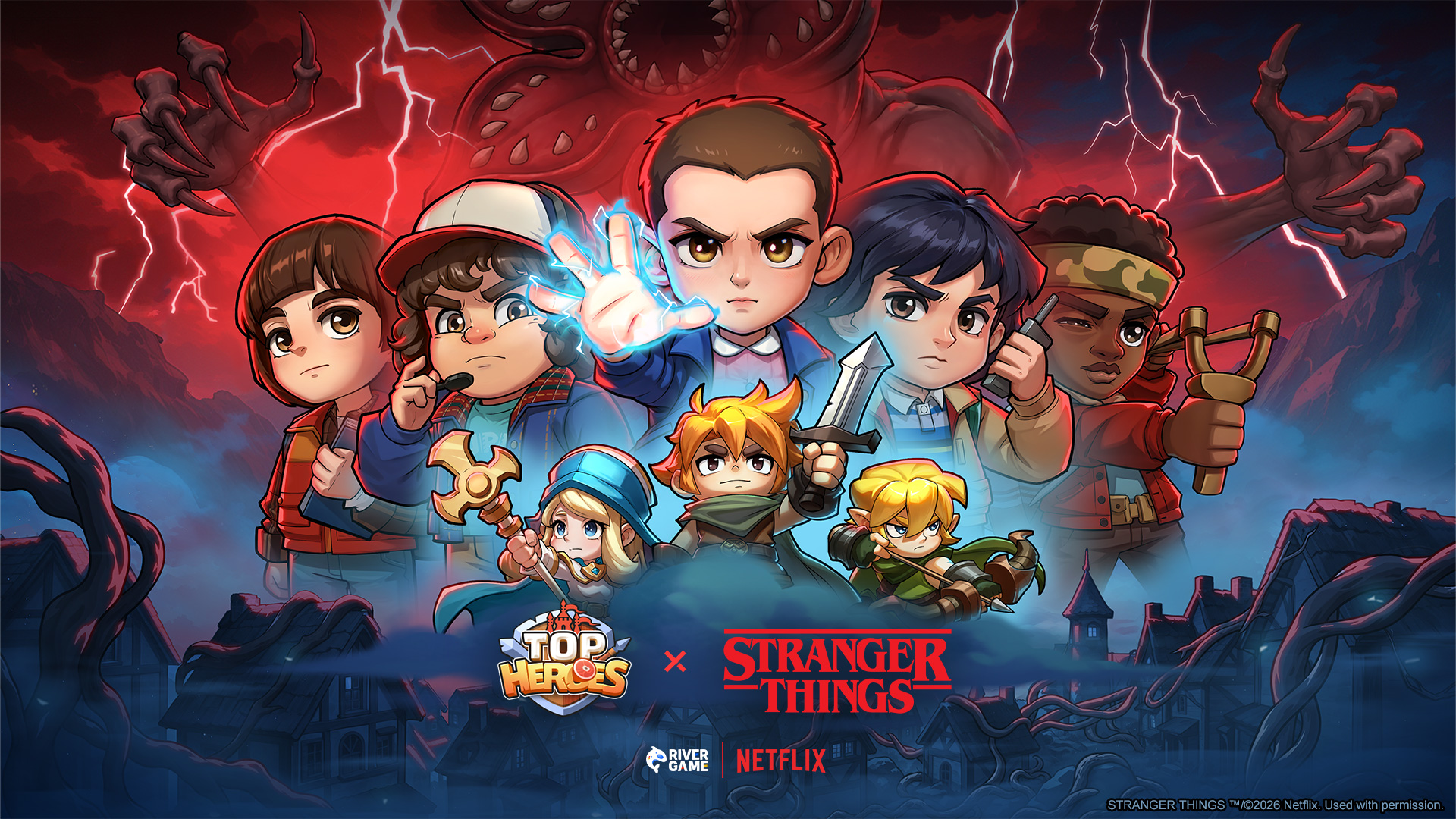
A famous character brings obligations as well as attention. Yodo1’s own readiness guide typically looks for a stable live game, a community, an event cadence and $300,000-plus in monthly revenue. Those are its screening signals, with other arrangements possible. A struggling prototype has different needs from an established game preparing a crossover.
Licensing can involve royalties, a minimum guarantee against royalties, or a flat fee. Yodo1 describes these models in its licensing explainer. A guarantee commits money even when sales disappoint. A team should budget for development and approvals alongside the rights, then judge the collaboration against its own audience and commercial goals.
The company also practices the handoff
Yodo1 says it has operated fully remotely since 2020. Its culture asks a practical opening question: “What Does Success Look Like?” Open communication and written documentation are part of the answer.
There is also Pitch Club, a weekly speaking ritual started in 2019. Employees get three minutes to make a pitch. The company reports more than 250 sessions. For a business that repeatedly has to explain why this game belongs in that market, or why these characters belong together, practicing the explanation seems sensible.
“What Does Success Look Like?”
A Yodo1 culture mantra

The copyable idea is modest: identify a continuing job that the creator cannot comfortably staff, and test whether a specialist improves it. Track the money alongside stability, retention and the time consumed. Yodo1 occupies that space between making a game people enjoy and building the operations that let its creators keep making games.