A profitable company is a difficult thing to argue with. It pays salaries. It supplies reassuring charts. It allows a founder to answer the question of how things are going without first requesting a drink. Yoav Naveh and Gil Shiff had reached that agreeable condition at ConvertMedia. Their display mediation business had customers and a working subscription model. Then they changed direction again.
The decision makes a useful entrance into Naveh’s career. His work has moved through advertising technology, video, people operations, investing and enterprise AI. The job titles suggest several separate lives. A closer look reveals a recurring concern: how a system behaves when customers, colleagues and circumstances refuse to follow the tidy version of the plan.
The business that worked, until they looked ahead
ConvertMedia began in 2008 as a pricing engine. Naveh was a machine learning engineer; Shiff was a data scientist. Their idea was to let advertising campaigns with different payment models compete in the same auction. A click, an action and a thousand impressions needed a common basis for comparison. The mathematics had a purpose. Finding a repeatable business around it proved harder.
After an important customer was acquired by Google, the company struggled to find its footing. A move into display mediation brought profitability and 65 clients. Yet the founders saw weak differentiation, declining prices and a customer base weighted toward intermediaries. They chose video, and direct relationships with publishers, as the next direction.
There is something bracing about that sequence. The warning arrived while the business was improving. A rising line on a chart could coexist with an uncomfortable place in the market. Naveh’s account of the change leaves room for both the relief of making money and the worry that the position would become harder to defend.
A reader gets a vote
Outstream video offered publishers a new piece of advertising real estate. A site could carry a video commercial between paragraphs even when the article itself contained no video. The publisher gained access to video demand without first producing a programme. The reader, meanwhile, gained a new reason to be irritated. Any business built around the format would have to reckon with both reactions.
At a 2016 industry retreat in Vieques, Puerto Rico, Naveh joined Brian Danzis of Virool and Mark Yackanich of Genesis Media to discuss this emerging market. His argument was that outstream deserved to be understood as a category of its own. Formats, measurement and the experience on the page all mattered.
“Outstream should be looked at as its own industry.”
Yoav Naveh · 2016
In his writing after that retreat, Naveh pushed publishers to consider the effect of a format over months, rather than the attraction of an immediate financial guarantee. Advertising demand already existed. The harder question was how to introduce it into a page without spoiling the visit. He wanted publishers to have tools to judge that trade-off for themselves.
By October 2016, he was arguing that video should appear selectively. Different people wanted different experiences; some did not want online video at all. More banners had already taught publishers a lesson about clutter and diminishing attention. His prescription was restrained by advertising’s usual standards: show fewer ads, find the appropriate audience, and make each appearance count.
That position also helps explain his dissatisfaction with the old exchange business. Screening participants for bad behaviour consumed effort, while established display platforms already occupied the market. He wanted to give publishers something with a clearer reason to exist. After the Taboola deal, ConvertMedia closed its legacy display exchange and concentrated on video.
The number was a pace, the deal was a doorway
Taboola announced its agreement to acquire ConvertMedia in July 2016. The announcement put ConvertMedia’s annual revenue run rate at $50 million. A run rate describes the pace of a business at a particular moment. It should keep its own name: it does not supply an acquisition price, a profit figure or a personal fortune.
ConvertMedia’s annual revenue run rate.
A measure of revenue pace.
The logic of the combination was straightforward. ConvertMedia had video technology and formats. Taboola had publisher relationships, recommendations and a personalization business with broad reach. The acquisition announcement described controls that would let publishers adjust delivery and pricing to balance revenue with the experience on their pages. Technology was being joined to a route to customers.
For Naveh, the next job was VP of Video at Taboola. By October, he described the initial integration as complete, with personalization the longer-term opportunity. The question had widened from whether a publisher could place a video to which visitor should see it, and when. A commercial could be valuable in one context and an unwelcome guest in another.
Adam Singolda and Eldad Maniv became part of this chapter of his working life. Taboola’s founder and chief operating officer were also the people Naveh identified when explaining the fit between the companies. An acquisition joins products on an organization chart. Making the people work together supplies the rather less photogenic part of the transaction.
Then the engineer took the people job
After integrating the video business, Naveh became Taboola’s Senior Vice President of People Operations. His responsibilities shifted toward organizational growth. His professional interests in that chapter included machine learning, big data and measurable results. It is an unusual move on a résumé, and an illuminating one: an engineer was now working on the conditions in which other people did their jobs.
At Founders Village, he proposed a conversation about why founders often rush to start another company after an exit. The question has a pleasing complication in his own case. He went on to become an early-stage investor through INT3, and eventually a founder again. An exit had supplied several possible next acts.
He is also an active angel investor and managing partner at INT3. His stated professional interests include creativity, continuous learning and cultures that value measurable results. Investing adds another perspective on the choices he once faced as a founder: where a young company stands, what it can change and which kind of support might help it grow.
The office has exceptions, too
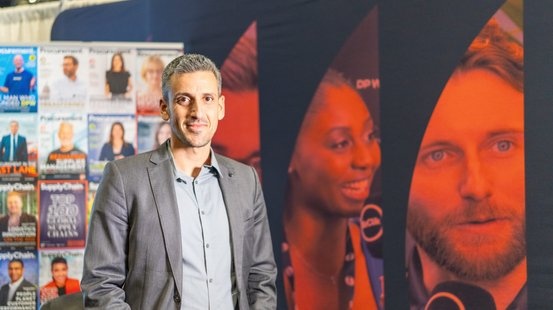
In 2024, Naveh co-founded Reindeer with Yair Weinberger. He now serves as co-CEO. The company builds AI agents for work inside enterprises, including finance and supply chain operations. Its chosen terrain contains the things a polished demonstration can conveniently avoid: incomplete information, changing procedures and cases that require someone to exercise judgment.
At Manifest Vegas in 2026, Naveh said he had expected the industry to make more progress putting agents into production during the previous year. The difficulty, as he described it, emerged when software met actual business conditions. He placed particular emphasis on managing change and exceptions. The easy, predictable part of a workflow made a poor guide to everything that followed.
His account of the opportunity is ambitious. Organizations should begin with a workflow they can improve, then consider how AI changes the roles and responsibilities around it. He sees a risk for established businesses that fail to think through those changes, and an opening for challengers that do. That is his argument for the market, rather than a prediction already fulfilled.
Reindeer’s March 2026 partnership announcement with Hellmann Worldwide Logistics made the approach tangible. The companies described AI-assisted airfreight quoting: gathering information, checking requests and supporting a pricing team’s work. The announcement reported a path from an initial process toward wider adoption. It also disclosed $18 million in seed funding from Lightspeed, Team8 and Vesey Ventures.
The colleague who knows why the form is wrong
Naveh’s writing returns to knowledge that never reaches a procedure manual. A team member recognizes an old receipt layout. Someone remembers the exception that applies to a particular customer. A document appears incomplete, but an experienced operator understands what happened. These are examples he uses to explain why a neatly documented workflow can still leave software unprepared.
His Hellmann example puts this knowledge inside familiar tools. Requests come through Outlook and a quote management system. People review a portion of the agent’s work, correct mistakes and answer questions. The intended result is a system that accumulates practical understanding as the business continues to operate. Experience becomes something the software can use, with people contributing the judgment.
He also makes a case for shared services leaders to guide adoption. They already work across departments, manage handoffs and balance cost, speed and accuracy. In his view, that experience gives them a useful vantage point for deciding which processes to change first. The people closest to the administrative machinery become participants in designing its replacement or improvement.
An expert answers when the agent meets uncertainty.
Patterns in feedback inform tested changes over time.
Human judgment connects today’s exception with tomorrow’s operating logic.
Reindeer calls its design a two-loop system. One loop concerns individual decisions: an uncertain case reaches an expert. The other concerns the agent itself: feedback across cases can prompt revisions, tests and human review of changes. Naveh describes this as a way to delegate gradually while retaining oversight. Buying software, in this account, creates an ongoing management responsibility.
Somebody has to run the tower
By July 2026, Naveh was writing about the danger of organizing enterprise AI around its launch date. Policies change. Documents arrive in unfamiliar formats. Systems disagree. The operating environment continues its untidy life after the demonstration ends. His concern is the sixth month of use, when the assumptions made at installation may already need attention.
In August he developed an aviation analogy for the problem. An enterprise full of agents would need the equivalent of air traffic control. He separated oversight into responsibilities: deciding whether work is correct, keeping the agent current, and assessing whether the economics justify it. He called the emerging function Agent Operations. It brings his people operations chapter into an unexpectedly relevant conversation.
There is a dry joke waiting inside the idea of an autonomous workforce that needs a management function. Naveh’s argument gives it practical weight. More capable software still leaves an organization with decisions about standards, ownership and accountability. The impressive machine does not remove the need to decide who answers for its work.
His current conversations extend to a podcast, Ahead of the Herd, which he co-hosts with Weinberger. Guests include Hellmann executive Stefan Borggreve and former Snowflake and ServiceNow leader Frank Slootman. The subjects range from enterprise adoption to the shape of a career. The founder who once reconsidered a profitable advertising business is still asking what should change next, and who will be responsible when it does.