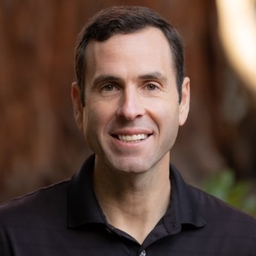
In 2008, somewhere northwest of Baghdad, at a remote combat outpost the Army probably didn't bother naming, two Harvard Business School classmates-to-be met for the first time. Yinon Weiss and Aaron Kletzing were both deployed, both staring down the same operational chaos. Years later, they would sit across from each other at HBS and decide to build a company together. That company - RallyPoint - became the professional network for the U.S. military. Weiss didn't find his co-founder at a conference. He found him in a war.
That's the detail that explains Yinon Weiss better than any resume ever could. The man runs on mission. He picks big, specific problems - ones where the incumbents are failing people - and he goes all in. Veterans with no professional network. Car owners getting ripped off by opaque repair shops. A $75 billion auto repair industry still operating on paper tickets and handshake estimates. Every time, same move: identify the trust gap, build the infrastructure to close it, then scale.
Weiss grew up in Palo Alto, California - the same zip code that produced generations of Stanford graduates and Silicon Valley insiders. He went the other direction, at least at first. UC Berkeley, bioengineering, minor in chemical engineering. Not a detour. A training ground. The discipline of systems thinking, of breaking down complex mechanisms, runs through everything he's built since.
After Berkeley came 10 years of active duty. Not desk years. Marine Corps first - as a Scout/Sniper Platoon Commander. Then the harder door: U.S. Army Special Forces. Multiple overseas deployments. The kind of service that ends with a Bronze Star, a Combat Infantryman Badge, a Special Forces Tab, and a Defense Meritorious Service Medal. He left as a Lieutenant Colonel, eventually wrapping up his Army Reserve service in 2022 after a total military career that spanned nearly two decades.
Harvard Business School was next. Summer associates at Goldman Sachs and Boston Consulting Group - the expected stops on the post-MBA conveyor belt. He took the Goldman and BCG summers, absorbed what there was to learn, and moved on. WiTricity Corporation briefly had him as Director of Product Marketing, where he built go-to-market strategy for wireless energy transfer technology. The future was already somewhere else.
RallyPoint
Co-Founded 2012 · Professional Network
The "LinkedIn for the military" - built with co-founder Aaron Kletzing, someone Weiss first met at a combat outpost in Iraq. Grew to serve over one million U.S. service members and veterans.
CarDash
Founded 2016 · Y Combinator S17 · Acquired
A transparent marketplace for auto repair services, launched in the Bay Area. Raised $5.3M from Index Ventures and Felicis Ventures. Originally launched as an employee benefit for SF tech companies. Acquired after YC batch.
Stress-Free Auto Care
Founded ~2020 · $11M Series A · 30+ Locations
The current chapter. Not a marketplace - actual shops, owned and operated, acquired and modernized. Tech-enabled, paper-free, 4.9-star average, live video streams of repair bays. Built for the next generation of vehicles.
The pattern across all three is clearer with hindsight. RallyPoint addressed a network problem: veterans had no professional infrastructure to navigate the transition from military to civilian careers. CarDash attacked a transparency problem: car owners were being quoted arbitrary prices with no ability to verify or compare. Stress-Free Auto Care takes both lessons and applies them to the underlying physical infrastructure - the shops themselves.
You can't software-only your way to fixing auto repair. That was Weiss's conclusion after CarDash. The marketplace model works until it doesn't - until the quality variance in independent shops undermines the promise you made to customers. So Stress-Free chose a different path: acquire the shops, train the staff, modernize the facilities, and apply proprietary software to operations you actually control. The company has acquired nearly 20 shops in the Bay Area, Southern California, and Texas. The first acquisition cost $60,000. It repaid tenfold.
Forerunner Ventures led the $11M Series A in April 2024, describing Weiss as "an operator in the truest sense of the word." That's venture-speak for something specific: he runs toward complexity rather than abstracting it away. The physical environment gets modernized. The staff gets trained. The paper gets eliminated. The customer gets a live video stream of their car being worked on, text updates from a named service advisor, transparent pricing before anything starts, and a 24-month/24,000-mile nationwide warranty when it's done.
The target is 100+ locations, built through a "Digitally-Native Franchise" model - a term Weiss uses to describe something that doesn't quite exist yet in the industry. Not purely company-owned. Not a traditional franchise either. Something in between, enabled by the software layer the company has built and the operational playbook it has refined across 30+ locations.
In 2024, Texas Governor Greg Abbott appointed Weiss to the Texas State Commission on Judicial Conduct - a largely unheralded appointment that nonetheless signals the kind of civic standing Weiss has built in Austin, where he's been based. He's also an alumnus of Presidential Leadership Scholars and a member of Teneo.
Outside the company, he shows up on Twitter as @yinonw, self-described as "Entrepreneur/Contrarian," with 15.8K followers and a history of posting data-driven takes on public policy topics. He contributed to The Federalist and Small Wars Journal. The bioengineering training never really left.
The automotive repair market is enormous, fragmented, and - in Weiss's framing - still fundamentally broken for consumers. The 30+ locations across California and Texas are a beachhead, not a destination. The question Weiss is betting his company on: can you build a nationally recognized brand in auto repair the same way Shake Shack built one in burgers, or Warby Parker built one in eyeglasses? Brand, technology, and consistent experience at scale.
If the career arc teaches anything, it's that Weiss doesn't dabble. He deployed to Iraq, twice. He spent 10 years in special operations. He co-founded a company that scaled to a million users. He ran a startup through Y Combinator. He's now building something with physical assets in two major states. None of these are the moves of someone optimizing for comfort. They're the moves of someone who needs the next hardest problem.
The car repair shop - greasy, overlooked, unconquered by the app economy - might be exactly that.