Yevgen Altynpara has a useful answer to the question every software founder eventually faces: what, exactly, have you built? An app would be an easy reply. A company would be a respectable one. His answer is the people. “The biggest achievements are our employees,” he has said. Coming from an engineer who became a chief executive, it is an admission that the hardest system to assemble contains rather more opinions than a computer.
Altynpara founded Cleveroad after working as a freelance developer and in outsourcing companies. He had seen enough of the trade to develop a complaint: the quality of service could be better. His response was to start a business around that dissatisfaction. The resulting career has taken him from individual software projects to managing engineers, setting business direction and writing about the machinery behind other companies' digital operations.
The name on Cleveroad's leadership page is Yevgen Altynpara, founder and CEO. Readers of his interviews and technical writing will also know him as Evgeniy. Across those different spellings, a consistent interest emerges: how to make the work useful, how to organise the people doing it, and how to keep the promises made before anyone starts building.
A few developers, one client
His early interest was in programming and mathematics. He studied computer science and began working as a freelance software developer. The progression matters. Freelancing puts the person writing the software close to the person paying for it; questions about requirements, revisions and delivery arrive without much ceremony. A founder who has worked that way has already encountered the awkward distance between an attractive idea and a finished product.
Altynpara has described the company's beginnings as a handful of talented developers and one trusted client. By February 2017, he was describing a business of around 100 people worldwide. He also said the colleagues who had started with him were still there. Those are historical snapshots, but they give his account of growth a human scale: a first customer, a small group, then the complicated business of keeping people working together as the circle widens.
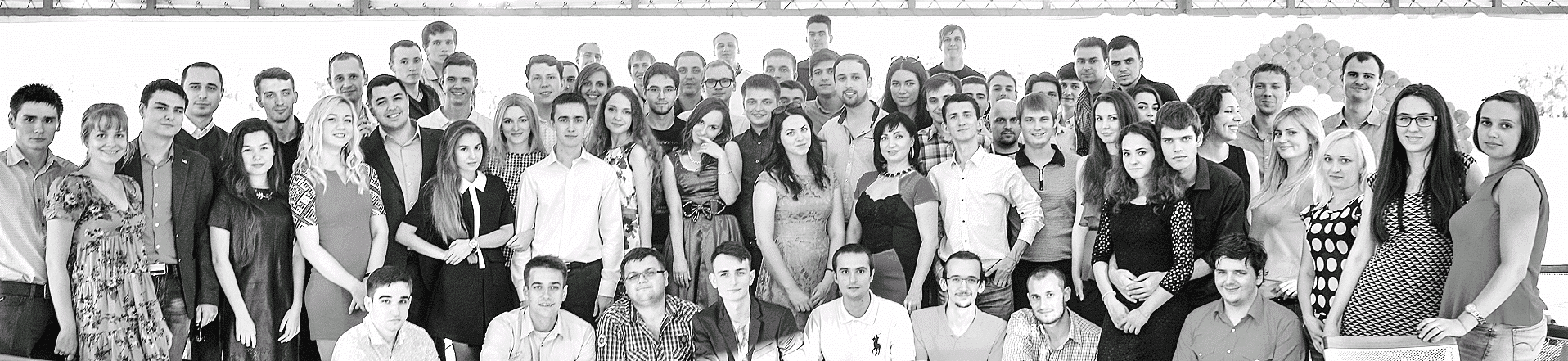
He personally interviewed and hired the core staff. His stated priorities included problem solving, communication, self-motivation and initiative. Technical ability earns its place here, but so does the capacity to work without waiting for instructions to be delivered on a silver tray. A growing company has quite enough trays to carry already.
“Initiative in our company is gold.”Yevgen Altynpara, 2017
The cost of an unanswered question
One of the projects Altynpara has singled out is unusually revealing: an App Cost Calculator. His team spent months developing a tool to help business owners estimate the expense of a mobile application from its requirements. He reported that it reached fifth place among Product Hunt's products of the day on 11 October 2017.
A calculator is a modest sort of calling card. It addresses the question a prospective customer is likely to ask before admiring the engineering. How much will this idea cost? It also invites the customer to think about scope. Every additional feature has consequences, even when it looks delightfully small on a presentation slide.
Product of the Day for the App Cost Calculator, as Altynpara described the team's result.
His explanation of project planning has the same practical emphasis. A manager, developers and requirements analysts work through the proposal; documentation and customer agreement precede development. His approach to platform choice considers audience, budget and the purpose of the application. The technical decision follows the circumstances of the business.
These details offer a less theatrical account of entrepreneurship than the familiar flash of inspiration. A price estimate, a documented requirement and an agreed schedule make poor fireworks. They are, however, useful things to have when the invoice arrives. The calculator gave that unglamorous work a public face.
Growth brings its own bugs
Altynpara has also acknowledged a management lesson: during intensive growth, he could have handled internal processes and communication between departments better. That is a consequential admission from someone whose original business proposition rested on improving service. Hiring more people creates more connections to manage, and a larger team does not automatically make those connections clearer.
His advice to would-be founders begins with experience. Learn the software development process thoroughly. Try freelance work and release products before establishing a company. It is advice with a certain economy: acquire some familiarity with the difficulties before adding payroll to them.
He has credited his engineering background with helping him maintain demanding entry standards for recruits. Yet his account of repeat business extends beyond the code to communication and management. The customer experiences the whole arrangement. A technically accomplished product can still arrive through a bewildering process, and bewilderment is rarely an effective customer service policy.

There is a tangible counterpart to his interest in keeping teams together. On his professional profile, he records helping relocate 32 employees from a conflict area in 2014, preserving their jobs and moving their families. The account is his own. It puts a concrete responsibility alongside the usual vocabulary of team building: colleagues have lives that continue beyond the project plan.
From the app to everything behind it
Altynpara's published work broadens the picture of a mobile software founder. His professional biography describes experience building engineering and design teams and operating businesses serving US and European markets. His interests include marketplaces, automation, artificial intelligence, connected devices and financial technology. The common thread is the way software participates in the running of a business.
His 2021 guide to cloud migration begins with preparation: identify the applications in use, understand their dependencies and establish measures of success. It goes on to discuss migration strategies and backup planning. The caution about dependencies is particularly characteristic. Moving one application can affect another; the organisational chart is not the only place where relationships complicate an apparently straightforward task.
The same year, he wrote about cloud services for real-time analytics. His framing asks business decision makers to understand how analysis happens, who controls it and how to improve it. Data is plentiful; useful judgment requires more work. An attractive dashboard has never, by itself, relieved anyone of the obligation to ask a sensible question.
In 2022, his writing turned to supply-chain visibility and the integration of logistics applications. Visibility concerns knowing what is happening across the chain. Integration concerns getting separate systems to exchange information. They are adjacent problems with very practical consequences: a business can own several perfectly serviceable applications and still struggle to get a coherent picture from them.
Read together, these subjects suggest a founder increasingly occupied with the connective tissue of technology. The visible app is one part of a larger arrangement. Servers, data flows and operational processes must cooperate behind it. His writing spends time on that arrangement, where a missed dependency can make itself felt far beyond the screen on which it began.
Coffee, Trello, and no sacred desk
There is a lighter inventory of Altynpara's working life in his 2017 interview: a PC, coffee, fruit as a work snack, and a preference for sitting. He named Evernote as his go-to mobile app and Trello as his preferred project management application. His office playlist included Michael Jackson, Pharrell Williams and Bruno Mars.
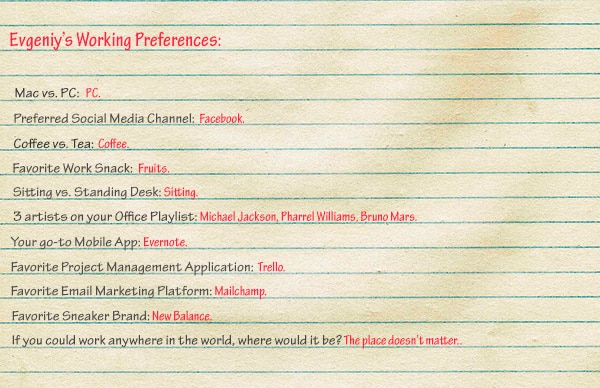
Asked where in the world he would work if he could choose anywhere, his answer was: “The place doesn’t matter.” It is a small, pleasing detail beside a career concerned with remote teams. The questionnaire records a moment rather than a permanent set of habits, but it supplies something the job title cannot: a little texture around the working day.
The engineer keeps studying
More recent public activity points back towards hands-on technical learning. His professional profile lists Udacity study in AI programming and generative AI in 2024. In 2026, it lists further certificates covering Claude Code, the Claude API, Model Context Protocol, agent skills and AI fluency. These are records of continued study, with subjects that follow the changing tools of software work.
His company writing is moving through related territory. A July 2026 technology migration guide carries his byline alongside technical writer Yelizaveta Ropalo. Its opening emphasis is on the sequence of decisions: which systems should move first, which approach suits each one, how much risk a business can absorb, and how to verify stability before retiring the old environment.
That is a recognisable continuation of his earlier concerns. The tools have changed; the obligation to understand what depends on what remains. Cleveroad's present leadership page places Altynpara alongside separate leads for technology, architecture, marketing, engagement, project management, business analysis and design. The organisation now gives names and responsibilities to work a freelancer once had to navigate much more directly.
Altynpara's career is most interesting in that passage from personal competence to collective responsibility. He began by wanting better software service. His own accounts keep returning to the people, communication and preparation required to deliver it. The ambition has room for artificial intelligence, cloud systems and new products. It also leaves room for a first client, a colleague's initiative, and the thoroughly unfashionable virtue of knowing how the work gets done.