The useful object at the first Paint Nite was an easel. The useful absence was a lease. In March 2012, Dan Hermann and Sean McGrail gathered 50 people in a Boston bar to paint. The bar already existed. So did its tables, its drinks and its reasons to welcome another paying crowd. The founders supplied the activity. For an enterprise built around creativity, the arithmetic was agreeably plain.
- Started with a reported $6,815, using existing bars instead of dedicated studios.
- Expanded through local artists and licensed event operators.
- Yaymaker now plans private and corporate events; PaintNite.com sells public experiences.
- Live hosts and supply logistics matter as much as the chosen activity.
The room was already paid for
The idea followed a friend’s birthday party where adults drank wine and learned to paint. Hermann and McGrail recognized a familiar pattern from bar trivia: give people a reason to gather, and a room becomes an occasion. Their reported $6,815 launch budget covered supplies, some food and drinks, design, a business license and a web domain. A storefront would have made the experiment considerably more expensive.
Painting parties were already a business. The founders’ contribution was a different way to deliver them. Rather than build studios, they recruited local operators who could organize events in existing venues. Historical reporting described a licensing arrangement under which Paint Nite received 30 percent of ticket proceeds. Venues gained customers; artists gained paid work; guests gained something to do with their hands besides inspect a phone.
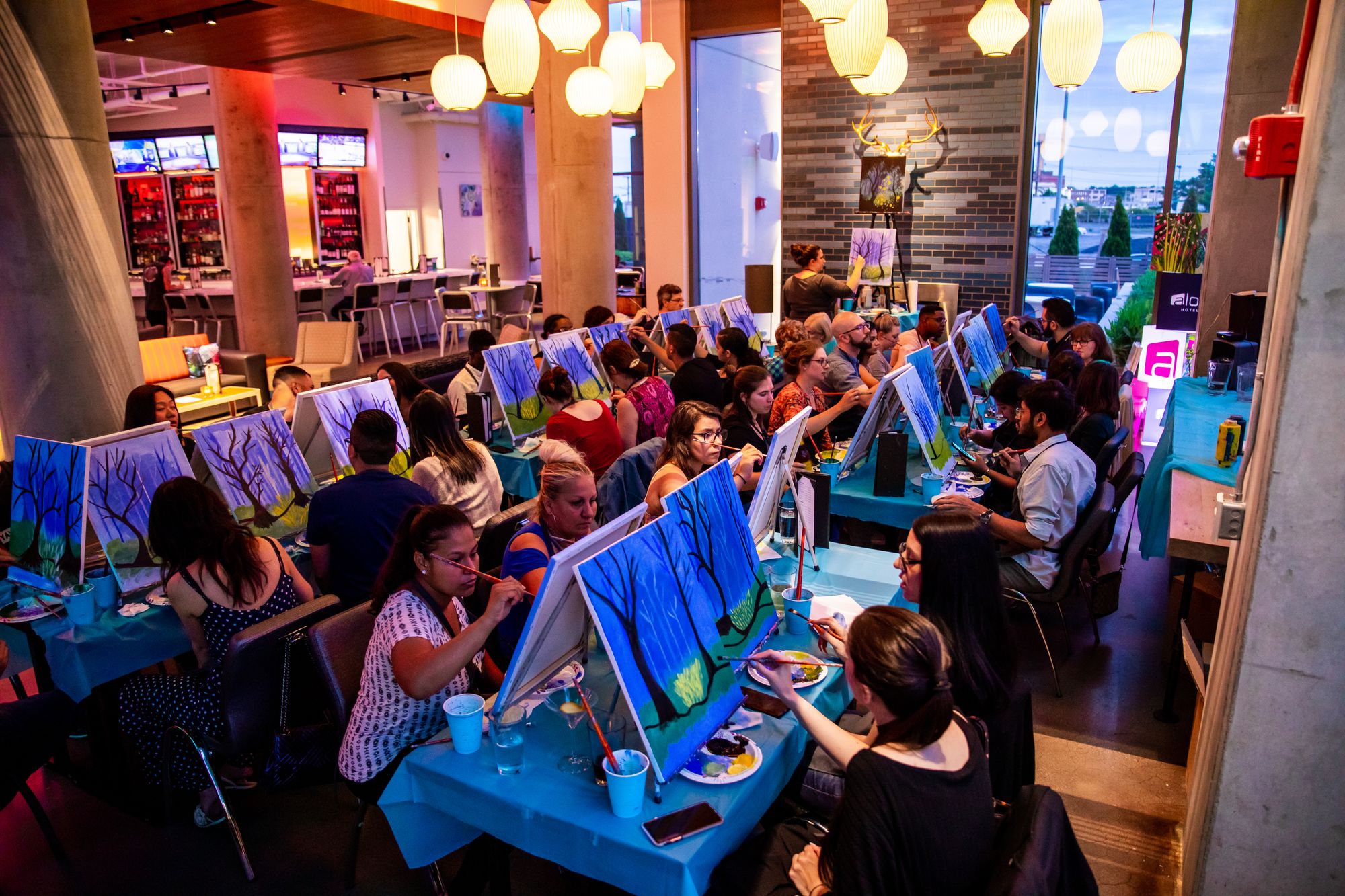
McGrail later told Salon that the first room of 50 strangers convinced them they had a real business. Guests also photographed their handiwork, giving the event a life beyond the evening. A canvas could be both a souvenir and an invitation to the next gathering. The marketing was built into an activity people already wanted to remember.

The first bottleneck wore an accountant’s visor
Hermann had reasons to distrust expansion by franchise. His earlier laundry business, Lazybones, had stumbled while attempting that conversion. Paint Nite chose licensing instead. By 2015 it was ready for outside help, taking approximately $13 million in investment involving Highland Consumer Fund. In 2016, the business reached No. 2 on the Inc. 5000. Portable equipment and local initiative could travel remarkably quickly.
The back office struggled to keep pace. In a 2019 Oracle-sponsored account, finance chief Bill Meagher described arriving at a business whose financial tracking relied on one accountant checking the bank balance. Ticket payments came through several systems. Inventory was difficult to locate. An evening’s entertainment could look beautifully simple from a barstool and decidedly less simple from accounts payable.
“We had no formal budgets or forecasts”Bill Meagher, finance chief, in 2019
The company adopted NetSuite to bring financial and supply records together. That same account reported a change from a 60-day book-closing process to reconciliation and reports within five days after month-end. The prosaic detail matters: ticket cash arrives before the event, while revenue is recognized after it happens. Selling seats and delivering evenings are separate obligations.
One name became two front doors
In 2019, Paint Nite became Yaymaker. Its relaunch offered signs, flowers and candles alongside paintings and plants. The name made room for more activities. The announcement claimed 300,000 events and more than 6.5 million tickets since the beginning. Those figures describe the accumulated network at that moment, rather than a count of today’s bookings.
The pandemic demanded another adjustment. Virtual experiences carried activities into homes. Escape-room creator Jayson Mamaclay described replacing physical exploration with 360-degree photographs, close-ups and a shared inventory screen. The adaptation required rethinking what players could see and collect. A camera aimed at the old product would only get so far.
In April 2022, PaintNite.com returned for public events. Yaymaker remained the home of corporate and private gatherings. The company’s explanation drew a distinction between lively, unscripted nights out and more buttoned-up private bookings. The practical benefit is clear: someone choosing a date-night ticket and someone arranging an entire department’s outing have different shopping lists.

The planner is part of the product
Today, Yaymaker’s menu ranges from painting and planting to ukulele creation, cooking, mixology, digital escape rooms and speakers. Its customers include people leaders organizing onboarding, team socials and client events, alongside private celebration organizers. Published testimonials from Google, Facebook and Netflix describe particular team experiences. They are endorsements of those events, rather than evidence that every booking produces the same result.
For the organizer, the service includes selecting an activity, securing a host, sourcing supplies and arranging shipping. A remote team can receive materials and join a live session. Published corporate guidance asks for mailing addresses and payment 14 days before an event. Even spontaneity, when bought for a group, needs a deadline.
Its alternatives include Painting with a Twist, Muse Paintbar and independent facilitators. Yaymaker’s appeal lies in coordinating a choice of formats and activities through a planner. Repeat corporate buyers can join a no-fee rewards program with preferred pricing, event tracking and direct Slack access. For the employee assigned to organize everything, fewer separate arrangements may be the most attractive item on the menu.
Borrow the capacity. Keep the discipline.
The numbers resist a tidy victory lap. Parent company Your Nite LLC’s April 2024 report disclosed $5.83 million in 2023 revenue and a $297,021 net loss. These consolidated figures cover the broader business, not Yaymaker alone. They keep the early growth story in perspective: a clever launch does not permanently settle demand, costs or profitability.
The idea worth copying is specific: combine existing space, a capable local host and a repeatable activity before committing to permanent premises. Then count preparation, supplies and delivery. It depends on willing venues, enough paying guests and reliable execution. A hurried organizer who cannot meet shipping deadlines, or a group seeking serious art tuition, needs a different arrangement. Borrowing the room removes one expense. The guests still expect a good evening.