The invoice was being typed twice. In a case published by XTGlobal, two operators independently entered the same invoice data to preserve accuracy. It was an entirely understandable precaution. It was also an excellent way to turn a routine purchase into a recurring clerical expense. Somewhere between the supplier’s document and the accounting system, a company was paying for its own uncertainty.
This is a useful place to meet XTGlobal. The company sells technology consulting, software development and outsourcing, categories capacious enough to conceal almost anything. Its more revealing work happens in the small gaps: a document that needs checking, an application that needs supporting, a project team that needs one more specialist. Ordinary work accumulates. Then somebody has to make it behave.
- Oracle and cloud expertise for organizations with systems to migrate, integrate or keep running.
- Circulus combines accounts payable software with document processing and human support.
- Clients can buy a defined project, temporary specialist talent or ongoing operations.
- The lesson to borrow: design the exception queue before celebrating the automation.
The invoice typed twice
XTGlobal’s response paired AWS Textract with a neural network and its Circulus AP platform. The system extracted and mapped invoice fields. An attribute below 99% confidence went to a human operator for correction; the case reports 95% achieved extraction accuracy. Those numbers describe different things. One measures reported performance, the other sets a rule for deciding which results deserve another look.
The distinction matters. Finance departments do not need an algorithm to appear clever. They need the correct amount, supplier and purchase order to arrive in the correct place. Circulus extends beyond extraction into approval routing, business rules, purchase-order matching and accounting integration. A faster way to make an error would be a rather expensive party trick.
Human correction
A company with two useful temperaments
Ramarao Mullapudi founded XTGlobal in 1998, after working at Alcatel and AT&T. In 2006, the business added a delivery center in Hyderabad. The geography became part of the offering: a U.S. consulting presence paired with delivery capacity in India. The business grew around helping other organizations build and operate their technology.
Then came a useful act of naming. In 2017, XTGlobal brought its AP automation and accounting outsourcing work under the Circulus brand. Circulus describes itself as the convergence of three XTGlobal business units. That gave a specific financial workflow a recognizable identity within a much broader services business.

Today the combination is still visible. XTGlobal can build a custom application, supply expertise and maintain the resulting environment. Circulus gives it a product around which services can gather. The advantage is practical: buyers dealing with unusual approval rules or accounting integrations can discuss the workflow and the people who will support it together.
Its website displays customer logos including Cinemark, Marriott, Verizon and Torani, without detailing individual assignments. The wider service mix addresses finance teams, technology departments and operations managers. For the smaller business, Circulus offers a focused AP entry point; an enterprise may arrive with an entire application estate to support.
There is plenty of competition here, from global IT consultancies and Oracle specialists to AP software vendors. XTGlobal’s position is the intersection of those jobs. Its corporate brochure lists relationships with Oracle, Microsoft, AWS, UiPath, Mendix and Automation Anywhere. These are established platforms on which it implements and integrates solutions. The differentiation lies in assembling them around a client’s operation.
The spreadsheet reaches its limit
Consider another published case: an Asian oil-and-gas construction company tracked productivity with Google Sheets and a desktop application. As projects multiplied, the arrangement became cumbersome and error-prone. People worked in the field, across locations; the information did not travel nearly as well as they did.
XTGlobal proposed an AWS-based productivity system, moved spreadsheet data into Aurora, interviewed end users and created a prototype during requirements gathering. The plan called for a six-month implementation and offline data uploads that would synchronize when connectivity returned. The case describes two-week production sprints and reports better real-time visibility into lost hours, rework and completed work.
The first thing to break was access. A desktop tool could hold information while keeping it inconveniently far from the people who needed it. The transferable idea is to show users a working prototype before committing the full scope. A field application also needs to tolerate the field: connection failures should be a design consideration, not an unwelcome discovery.
“Be a transformation partner to give our customers a digital edge.”
XTGlobal’s stated mission
Keeping the toll booth open
Enterprise modernization has another awkward requirement: the enterprise must continue functioning. In XTGlobal’s toll-processing case, the client needed to move legacy systems to Oracle Cloud Infrastructure while maintaining availability. The work combined application and database migration, operating-system upgrades, replication and ongoing support.
XTGlobal reports a 40% reduction in infrastructure costs, 20% improved system performance and 99.9% uptime. These are the company’s results for this engagement, rather than universal migration promises. The interesting operational choice was to move the existing estate without a complete redesign, then support both Oracle and non-Oracle applications.
Company-reported results from one toll-processing migration case.
That willingness to work with what already exists extends to older Oracle E-Business Suite versions. XTGlobal advertises support reaching back to 10.7, with flexible support models. For a buyer, the question becomes whether an upgrade serves the operation well enough to justify its disruption and expense. Continuing support and modernization belong in the same conversation.
The price of making a prototype behave
Recent announcements put actual contract values beside the technology vocabulary. In February 2026, the Indian listed group entity, XTGlobal Infotech Limited, announced a U.S. state transportation-agency AI engagement. The initial six-month program was valued at approximately $796,900. Its task was to take an internally developed proof of concept toward production, including document assembly, governed agentic workflows and cloud deployment.
In April, that entity announced another transportation-agency award: approximately $1.59 million to modernize more than 230 internal forms with Adobe Experience Manager. The planned duration was about 14 months. Accessibility, internal-system integration, validation and transition into support were part of the assignment. The two announcements describe awarded programs and planned scope; they do not establish completed outcomes.
These prices illuminate the business. Enterprise AI and modernization involve permissions, delivery milestones, compliance and the old system’s stubborn attachments. XTGlobal’s AI offering accordingly includes data-readiness assessments, governance, staff training and custom development. A prototype can demonstrate possibility. Operating it responsibly requires a larger collection of decisions.
Buying the right kind of help
XTGlobal’s commercial models divide those decisions by responsibility. A statement-of-work engagement puts delivery against an agreed scope, timeline and budget. On-Demand Talent Solutions supplies specialists for short, defined needs while the client directs priorities and daily execution. Managed services cover continuing operational work; the current offering includes monitoring, security, cost management and recovery testing.
Its Global Capability Center service goes further, combining dedicated teams in India with facilities, hiring and governance support. XTGlobal describes assisted, joint-venture and virtual models, among others. Buyers can therefore move from filling a temporary skill gap to establishing a longer-lived delivery operation. Those choices call for different levels of commitment and oversight.
A June 2026 group announcement adds a modest geographical marker: its first finance and accounting outsourcing engagement in Ireland. The work is to run from India, covering finance support, AP supervision and HR administration. It is another example of selling an ongoing business function alongside technical services.
The reader’s useful starting point is a responsibility map. Who owns the requirements? Who resolves exceptions? Who approves a release? Who answers when production stops? Fixed-scope delivery needs clear success criteria. Invoice automation needs readable inputs and an accountable review path. A dedicated offshore team needs sustained work and management attention. Match those conditions to the contract before admiring the demo.
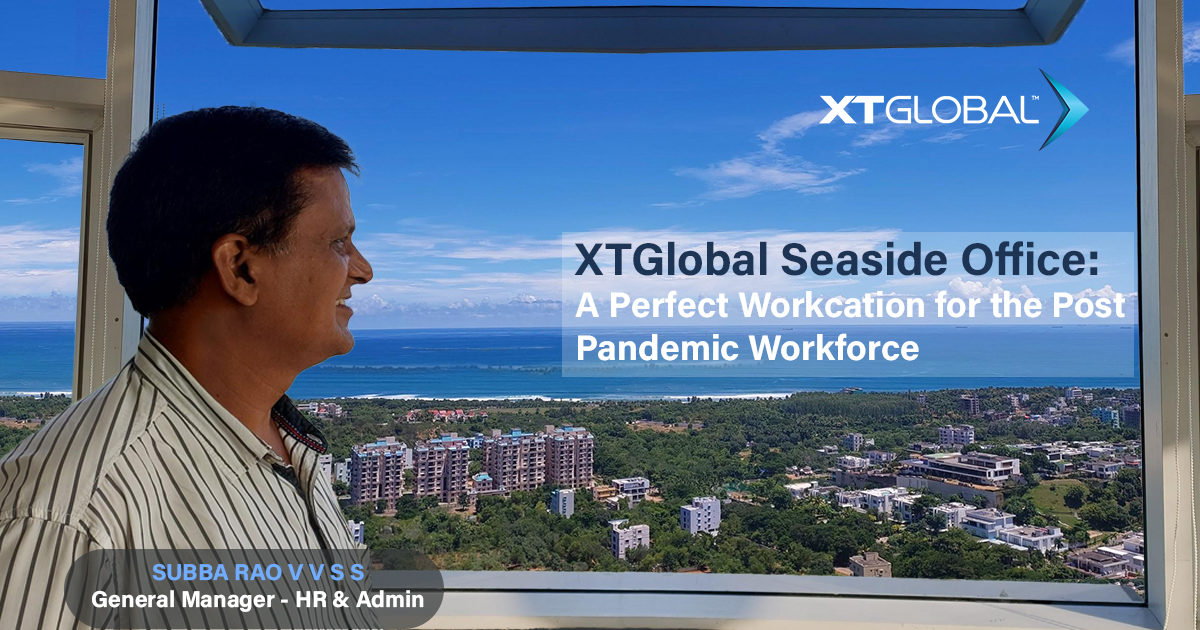
A sea view for the back office
For a business so often concerned with unromantic chores, XTGlobal has a surprisingly scenic workplace story. A 2022 staff blog describes its Visakhapatnam seaside office through the language of a “workcation,” combining collaboration with the attractions of the coast. It is the company’s own portrait of the workplace, complete with enthusiasm for the view.
The business itself is better understood through the smaller view: an invoice, a field update, a form, a database dependency. XTGlobal operates where those ordinary objects become obstacles at scale. For a finance or technology team, the value is a chance to spend less effort shepherding information between systems. The glamour may be modest. The queue getting shorter is quite enough.
Company website ↗ · Circulus AP platform ↗ · Case studies ↗ · Company blog ↗
LinkedIn · X · Facebook · YouTube · Company overview video ↗