A propane torch seems an unlikely place to look for a theory of corporate strategy. It sits on a workbench, does something hot and useful, and returns to a drawer. Yet follow a Bernzomatic torch back through its ownership and you arrive at Worthington, an Ohio manufacturer whose recent history poses an interesting question: how much of a company can you remove before its purpose becomes clearer?
- In December 2023, Worthington Industries separated its steel business and became Worthington Enterprises.
- The remaining portfolio connects familiar tools with less visible building components.
- Its bet: solve specific problems, earn repeat business, and buy nearby expertise.
A car loan becomes a company
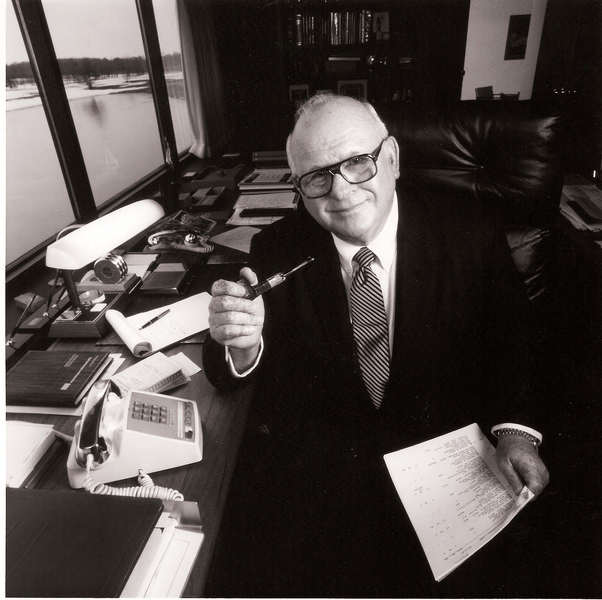
In 1955, steel salesman John H. McConnell borrowed $600 against his 1952 Oldsmobile to buy steel and start a custom-processing business in Columbus. The first year produced $11,000 in profit. A replica of that car now sits at headquarters. Corporate origin stories rarely come with such convenient parking.
McConnell’s other contribution was an operating arrangement. In 1966, he introduced employee profit sharing and moved production workers onto salaries. The company’s philosophy still links compensation to performance and favors long employment and internal promotion. Its proposition is practical: people asked to improve a factory should participate in its success.
The subtraction that mattered
Worthington added pressure cylinders in 1971, then accumulated businesses around metals, buildings and household tasks. Eventually, the collection contained two quite different propositions: processing steel for industrial customers, and selling engineered products under recognizable brands.
The board announced a separation in September 2022, after two consecutive years of record earnings. This was a deliberate change in structure during a strong period. Management argued that the businesses needed different investment strategies and would be easier for investors to evaluate separately.
On December 1, 2023, steel processing became Worthington Steel, trading as WS. The existing company changed its name to Worthington Enterprises and kept WOR. Automotive steel and laser-welded blanks belong with the former. Bernzomatic, Balloon Time and water-system products belong with the latter. An old company description can now send a buyer to the wrong business.
One history. Two companies. December 2023.
The customer buys a finished job
Consider the portfolio from the customer’s end. A plumber needs controlled heat. A drywaller needs tools that leave a smooth surface. A building operator needs reliable water pressure or cooling. A parent needs helium for a party. Worthington supplies the equipment behind these small, definite outcomes.
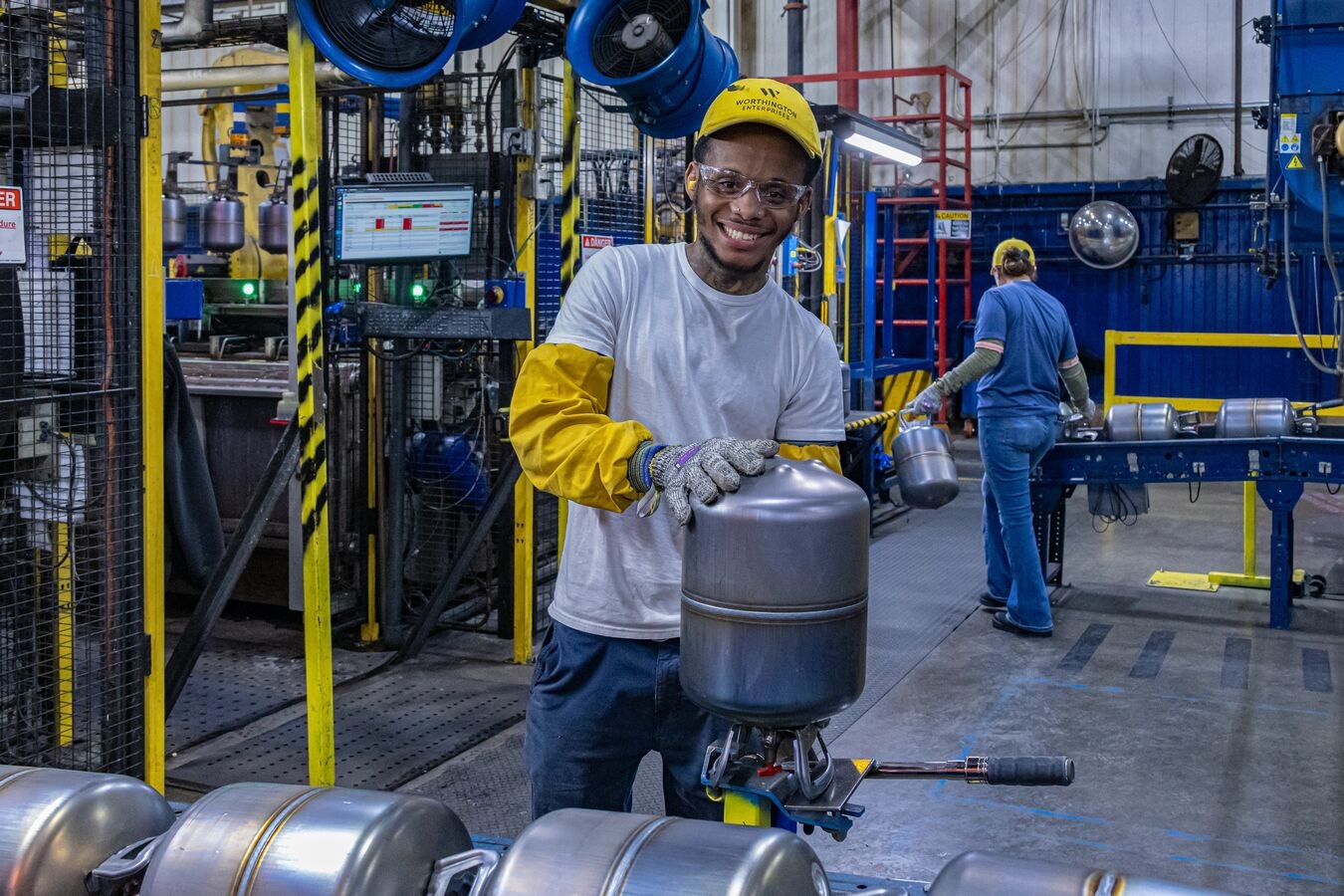
Building Performance Solutions, the segment name adopted in September 2026, covers cylinders, water tanks, HVAC components and metal-roof components, alongside interests in ceiling systems and metal framing. Trade & Specialty Solutions contains tools, portable propane, helium and related products. Customers include equipment manufacturers, gas distributors, retailers, professional tradespeople and household users.
There is no single competitor for this assortment. A torch competes with other heat tools; a tank competes with other pressure-management products; a roof component competes on a contractor’s specification. Worthington’s argument rests on engineering, product certification, established brands and distribution. The usefulness of that combination depends on the job being done.
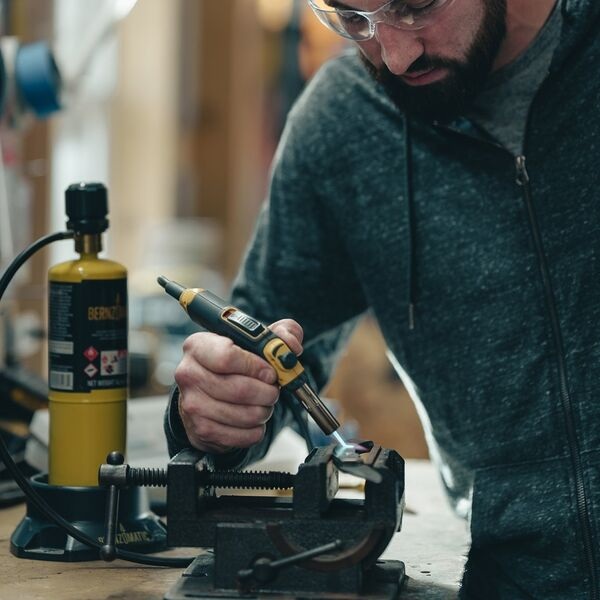
Its FirePoint Creator Tool makes the method concrete. Interviews and observation revealed that makers wanted the heat of a propane torch with more control for detailed work. Small butane tools could lack heat; conventional propane designs could feel cumbersome. Bernzomatic responded with a fine flame, a flexible 41-inch fuel hose and a stand with a torch dock. The change began with watching hands at work.
Buying the next small advantage
Worthington also purchases capabilities. Elgen, acquired in June 2025 for an announced approximately $93 million before closing adjustments, brought HVAC components, ductwork and structural framing. LSI Group, acquired in January 2026, added standing-seam roof clips and retrofit components. The annual report records LSI’s price at $206.6 million, net of acquired cash.
The selection criteria are revealing: niche leadership, complementary channels and relatively low capital intensity. Repair and replacement provide another attraction. An installed heating or water system eventually needs attention, even when a developer postpones a new building. That supports repeat demand without turning equipment sales into subscriptions.
Partnerships extend the model. Worthington owns half of WAVE, its ceiling-suspension venture with Armstrong World Industries, and a quarter of metal-framing company ClarkDietrich. Their sales are unconsolidated; Worthington reports its share of earnings. Reading revenue alone therefore misses an important part of the business.
“Our employees are our greatest asset.”Worthington’s published philosophy
The price of getting it wrong
Specialization offers no exemption from mistakes. Fiscal 2025 included a $50.8 million noncash impairment associated with General Tools & Instruments. The accounting charge acknowledged reduced asset value; it was not a fresh cash payment. Buying an established brand still leaves the buyer exposed to disappointing economics.
Construction pricing can hurt, too. ClarkDietrich’s contribution to Worthington’s equity income fell from $40.8 million in fiscal 2025 to $21.9 million in 2026, reflecting pricing pressure and an unfavorable project mix. Maintenance demand helps, but customers can defer projects and competitive pricing can squeeze the return.
There is recent evidence of progress: the September 2026 results showed 7% organic sales growth alongside acquisition contributions. The transferable lesson is a sequence: observe a stubborn task, improve the equipment, use existing channels, then consider buying adjacent skills. It needs reliable manufacturing and customers willing to pay for the improvement. A clever attachment cannot rescue poor distribution or an overpaid acquisition.
Worthington’s appeal lies in that modest scale of ambition at the product level. The corporate structure changed dramatically. The work still starts with something tangible: a joint to heat, a ceiling to hang, a tank that must hold pressure.
Follow the useful things
Explore Worthington Enterprises, Bernzomatic tools and how-to videos, building solutions and the company newsroom.