Mike Dennison’s first special vehicle was a 1970 Dodge D100 truck. Before the board seats and the earnings calls, there was an Oregon childhood of go-karts and BMX bikes. By June 2019, the boy who liked things with wheels was running Fox Factory, whose suspension products helped other people go faster over inconvenient ground. He called it his “dream job.” Seven years later, the dream had acquired a rather demanding balance sheet.
On October 16, 2026, Fox announced that Dennison was stepping down as chief executive and leaving its board. Douglas Grimm became interim CEO. The change arrived three weeks after the company sold Marucci Sports, the baseball equipment business it had bought during Dennison’s tenure. His departure closes a chapter that contained substantial growth, manufacturing expansion and an expensive experiment in how far a performance brand could travel.
There is an appealing neatness to the idea of an enthusiast getting the keys to his favorite business. Dennison’s career makes that proposition more interesting. He brought nearly two decades at Flex, where products had to move from design into factories and out to customers around the world. The enthusiasm was real. So was the industrial apprenticeship. At Fox, both would be put to work.
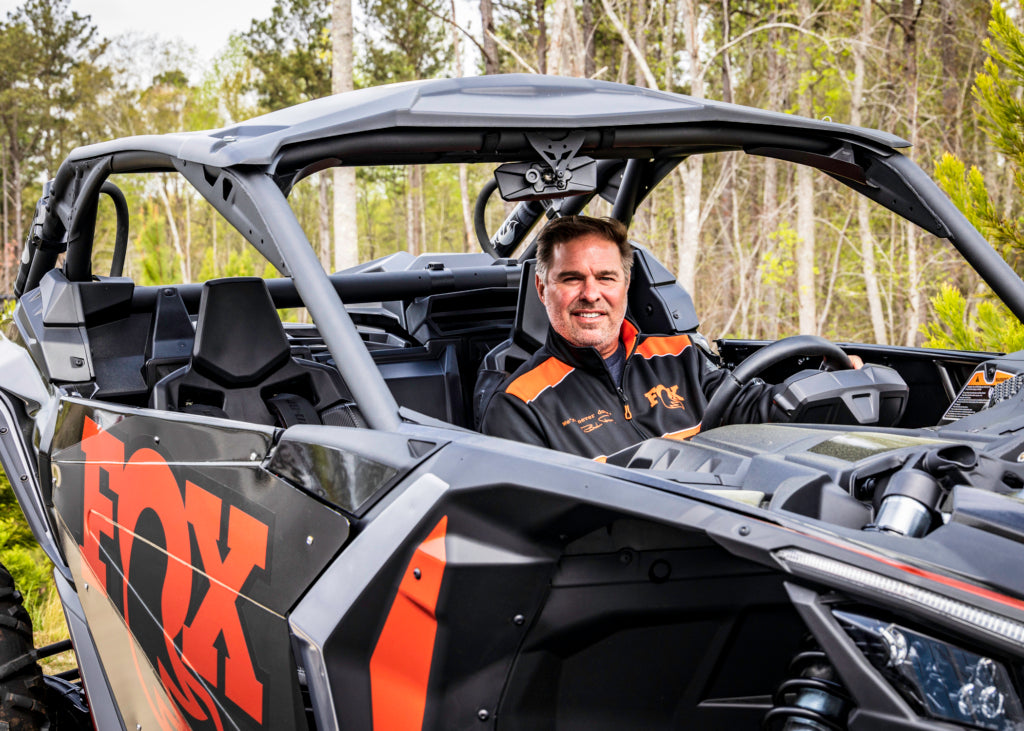
The long way from Oregon to the driver’s seat
Dennison earned a bachelor’s degree in liberal arts at Oregon State University in 1989. His professional route into suspension ran through electronics. Before Flex, he was a regional director at Arrow Electronics in New York. He joined Flex in 1999, eventually holding leadership jobs across procurement, global supply chains and consumer products. His résumé belongs to the business of making physical things reliably, with all the negotiations and coordination that entails.
At Flex, his responsibilities included the Mobile and Consumer Segment and the High-Velocity Solutions business. He became president of the Consumer Technologies Group and later president and chief marketing officer. Printers, smartphones, audio equipment and wearables were part of the manufacturing world he inhabited. A bicycle fork might seem a considerable distance from a smartphone. Suppliers, production schedules and customer expectations provide a useful connecting road.
His appearance on the Fashion Tech Forum’s speaker roster captures another side of that period. Dennison was working where consumer brands met engineering and manufacturing, including industries outside conventional electronics. In 2018, he also spoke for a Flex augmented-reality reference platform intended to help companies build devices without having to assemble every piece of the necessary expertise themselves. Turning an idea into something repeatable was already familiar territory.
Fox first invited him into its boardroom in February 2018. Then-CEO Larry Enterline described him as an avid user of the company’s products alongside his experience in global supply chains. In August, Dennison took an operating role as president of the Powered Vehicles Group. He had moved from overseeing the company to helping run one of its principal businesses, before taking the chief executive’s chair the following June.
Joins Flex
Fox director, then powered vehicles president
Becomes Fox CEO
CEO transition announced
A brand people already believed in
Dennison inherited a company with a substantial history of expansion. Under Enterline, annual revenue had risen from $272.7 million in 2013 to $619.2 million in 2018. Fox had become publicly traded in 2013. Its suspension business served both vehicle manufacturers and customers buying aftermarket upgrades, giving it a place in factory production programs as well as in the garages of enthusiasts.
The succession was arranged with continuity in mind. Enterline became executive chairman when Dennison took over on June 29, 2019. Two years later, Dennison publicly credited his predecessor’s mentorship as Fox approached its first billion-dollar revenue year. It is a useful corrective to the solitary-CEO version of business history: the new leader had an established business, a predecessor still involved and a foundation laid over many years.
The customer connection was unusually tangible. Dennison described encountering people at races who had tattooed the Fox logo onto their bodies. Most manufacturers must settle for a repeat order. That kind of affection carried commercial weight, but it also set expectations for the equipment. A suspension brand earns its place through what happens when the wheels meet the ground, and its customers have ample opportunity to notice.
The factory behind the feeling
The manufacturing work supplied the less glamorous half of the story. Fox opened a 350,000-square-foot facility in Gainesville, Georgia, in 2020. Dennison explained the location choice in terms of industrial growth, proximity to powered-vehicle customers and the opportunity to build a factory around a modern supply chain. Within its first two months, he reported productivity more than 25 percent above the West Coast operation.
Those were concrete claims about how a building worked. His description of the Georgia production flow placed machining, anodizing, assembly, packaging and shipping in sequence. Previously, moving parts around to complete the process had become unwieldy. His assessment of the old arrangement was refreshingly compact: “It was a mess.” A liberal-arts graduate with years in electronics was now discussing the route a shock absorber took through a factory.
Machine→02
Anodize→03
Assemble→04
Ship
The revenue figures show how much larger the operation became. Fox recorded $751 million in sales in 2019, $890.6 million in 2020 and $1.299 billion in 2021. In 2022, sales reached $1.6025 billion. Acquisitions formed part of that expansion, alongside the company’s existing businesses. These are company results, produced by thousands of people; they also establish the scale of the organization Dennison was responsible for leading.
He spoke about the workforce as something built over time. “You have to rely on the culture you created,” he said in 2021. In a 2022 company discussion about sustainability, he connected environmental and social commitments to the demands of an expanding organization. That discussion placed customers, employees and business partners within the same field of responsibility. Fox’s Trail Trust program, launched in 2021, supported trails, responsible recreation and wider access to outdoor activity.
When the portfolio picked up a baseball bat
In November 2023, Fox agreed to acquire Wheelhouse Holdings, Marucci Sports’ parent, at an enterprise value of $572 million. Marucci made baseball and softball equipment, extending the portfolio beyond the suspension and vehicle businesses. Fox presented the acquisition as a way to combine performance brands, diversify the business and reach more enthusiasts. The announced purchase was to be financed through additional borrowing.
The plan had a recognizable sporting logic: equipment chosen by accomplished athletes can attract customers who want to use what the professionals use. Fox already operated in that world. Moving into bats, gloves and other baseball products extended the idea into a different set of customers and manufacturing requirements. Dennison’s responsibility now included making the financial case work across a broader collection of businesses.
Marucci did achieve a visible milestone during Fox’s ownership: Marucci and Victus became the Official Bats of Major League Baseball in 2025. When founder Kurt Ainsworth later led the business back into private ownership, he thanked Dennison and the Fox team for their partnership in reaching that goal. The sporting achievement and the investment result belong side by side. A stronger platform for a brand can coexist with disappointing returns for its owner.
On September 25, 2026, Fox completed the sale at an enterprise value of $225 million. The consideration included $200 million in cash and a $25 million note. All the cash received at closing went toward debt reduction. The difference between the two headline enterprise values was $347 million, although that subtraction alone is not a complete accounting of the investment’s cost or proceeds.
Dennison’s explanation was direct: “It did not deliver the returns we expected inside Fox.” He described a renewed focus on reducing debt, investing in performance products and applying a high return threshold to capital investments. The sale reversed an expansion decision while preserving Marucci as an operating business under a group led by its own management. Corporate ambition had met an uncooperative set of numbers.
A place where cameras meet suspension
His other board work followed the territory between consumer products and outdoor enthusiasm. Dennison became chairman of K&N Filters’ board in 2024. He served on Solo Brands’ board from May 2022 to March 2026. In June 2025, he joined GoPro’s board, adding a camera company whose products often accompany the same kinds of activities Fox equipment makes possible.
GoPro founder Nicholas Woodman welcomed his manufacturing, product and brand experience. Dennison, in turn, described an admiration for the way GoPro connected people with their interests through images and innovation. The appointment brought together two strands of his career: the electronics manufacturing background and the enthusiast businesses that followed. He had experience with both the object people bought and the activity that made them want it.
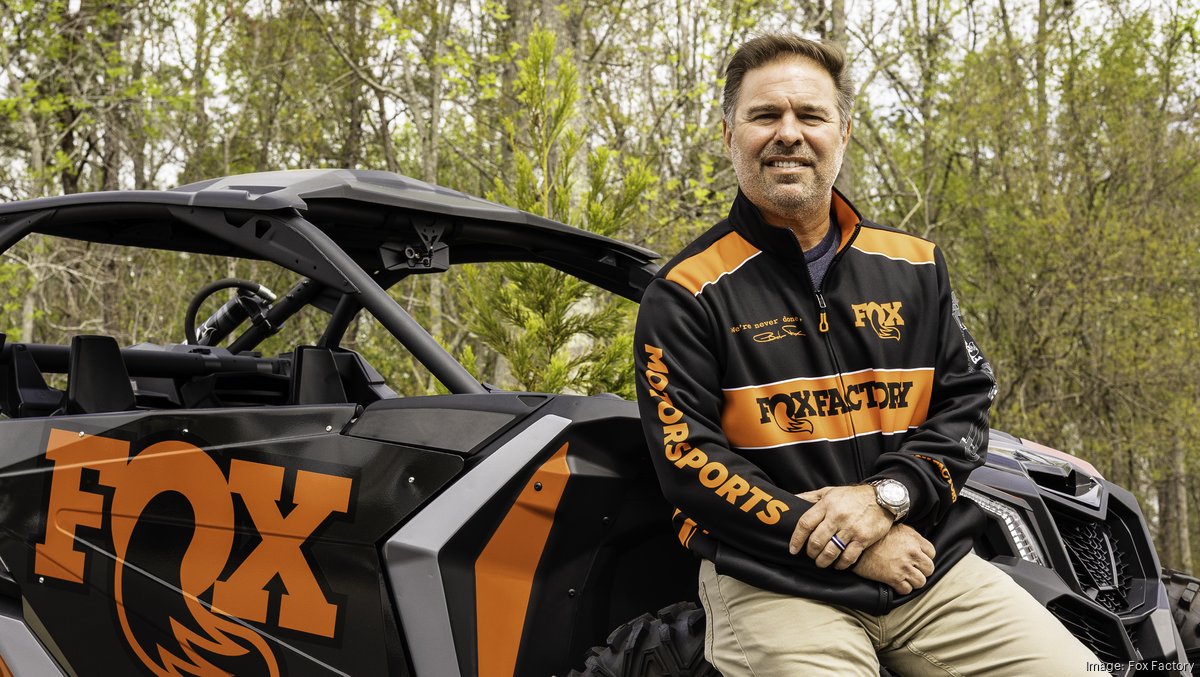
The handover, and the enthusiast who remains
October’s leadership announcement came with preliminary third-quarter sales of $336 million to $340 million, below the earlier forecast of $355 million to $380 million. Fox cited difficulties across several businesses, including Marucci before its sale, powered-vehicle supply disruption and problems in vehicle upfitting. These were preliminary, unaudited figures. The board appointed Grimm and began a search for a permanent chief executive.
Dennison resigned his board seat effective October 15. The filing said he would remain employed while transition arrangements were discussed. His public statement expressed pride in the team’s work and a willingness to support the handover. Chair Jean Hlay credited his contributions to engineering, innovation and the company’s brands. The ending was a leadership change at a business confronting specific operating and financial demands.
There is also a smaller, less corporate Dennison in his automotive podcast appearance: a reader recommending Keith Ferrazzi’s Never Eat Alone and Robert Edelstein’s Full Throttle, and an enthusiast who remembered that Dodge truck. Asked for parting advice, he offered a modest instruction.
“Spend more time giving than receiving.”
Mike Dennison · Cars Yeah
It is a useful final detail for someone whose public life is usually measured in sales, factories and transactions. The job ended. The interests that took him there began much earlier.