Consider the least theatrical part of a car: the seat. You sit down, adjust it, and forget it. Then, an hour into a journey, a small pressure in your lower back becomes the most interesting thing in the vehicle. The dashboard can offer a thousand settings. Your body has registered a complaint about one.
Adient works in that gap between what a car promises and what a passenger feels. It designs and manufactures complete seating systems and the structures, mechanisms, foam and trim inside them. Its customer is the automaker. The person quietly grading its work is you.
- Seats and components for automakers, from foam to finished systems.
- Comfort engineering meets just-in-time manufacturing.
- New assembly ideas face an old constraint: vehicle demand.
There is another judge: the assembly line. Adient says its just-in-time manufacturing can move from an original order to final delivery in as little as 90 minutes. That is a qualified claim, not a promise for every plant. Still, it changes how you think about the object. A seat has to arrive with its engineering solved and its timing intact.
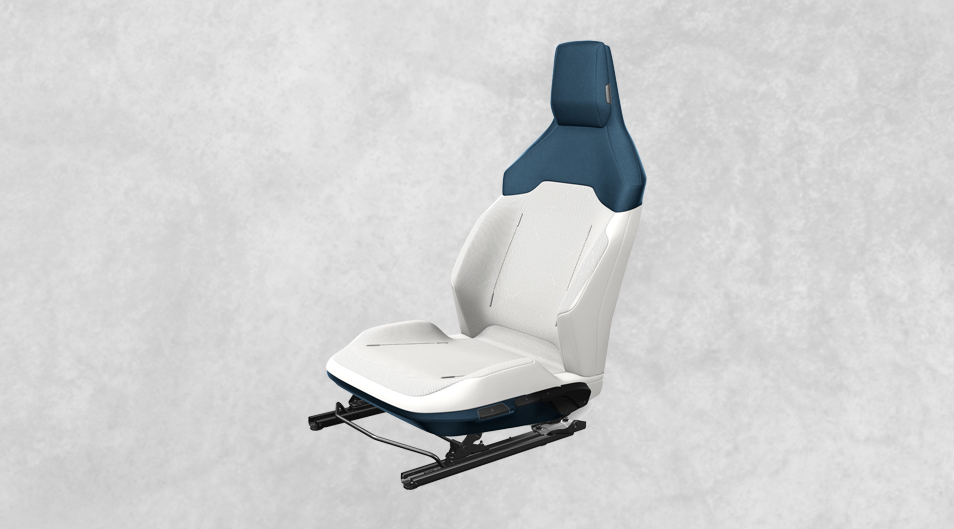
Comfort is a measurement problem
The company became independent when Johnson Controls separated its automotive seating business in October 2016. Its industrial memory is older. Johnson Controls entered seating through its 1985 acquisition of Hoover Universal; later acquisitions added mechanisms, metal structures and other capabilities. Adient inherited a collection of connected skills rather than starting with a single invention.
Its comfort process begins with research and agreed customer targets, moves through development, and ends with prototype evaluation. The Comfort Benchmarking Database combines subjective and objective measurements. This is the useful wrinkle: a human sensation becomes something engineers can compare, test and revise. Adient dates its first comfort laboratory to 1998.
For automakers, the attraction is the ability to develop a seat as a system. A cheaper foam formulation, a thinner structure or a different trim surface changes the finished experience. Adient can work across those interfaces. Its complete-seat offering spans lower-cost applications and luxury models, allowing manufacturers to distinguish cabins without independently coordinating every layer.
The clever part may be the assembly
A supplier competes on price, quality and dependable delivery as well as design. Adient faces Lear, Forvia, Toyota Boshoku, Magna and Yanfeng. Its argument is breadth: components, complete seats, engineering and manufacturing under one industrial roof. That does not make every proposal cheaper. It gives an automaker more of the work in one relationship.
In January 2026, Adient introduced ModuTec. The approach builds a seat module offline, then sequences it into the main just-in-time line. The company says that assembly step can shrink from minutes to seconds. The distinction matters: this describes a stage of assembly, not the total time required to manufacture a finished seat.
February brought Sculpted Soft Trim, a formed, breathable covering that reduces sewing. In one application, Adient says a single pattern replaces as many as twelve patterns and sew lines. A difficult concave surface becomes a tooling problem instead of a small sewing project. The company announced availability globally and planned vehicle production during 2026.
The lesson is portable. Before asking workers to repeat an awkward task faster, examine the design that makes the task awkward. Moving work away from a pressured line or removing a seam can matter as much as adding machinery. The benefit depends on the application, tooling and production volume; a process announcement alone does not establish savings for every customer.
Offline
To vehicle order
Main JIT line
Minutes → seconds
Adient’s claim for the module assembly step, not total seat production.“ModuTec will fundamentally change how seats are made going forward.”Griffin Brown · Adient · January 2026
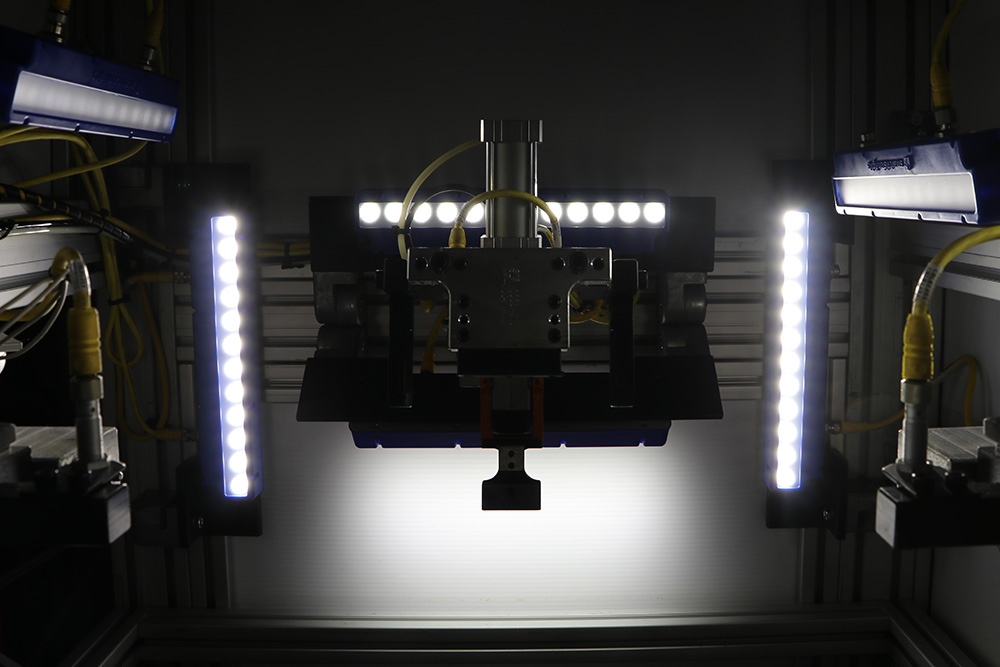
When reclining changes the rules
Comfort also creates fresh constraints. Deeply reclined seats alter the relationship between a passenger and conventional restraints. In October 2025, Adient and Autoliv announced a jointly developed response: Adient’s Z-Guard seating concept combined with Autoliv safety technologies, described by the partners as ready for mass production.
The package includes a cushion-collapse mechanism intended to absorb energy and adjust posture during a collision, plus an adjustable belt outlet. It is a revealing partnership. Selling a more relaxed seating position requires engineering the consequences of that position. The desirable feature and its safety problem arrive together.
At the more indulgent end, StepJoy made its announced debut on NIO’s ES9 in April 2026. Two synchronized cam modules massage the forefoot and arch; the unit stows into the seatback and can serve as a footrest. The humble seat now has a department for feet. Adient’s business is selling these systems to vehicle manufacturers, so consumers encounter them through the cars they choose.
Factories do not get to ignore demand
The operating model has a less comfortable side. In fiscal 2025, Adient recorded $14.535 billion in sales and a $281 million net loss attributable to the company. A $333 million noncash goodwill impairment in its Europe, Middle East and Africa business was a major factor. That accounting charge should not be mistaken for cash spent on a new product.
European production weakness exposed the mismatch between demand and the existing cost base. Adient’s 2025 restructuring plan carried $58 million in charges before offsets, primarily for European termination benefits. Here, the documented change in direction was a response to market conditions. Better seats cannot by themselves fill an underused factory.
Other moves point toward tighter control and local access. Adient bought Woodbridge’s Romulus, Michigan foam plant in April 2026, retaining the UAW agreement. It also announced a 49% stake in SCI in December 2025 to serve Chinese automakers. These are specific ways to bring production capability or market knowledge closer to the customer.
A large sales base does not guarantee a profit.
Start with what the passenger never sees
Sustainability adds another design brief. Adient uses its ES³ development approach and a product carbon-footprint tool to evaluate materials and manufacturing choices early. Its stated targets include renewable electricity at manufacturing sites by 2035. Such targets describe intended progress; they are not evidence that every seat is already circular.
The latest reported quarter available at this writing offers a modestly brighter operating picture: Adient reported $25 million in GAAP net income for fiscal Q3 2026. Full-year fiscal 2026 results are scheduled for November 4. Until then, the interesting question remains practical: can simpler products and processes earn their keep when customers build fewer vehicles?
Next time you test a car, spend a little longer sitting still. Adjust the seat. Notice the support, the space behind it, the way the covering meets a curve. Adient’s work becomes easier to understand when you look closely at the things your body notices before your eyes do.
Take a closer look
Adient website ↗ · Products ↗ · Company news ↗ · Investor updates ↗