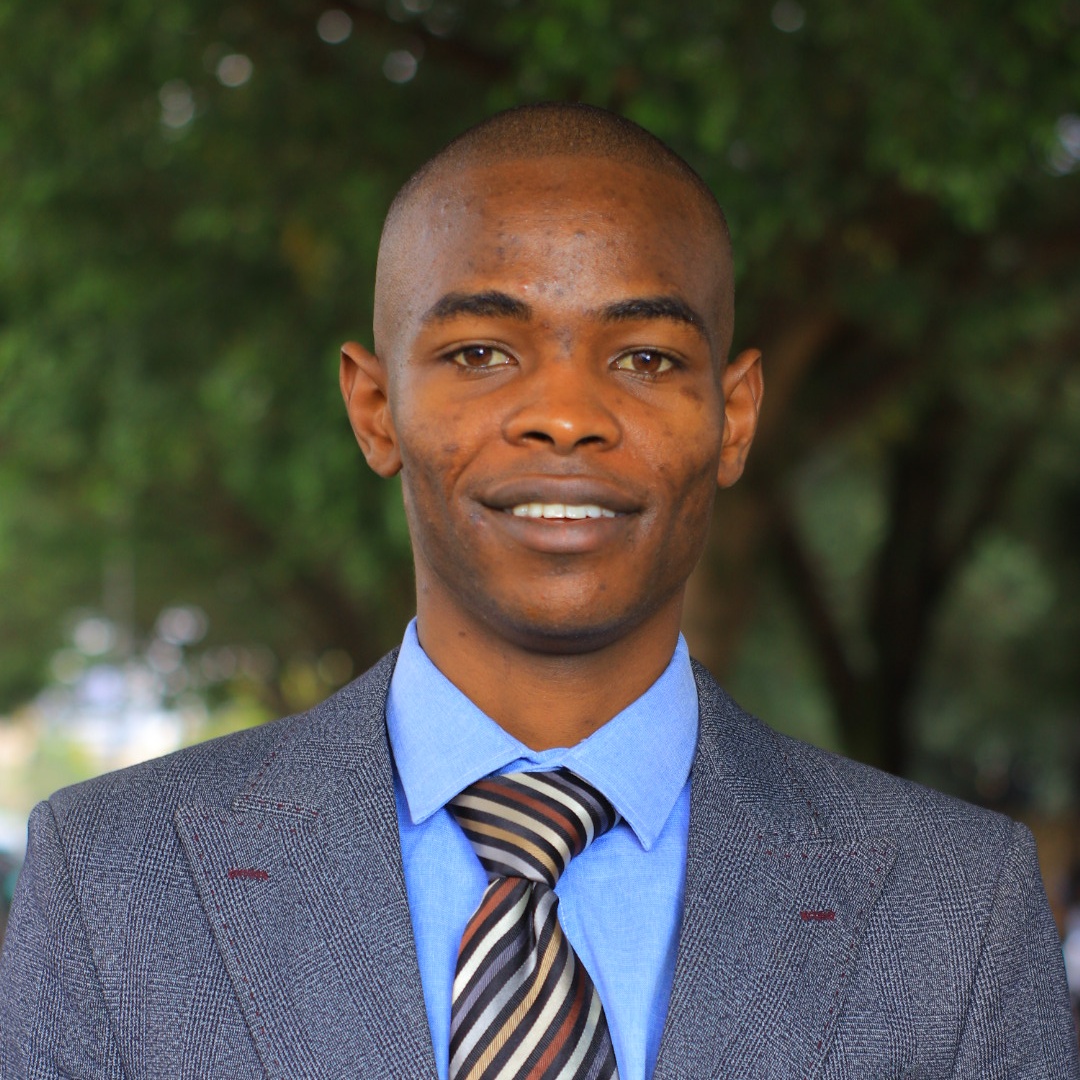
Before he was forecasting market volatility, Munene Ndegwa was walking three kilometers to find a phone signal. He grew up in rural Kenya without electricity or internet. Later came an engineering education, a business called Emen Engineering, and a discovery that made him suspicious: WorldQuant University offered advanced technical education for free. In an October 2026 university spotlight, he described what changed his mind: the practical coursework. He completed its Computer Vision Lab, then its Data Science Lab, and enrolled in financial engineering.
- Students pay no tuition or program fees. Foundation support pays for the education.
- The work remains substantial. The financial engineering master’s asks for 20-25 hours a week over two years.
- There are several entry points. Applied labs sit alongside graduate certificates and two master’s degrees.
Ndegwa’s experience exposes a peculiar problem for an educational institution: a price of zero can make a serious offering look disposable. The learner has to discover that the thing being given away still requires effort. WQU’s wager is that removing the bill will let more capable people make that discovery.
A university built around a missing invoice
Igor Tulchinsky founded WQU in 2015. While building the investment firm WorldQuant, he had encountered an imbalance: quantitative ability was scattered around the world; access to advanced quantitative education was concentrated in expensive institutions. His compact diagnosis became the university’s motto: “Talent is global, opportunity is not.” The first students enrolled in January 2016.
WQU is a nonprofit university, legally and operationally separate from WorldQuant LLC. The WorldQuant Foundation funds it. Students are not signing an income-share agreement or borrowing against a future salary. Nor is enrollment a recruitment pipeline into the investment firm. The institution removes an expense, rather than deferring its collection.
Someone still pays. The university’s fiscal 2025 filing reports $4.97 million in revenue and $4.60 million in expenses; contributions accounted for 99.5% of revenue. Those figures describe institutional finances, rather than a per-student price. They also explain the model’s dependency: keeping education free requires continuing support from people and organizations willing to fund it.
The free part ends at your calendar
The financial engineering master’s combines mathematics, statistics, programming, and finance. Its nine sequential courses lead to a capstone. Applicants need a bachelor’s degree, English proficiency, and at least 75% on a quantitative entrance test. This is a substantial commitment for someone already working. Moving the classroom onto a laptop does not create another evening in the week.
The shorter Data Science Lab offers a more bounded experiment. Its eight projects take learners through data preparation, modeling, and deployment. Recommended study lasts 16 weeks, at 10-15 hours weekly. Beginner Python and basic statistics are prerequisites. The problems travel: property prices in Mexico and Argentina, air quality in Nairobi, earthquake damage in Nepal. Students practice turning untidy observations into usable decisions.
Other labs move toward neural networks and visual data. Deep Learning Fundamentals uses PyTorch in cloud-hosted virtual machines. Computer Vision covers six projects, including model training and transfer learning. These environments matter: a learner can have the curiosity to train a model without owning the hardware to do it comfortably. Ndegwa specifically valued access to a GPU and datasets.
“Talent is global, opportunity is not.”
Igor Tulchinsky, founder
The part a free course cannot supply
Consider one early adjustment. In November 2017, WQU announced a redesigned website that loaded five times faster, explicitly helping visitors with slower connections. There is no need to invent a spectacular failure to appreciate the constraint. A university promising geographic access still has to reach someone’s device. The speed of a webpage becomes an educational decision.
In Douala, Cameroon, that logic became more physical. Sazience Technology launched an academy with WQU in October 2025. Five initial participants received laptops, workspaces, stipends, and mentoring while studying data science and contributing to client projects. Their supervisor, Joshua Nji, had completed WQU’s financial engineering degree in 2022.
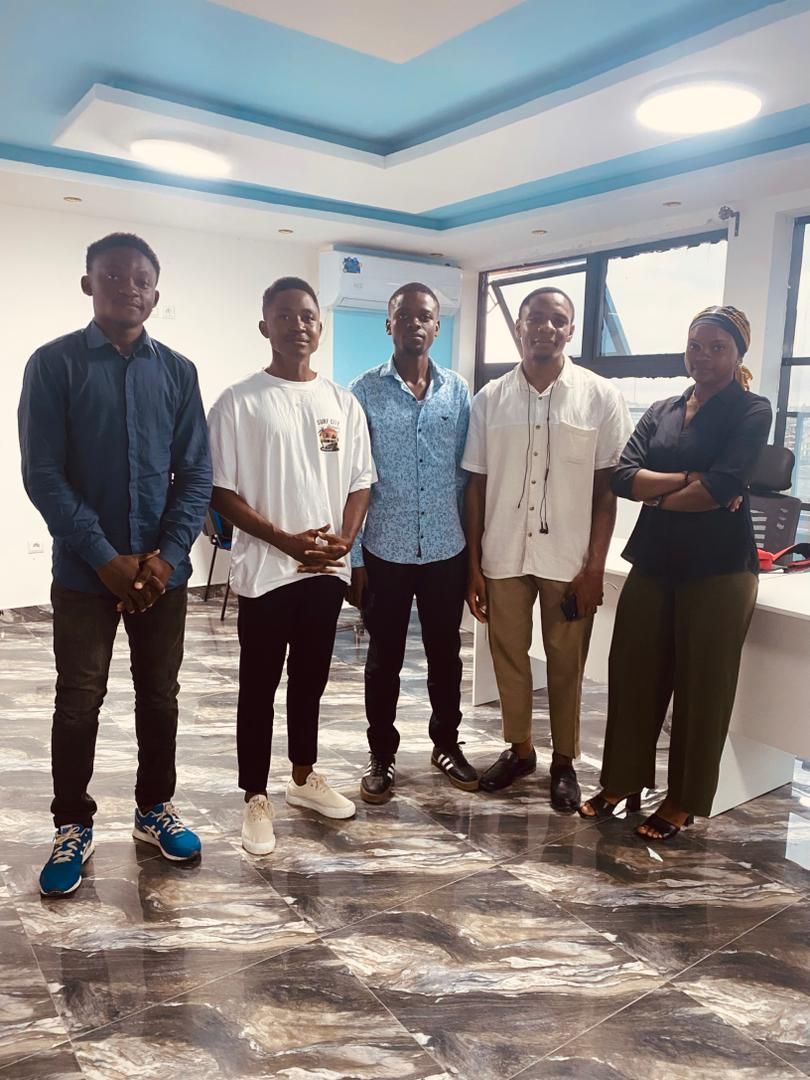
This is a practical pattern others can copy: combine shared online instruction with local help for the costs instruction does not cover. A free course cannot replace a laptop, a dependable connection, or income forgone while studying. A small employer partnership can address some of those gaps. It is a more useful lesson than assuming a lower price solves every access problem.
For employers, the attraction is similarly concrete. WQU’s partnerships program offers ways to develop existing staff and connect with graduates. The academic expertise is in quantitative methods and applied technical work; the partnership supplies a setting where those skills can be used. That division of labor matters. Watching an explanation of a model, building one, and explaining its limits to a colleague are different tasks. The curriculum’s projects, peer reviews, and group assignments make room for more than the first.
From pricing risk to deciding what AI should do
On October 13, 2026, WQU announced its second degree, the MSc in Strategic AI and Innovation. Its 30 credits span ten courses, with the first five forming the Applied AI Fundamentals graduate certificate. The intended audience extends to policymakers, strategists, and operations leaders. Prior AI or coding experience is not required; the emphasis is applying AI to decisions, governance, and interconnected risks.
That expansion places WQU between several familiar alternatives: university graduate programs, commercial course subscriptions, and intensive bootcamps. Its distinction is the combination of tuition-free study and an accredited institution, with both technical and decision-oriented pathways. WQU received initial DEAC accreditation in 2021 and a five-year renewal in 2024. Recognition abroad still depends on local authorities and employers; prospective students should check before committing.
Growth introduces another test. In July 2026, WQU launched Horizon 2036, its first fundraising campaign, to expand programs, learner support, and access. The useful question is whether the resources surrounding instruction can grow with enrollment. For a prospective learner, the immediate decision is smaller: choose a program that fits your preparation, protect the hours it requires, and complete the work. The tuition bill has disappeared. The calendar has not.
Find your next classroom
Visit WQU · Admissions & practical questions · News & student stories · Strategic AI master’s
LinkedIn · Twitter / X · Instagram · Facebook · Watch WQU on YouTube · Photo stories