He once watched a robot reach for a hammer to crack a nut, then calmly pick a different tool when the hammer vanished. That flicker of common sense is now driving 40-ton trucks.
A shipping yard at dusk is a brawl. Trailers swing, drivers improvise, nothing follows the manual. Yibiao Zhao decided that was the perfect place to prove a machine could have street smarts.
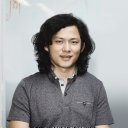
Zhao is the co-founder and CEO of ISEE, the Cambridge company that turns ordinary yard trucks into self-driving ones - and claims to be the first and only outfit running fully autonomous operations in the logistics-yard chaos.
The bet underneath the company is contrarian. While most of the self-driving world poured billions into pattern recognition - feed the model enough miles and it learns the road - Zhao argued that miles aren't the point. The point is the people. A driver edging forward at a four-way stop is making a guess about your intentions. ISEE's AI is built to make that same guess.
It works. ISEE has logged more than 10,000 fully autonomous trailer moves at customer sites, signed Maersk and Lazer Spot, and raised $40 million from Peter Thiel's Founders Fund. Not bad for an idea that started as a robot fumbling with a hammer.
When we see something for just a few seconds as we're driving, we can quickly deduce the intention of the driver in front of us. We want cars to have this same predictive capability.
- Yibiao Zhao, MIT Technology ReviewZhao earned his PhD in computer vision at UCLA between 2011 and 2015, then went to MIT for a postdoc under Joshua Tenenbaum, who runs the Computational Cognitive Science Group and is one of the most cited minds in the field.
Tenenbaum's lab asks an unfashionable question: not how to make machines see, but how to make them understand. Zhao's research lived there - "engineering common sense for visual understanding and cognitive robots," as his bio puts it. He taught machines about the properties of tools, worked on a DARPA project to build robots that could read soldiers' intentions on a battlefield, and chased the slippery idea that intelligence is mostly about imagining what hasn't happened yet.
In 2017 he stopped writing papers about it. With Debbie Yu and Chris Baker, Zhao spun ISEE out of MIT to build, in his words, the first AI that understands the physics, psychology, and causality of complex situations. The founding trio bet on theory of mind - the human knack for inferring what someone else believes and wants - as the missing piece of autonomy.
The first prototypes proved themselves on Boston's congested, rule-bending streets. ISEE says it became the first autonomous company to merge onto a highway in heavy snow. Impressive, but open roads are a hard place to make money. By 2018 the team had bolted its system onto a yard truck and a semi, and the company found its lane: the repetitive, fenced-in, surprisingly tricky world of logistics yards.
Finishes PhD in computer vision at UCLA.
Postdoc at MIT with Joshua Tenenbaum, building cognitive robots.
Co-founds ISEE with Debbie Yu and Chris Baker; MIT Tech Review profiles his "machine imagination."
Outfits first yard truck and semi-truck; pivots to logistics.
Speaks at MIT Tech Review's EmTech Digital on warehouse automation.
Raises $40M Series B led by Founders Fund; passes 10,000 autonomous moves.
Debuts AI-powered trailer auto-coupling for autonomous yard trucks.
Instead of memorizing routes, ISEE's AI builds a model of the other agents in the yard and predicts what they'll do next - the same inference humans run automatically.
Merging, yielding, and squeezing past a parked trailer are negotiations. Zhao's stack treats them as such, weighing intentions and risk in real time.
Cognitive structure does the reasoning; deep learning supplies the perception. The combination is what Zhao calls "humanistic" AI.
ISEE says it can start live loads in roughly four weeks with no infrastructure changes and no disruption to operations - a salesman's dream in a skeptical industry.
Backers and customers include Maersk, the world's largest shipping company, and Lazer Spot, the biggest yard operator of distribution centers in North America.
ISEE bills itself as the first and only company to achieve fully autonomous operations in the logistics-yard space - the messy proving ground Zhao chose on purpose.
The name ISEE is a quiet pun on perception - "I see" - the exact problem Zhao spent a decade trying to solve.
His most-cited paper, on multi-agent trajectory prediction, has been referenced more than 600 times - the academic seed of ISEE's "predict the others" approach.
Before trucks, his robots cracked nuts. The famous demo: a robot picks a hammer, then a substitute tool when the hammer is taken away.
He once worked on a DARPA project to build robots that could understand soldiers' intentions on the battlefield.
His postdoc advisor, Joshua Tenenbaum, is a towering figure in computational cognitive science - the intellectual lineage behind ISEE's thesis.
ISEE reported revenue growth of more than 20x in the year before its Series B.
A future where autonomous machines can thrive alongside people, seamlessly and safely, freeing us to do what we do best.
- ISEE's mission, in Zhao's framing