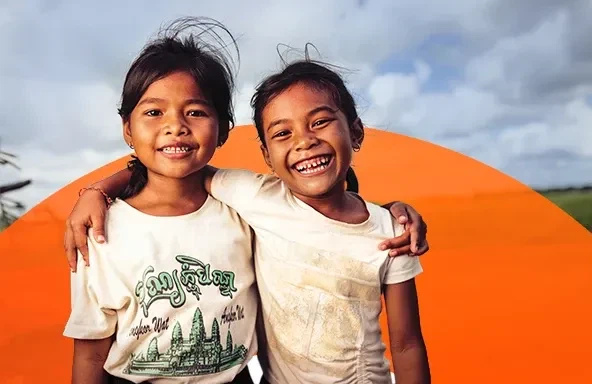
The most important thing to understand about World Vision Canada is also the thing most likely to surprise a donor: sponsoring a child does not mean your $49 monthly payment lands in that child’s household. The money is combined with other gifts and invested around the child - in a well, a reading club, a trained health worker, a savings group, a child-protection committee. The photograph is personal. The delivery system is communal.
That can feel like a bait-and-switch if nobody explains it. In 2022, a Canadian couple told CityNews they felt misled after learning that a child they had sponsored in Sri Lanka had never received their contributions directly. World Vision confirmed the money went to community programs. The couple’s blunt suggestion was that it should be called “sponsor a community.” Their complaint found the seam in the whole model: the promise that recruits the donor is simpler than the work that helps the child.
And yet the seam is also where the leverage lives. Handing money to one family may change that family’s options. Repairing a water point or training teachers changes the environment shared by many children. World Vision says that for every sponsored child, four more benefit. It reported 251,215 sponsored children in 136 communities in fiscal 2025. The organization’s wager is that donors need a face, while durable development needs a system.
A charity with five operating systems
World Vision Canada is a Christian relief, development and advocacy organization based in Mississauga. It grew from the World Vision movement founded by American evangelist Bob Pierce in 1950; the Canadian office opened in Toronto in 1957. Today it works through a federation with local offices and partners across nearly 100 countries. Faith supplies the mission and a large portion of its Canadian distribution network through churches. The organization says it serves people regardless of religion, creed or culture.
Its work divides into five practical systems: livelihoods; health and nutrition; education; child protection and participation; and water, sanitation and hygiene. In a stable community those systems overlap. A girl is more likely to stay in school if a nearby tap saves hours of water collection. Her health improves with sanitation. Her family’s savings group makes school fees less precarious. A local protection committee may delay early marriage. The product is not any one intervention. It is the compounding effect.
When conditions collapse, the same network switches modes. World Vision coordinates food, shelter, water, health and child-safe spaces during war, displacement and natural disasters, then tries to connect relief to recovery. In fiscal 2025, 31 percent of its resources went to fragile countries. The latest public work in Chad describes a 17-month response that combined water, sanitation, shelter and protection in a refugee camp. This is the organization’s market position: broader than a sponsorship charity, more operational than an advocacy group and more patient than an emergency appeal.
The business model is a portfolio, not a collection plate
World Vision Canada’s fiscal 2025 revenue was CA$456.6 million. Cash donations contributed CA$183.9 million. Gifts-in-kind - physical goods such as food, hygiene kits, clothing, medical supplies and educational materials - were valued at CA$192.6 million, more than cash donations. Grants added CA$78.1 million. The remaining CA$2.1 million came from investment and other income.
That mix matters. Sponsors supply predictable monthly revenue. Public grants support larger multi-year programs. Companies donate inventory, fund causes and engage employees. Churches bring congregations, volunteers and credibility inside a faith community. Planned gifts turn estate decisions into patient capital. The Gift Catalogue translates abstract needs into objects - CA$120 for goats, CA$50 for hens and roosters - while explaining that listed costs are averages and delivery includes the less photogenic part, such as animal-care training.
The five-year expenditure average is 85 percent for field programs and advocacy, 10 percent for raising more resources and 5 percent for support and accountability. Those labels are cleaner than the underlying operations, but they show the bargain: scale requires fundraising and controls, not only frontline delivery. Charity Intelligence’s 2025 list gave World Vision Canada a high demonstrated-impact rating and an A+ for results reporting. Trust is not ornamental here. It is a production input.
“The best way to actually change a child’s life is to change the world that they live in.”Allison Alley, President and CEO
What failed first was the easy explanation
Traditional sponsorship made a huge organization understandable: here is a child, here is a monthly amount, here are letters and photographs. But the implied one-to-one money trail was always weaker than the development logic. Shared infrastructure cannot be divided into tiny private wells. Selecting some families for cash while their neighbours watch can create stigma and distort community priorities. The operational answer was to pool the funds. The communication answer has taken longer.
World Vision now puts the mechanism in plainer language: your monthly gift is combined with others; it funds long-term solutions where the child lives; programs are locally led; a relationship commonly lasts 10 to 12 years. It also offers CHOSEN, a format in which children choose their sponsors. That reversal does not solve every criticism of sponsorship, but it changes who gets to stand in front of the wall of photographs and decide.
The organization has changed its measurement too. Counting wells, training sessions and nutrition packets is activity reporting. The harder question is whether waterborne illness falls, literacy rises or households become more resilient. Its Real Impact work, supported by a Microsoft data stack, is meant to connect program records, evidence and donor reporting. The interesting shift is from “we delivered a thing” to “the thing changed an outcome.” That is a better sentence, provided the data survives contact with hundreds of programs and inconsistent field conditions.
A useful test: if the donor-facing story sounds individual but the intervention is pooled, say so before checkout - not on page seven of the welcome pack.
The exit is the most convincing product feature
Most businesses dread churn. A development charity should manufacture the right kind. World Vision typically works with a community for at least 12 years and leaves when local systems can continue without sponsorship. In 2025, it reported that 18 communities graduated to self-sufficiency, four new communities opened and 11 were on track to graduate in 2026. That graduation number deserves more attention than a larger reach figure. Reach says the machine ran. Graduation says it may have worked.
The long horizon also separates World Vision from a one-off giving marketplace. A borehole without maintenance becomes a monument. Livestock without veterinary knowledge becomes an expensive lunch. A clinic without trained staff becomes a building. The organization’s expertise is not merely buying assets; it is surrounding assets with local capability, public institutions, advocacy and time.
That patience has limits. A 12-year partnership assumes access, community legitimacy, competent local partners, reliable measurement and enough predictable funding to outlast political shocks. It is a poor fit when authorities block humanitarian access, when conflict repeatedly displaces a population, when programs are designed from Mississauga instead of locally, or when donors expect their payment to reach one named household. It also competes with direct-cash models that offer recipients more discretion and with secular organizations for donors uncomfortable with explicit Christian identity.
What to copy
Give a complex system a human entry point. Pool resources where shared infrastructure creates leverage. Publish the cost structure. Measure outcomes. Define graduation before launch.
When it breaks
When the personal story implies a false money trail; when communities do not lead; when reporting stops at outputs; or when recurring funding cannot match the time horizon.
A machine disguised as a relationship
World Vision Canada’s closest alternatives range from Plan International Canada, Compassion Canada and Save the Children to UNICEF, CARE, War Child, World Renew and direct-cash charities. Its distinction is not that nobody else digs wells or protects children. It is the bundle: an explicitly Christian identity, a personal sponsorship interface, long-duration community development, emergency logistics, advocacy and a global network large enough to carry donated goods and government grants.
The 2025 results show what that bundle can do: 4.38 million people reached through livelihoods work, 4.28 million through health, 1.45 million through education, 2.36 million through child protection and participation, and 1.50 million through water and sanitation. These categories overlap, so they should not be added into one giant victory number. Their usefulness is directional. The organization is now spending most heavily on livelihoods because food assistance, cash, savings and income are the connective tissue between crisis and independence.
For a prospective donor, the practical choice is straightforward. Sponsor a child if the ongoing relationship and community updates will keep you committed. Use flexible monthly giving if you care more about allocation than correspondence. Pick a catalogue gift if a tangible item helps your family talk about giving. A company can bring inventory, employee participation or program funding; a church can build a longer partnership; an advocate can push policy without opening a wallet.
The lesson for everyone else is less sentimental. Human attention likes a protagonist. Social change needs a network. World Vision Canada has spent nearly seven decades trying to connect the two without letting the photograph misrepresent the plumbing. Its best evidence is not that a donor stayed forever. It is that a community eventually did not need the donor at all.