At Yellow Rose Painting, the financing conversation had become something to avoid. The Texas contractor’s previous application process was awkward, its rates frustrated customers, and salespeople stopped wanting to bring it up. A product intended to help close a sale had become another reason to hesitate. Then the company adopted financing through Builder Prime’s integration with Wisetack.
- Monthly payments appear inside the contractor’s existing workflow.
- The standard merchant fee is 3.9%; optional extended 0% plans cost more.
- Banks provide the loans. Wisetack connects financing to the job.
According to Builder Prime’s account, setup took two hours. Yellow Rose later reported 35% more contracts and a 26% sales increase from one quarter to the next in 2024. Those results cover a broader software change, so assigning every dollar to financing would be a stretch. The revealing detail is smaller: the sales team had a payment option it was willing to discuss again.
The payment plan has an address
Wisetack’s chosen address is the estimate. A plumber, roofer, or HVAC contractor can introduce monthly payments through the software already used to run the business. Customers receive a link, apply on their own phones, and review available offers. The company handles the financing technology; its lending partners supply the loans.
This is embedded finance with work boots on. Housecall Pro, Jobber, and Builder Prime are among the software platforms connected to Wisetack. Its current home-services page lists more than 30 integrations. A separate lender portal asks a busy contractor to remember another process. Putting the option into an estimate gives it a chance to become routine.
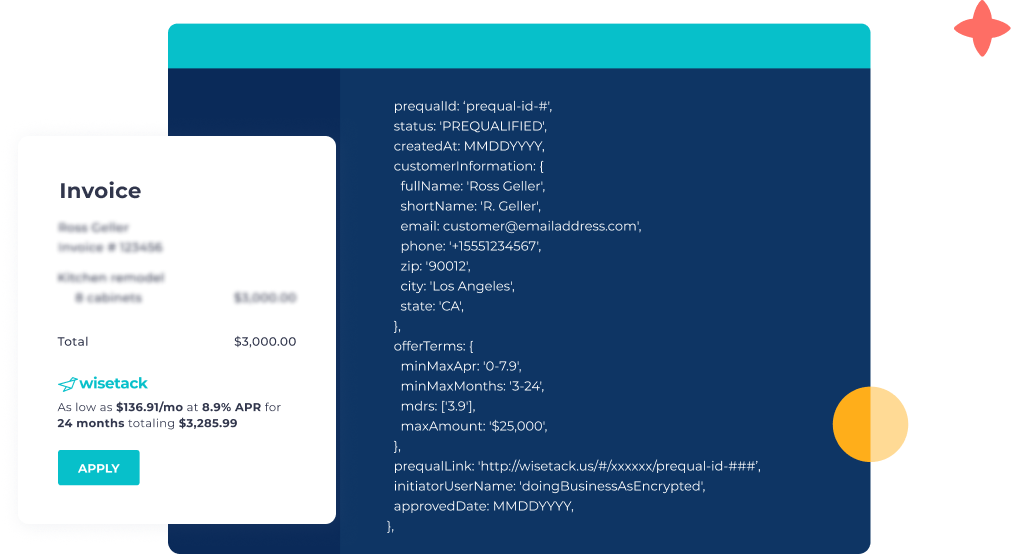
The customer base extends to auto repair, dentistry, elective medical care, and veterinary services. Home services remain central. In its April 2026 partnership announcement, LendingClub described a network of over 40,000 contractors. That is a distribution network built around businesses people call when something needs fixing.
Start with a $10,000 job
The standard published home-services merchant fee is 3.9%, without a setup charge or subscription. On a fully financed $10,000 job, that is $390. The contractor has to earn enough from the work to absorb that expense. Financing can help win a project; it also takes a measurable bite out of the proceeds.
Optional extended interest-free plans change the calculation. Arborgold’s integration documentation lists merchant fees of 4.9%, 6.9%, and 9.9% for qualifying six-, twelve-, and twenty-four-month 0% offers. These are alternative fee levels for selected promotional offers. The customer’s interest-free period has a price for the business.
Borrowers need to inspect their own numbers. Wisetack advertises offers from 0% to 35.9% APR, subject to credit approval and other conditions. A payment that fits this month’s budget can still produce a substantial total borrowing cost. Longer terms lower the monthly amount by spreading repayment across more time.
A bigger roof needs a bigger loan
In June 2026, Wisetack raised its maximum financing amount from $25,000 to $65,000 for qualified customers. It introduced seven- and ten-year terms starting at 9.9% APR for eligible borrowers. The standard merchant fee stayed at 3.9%. Actual offers vary by creditworthiness, merchant, lender, and transaction.
That expansion matters for roofing, remodeling, and other substantial projects. It also sharpens the responsibility of the sales conversation. A monthly figure should sit alongside the project price and financing terms. A homeowner choosing a larger scope needs to understand both the work and the debt.
- 01Quote the jobIntroduce payment choices
- 02Customer appliesReviews available offers
- 03Finish the workCustomer confirms completion
- 04Business gets paidCustomer repays over time
The people behind the plumbing
Wisetack began in 2018 with Bobby Tzekin, Kolya Klymenko, and Liz O’Donnell. Tzekin had worked at PayPal and LendingClub; Klymenko had co-founded Varo Money. Their experience lay in making money move and lending systems function. By late 2019, a team of fewer than ten people had processed its first fully automated loan.


The early funding totaled $19 million in 2019. A $45 million Series B followed in 2021, led by Insight Partners. Trinity Capital committed $25 million in growth capital in January 2025. Equity and growth capital support the company; lending relationships support the customer loans. Keeping those two kinds of money distinct explains much of the business.
U.S. Bank joined as a lending partner in January 2025. Group 1001 announced an agreement to purchase loans that September. Software partners can share revenue when merchants complete financed jobs. Wisetack therefore has several relationships to keep working: the customer, the contractor, the software provider, and the institutions supplying capital.
There is a practical competitive distinction here. Wisetack sells a connection between lending and the contractor’s daily tools. Businesses comparing providers should consider how often staff will actually offer the product, alongside the rate sheet. A lower fee on an option nobody remembers to mention has limited value. A convenient option with poor economics has a different problem.
The application that never arrived
There is an instructive snag behind this tidy experience. In Enigma’s merchant-verification case study, Wisetack’s credit operations team described applications failing to reach its review queue. Staff chased delays and repeated verification work. The first failure was basic visibility: applications could get stuck before underwriters could act.
“Those applications failed to reach our queue, preventing the team from taking action on them.”Katie Beach · Wisetack Credit Operations
Wisetack tested Enigma, changed its workflow, and eventually reduced three verification vendors to two. The case reports verification-cost savings above 60%. Manual review finished near its original rate, 43% versus 42%. The improvement was control over the queue and less duplicated work. An automation percentage alone would have missed the point.
The company’s published values put customers, speed, and ownership near the center of its culture. The verification example gives those words a concrete test: can a team see the problem, change the process, and tell whether the result is better? In financial software, the plumbing behind the screen is part of the product.
For another business, the useful move to copy is placement. Put a payment choice where the customer decides on the job, and track the applications that stall. Wisetack competes with home-improvement financing providers such as GreenSky and GoodLeap, while credit cards and personal loans remain alternatives. Its appeal depends on workflow fit, acceptable offers, and margins that cover the merchant fee. The quote still has to make sense.