Consider the peculiar predicament of a lawyer with a perfectly good argument and no idea where to find the case that supports it. The law exists. The decision has been written. Somewhere, a judge has already considered something similar. None of that helps if the answer is effectively lost. West Publishing made that gap between existence and usefulness its business.
- West collected court decisions, then built tools to connect them.
- Westlaw sells research access; KeyCite helps check what happened afterward.
- The durable asset is the editorial structure behind the search box.
A bookseller finds the missing delivery
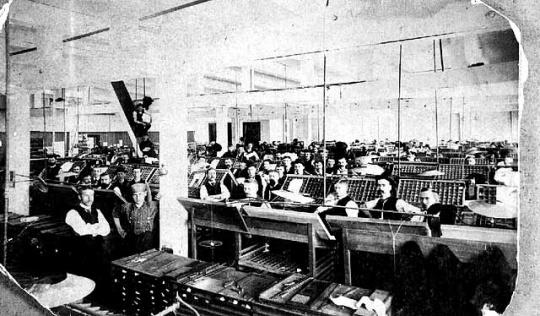
John B. West started his own law-book business in St. Paul in 1872. Four years later, with his brother Horatio as a partner, he began publishing The Syllabi, delivering Minnesota court opinions to lawyers. Expansion into Wisconsin brought a new name, the North Western Reporter. Regional reporting became the basis of a national network.
The opportunity began with a failure of distribution. Lawyers wanted decisions promptly; the available arrangements did not meet that need. West did something specific and repeatable: collect the opinions, publish them regularly, and put them into customers’ hands. The insight is familiar to anyone who has paid for an alert instead of checking a hundred websites.
The index becomes the invention
Collecting decisions created another problem: more decisions to search. In 1908, West introduced its Key Number System. Today, its guide describes more than 400 main topics and over 100,000 individual subdivisions. Attorney-editors identify legal issues in cases and connect headnotes to that classification. A researcher can follow a legal concept across cases whose wording differs.
Think of the difference between searching for a phrase and following an idea. A keyword search depends on the words someone used. A classification system gives related questions a common address. That is West’s distinctive contribution to research: the editorial connections between documents, alongside the documents themselves. The useful unit becomes the issue a lawyer needs to resolve.
- 01 Decision
- 02 Headnote
- 03 Key Number
- 04 Related cases
- 05 KeyCite check
Then the library got a keyboard
Westlaw arrived in 1975. The move into computerized research carried the publisher’s material into a different medium. Subsequent versions added natural-language searching, analytics and AI. The computer changed how a researcher entered the library; decades of editorial work helped determine what could be found inside.
Today, Westlaw combines case law, statutes, regulations and secondary materials with research tools. Law firms, corporate legal departments, courts, government agencies and law schools use it. Thomson Reuters says more than 50,000 law firms and legal departments rely on the platform. That figure describes Westlaw’s reach, rather than the size of a separately reporting West Publishing company.
The business model follows the work. Professionals subscribe to research access, with plans differing by coverage and features. Printed reporters and reference works belong to the same publishing lineage. LexisNexis offers a competing research environment with Shepard’s citation checking; Bloomberg Law combines legal research with analysis and news. Choosing among them involves the material a practice needs and how its lawyers actually research.

The expensive part was the map
Thomson’s approximately $3.4 billion acquisition of West in 1996 revealed the value of that position. It also drew antitrust scrutiny. The eventual settlement required 52 product divestitures and other remedies. The Justice Department worried about reduced competition in legal publications and online research.
Even page numbers mattered. West’s reporter pagination let lawyers identify passages precisely, and the settlement required open licensing on capped terms. A detail that looks like book production had become part of the profession’s navigation system. Anyone building a widely used information service should notice the implication: making yourself useful can also make your access rules consequential.
“The legal industry is moving beyond AI that simply generates answers.”
Raghu Ramanathan · Thomson Reuters · August 2026
An answer needs a history
KeyCite, introduced in 1997, addresses a problem that survives every improvement in search: a relevant case may have been overruled or undermined. It lets researchers inspect subsequent treatment and citing references. Finding a useful passage begins the inquiry. Reading what later courts did with it can change the argument.
For a user, the practical sequence is straightforward: find an authority, read the opinion, follow relevant headnotes into related cases, and examine subsequent treatment. Headnotes provide editorial guidance; the court’s actual reasoning still matters. This method is useful when the same issue appears in unfamiliar language. It offers less help when the underlying question, jurisdiction or facts have been framed incorrectly.
The book and the answer part company
In August 2026, Thomson Reuters announced Westlaw Brief Builder within its next generation of CoCounsel Legal. Drawing on Westlaw Deep Research, KeyCite and Practical Law, the feature is intended to carry research into first-draft briefs. The publisher’s route through legal material now extends toward producing work from it.
That promise needs careful handling. A 2024 study found errors in earlier commercial AI research tools, including Westlaw AI-Assisted Research. Those findings do not measure the 2026 release, but they explain why verification remains part of the job. A fluent answer does not settle whether an authority supports the proposition attached to it.
October 2026 made the business distinction unusually clear. Thomson Reuters completed the sale of 51% of Global Print to KKR-advised accounts. The resulting business, Westbridge Print, distributes licensed content in print and on ProView. Thomson Reuters retained intellectual property rights and editorial control. The company that inherited West could separate the publishing machinery from the material and judgment that make it valuable.
There is a lesson here a smaller business can copy: watch where customers repeatedly lose time, then connect the next useful step. West began by getting decisions to lawyers. Its lasting contribution was making those decisions easier to navigate, compare and check. The medium keeps changing. The customer still needs to know where to go next.