A person with diabetes may see a clinician four times a year. The disease, inconsiderately, keeps operating on the other 361 days. Meals happen. Glucose rises. Medication gets skipped. Sleep goes sideways. A blood-pressure cuff produces a number that lands in one app while a continuous glucose monitor sends another stream somewhere else. Welldoc built its company around this annoying gap between care as scheduled and health as lived.
The Columbia, Maryland company turns those fragments into coaching for patients and reports for care teams. Its software collects readings from glucose monitors, blood-pressure cuffs, scales, fitness trackers, medication records and patient entries. It then looks for patterns and returns context at the moment a decision is being made. The visible product is a mobile app. The harder product is the regulated, clinical and integration machinery underneath it.
That distinction explains Welldoc's 20-year evolution. It began in 2005 with diabetes, a condition expensive enough to command attention and measurable enough to test. BlueStar, its best-known product, became one of the early mobile health systems to pass a randomized trial and receive FDA clearance. Today Welldoc sells a broader cardiometabolic platform through health plans, employers, health systems, life-sciences companies and device makers. It is less an app company now than a supplier of chronic-care intelligence.
The origin was frustration, not futurism
Welldoc's founding story starts with endocrinologist Suzanne Sysko Clough, who was frustrated by the limitations of episodic diabetes management. She co-founded the company with Ryan Sysko and Yves Nordmann. The premise was practical: give people feedback when they log a glucose reading, not months later when a clinician finally sees the pattern.
In 2010, Welldoc received an early FDA clearance for diabetes-management software. Later versions added prescription-only insulin-management features, including a bolus calculator. BlueStar could capture and transmit glucose data, support medication adherence, send coaching based on readings and produce an electronic report for a healthcare professional. The software did not replace diagnosis or treatment. It made the hours between appointments more legible.
“I'm not treating numbers. I'm treating people.”Mansur Shomali, Welldoc chief medical officer
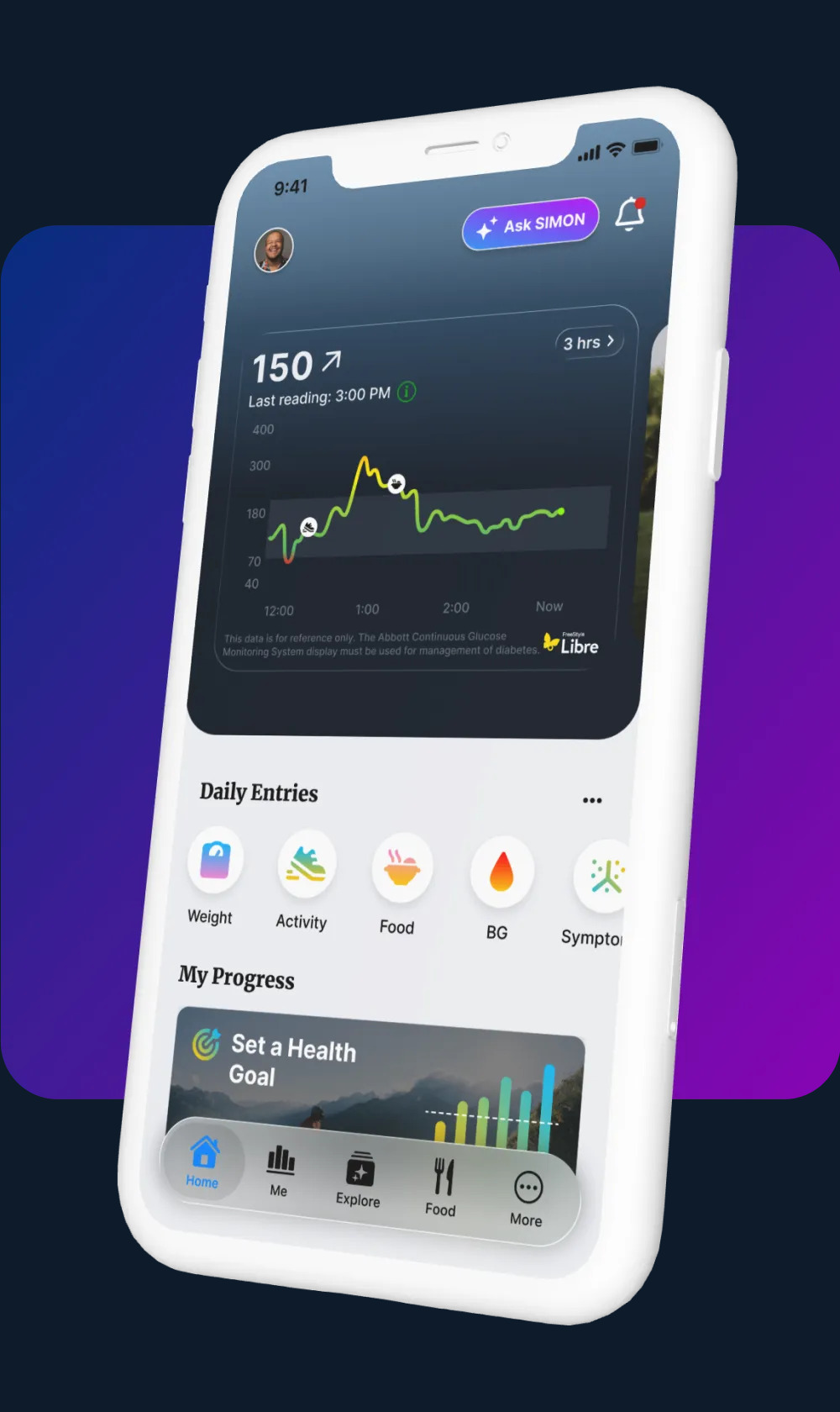
The line is a tidy description of the product's job. A reading of 150 is not a story. Pair it with lunch, a missed dose, a poor night of sleep and yesterday's activity, and it starts to become one. Welldoc's defensibility comes from making those connections inside clinical and regulatory boundaries - a less cinematic advantage than a clever chatbot, but a more durable one.
What failed first: the invitation
The revealing mistake was not a bad algorithm. It was assuming access would create use. In implementation research presented in 2018, one health-plan rollout invited identified members by email and saw lower engagement when the outreach arrived without promotion. Clinician- and diabetes-educator-led programs created a different experience: someone introduced the app, helped configure medications and explained how the data would return to the care team.
That is a crucial digital-health lesson. Onboarding is not a growth hack attached to the intervention. It is part of the intervention. If a patient does not understand who invited them, why the data matters or whether a clinician will look at the report, the product can be clinically valid and commercially invisible at the same time.
What changed the opportunity was distribution. BlueStar began as prescription software. In 2017, an FDA-cleared non-prescription version widened the routes by which employers, health plans and wellness programs could offer it. Welldoc did not abandon regulated care; it separated the functions that require clearance from the general wellness and education modules that do not. That architecture now lets one app support diabetes alongside prediabetes, hypertension, heart failure, weight management, sleep and mental wellbeing without pretending every screen is a medical device.
The business underneath the bedside manner
Welldoc is primarily B2B and B2B2C. The patient uses the app, but an organization often pays or distributes it. Health plans and employers buy chronic-care programs. Health systems use reporting and population tools. Life-sciences and medtech companies can license white-label experiences, embed Welldoc capabilities through APIs and SDKs, or build companion products on the platform. Public pricing is not disclosed.
What did the build cost? The cleanest disclosed chapter is a $22 million Series B in December 2015 followed by a $7.5 million extension in 2016. Aggregated funding databases disagree on the lifetime total; supplied company intelligence puts it at $54.16 million. The important point is what the capital purchased: regulatory submissions, clinical studies, integrations, security controls, enterprise selling and years of evidence. Those assets compound slowly. They also explain why cloning the interface would not clone the company.
Company-reported averages: weight at six months; A1C percentage-point improvement; systolic blood-pressure reduction in mmHg. Results vary by population and implementation.
Its buyers have alternatives. Omada Health, Teladoc's Livongo programs, DarioHealth, Lark and Virta all compete for some version of the same budget. Traditional care-management vendors and health systems can also assemble their own programs. Welldoc's answer is regulatory experience plus flexibility: one platform, hundreds of connections, a care portal and modules that partners can brand or embed.
The company's recent deals make that positioning concrete. Databricks supplies a data-intelligence foundation for analytics and model development. b.well gives users a way to authorize access to cleaner longitudinal records across a broad exchange network. Senseonics tapped Welldoc to develop the next Eversense 365 app, with a launch targeted for the second half of 2026. An earlier Lilly agreement aimed to integrate BlueStar capabilities with connected insulin products. Each partnership places Welldoc behind another company's front door.
From reimbursement puzzle to Medicare experiment
Digital therapeutics have long suffered from an awkward question: who writes the check? A prescription does not guarantee reimbursement, an employer benefit does not guarantee enrollment, and an app-store listing does not produce clinical workflow. Welldoc has tried nearly every route - prescription, payer, employer, provider, device partnership and licensing.
In 2026 it added a notable channel. Welldoc went live as a credentialed Medicare Part B supplier in the CMS ACCESS Model, a 10-year program for technology-supported chronic care. Eligible people with Original Medicare can access the app with coinsurance waived. Participating providers are paid substantially on whether health improves, and CMS plans to publish risk-adjusted outcomes beginning in 2028. This is a direct test of the proposition digital health has made for years: pay for measurable progress, not another login.
The conditions are unusually favorable. Diabetes and hypertension have measurable biomarkers. Medicare has the scale to standardize a channel. Welldoc has the regulatory and reporting infrastructure to operate inside it. If ACCESS works, it could make distribution less dependent on scattered benefit contracts. If enrollment stays confusing, clinicians do not reinforce use or outcomes fail to persist, the old onboarding problem will return wearing a federal badge.
What a builder can copy
- Start with one costly problem whose outcome can be measured.
- Treat evidence, compliance and onboarding as product work.
- Integrate into an existing workflow before asking users to invent a new one.
- Turn the difficult infrastructure into reusable modules only after the wedge works.
- Let partners own the front end when your advantage lives underneath it.
Where the playbook breaks
Welldoc's method is not a universal template. It works best when a condition generates frequent data, a behavior can change the trajectory, the outcome is clinically meaningful and someone has an economic reason to pay. It works less well when the signal is rare, the diagnosis is uncertain, the treatment requires hands-on care, or the user cannot reliably access devices and connectivity.
There is also a category risk. Combining conditions may reduce app fatigue, but it can create a platform that feels broad to buyers and generic to patients. AI can personalize the surface, yet every additional data stream adds consent, quality and liability questions. Welldoc's own indications draw a hard line: the software supports self-management and reporting; it does not replace a licensed professional or provide treatment recommendations. Responsible positioning is not merely legal caution. It is the boundary that keeps a coaching product from impersonating a clinic.
The company now describes its platform as “healthcare-ready AI.” The phrase earns its keep only because the work began long before the current AI boom. Eleven clearances, more than 50 patents and more than 90 clinical publications are company-reported counts, not magic. They are evidence of repetition. Welldoc has spent two decades learning that a useful health insight must survive regulation, make sense to a patient, travel to a care team and arrive through a channel willing to pay.
The reader can copy the sequence, not the shortcuts. Pick the narrow wedge. Measure the result. Fix the invitation. Build the pipes. Then, when the market asks for a platform, there may actually be one behind the slide.