The revealing detail is the job title. Web3 Decision Makers advertised for an “HR Manage,” but the work underneath the heading belongs to someone who knows how to keep a room interesting. Moderate a Telegram group. Introduce members. Arrange discussions. Choose information worth sharing. Ask people how the experience could improve. Read together, those duties offer a compact explanation of the company’s proposition: a professional network requires somebody to tend it.
- A Telegram community aimed at senior Web3 professionals.
- A proposition built around connections, shared information, and collaboration.
- An operating role that puts introductions and member experience on the daily agenda.
Web3 Decision Makers describes its audience as executives, founders, investors, and other leaders working in blockchain and decentralized technologies. The premise is straightforward. Put people with related professional interests within conversational reach, and useful things might happen. A question could reach someone qualified to answer it. A potential collaboration could begin with a discussion. The interesting word is “might.” A network supplies the setting; its members still have to make something of it.
A room with a job to do
Consider a hypothetical founder looking for a commercial partner. A public post can announce the need to everyone. A contact list can supply names. A professional community offers a third possibility: a conversation in a shared setting, where participants can explain what they need and discover whether another member has a relevant connection. Those are different tools for different stages of the same problem. Choosing between them starts with knowing the task.
For this company, the stated task is connecting decision-makers and helping them exchange useful knowledge. That places its offering in professional community and business development. The appeal is easy to understand. An executive rarely needs every available opinion. They need a response that fits a particular decision, from someone whose experience helps them judge what to do next. A community can offer a place to seek that response without arranging a conference trip.
There is a small discipline hidden in that proposition. Membership becomes useful when someone can turn a broad ambition into a question another person can answer. “We want to grow” gives a group little to work with. “We need an introduction to an infrastructure partner with experience in our market” gives it something concrete. This is an illustrative use case, but it explains why relevance matters more than the mere existence of a group.
The person tending the room
The vacancy makes that proposition practical. It describes a part-time, remote role covering moderation, member introductions, onboarding, feedback, and curated resources. It also names digital formats such as AMAs, roundtables, and briefings. These are responsibilities in a recruitment listing, rather than evidence that particular events have taken place. What they reveal is the kind of work the organization wants performed around its community.
That is a useful distinction for anyone building a network. Creating the channel is one decision. Choosing what deserves members’ attention is a continuing editorial task. An open discussion, a focused briefing, and an introduction each ask something different of a participant. A moderator has to recognize which format suits the need, then help people understand why they should spend time on it. The app supplies the room. The work gives it a purpose.
A network supplies the setting; its members still have to make something of it.
Editorial observation
The advertised feedback responsibility is especially instructive. A member who joins, reads nothing, and leaves quietly can be easy to overlook. Asking what would make the experience useful turns that silence into a question someone can act on. For a community operator, the practical lesson is to make room for that answer before adding another event or another discussion thread. More activity is an available response; it should follow a diagnosis.
Access has several substitutes
Web3 Decision Makers sits beside several ways of reaching the same professional audience. Spredo markets Telegram sales automation. CRMChat offers a Web3 contact database. CoinGape’s Block of Fame network and Cointelegraph’s Longitude gatherings offer other settings for executive connections. These are functional alternatives, rather than evidence of a direct commercial contest. Together, they help explain the choices facing someone who wants a relevant conversation.
A database helps answer whom to approach. An outreach tool helps manage the approach. A gathering offers a scheduled occasion to meet. A community offers an ongoing setting in which members can encounter one another. None of those formats automatically produces trust, a partnership, or a sale. The sensible comparison begins with the desired next step, then asks which format makes that step easier for the people involved.
Make the next exchange useful
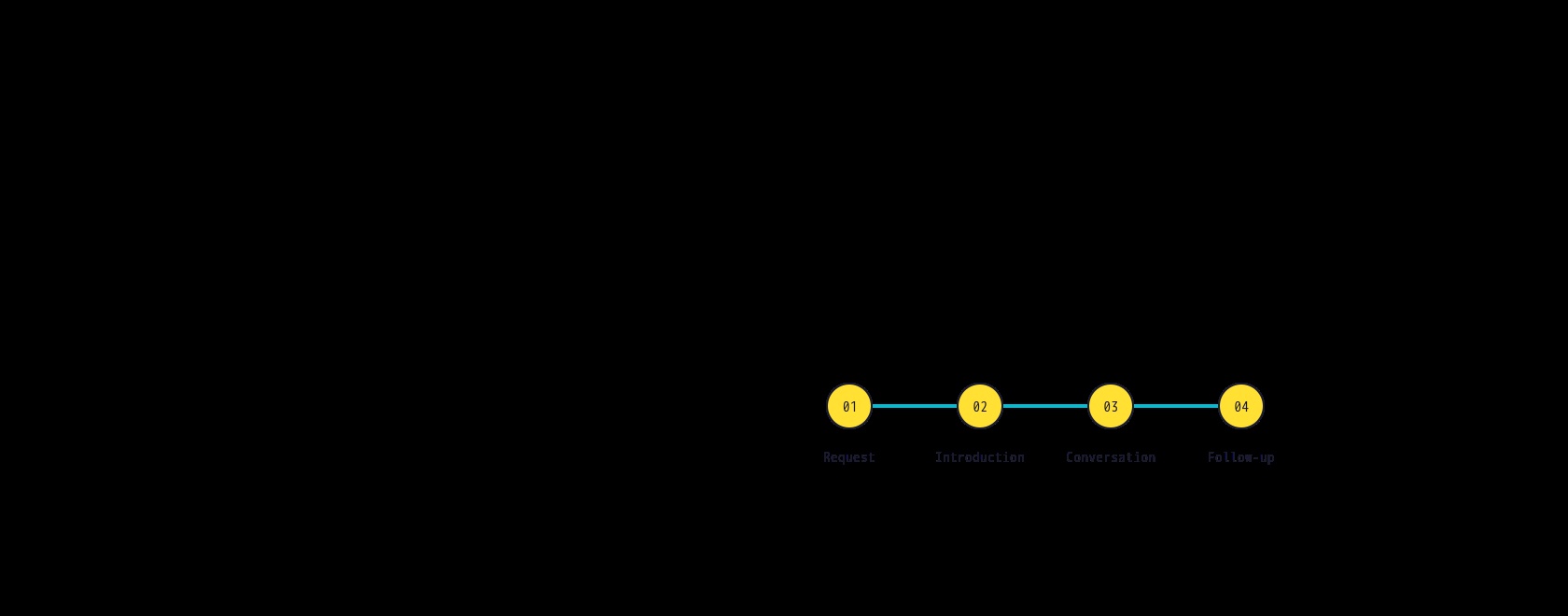
For a prospective member, the approach is refreshingly ordinary: arrive with a specific professional interest, explain what you can contribute, and ask a question with enough context to invite a useful answer. An introduction should have a reason attached. A follow-up should acknowledge why both people agreed to speak. These are suggested practices for using an executive community, not a claim about how every member here behaves.
The same logic sets limits on the proposition. A person seeking an immediate software deliverable needs a product or service provider. Someone with no time to participate may get little from another conversation channel. And an introduction between poorly matched people can consume attention without advancing either person’s work. The company’s community model makes most sense when participants have relevant needs, something to offer, and enough willingness to respond.
That leaves Web3 Decision Makers with a clear proposition to put into practice: help the next useful exchange happen. For a member, the question is concrete enough to carry into any professional group. Who could I help, what do I need to learn, and what would make the next conversation worth having?