Four hundred thousand dollars is a substantial amount to spend on a first impression. Waseem Daher spent it on Pilot.com. At the time, he says, the purchase consumed a third of the money the young company had. For a business whose purpose involved keeping track of other people’s spending, this was an attention-getting place to begin.
He has since called the decision risky, even reckless. His reasoning was that accounting demands trust before a customer has much evidence to judge. A name could help. He also expected a desirable domain to become harder to buy once the company had put years into its brand. If Pilot succeeded, it would want to own its address.
The interesting part is the buyer. Daher had already helped bootstrap a company, sell it to Oracle, build another, and sell that one to Dropbox. He had learned to watch cash. He had also learned how much of a founder’s time goes to chores that never appear in the original dream. Pilot was his third attempt at a company, built around one of those chores.
A pinball machine, then a Linux kernel
Daher’s early picture of business success included a pinball machine. An uncle owned a bar, and the machine made an impression on a child. Later, when Daher wanted to work in a coffee shop, that uncle proposed payment in coffee and snacks. It was an introduction to negotiation with unusually edible compensation.
By adulthood, the puzzles had changed. Daher studied computer science at MIT, finishing his undergraduate education in 2007 and a Master of Engineering in 2008. Ksplice grew out of a problem Jeff Arnold had encountered administering MIT servers: installing an important update could require shutting a machine down. Postponing an update created its own risk.
The team developed software that let Linux systems receive updates while they continued running. In 2009, Ksplice won the MIT $100K Entrepreneurship Competition. It gave administrators a way through a troublesome choice between keeping a service available and keeping its software current.
Business work accompanied the technical work. Daher and Arnold dealt with customers, marketing, sales, and accounting, drawing on MIT’s Venture Mentoring Service. On July 21, 2011, Oracle announced it had acquired Ksplice. A problem from a campus server room had become part of a much larger company’s Linux offering.
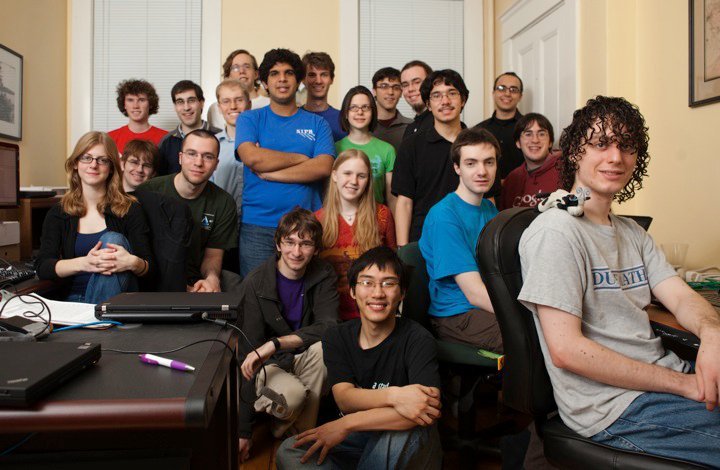
The people came before the next idea
The early company had a domestic setting as well as a technical one. Daher remembers living and working in a scrappy row house in Cambridge’s Central Square. Revenue grew into six figures, then seven. After the acquisition, he stayed at Oracle for a year and a day to help with the transition.
Then the familiar group got together again. Daher, Arnold, and Jessica McKellar had known one another at MIT, through classes and the student computing community. They wanted another company. The search for an idea began with people who already wanted to work together.
Zulip, founded in August 2012, addressed team communication. Its approach drew on the messaging culture at MIT and organized conversations around topics. Dropbox acquired the company in early 2014, while its product was still in private beta. The software later took a separate route: Dropbox released it as open source in 2015, and Tim Abbott went on to establish Kandra Labs to support its development.
For Daher, Dropbox offered a new vantage point. His earlier startups had been small; Oracle had been enormous. At Dropbox, where he worked as a product manager, he watched the workforce grow from roughly 600 to 1,200 people during his time there. Working with its sales team showed him another scale of company building.
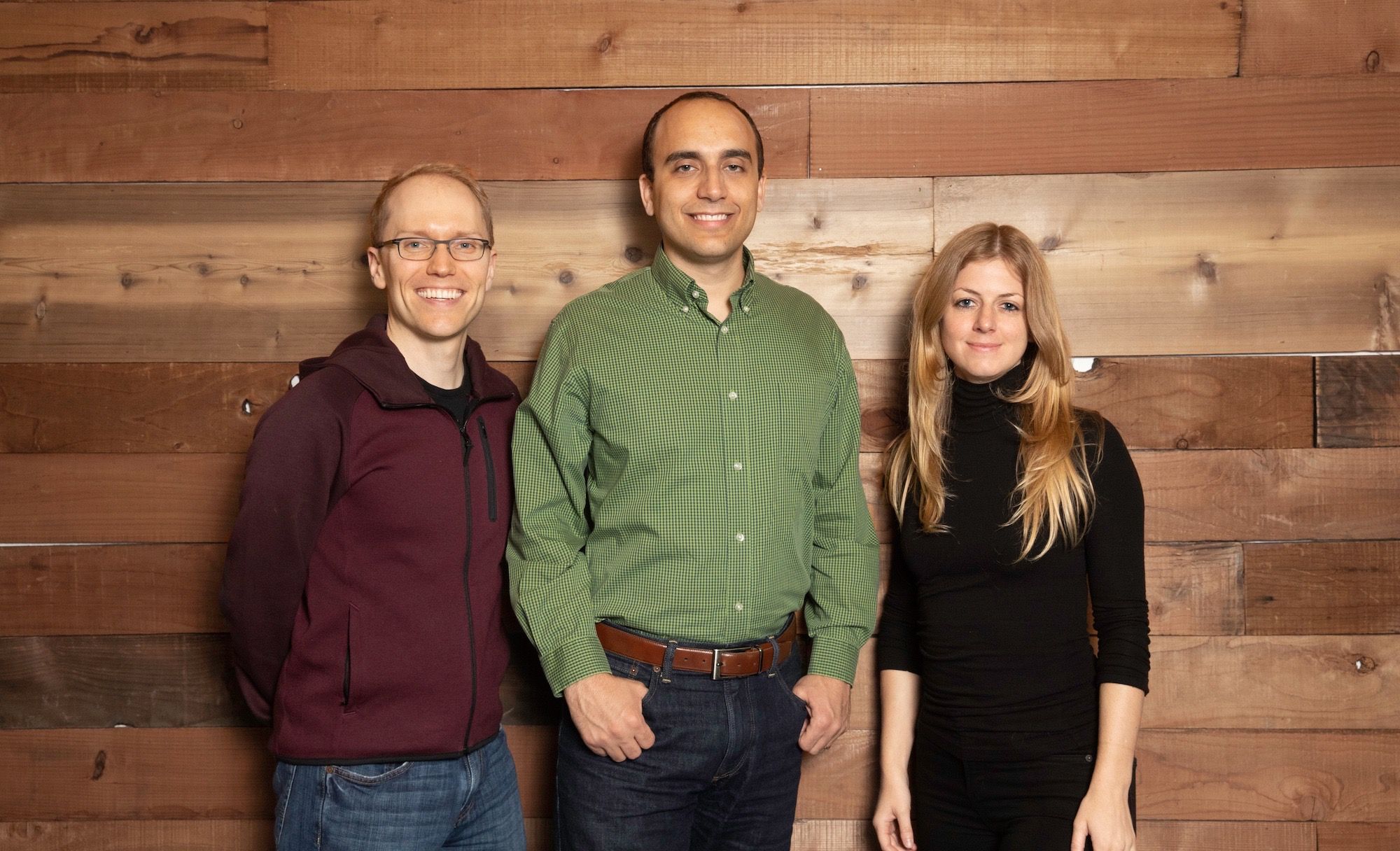
January 2017: please open QuickBooks
Pilot began with a decidedly ordinary piece of software. In January 2017, the founders called startup owners they knew and offered to do their bookkeeping. Daher and Arnold opened QuickBooks and did the work by hand. McKellar watched over their shoulders, looking for steps that were slow, repetitive, or likely to produce errors.
She wrote software to handle those steps. The next month, the founders could run a Python script, then finish whatever remained. Each cycle gave them another look at where a computer could help. It was an engineering education conducted through someone else’s monthly books.
They charged from the beginning. A paying customer supplied a more useful answer than a friendly compliment about an idea. The founders could learn whether the service relieved a problem enough for someone to spend money on it.
That arrangement also settled what Pilot was offering. Customers would get bookkeeping done for them. The founders would take responsibility for the task while gradually improving the machinery underneath. For engineers accustomed to building software, the willingness to do the manual work was consequential. They could study the job closely because they had to finish it.
The sales call is part of the service
For Daher, a conversation with a prospective customer carries unusual weight in accounting. Someone buying a file-sync product can dislike the salesperson and still believe the software works. Someone choosing an accounting provider may hear a confused answer and wonder whether the people doing the books understand the business at all.
That makes the sales conversation an early sample of the service. It has to convey competence and an understanding of the customer’s situation. It is also a chance for the founder to hear the doubts firsthand.
His enthusiasm for founder involvement in sales follows from that. When the conversation goes badly, a founder who was present has a better chance of understanding the cause. Hiring someone else too early puts another layer between the product and the person deciding whether to buy it.
There is a practical modesty to this approach. A successful acquisition does not grant permanent knowledge of what customers want. A computer science degree does not settle how to explain an accounting service. Daher’s work repeatedly returns him to conversations in which someone can decline. The answer is useful precisely because he cannot arrange it in advance.
A bigger back office
The original bookkeeping irritation had room around it. In April 2019, Pilot announced $40 million in Series B financing led by Index Ventures, with Stripe participating, and launched Pilot Tax. Customers wanted more of their financial work handled by a provider they already trusted. The company could extend an existing relationship rather than introduce a wholly separate one.
By March 2021, additional investment from Bezos Expeditions and Whale Rock had expanded Pilot’s Series C to $100 million and put its valuation at $1.2 billion. Daher recalled an internship at Amazon in 2005 and the influence of Jeff Bezos’s attention to customer experience. The investor connection thus had a much earlier point of reference in his career.
Funding gave the business resources to expand its services. It also supplied a conspicuous number that could obscure the less conspicuous work beneath it. Bookkeeping still involved making sense of a particular company’s transactions. Tax preparation still involved getting a particular company’s filings done. The broader ambition depended on the ordinary engagements working.
Daher has described the long-term opportunity as taking more back-office work off business owners’ hands. Accounting was a familiar place to start because he had experienced its demands himself. The next opportunity would have to earn the same conviction.
Learning to leave the room
Daher’s account of leadership includes an unheroic confession: “I have a natural tendency to agree with the last person I talked to.” He has worked at pausing, thinking, and committing to a decision, so the team experiences fewer changes of direction. An accommodating conversational habit can become expensive when other people have to act on it.
Delegation brings a related difficulty. He has spoken about learning to distinguish his preference for how something is said from whether it actually produces a good result. A colleague’s different wording need not require the founder’s intervention. Otherwise, familiar instincts turn into an approval queue.
His advice about dividing decisions is practical: the people accountable for an outcome need control over the process. Pushing choices toward those with the relevant information can make decisions both better informed and faster. In a company with several hundred competing requests for attention, the founder’s presence is a limited resource.
Experiments help when discussion stalls. Rather than assume he can predict customers’ reactions, Daher prefers, where possible, to put a choice in front of them. It suits someone trained to build things. A small piece of working evidence can do the job that another meeting was supposed to do.
“It should just be clear that it’s correct.”
Waseem Daher, on the customer’s experience of accounting automation
The books after bedtime
That standard of correctness runs through Daher’s thinking about AI. In 2023, he described using language models for difficult pieces of accounting work that existing software still left to people. His interest was in improving the underlying job. A feature that looked persuasive in a demonstration still had to address something the customer needed.
On June 16, 2026, Pilot launched Meridian for other accounting firms. The company said the platform drew on more than 187,000 months of completed books across over 8,000 businesses. Those figures describe accumulated operating experience. The offer was software that would perform the monthly close and return financials for accountants to review.
By then, Daher was Pilot’s executive chair, and McKellar was CEO. He remained close to the work: in a public post about Meridian, he said he personally maintained a $500,000 revenue portfolio on the platform while watching television after his children had gone to bed. The old pattern persists - use the system on real work, notice what happens, improve it.
There are other glimpses of the person outside the accounting pitch. His personal website dresses its links as an old installation wizard. He has appeared on Jeopardy!, answered 11 questions correctly, and watched $8,200 arrive and disappear. He concluded that the buzzer mattered. Even a well-stocked mind needs the timing right.
The expensive domain, the recurring co-founders, the evening client work: each offers a different view of Daher’s career. He keeps finding useful work in places a founder might hurry past. First it was an update that demanded a restart. Then a conversation that needed a topic. Now it is a month of transactions waiting to become books someone can use.