Start with sixty-five cents. In a 2023 announcement about its PARAGON refining catalyst, W. R. Grace described a trial in which it estimated $0.65 of value per barrel. Apply that estimate to an average-sized fluid catalytic cracking unit, the company said, and the annual value could reach $14 million. The interesting thing about this claim is its unit of measurement. Grace was selling chemistry. The customer was counting barrels.
- Grace supplies catalysts, engineered silica, chemical manufacturing services and polypropylene process technology.
- Its buyers make fuels, plastics, pharmaceuticals and coatings.
- The buying decision turns on performance inside a particular process, supported by testing and technical service.
That distinction explains much of the company. A consumer buys the finished object. Grace sells something that helps a manufacturer make it. The ingredient might improve the yield from a refinery feedstock, keep a tablet formulation dry, or help produce plastic with particular properties. Its usefulness becomes visible somewhere else in the factory, where the next production run gives the buyer a reason to order again.
PARAGON illustrates the bargain. Metals in heavier refinery feeds can impair catalyst performance. Grace developed a vanadium trap intended to help operators process those feeds while improving conversion at constant coke yield. The $14 million figure was an estimate using generic economics, not a guaranteed saving. Feedstock, equipment and operating conditions decide what happens to those sixty-five cents.
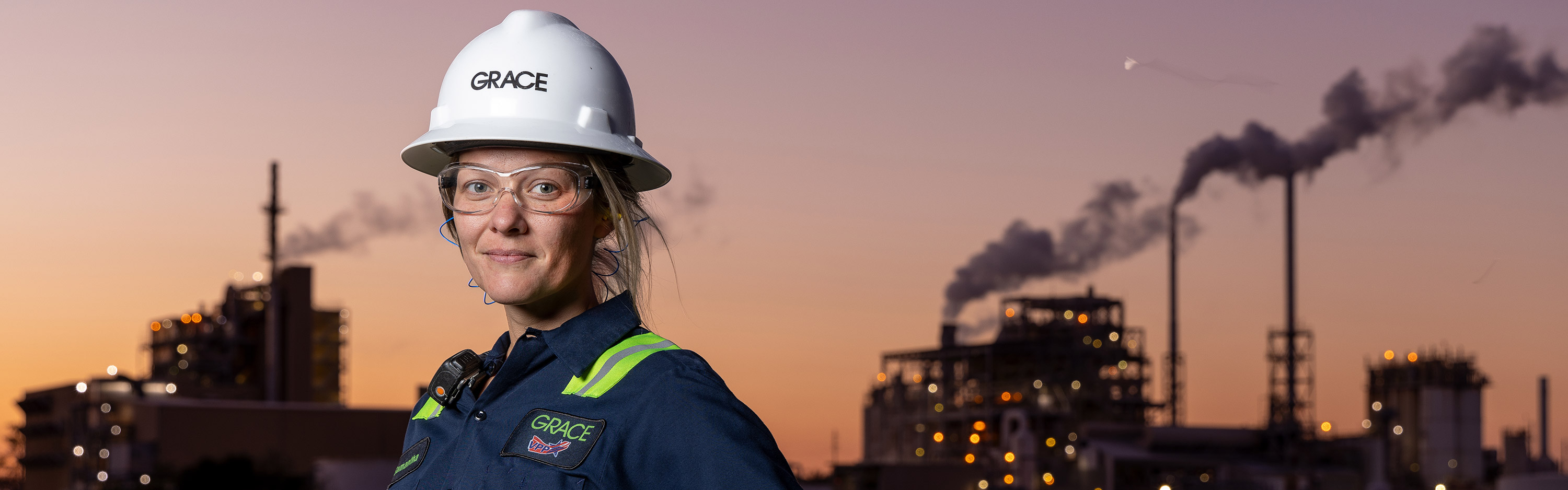
Sell the recipe. Stay for the reactor.
Grace operates upstream of familiar brands, among the businesses that supply industrial know-how. Its Performance Catalyst Solutions business serves refining and polyolefins; Materials Technologies supplies engineered materials and fine chemical manufacturing services. Ed Sparks leads the company. Standard Industries owns it, following a 2021 cash acquisition announced at approximately $7 billion, including a pending fine chemistry purchase.
The model mixes physical products with intellectual property. Manufacturers buy catalysts and materials. Polypropylene producers can license Grace’s UNIPOL process technology, alongside catalyst systems, process-control software and technical support. Pharmaceutical developers can contract for chemical development and manufacturing. These are different purchasing decisions held together by a shared problem: getting chemistry to behave reliably at commercial scale.
Consider Bharat Petroleum. In June 2024, Grace announced additional UNIPOL licenses for planned reactor units at Kochi and Bina, rated at 400,000 and 550,000 tonnes annually. That is a customer buying a production system. At the time, Grace reported more than 33 million tonnes of licensed polypropylene capacity globally. Licensed capacity describes the reach of the technology, not Grace’s own plastic output.
Competitors understand the same economics. BASF also supplies tailored cracking catalysts and technical services. Grace’s case rests on its particular combination of catalyst chemistry, process licensing, manufacturing and application expertise. For a buyer, the useful comparison is the result in the intended unit, including support and supply reliability. A long product catalogue cannot settle that question.
The useful part is the empty space
In silica, some of the important engineering concerns the holes. Grace can adjust pore volume, pore diameter, particle characteristics and internal surface area to suit an application. Its SYLOID XDP material carries oily active ingredients, helping turn liquids into free-flowing solids. Other SYLOID grades manage moisture or improve powder flow. Anyone who has tried to pour something sticky can appreciate the attraction.
The same materials expertise reaches coatings, where silica provides matting effects, and industrial formulations that need adsorption or separation. Buyers are formulators and process engineers with specific requirements. Choosing a grade means matching the material to the job, then checking compatibility and performance. A powder that works in one formulation does not earn automatic admission to the next.
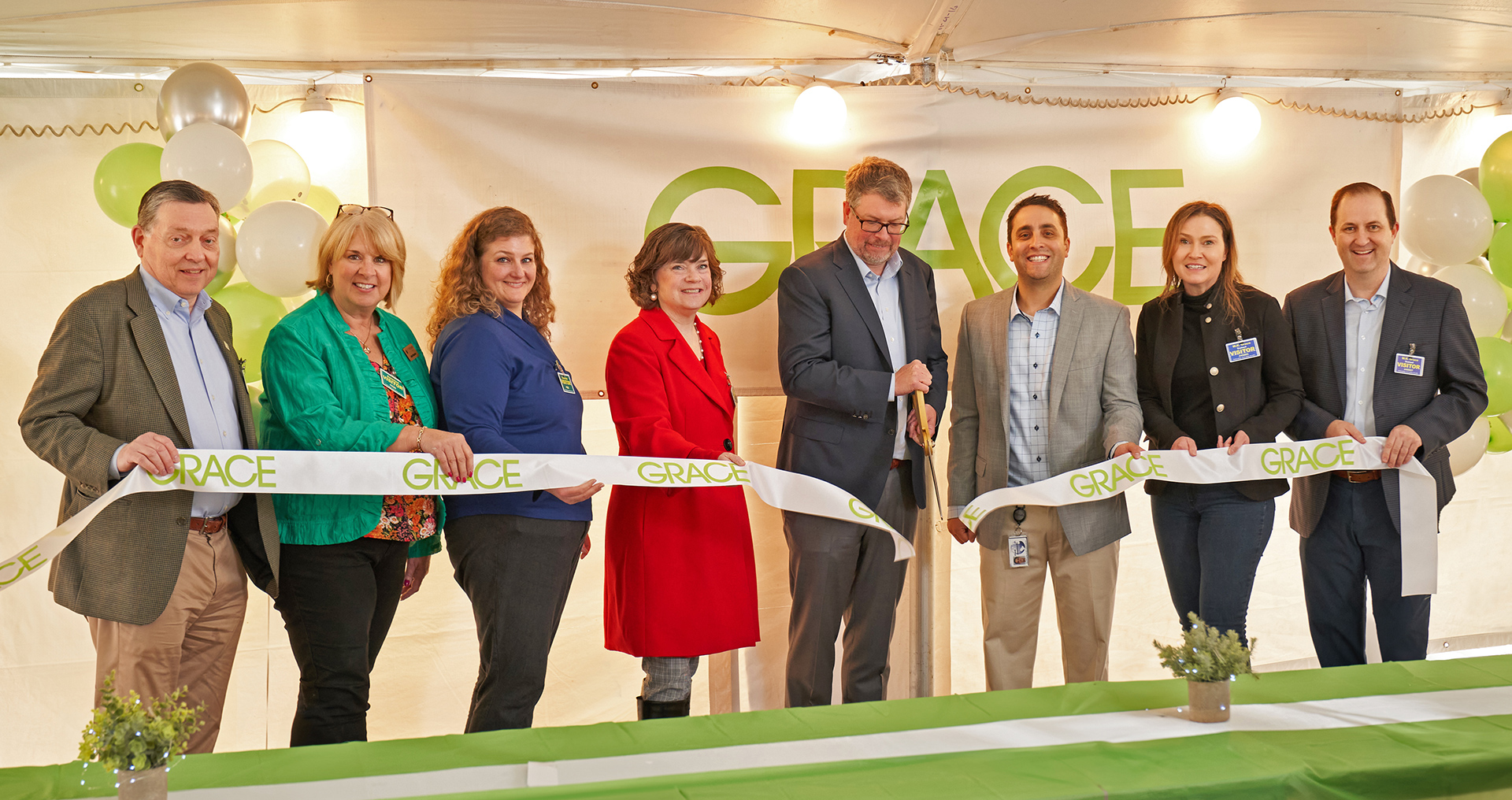
Grace also makes complex chemicals for customers. Its South Haven, Michigan, expansion, opened in March 2024 after a 21-month project, added 25% capacity. The equipment included three 4,000-gallon reactors and a 4,000-gallon centrifuge. Those details give scale-up a physical meaning: a promising laboratory route must survive different vessels, separation steps and quality requirements before it becomes a dependable supply chain.
The bill that belongs in the story
Grace traces its origins to William Russell Grace’s shipping business in Peru in 1854. Its modern chemical foundation came through the 1954 purchases of Davison Chemical and Dewey & Almy. The construction-products business later separated into GCP Applied Technologies in 2016. The current company is the result of acquisitions and deliberate narrowing over generations.
That history carries a serious liability. Grace entered Chapter 11 in April 2001 to resolve asbestos-related claims and emerged in February 2014. In a separate 2008 settlement, it agreed to pay $250 million toward federal investigation and cleanup costs for asbestos contamination in Libby, Montana. That amount was one settlement, not the total human or financial cost of the company’s asbestos legacy.
This history matters when judging today’s safety language. Grace says employees, contractors and visitors have authority to stop work they believe is unsafe. It reports an average employee tenure of roughly twelve years. These describe its stated working practices and workforce; they are not evidence that historical harms have been undone. Technical achievement and responsibility have to be assessed together.
Grace’s 2008 federal settlement for Libby asbestos investigation and cleanup costs. One settlement, not the full cost of the legacy.
A new route has to survive the factory
Recent moves extend the same manufacturing logic. In November 2025, Grace bought Chevron’s interest in ART Hydroprocessing, taking full ownership of their catalyst venture. ART’s portfolio includes products for conventional refining and renewable-fuel production. The arrangement retained ART as an exclusive hydroprocessing catalyst supplier for specified newly licensed Chevron Lummus Global units.
Then, in December 2025, Grace announced a multi-year collaboration with Molecule.one, initially targeting peptide building blocks. The partner’s MARIA platform combines AI with automated experiments. The ambition is to identify synthesis routes that are easier to scale. Molecule.one’s chief executive described the starting point plainly: “Following Grace’s successful validation of our technology, we sat down to discuss strategic priorities.”
There is a practical lesson here for other businesses: find the expensive bottleneck, measure a proposed improvement in the customer’s units, and validate it before expanding the relationship. The method depends on repeatable results and economics that survive scale-up. At Grace, the argument ultimately returns to the factory: does this small ingredient make the larger process work better?
The customer was counting barrels.An ingredient’s value appears in the process it helps improve.