The awkward thing about a diesel generator is how good it is at its job. It waits for years, springs to life when asked, and keeps a remarkable amount of energy in a modest tank. It is also loud, dirty, maintenance hungry and, at large sites, surrounded by land that cannot be used for much else. Voya Energy, a young company in Hayward, California, has chosen a peculiar opponent: the machine everybody complains about and nobody has managed to replace.
- Voya is developing a generator that converts aluminum pellets into electricity through a metal-air reaction, without combustion at the site.
- Its first market is large users, especially data centers, that need power while the grid is constrained or delayed.
- The company has raised $48 million across a seed round and Series A. Initial deployments are planned for 2027.
- The open question is the complete cost of fuel, hardware, freight and byproduct handling at commercial scale.
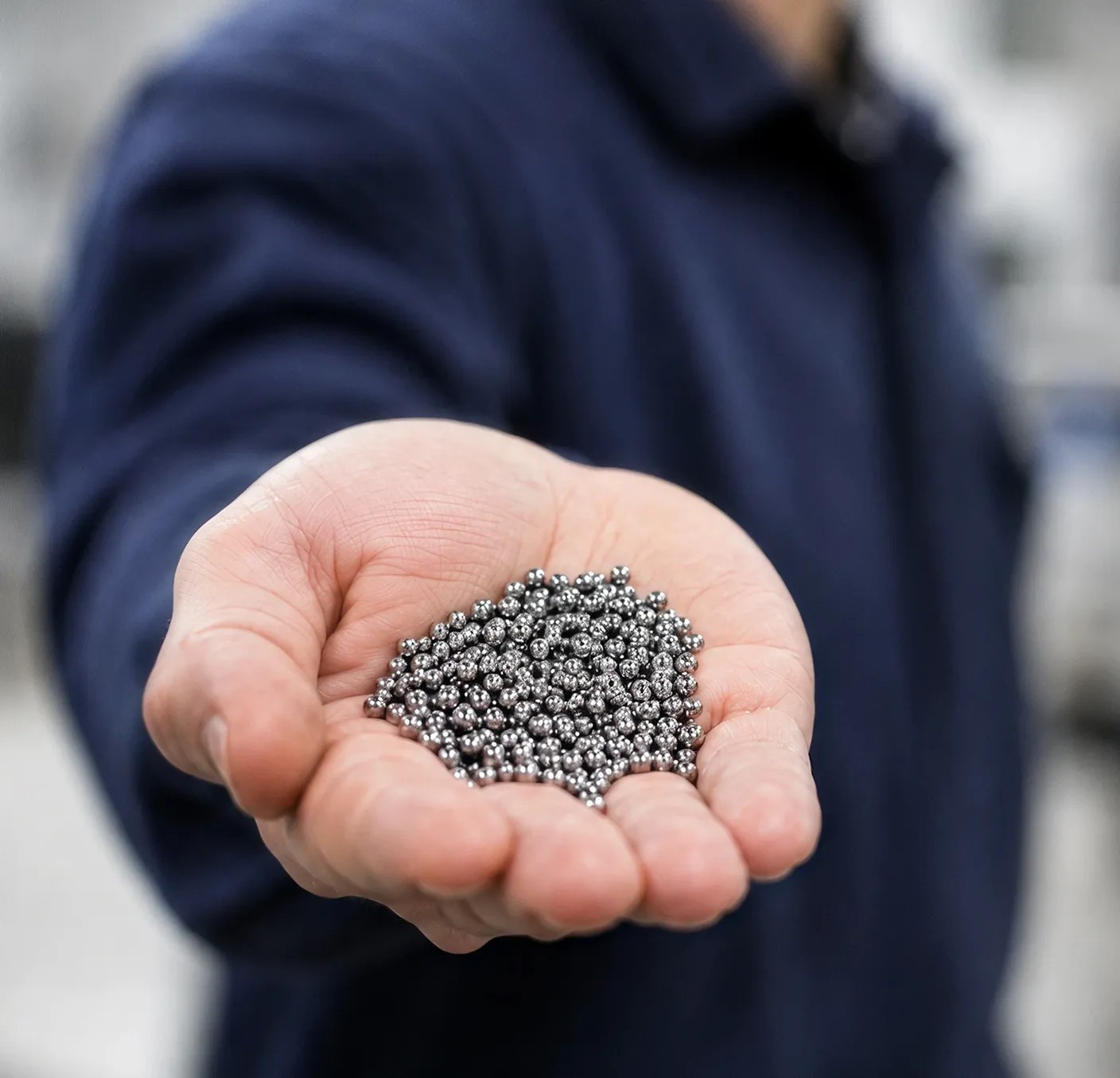
Its fuel is a handful of small aluminum pellets. The pellets enter an electrochemical cell, where aluminum reacts with oxygen from the air in a water-based electrolyte. Electrons move through an external circuit; a stable aluminum compound remains. There is no flame, turbine or exhaust stack in that sequence. The generator is intended to run where a utility connection is too slow, a gas pipeline is inconvenient, or a diesel fleet is unpopular with neighbors.
A fuel hiding in plain sight
Aluminum is usually sold for what it can become: a car part, an aircraft component, a drink can. Voya is interested in what it already contains. Producing aluminum metal takes electricity. Its chemical bonds hold some of that energy until oxygen meets the metal again. Voya’s planned system releases it as electricity rather than heat. That is the central bet: treat an industrial material as a portable energy carrier.
Co-founder and chief executive Richard Wang came to this idea after founding Cuberg, a battery startup later acquired by Northvolt. His co-founders bring complementary experience. Matt Horton, the chief commercial officer, led electric-fleet charging developer Voltera. Chief technology officer Steven Kaye has worked across battery and materials companies and holds more than 60 patents. Energy Impact Partners helped incubate the thesis before leading both of Voya’s funding rounds.
The founding team considered several routes for extracting energy from metal. Burning powdered metal would yield heat, but converting that heat into electricity adds a turbine and its cost. Hydrogen was another possible output. Wang says the group chose direct electrochemistry because electricity was the customer’s immediate need and battery and fuel-cell industries had already improved the parts, talent and manufacturing methods needed to build such a system. The shift was less a romantic discovery than a decision about the shortest path from scrap yard to socket.
The container that leaves matters too
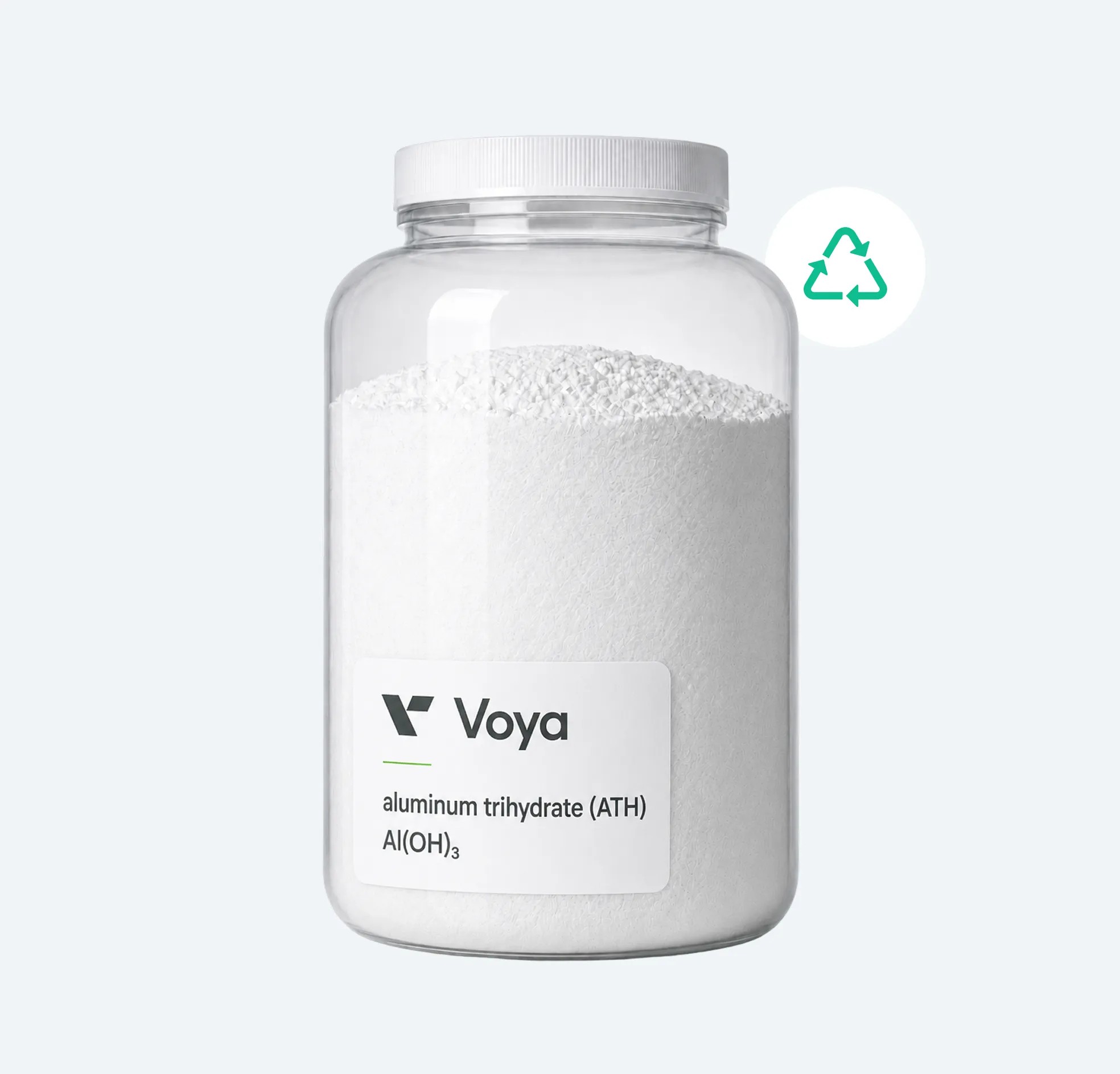
Voya’s product is more than a generator. It includes fuel storage and a way to remove aluminum trihydrate, often abbreviated ATH. This white, stable byproduct can be sold into industrial markets including water treatment and flame retardants. Voya says it will first send ATH into those existing markets. Its longer ambition is to regenerate it into aluminum fuel using low-cost electricity. That circular system is a plan, not a commercial process already running at scale.
The fuel strategy starts with a price distinction familiar to recyclers and easy to miss elsewhere. Clean can scrap has a valuable recycling loop; Voya says it has no reason to buy that. Mixed-alloy material from shredded vehicles is harder to turn back into high-grade structural metal and often trades at a discount. Wang says the cell chemistry can tolerate common low-end grades. In an August interview, he described an unexpected finding: some impurities in the cheapest scrap appeared to improve electrolyte stability. A contaminant becoming useful is the kind of twist a laboratory enjoys. A procurement team will still want the result repeated across suppliers and years.
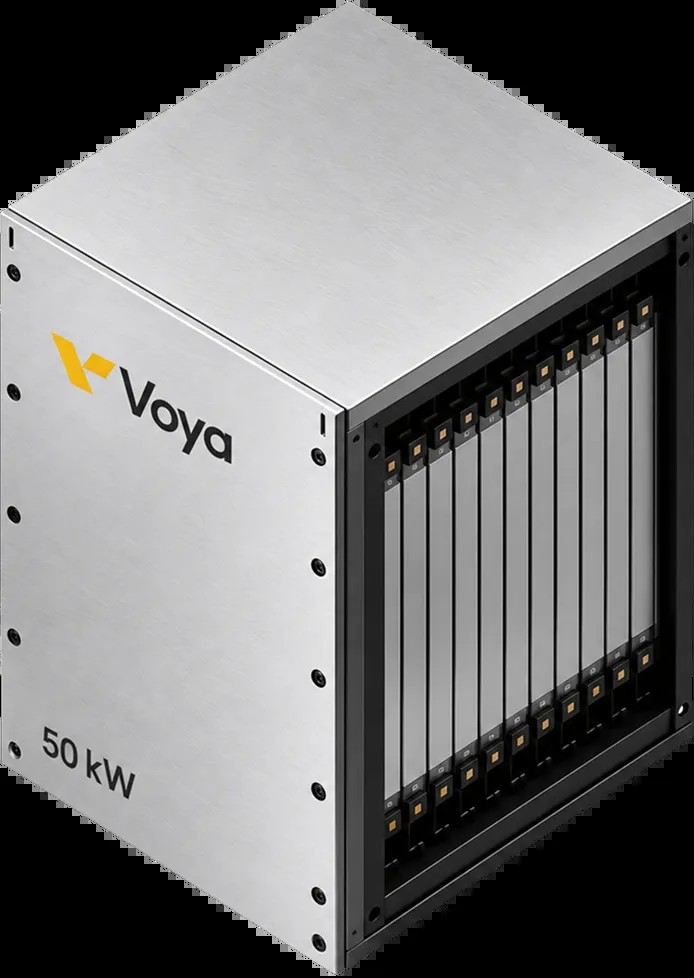
The company’s published design uses a 50 kW module as a building block. Its industrial-scale concept puts up to 2 MW in a standard 20-foot generator container, with separate containers for fuel and byproduct. The fuel container is designed to hold roughly 100 MWh. A site could use the system for backup, bridge power while waiting for a grid connection, or flexible onsite generation. Voya also sees later uses in defense, remote operations and heavy transport. These are intended applications; the company has not named a fleet of operating customer installations.
Diesel set an unpleasantly high bar
Cost is the part of this story that refuses to fit on a poster. Wang puts diesel generator hardware at roughly $500 to $800 per kilowatt, rising toward $1,000 for more controlled equipment. That is a formidable starting price for a machine used only occasionally. Voya has not disclosed its own equipment price, customer contracts or audited cost per delivered kilowatt-hour. Wang argues that, using US low-grade scrap, delivered fuel can reach parity with diesel. It remains the company’s claim until procurement and operations at scale put numbers around it.
Voya’s planned advantages are easier to describe than to price. Solid fuel can be stored without the same liquid-fuel degradation routine. A low-temperature electrochemical process avoids local combustion emissions. A modular footprint could reduce the land consumed by generator spacing and fuel tanks. Voya estimates that a full one-acre layout could deliver 100 MW with 10 GWh of stored fuel, enough for 100 hours at that load. It says the configuration would use about one quarter of the space of a comparable diesel fleet. Both are design comparisons, not a finished site one can visit.
Diesel today
Inexpensive hardware, mature service network, high-density fuel. Exhaust, noise, maintenance and permit limits complicate large fleets.
Voya’s proposed system
No combustion at the point of use, compact solid fuel and recoverable byproduct. Its commercial price and long-run reliability await deployment.
“Electricity demand is rising faster than the grid can expand.”Richard Wang, co-founder and CEO
The distinction between local emissions and total climate impact also matters. Voya’s generator is designed to release no carbon dioxide or criteria pollutants where it operates. But making aluminum fuel takes energy, even when the feedstock is recycled scrap; trucking fuel and byproduct does too. Whether a given deployment is low-carbon over its entire life depends on those upstream steps. The company’s proposed future regeneration loop could change the arithmetic, but it is not yet the basis for judging an operating system.
The test moves beyond the cell
Voya says it moved from a sketch to a working cell at target performance in about twelve months. Its timeline says it scaled cells 30-fold, tested full stacks and opened a 28,000-square-foot pilot factory in 2026. A $13 million seed round in 2025 and a $35 million Series A in August 2026 fund the next stages. Nearly a dozen unnamed companies across data centers, manufacturing, utilities, transportation and other sectors are working with Voya on pilot demonstrations. First deployments are planned for 2027, with manufacturing scale-up targeted for 2028.

The next proof is practical and rather unglamorous. How much aluminum can a unit consume per hour? How often must the byproduct container leave? What happens when scrap chemistry changes? How does the installed cost compare with a diesel fleet after land, maintenance, air permits and backup batteries are included? A pilot that answers those questions will tell buyers more than another diagram of electrons.
The lesson others can copy is Voya’s framing of the problem. It started with the incumbent’s strongest traits - cheap hardware, compact stored energy, dependable long duration - and designed around those rather than celebrating a single clean metric. It also found a cheaper feedstock by understanding why one kind of scrap is less valuable than another. That approach would be weaker where low-grade scrap is scarce, freight is costly, or a site already has cheap, reliable grid power and little need for long-duration backup. In those places, aluminum’s cleverness may not pay its way.
For now, Voya is a company with a working technical thesis and a substantial manufacturing exam ahead. Its most interesting claim is not that a metal can make electricity; that has been known for a long time. The claim is that the whole loop - the pellets, the cell, the container that carries away the white powder - can become ordinary enough for an engineer to specify it instead of diesel. Ordinary, in power generation, would be quite an achievement.