A power station used to be a place you could point to on a map. A house, by comparison, was where electricity went to disappear into kettles, cooling systems and the television no one admits is too big. Lunar Energy is betting that this old division has become expensive. Put a battery beside the house, give it a decent brain, and the address becomes part of the electricity system rather than its final stop.
The Mountain View company makes the Lunar System, a modular home battery and solar control setup. It also sells Gridshare, enterprise software that coordinates fleets of home batteries, electric vehicles and other devices. One business speaks to the homeowner who wants backup and a smaller bill. The other speaks to utilities and energy retailers that need flexible power at the right hour. The same kilowatt-hour may interest both of them.
- Lunar sells its home system through certified installation partners, including Sunrun.
- The Battery, Bridge, solar Maximizers and App are designed to work as one setup.
- Gridshare also coordinates devices Lunar did not make.
- In February 2026, Lunar reported more than 2,000 installed systems and over 100,000 devices connected to Gridshare.
The Frankenstein problem
Founder Kunal Girotra had seen the machinery up close. He led Tesla Energy until March 2020, then founded Lunar that August. He later described shopping for a home battery as a trip to 1990s Fry's Electronics: pick the inverter, choose the storage, add the smart panel, download several apps and hope an update doesn't make the pieces quarrel. His metaphor is funny because it is painfully specific. The first thing to fail in that setup is often coherence, long before any cell wears out.
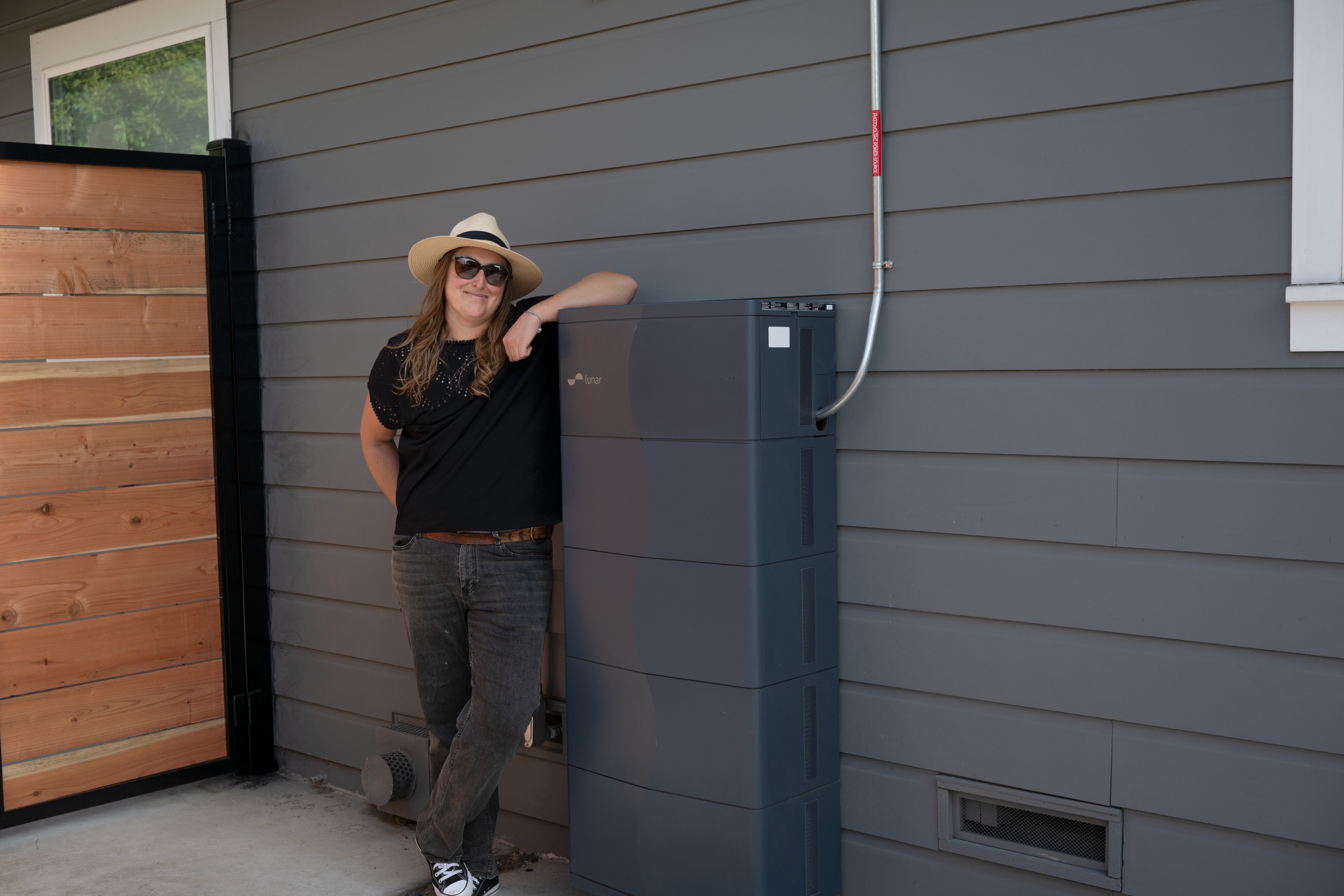
Lunar's answer was to design the pieces together. The Lunar Battery and inverter stack vertically. The Bridge connects the home to the grid and manages important circuits during an outage. Roof-mounted Maximizers work at the solar panels. The App shows generation, use, stored energy and savings. Buyers can choose 10, 15, 20 or 30 kilowatt-hours of storage; the system can accompany new solar, join an existing array or serve as backup on its own. Lunar says its products are developed in Mountain View and assembled in the United States.
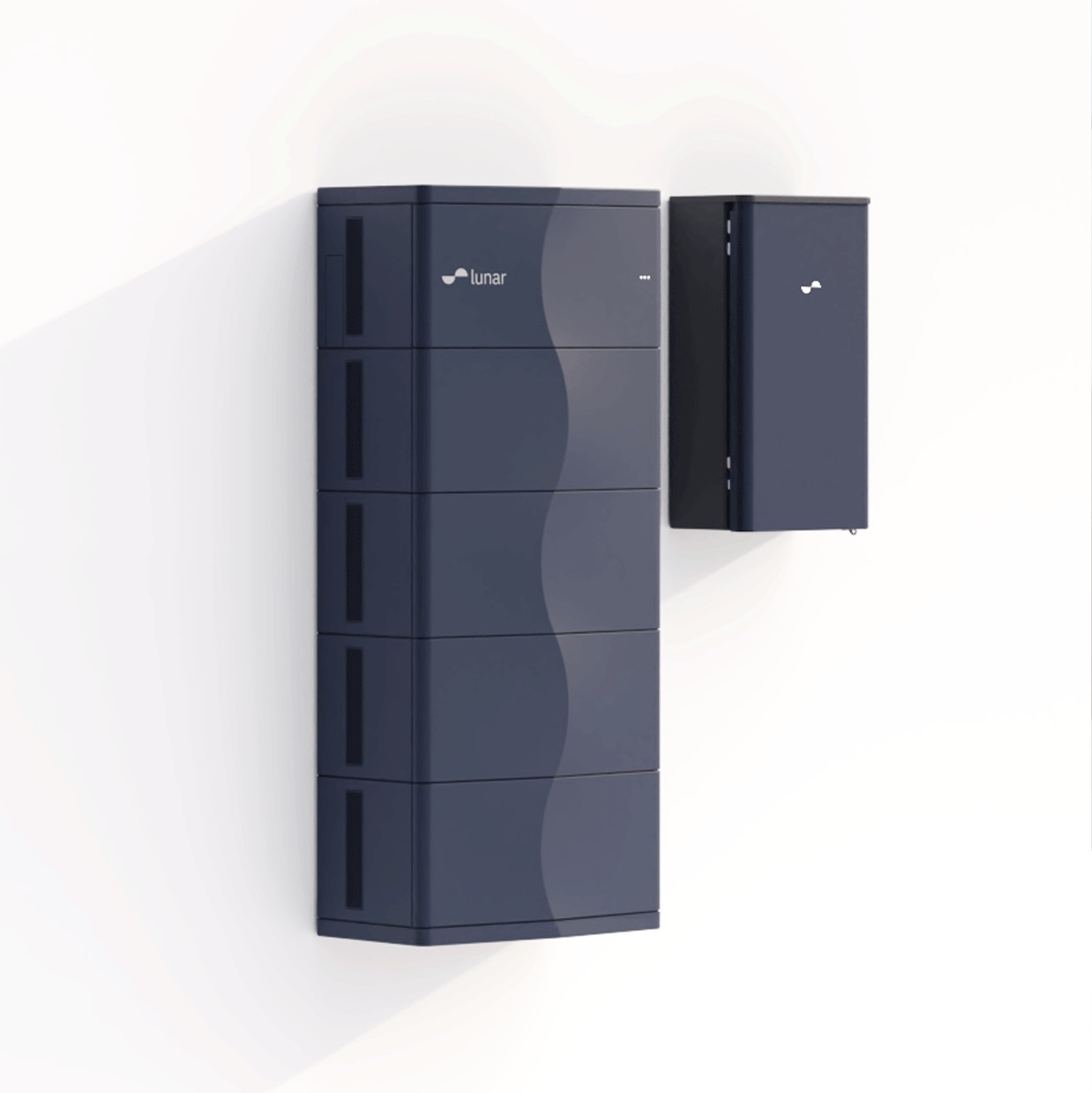
The 20 kWh system launched in California in early 2025. By February 2026, Lunar said more than 40 installation partners had deployed over 2,000 systems. Those partners sell and install the equipment; Lunar supplies the hardware and software. That detail matters to anyone imagining a frictionless online checkout. A home installation still involves a proposal, permits, a visit from an installer and utility permission to operate. Lunar says the physical work with solar often takes a day, but permission from the utility can take weeks or even months.
“Every home would benefit from a battery.”Kunal Girotra, founder and CEO
The battery keeps a diary
Storage is useful because hours have different prices. A battery that fills when solar is plentiful and discharges during expensive evening hours can change a bill without changing a family's habits. Lunar AI uses rate schedules, weather forecasts and household usage to make a daily charging plan. It can also keep energy for an outage, rather than spend every last unit chasing a saving.
Lunar reports that its California customers gained an average $338 of extra value from its AI optimization in 2025 compared with standard battery operation. Customers who took part in its virtual power plant programs earned an average $464 more. Together that is $802 in additional reported value, not a promised reduction in everyone's total bill. Geography, tariff, solar production and program eligibility all matter. A customer with a flat electricity rate and no grid program has less for clever scheduling to do.
What does the homeowner pay? Lunar does not publish one installed sticker price: an installer quotes the equipment and work for each property. In Texas, the company and Octopus Energy announced a different arrangement in April 2026: a fixed-rate electricity plan with a Lunar Battery and no upfront hardware cost. The price story therefore changes with the channel. So does the risk borne by the customer and the energy provider.
Ask for a written estimate separating hardware, installation, electricity plan terms, projected bill savings and any virtual power plant earnings. Compare it with a plain battery operating in its default mode. The extra $802 is a company-reported average, not a universal return.
A fleet of houses
The less visible half of Lunar's business predates its first commercial battery. In 2021 it acquired Moixa, a British distributed energy software company. That gave Lunar an experienced optimization team and years of operating data while its own hardware was still being built. Gridshare's crucial quality is that it is device agnostic. It can coordinate a third-party battery, a thermostat or an electric vehicle without a Lunar box on the wall. Lunar says Gridshare reaches more than 100,000 devices across three continents.
One battery, two schedules
A virtual power plant is a dispatch program, not a new building.
In California, Ava Community Energy uses Gridshare for a virtual power plant initiative. WestLight Energy named it the engine for a residential battery load-shifting program in 2026. That project illustrates the awkward negotiation inside every virtual power plant: the grid wants energy exactly when the homeowner may want to keep it. WestLight's plan maintains at least 20% battery charge for backup. A severe-weather alert can pause grid dispatch and refill the battery to 100%. A customer who loses backup for a few dollars of grid service would be unlikely to sign up twice.
The software has traveled further than the battery. In Japan, Gridshare has long optimized ITOCHU's residential battery fleet. Lunar says it now controls 40,000 Smart Star batteries there and has extended the same approach to Daikin EcoCute hot-water tanks. That is a pleasingly ordinary appliance to find in a conversation about future power stations. Heating water at the sunny hour can be a grid service, provided the water is still hot when someone needs a bath.
The expensive middle
This is a capital-heavy way to pursue a software opportunity. Lunar announced $300 million from Sunrun and SK Group in its first two financing rounds. In February 2026, it disclosed a $130 million Series C led by Activate Capital and a $102 million Series D led by B Capital and Prelude Ventures. That totals $532 million in reported funding. It buys time to design hardware, build manufacturing and installer relationships, and write grid software that can earn its place in actual markets. It does not by itself tell us what each installed system costs Lunar to make or whether the business is profitable.
The alternatives are familiar: Tesla Powerwall, Enphase IQ Battery and FranklinWH compete for the household wall; other software companies compete to manage distributed fleets. Lunar's distinction is the attempt to own the complete home experience while keeping the grid platform open to other manufacturers. The tension is productive. A closed hardware club would limit Gridshare's reach; a generic control service would surrender the benefit of knowing Lunar's own equipment in detail.


By September 2026, Lunar had made Mark Gudiksen, a board member, investor and early customer, its president. The appointment followed new Texas and California partnerships and an expansion of Gridshare's work in Japan. The market is still young enough that a house can seem an odd place to look for grid capacity. Yet a house already has the roof, the appliances, the bill and a strong opinion about a blackout. Lunar's wager is that these scattered motives can be made to agree, one well-timed battery cycle at a time.