BREAKING  Base Power in talks to raise near a $12 BILLION valuation   $1B Series C closed October 2025 100+ MWh of home batteries deployed across Texas $19/month. $695 battery. No more blackouts. $265M Austin battery plant · ~500 jobs BREAKING  Base Power in talks to raise near a $12 BILLION valuation   $1B Series C closed October 2025 100+ MWh of home batteries deployed across Texas $19/month. $695 battery. No more blackouts. $265M Austin battery plant · ~500 jobs
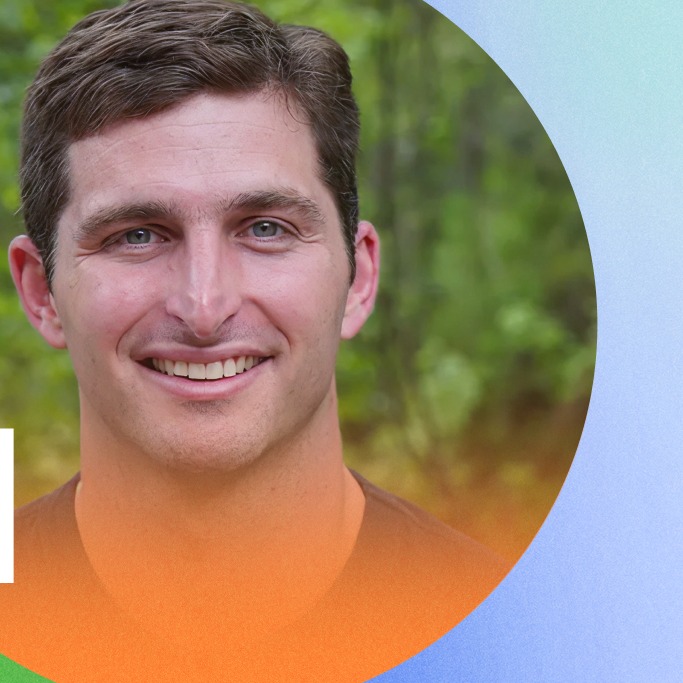
Zach Dell, co-founder and CEO of Base Power
Zach Dell, photographed for The Generalist. The grin of a man who was told it wouldn't work.
The Profile

Zach Dell

His father built computers in a dorm room. He is building the grid, one basement at a time - a home battery here, a home battery there, until a million of them behave like a single power plant.

Co-Founder & CEO, Base Power · Austin, Texas
Share LinkedIn X Facebook Instagram

Austin, Texas

The pitch sounds almost too plain to be a billion-dollar company. Pay $19 a month. Put a $695 battery on the side of your house. When electricity is cheap at 4 a.m., the battery fills up. When it is expensive at 6 p.m., the battery empties. When the grid fails - and in Texas, it fails more than anywhere in America - the lights in your house stay on.

That is Base Power. And the person behind it is Zach Dell, who is 29, runs the company he co-founded in 2023, and happens to share a last name with the man who put a computer on every desk. Zach chose a harder object: the electrical grid, a century-old machine that most founders find too slow, too regulated, and too dull to touch.

He touched it anyway. In under three years Base grew into a vertically integrated company that makes its own batteries, installs them, sells electricity, and stitches thousands of households into one coordinated fleet. By late 2025 it was worth about $4 billion. By the middle of 2026, investors were reportedly circling a round near $12 billion.

Dossier

The Short Version

Role: Co-founder & CEO, Base Power
Founded: 2023, with Justin Lopas
Base: Austin, Texas
School: USC, 2019 (Psychology & Economics)
Before Base: Thrive Capital, Blackstone
Family: Son of Michael & Susan Dell
Ambition: "The largest and most important power company on the planet."

By the numbers

$1B
Series C, Oct 2025
$695
One-time battery cost
$19
Monthly membership
100+
MWh deployed
"We have the ambition to build the largest and most important power company on the planet." - Zach Dell

Origins

Lava fields, biogas, and a stubborn idea

Before the batteries, there was a lava field. In college at USC, Zach Dell tried to lease a stretch of Hawaiian volcanic ground to build a solar project. Investors passed. Around the same stretch of years he was in India, tinkering with anaerobic digestion systems - the unglamorous chemistry of turning human waste into biogas. Neither venture worked. Both pointed in the same direction.

He did not go straight into energy. He went into finance, first as a private-equity analyst at Blackstone, then as an investor at Thrive Capital, Josh Kushner's firm. Thrive is where the pieces clicked. He studied energy markets from the inside, and he met Justin Lopas, a manufacturing leader who had built things at SpaceX and Anduril - two companies that treat the factory floor as a competitive weapon.

The two saw the same gap. Home batteries existed. Retail electricity existed. Backup generators existed. Nobody had bundled them into a single, affordable product and then used the combined fleet to help the grid. In 2023 they left to build exactly that, and named it Base.

Dell is candid about what building it felt like. "You must get comfortable with the notion that a lot of really smart people you respect are going to explain to you in excruciating detail why this is not going to work," he has said. "You have to be able to see through that and have a clear vision in mind for why it is going to work."

How it works

Make. Move. Store. Sell.

Base calls its model vertical integration, and Dell calls that integration "the magic." Instead of buying batteries from a supplier and reselling power from a utility, Base owns the whole stack - which is how it gets the price down to a $695 battery instead of a $15,000 generator.

1
MakeBase manufactures its own home batteries - a $265M Austin plant is set to add ~500 jobs.
2
MoveIt installs and maintains the hardware, acting as the customer's own retail electric provider.
3
StoreBatteries charge on cheap overnight power and hold it for peak demand - your home runs on "4 a.m. power."
4
SellThousands of batteries act as one virtual power plant, feeding the grid when it strains and keeping homes lit when it fails.

The climb

From $200M rounds to a $12B conversation

Money followed the model quickly. Base raised a $200 million round, then a $1 billion Series C in October 2025 led by Addition, alongside Andreessen Horowitz, Lightspeed, Thrive Capital, and Alphabet's CapitalG - one of the largest venture rounds in Texas history. That deal valued the company around $4 billion.

Less than a year later, reports had Base in talks to raise again near a $12 billion valuation, with Ribbit Capital said to be leading. Data centers and AI were straining the grid, and a company that could add usable capacity without pouring new concrete suddenly looked essential.

Valuation, approx.

2024 · growth
~$1B
Oct 2025 · Series C
~$4B
2026 · in talks
~$12B

Figures reported by Forbes, The Information & Texas Monthly. Bars indicative, not to exact scale.

The road

A teenager's startup to a power company

Dell has been starting things since high school. The through-line is not energy - it is the itch to build the whole thing himself.

2013
Founds Thread Dating as a teenager.
2016-2020
Runs Sqwatt, an early venture, through college.
2019
Graduates USC; summer analyst at Blackstone.
2020-2021
Private equity at Blackstone.
2021-2023
Investor at Thrive Capital; meets Justin Lopas.
2023
Co-founds Base Power in Austin.
2025
Closes $1B Series C at ~$4B valuation.
2026
In talks to raise near a $12B valuation.

Why Texas

The state that made the model possible

The wind & sun

All the raw power

"Texas has the most renewable energy generation of any state," Dell notes - it sits "at the intersection of the Sun Belt and the wind corridor." Cheap electrons to store.

The pain

All the outages

Texas leads the nation in power outages, and retail prices have climbed sharply since 2017. A backup that also lowers your bill sells itself.

The rules

An open market

ERCOT's deregulated market lets a newcomer become a retail electric provider and rewrite the offer - something far harder in most of America.

The thesis

Don't build a bigger grid. Use the one we have.

Most people look at rising demand - electric cars, heat pumps, and now enormous AI data centers - and conclude the country needs to build far more of everything: more plants, more wires, more substations. Dell's read is different, and it is the intellectual core of Base. For decades, he argues, the grid rewarded utilities for building more infrastructure rather than for lowering costs. The next phase, he believes, will come from squeezing more use out of what already exists.

Batteries are how you do that. A battery is a time machine for electricity. The grid is built to handle the worst hour of the worst day, and it sits half-idle the rest of the time. If you can store the cheap, abundant power made at 4 a.m. and release it during the 6 p.m. crunch, you raise the utilization of the entire system and lower costs for everyone - not just the household with the battery. Distributed across thousands of homes, those batteries become a power plant that never needed a new plot of land.

That framing turned into a tailwind in 2026. As AI data centers began drawing power at a scale that alarmed grid operators, the value of adding usable capacity without pouring new concrete jumped. A company that could stand up flexible storage inside existing neighborhoods suddenly looked less like a consumer gadget and more like critical infrastructure. It is a large part of why the reported valuation tripled in under a year.

The economics for the customer are deliberately simple, which is the point. A whole-home backup generator can run north of $15,000. Base asks $695 up front for a leased battery, a $19 monthly membership, and standard retail electricity - and then shares the upside it earns by dispatching those batteries back to the grid. Dell has compared it to a Costco membership: one relationship, a low recurring fee, and a promise that the store has your back.
In his words

Six lines that explain the company

"We're able to lower your electricity bill by effectively making your home run on 4 a.m. power versus 6 p.m. power."

"Base's mission is to provide reliable and affordable power for all."

"Vertical integration is the magic."

"A lot of really smart people you respect are going to explain to you why this is not going to work. You have to see through that."

The last name

Not his father's company

The Dell comparison is unavoidable, and Zach does not run from it. Michael Dell famously started Dell from a University of Texas dorm room; his only son built Base a few miles away in the same city. But Michael is not on the Base cap table or in the building. He is, Zach says, "an extremely valuable mentor" - a phone call, not a boss.

The instinct they share is older than either company: take the expensive, complicated thing, make it cheap, and put it everywhere. Michael did it with the PC. Zach is trying to do it with the kilowatt-hour.

  • Started his first company, Thread Dating, as a teenager in 2013.
  • His energy career began with two flops: solar on lava, biogas in India.
  • Base is often described as a "Costco membership" for electricity.
  • The model turns idle home batteries into a coordinated virtual power plant.
  • Co-founder Justin Lopas brought manufacturing chops from SpaceX and Anduril.
The goal is not just a bigger utility. It is, in Dell's framing, the first energy company people actually love. - On Base Power's ambition

Quick facts: Zach Dell

Zach Dell is the co-founder and CEO of Base Power, an Austin battery-and-electricity company he started in 2023 with former SpaceX and Anduril manufacturing leader Justin Lopas. Base sells homeowners a leased backup battery for a one-time $695 plus a $19 monthly membership and retail electricity, then knits those household batteries into a distributed grid that charges on cheap overnight power and discharges at peak. In under three years the company raised a $1 billion Series C at a roughly $4 billion valuation and, by mid-2026, was in talks to raise again near a $12 billion valuation. The son of Dell Technologies founder Michael Dell, Zach traces his energy obsession to college experiments that included trying to lease a Hawaiian lava field for solar and building anaerobic digesters in India.

Role
Co-Founder and CEO at Base Power
Organizations
Base Power, Thrive Capital, Blackstone, Sqwatt, Thread Dating, Camp Spark
From
Austin, Texas, United States
Nationality
American
Education
B.A., Social Sciences (Psychology and Economics), University of Southern California
Known for
Co-founded and leads Base Power, valued around $4 billion by late 2025 with talks of $12 billion by 2026, Raised a $1 billion Series C in October 2025, among the largest venture rounds in Texas history, Built a vertically integrated 'make, move, store, sell' power company in under three years

Last updated: