Consider a truck that has arrived exactly where it belongs. The driver is ready. The equipment works. The journey, technically, is a success. Then nothing happens. A loading slot slips; the next delivery waits; another person makes another phone call. The truck has become a very expensive chair.
Vorto builds software around this unglamorous problem. Its wager is that some of the cost of moving goods comes from decisions that arrive too late or happen in isolation. Purchasing, dispatch, delivery, and payment can each look sensible on their own while producing an absurd result together. The company wants to connect them before the absurdity reaches the loading dock.
- ReLoad connects demand, procurement, freight scheduling, and payment.
- Its customers include industrial and consumer-goods businesses.
- The economic target is wasted time and total delivered cost.
- Its published savings are reported customer results, not promises for every deployment.
The first answer was too small
The revealing part of Vorto’s history is a discarded approach. In a 2022 Commercial Carrier Journal interview, founder and CEO Priyesh Ranjan described the earlier business as a transportation-management software company. Improving driver utilization was central to its work. But scheduling trucks alone could not untangle purchasing decisions, pickup appointments, carrier selection, and everything downstream.
Ranjan said the company shut down that approach and started a new platform that automated procurement and logistics together. That is a useful distinction: the failure he described was the scope of the solution. A more efficient dispatcher still inherits the consequences of an awkward purchasing decision.
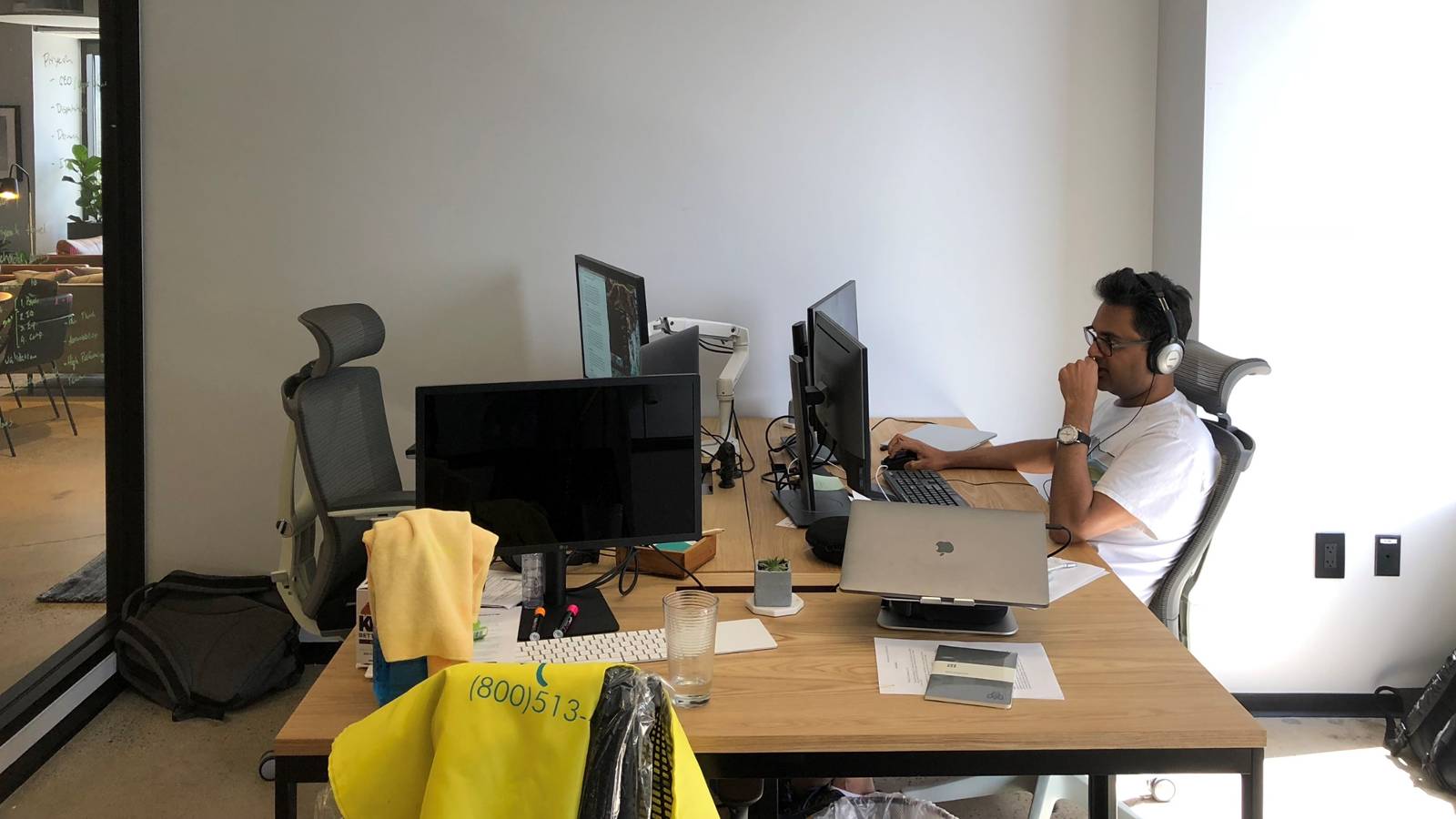
There is something pleasingly concrete about that early office photograph. No futuristic command center. A desk, a headset, several screens. The company says the office held its entire four-person team. The task was already larger than the room: make buying goods and moving them obey the same set of constraints.
A purchasing decision has wheels
Take a simple hypothetical. One supplier offers a lower material price but sits farther away. Another charges more but can deliver at the right time with less travel. A purchasing team judged only on unit price has a reason to choose the first. A transportation team then receives the privilege of making that bargain expensive.
Vorto’s AutoProcurement is designed to weigh material and logistics costs together. This is total landed cost: what the goods cost once getting them there is included. Existing supplier contracts, blind bidding, and reverse auctions are supported. The attractive idea is that sourcing and transport become parts of the same calculation.
ReLoad surrounds that decision with other modules. AutoDemand takes demand plans or supports replenishment. AutoLogistics schedules and tenders loads, then responds to delays and changes. AutoPayment uses the operating record to reconcile billing. GPS evidence and proof of delivery help connect the invoice to the work performed. The product’s expertise lies in coordinating these tasks across buyers, suppliers, and carriers.
A conceptual map of ReLoad’s connected workflow, rather than a product screenshot.
The buyer, the seller, and the person in the cab
Vorto calls these relationships a supply-chain love triangle. It is a cheeky name for a serious coordination problem. Buyers need materials when production needs them. Suppliers need a useful view of demand. Carriers need loads that fit their equipment, location, and available time. Each participant can inconvenience the other two without intending to.
In March 2021, FreightWaves reported the launch of ReLoad and its move beyond Vorto’s historical energy focus into other bulk-logistics industries. The distinction matters. This is enterprise software for businesses moving physical goods, with production schedules and transport constraints attached. It is far removed from a consumer delivery app with a pleasing little scooter on a map.
“You would never challenge automating the air traffic control.”Priyesh Ranjan, speaking to FreightWaves in 2021
The company’s website now lists trusted customers including Halliburton, Cargill, Nucor, Procter & Gamble, and Boston Beer. That roster spans energy, agriculture, metals, and consumer goods. It also suggests why coordination has value: a late load can affect a production line, not merely an estimated arrival time.
Vorto also announced 5F publicly in February 2022. The transportation platform connects freight demand with owner-operators, drivers, equipment owners, and yard and maintenance infrastructure. Its launch release described Halliburton’s expanded collaboration during 2021. Software meets an operating network here: a useful dispatch decision still needs someone and something available to execute it.
Read the savings with a ruler
Vorto’s anonymous customer case study reports more than 23% savings in total landed cost when AutoProcurement balances payload and material costs. It also reports zero minutes of nonproductive time caused by inbound logistics failures across customer operations in 2022. Those are company-reported observations with a defined cause and period. They should be read at that scale.
Count the material. Count the move.
Illustrative index: baseline = 100. Vorto reports savings exceeding 23% in material + logistics cost. Customer identity and absolute spend are not disclosed in this case.
The useful metric underneath the drama is turn rate: how many trips a driver can complete in a day of short-haul work. Small changes can matter because equipment and working hours are finite. A shorter queue can release capacity without requiring a new truck. The resulting benefit may be shared between the customer buying transport and the carrier providing it.
An April 2025 company release puts annual user savings above $510 million and reports close to 160,000 tons of CO2 emissions eliminated. These are aggregate claims from Vorto. Their environmental logic is straightforward: unnecessary driving and waiting consume resources. The figures do not establish a universal savings rate or a carbon forecast for a prospective customer.
Fast software, fast hiring
ReLoad is sold through an enterprise sales process, with demos and a free trial advertised. Its public product page describes modular deployment and API integrations. For a prospective buyer, the practical question is which decisions to connect first: demand and sourcing, dispatch and facility timing, or delivery records and payment.
The company’s pace also appears in its recruiting. A 2021 Built In Colorado interview described hiring engineers in seven days or less, using two to four interviews within a week alongside technical assignments. Ranjan reported growth from 20 people to about 150 in ten months. The qualities he emphasized included ownership, speed, grit, and comfort with ambiguity.
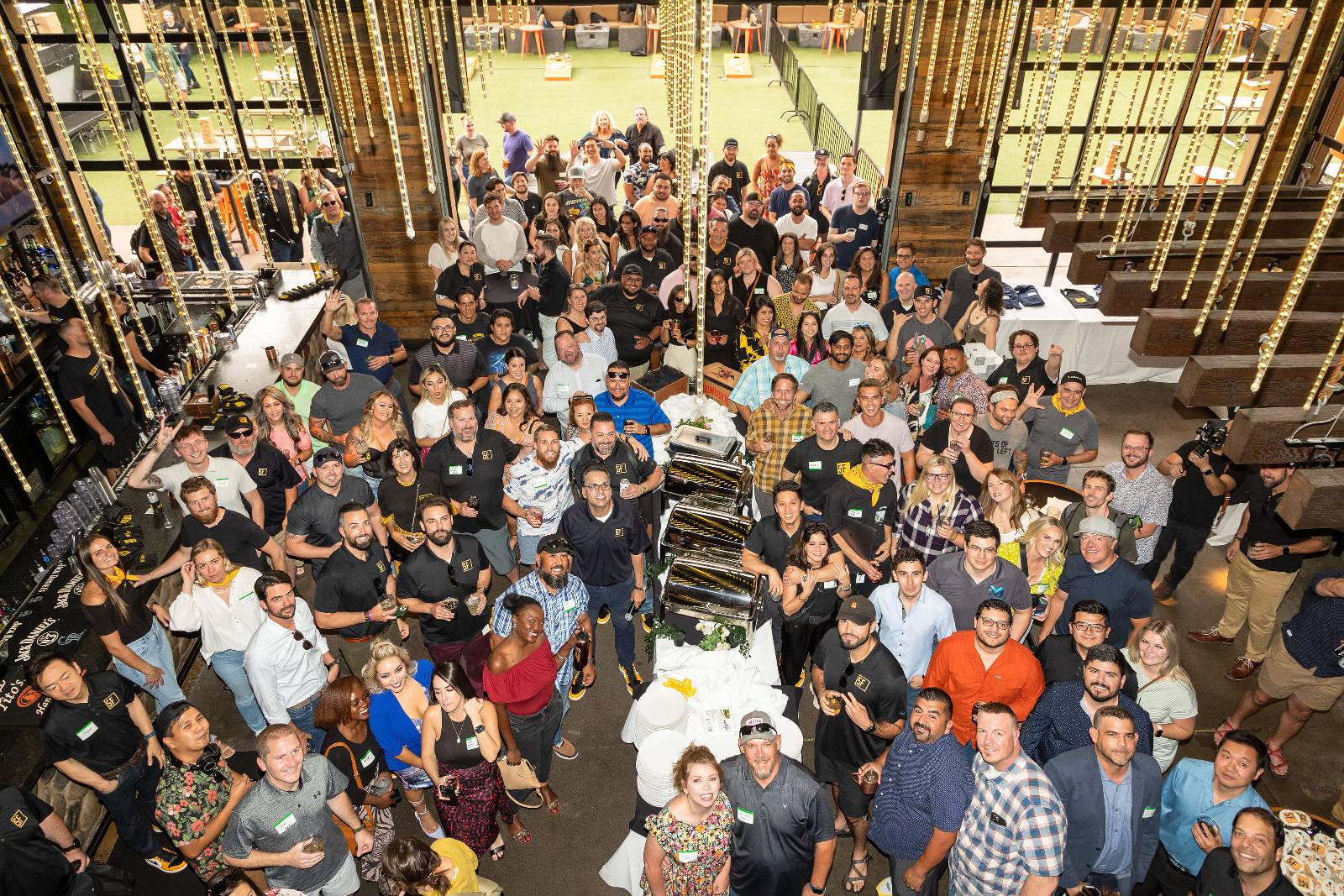
Its careers language is similarly intense. This is a company that advertises endurance and an appetite for difficult work. That is useful information for an engineer weighing a job: the attraction is responsibility and pace, with the demands those words imply. The photograph documents an earlier growth milestone, rather than today’s headcount.
The next load needs more than an algorithm
Golden Gate Capital lists Vorto as an active investment. Meanwhile, the company has recruited advisers with experience inside the industries it wants to serve. In April 2025 it announced eight additions, including former UPS executive George Willis, building-materials leader Bill Sandbrook, and former Clorox supply-chain chief Rick McDonald. The stated expansion targets included building materials, packaging, food, retail, and third-party logistics.
That choice reveals a practical truth about enterprise automation. Industry knowledge helps establish which constraints matter and which decisions an organization will permit software to make. A model cannot negotiate organizational trust by producing another decimal place.
There is a copyable lesson here even for businesses that never buy Vorto: measure the complete delivered cost, identify where the working day disappears, and connect the decisions that create those losses. Start with an actual handoff. Does the purchasing choice account for the delivery slot? Does dispatch know what changed? Can billing use the delivery record?
My reading of the operating requirements is that this approach needs accurate data, participating suppliers and carriers, and authority to act. Vorto’s February 2026 acceptable-use policy explicitly requires truthful shipment information and limits use to supported operating scopes. If records are unreliable, capacity unavailable, or every adjustment awaits a separate approval, the mechanism has less room to work. Better scheduling cannot manufacture a missing vehicle.
The compelling thing about Vorto is its attention to the interval between useful events. Goods get bought. Trucks get driven. Invoices get paid. The expensive disorder lives between those verbs. Bring them onto the same clock, and a truck may spend less of its working life impersonating furniture.
Follow the next move
Visit Vorto ↗ · Explore ReLoad ↗ · Company blog ↗ · News ↗