The first useful object in David Howland's marketing career may have been a cabinet. Before the funnels, before the global software launches, before anyone put a C at the beginning of his title, he was in Seattle making furniture with an art-history degree in his pocket. Wood is a bracing client. It does not care for jargon. A joint either meets or it does not; a door either swings or sulks. Form matters, but function gets the final vote.
Howland did not arrive in the cabinet shop by following a conventional executive itinerary. He studied art history and studio art at the College of Wooster, then earned a master's degree in contemporary sculpture from the University of Oregon. There he was a graduate teaching fellow and worked as a curatorial intern at the Jordan Schnitzer Museum of Art. The education was visual, spatial, and interpretive. It also trained him to look at a thing from several sides before deciding what it meant.
When an interviewer later asked how that beginning led to the CMO office, Howland replied, "Where's the back door?" It is a compact joke about a career assembled in retrospect. Cabinetmaking led to creative work. Creative work grew into art direction and leadership. Soon he was running teams of writers, designers, marketers, and programmers. The titles changed. His governing interest did not: how to create an experience that lands, lasts, and earns its place.
One craft, three working tests
The Nasdaq years
Sixty websites walk into a strategy meeting
At Nasdaq, where Howland spent nearly a decade and ultimately led brand and digital marketing, craft met institutional sprawl. The exchange was digital at its core, yet its public web presence had accumulated the usual corporate attic: disconnected properties, obsolete systems, abandoned sites, and an identity scattered across too many addresses.
The memorable number is 60. That is how many websites Howland said the company distilled into one. Behind the tidy result sat less photogenic work - consolidating platforms, improving governance, reducing legal and compliance risk, and making the economics legible to management. The team justified a platform overhaul partly through savings that would pay for the project over three years. Even ambition, a word Nasdaq placed at the center of its brand, had to survive a budget meeting.
It is tempting to call this tidying. That would undersell the politics of taking many departmental front doors and asking everyone to use one. Howland spoke about building an ecosystem of hundreds of content creators while maintaining consistency and accuracy. Central control had to coexist with distributed contribution. Anyone who has shared a document with six colleagues will recognize the philosophical difficulty.
The episode exposed a pattern that would follow him into enterprise software: complexity rarely needs another slogan. It needs architecture. People must know where they are, what the organization offers, and what to do next. A strong experience is not decoration added at the end. It is the route through the building.
“Never let your title or position define you.”Advice Howland credits to Nasdaq CEO Adena Friedman
Howland kept another Nasdaq lesson as a mantra. CEO Adena Friedman told him never to let a title or position define him. He has repeated the line because it suits an art-school graduate who wandered into financial technology through the workshop door. A title provides a frame for the current moment, in his telling, but cannot account for the full set of talents and ambitions a person brings to work.
The repeat CMO
A creative who asks where the revenue went
After Nasdaq came a sequence of chief marketing roles at Questback, Longview Solutions, and Earnix. Each company sold something abstract, consequential, and not easily demonstrated over coffee: feedback software, corporate performance systems, and AI-driven pricing and decisioning for banks and insurers. Howland's task was translation, but translation with a commercial meter running.
He is unusually blunt about the limits of marketing's prettier measurements. Impressions, opens, unique visitors, and MQLs matter, he has said, but they do not settle the case. He works backward from marketing-sourced pipeline and closed-won deals, looking for the point where an opportunity jumped the track. "Drive attributable revenue," he advised, "and believe me, the audience will hear the tune." It is the cabinetmaker's test again: admire the finish, certainly, but first see whether the drawer opens.
At Earnix, where he served from 2020 to 2025, the enterprise buying cycle pushed that discipline further. Howland described campaigns in which a target account might require more than 150 touches before a meeting. The number makes the old image of a clever ad causing an instant conversion look rather sweet. Enterprise persuasion is closer to patient carpentry: repeated contact, careful qualification, and a structure sturdy enough to hold over a long sales cycle.
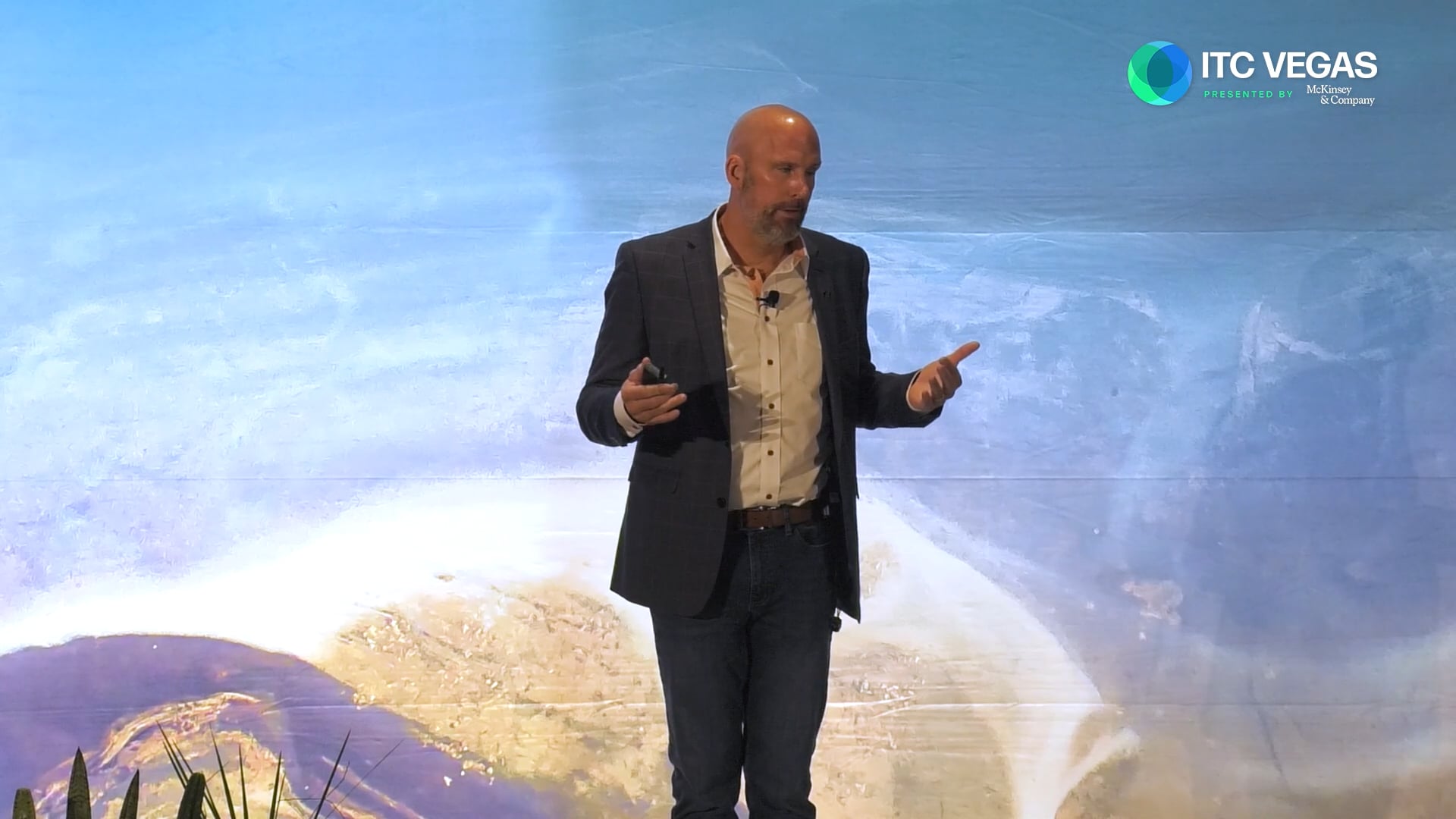
His preferred team qualities are almost aggressively unflashy: curiosity, enthusiasm, and humility. Curiosity gets beneath the brief. Enthusiasm supplies the energy for a long build. Humility lets evidence alter the plan. They are also protections against the "hero mentality" he has criticized in startups, where one person or one tactic is expected to rescue growth. Durable marketing, in his view, depends on foundations, processes, and people who can operate without a cape.
The same instinct appears in his approach to agencies. He treats outside partners as extensions of the team's capability and argues that leaders should explain what must be accomplished and why, then let experts help determine how. Prescribing every move defeats the point of hiring expertise. Open communication, transparency, and clear goals do more useful work than supervision disguised as collaboration.
“Always stress test your ideas by bouncing them off others.”Howland on the practical work of simplicity
Simplicity is the word Howland returns to, though his version is not the airy simplicity of a white room with nowhere to sit. He defines it as choosing the important thing and doing it exceptionally well. The route there passes through other people. A second or third set of eyes tests whether the message says what its author thinks it says, especially across countries and cultures. Assumptions dislike company; spoken aloud, many of them begin to look overdressed.
That respect for feedback also shaped his view of technology. At Questback, Howland argued that technology has no inherent moral direction apart from its purpose and the rules built around it. He saw continuous listening as a way for companies to move from knowing what customers did to understanding why they did it. Intent became the valuable material. Years later, it remained central to his enthusiasm for account-based and intent-based marketing.
The Blue Ridge chapter
Giving the supply chain a sentence it can stand on
In October 2025, Howland joined Blue Ridge as Chief Marketing Officer, responsible for marketing, brand, and communications. He thanked his new colleagues for the welcome and his former Earnix team for five years spent building a category around intelligent decisioning. Then he moved into another field with a formidable vocabulary: demand signals, multi-echelon inventory, replenishment, planning constraints, service levels.
Blue Ridge's new category language is "Supply Chain Intelligence." Howland has described it as the natural evolution of work the company has done for distributors, manufacturers, and retailers: connecting current demand signals, network-wide inventory decisions, AI, and ongoing operational support. His phrasing includes a telling standard - AI should "earn its authority" by demonstrating accuracy. The machine gets a probationary period, just like everybody else.
The assignment fits him. Supply chains are systems of consequence hidden behind ordinary moments. A bottle appears on a shelf. A replacement part arrives. A distributor holds enough stock, but not too much. Beneath each event lies a mesh of forecasts and tradeoffs. The marketer's job is to make the mesh visible without leaving the audience tangled in it.
Howland's route from sculpture to supply-chain software looks eccentric only if marketing is mistaken for promotion. Look at it as the arrangement of meaning under constraint, and the route straightens. Sculpture taught him to consider form. Cabinetmaking demanded function. Nasdaq supplied scale and governance. Enterprise SaaS added attribution, long buying cycles, and the daily diplomacy of aligning a CEO, a sales team, a finance department, and a market.
He once rejected the invitation to name the brand that best represented him. Labels, he said, reduce the rich complexity of a person. He even noted that he owns very few branded shirts. This is inconvenient behavior for a brand executive and therefore rather likable. It also clarifies the work. The point of a good category is not to trap a company inside a phrase. It is to give complicated value a useful entrance.
A cabinet has edges because edges make it useful. A career need not. Howland's has room for the artist, the analyst, the operator, and the executive who still likes a line with a little wit in it. The practical ambition is consistent: understand the material, involve the people who know it, remove what obscures it, and build the result so it holds.