Brad Kifferstein had the kind of problem that looks embarrassingly small until you count how often it happens. He drank coffee every morning. He also needed to pay attention to vitamins B12 and D, especially as a vegan. The coffee was automatic; the vitamins were not. One ritual had a mug, a smell and a reliable place in the day. The other lived in a bottle that was easy to ignore. VitaPerk was born in the gap between them.
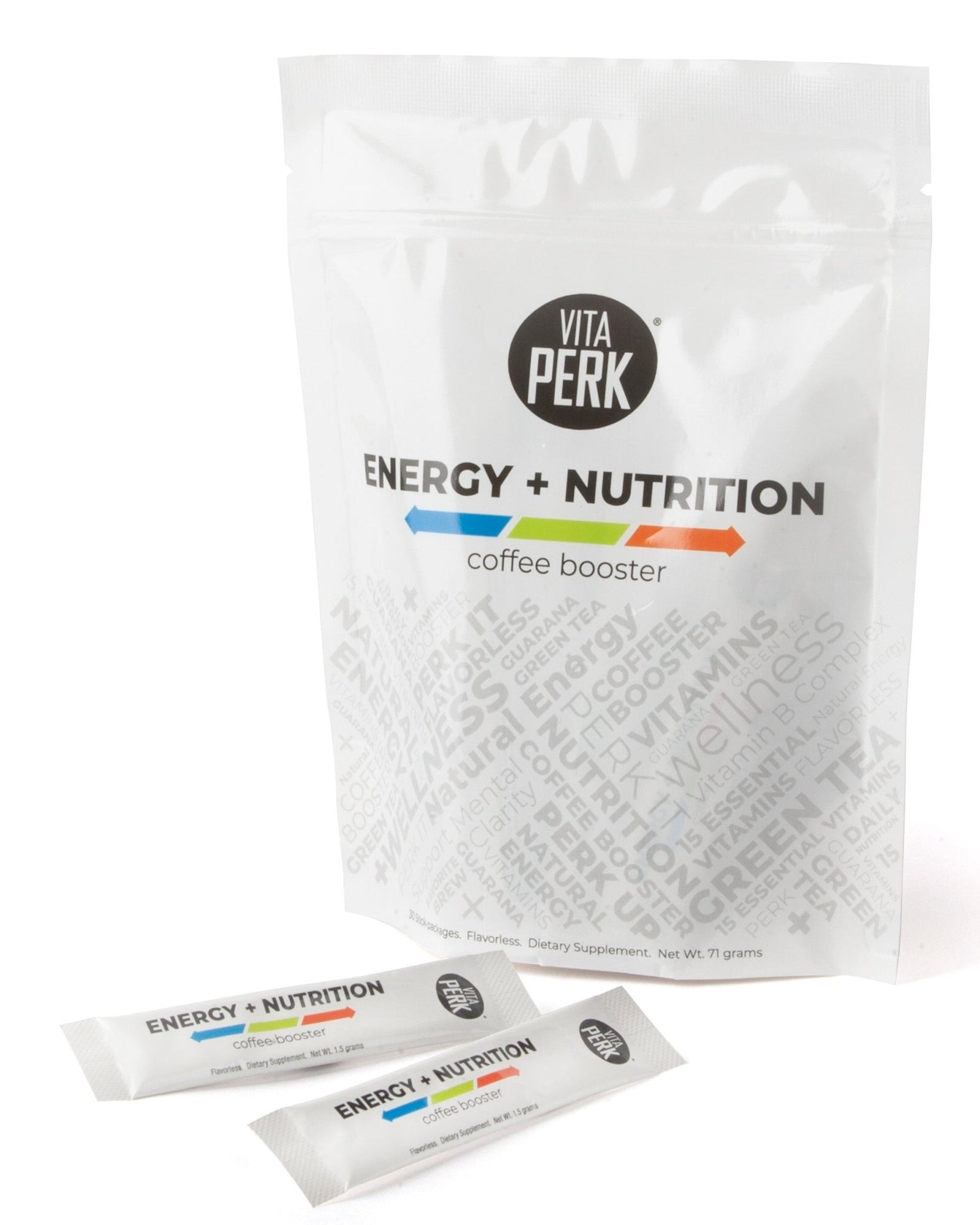
The West Bloomfield, Michigan company makes a powdered dietary supplement for coffee. Tear open a 1.5-gram stickpack, stir it into a hot cup or cold brew, and the product adds 15 vitamins and minerals plus guarana and green tea extract. VitaPerk says the powder is flavorless, dissolves quickly and leaves the drink’s color and aroma alone. Its current storefront lists the flagship product at $29.99.
That description makes VitaPerk sound like a tiny chemistry trick. The more interesting trick is behavioral. It does not ask customers to buy a new coffee system, tolerate a wellness-flavored latte or remember a separate pill. It borrows a ritual already secured by caffeine, taste and repetition. In product language, VitaPerk is an add-on. In human language, it is a stowaway.
A product built around forgetting
The problem was not access to vitamins. It was adherence.
Kifferstein and co-founder Jeb Belchinsky began developing the concept in 2010. Kifferstein’s account is disarmingly specific: coffee was “sacred,” supplements were “sporadic.” Rather than manufacture another complete beverage, they wanted a neutral powder that could enter whatever coffee a customer already preferred. Dark roast, office drip, cold brew, cream, sugar and the aggressively customized half-caf latte could all stay.
The borrowed-habit loop
brew coffee
tear + stir
fortified cup
The customer is not only the supplement enthusiast. It is the busy parent, office worker or habitual coffee drinker who likes the idea of added nutrients but dislikes another routine. The company also pitches employers through VP@Work, a corporate-wellness program built around the communal coffee station. For roasters and beverage companies, its Partner Perks program presents the formula as a plug-in route toward functional drinks without rebuilding an entire product line.
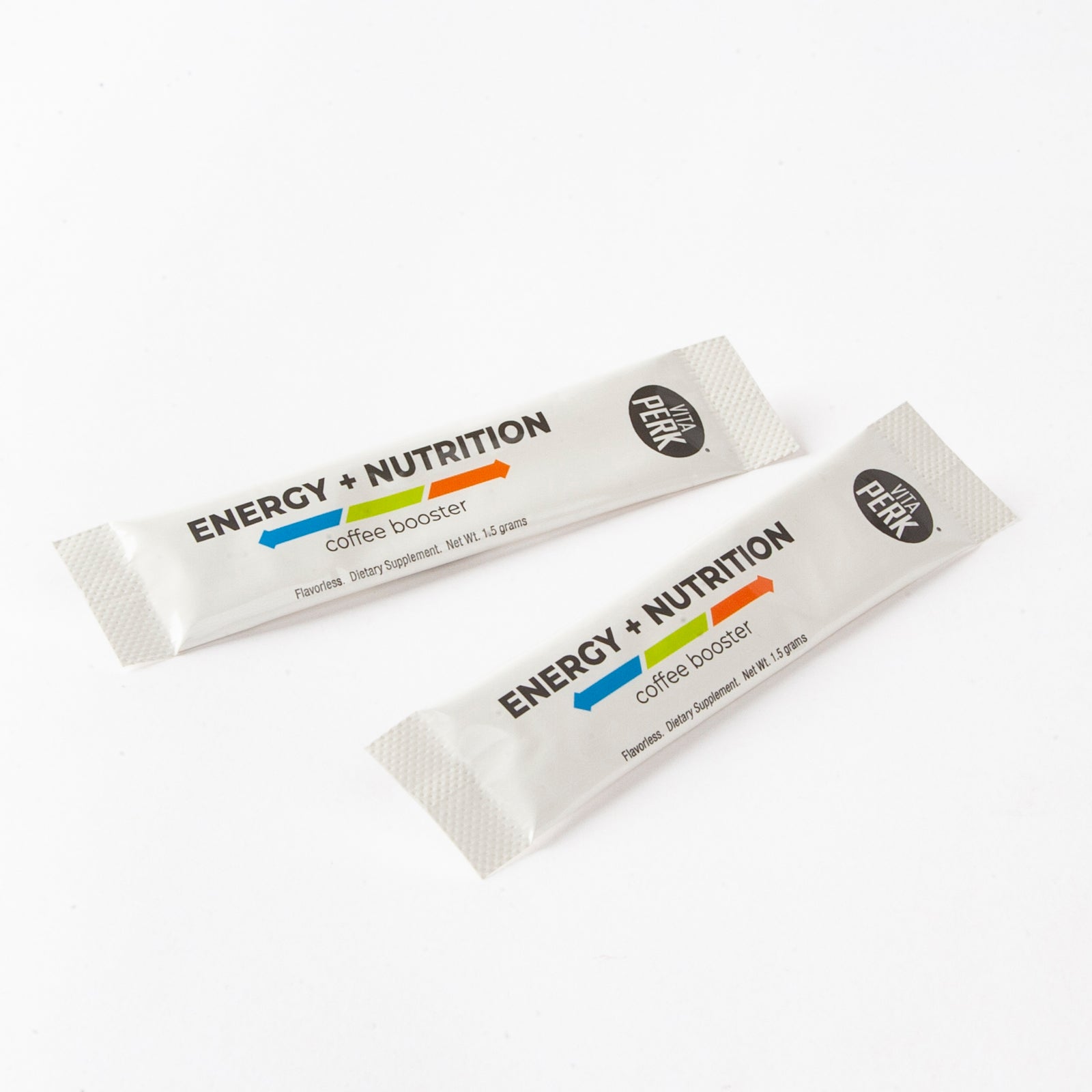
The first failure was physical
A one-year launch plan met the uncooperative reality of powder, heat and production.
The concept began in January 2010 with an expected one-year route to market. Commercial availability did not arrive until early 2015. Contemporary accounts attribute the stretch to formulation and production problems. That delay is the least glamorous and most revealing part of the story. “Flavorless” is not an adjective a founder gets to add in a pitch deck. It is a sensory constraint. The nutrients must survive the intended use, the powder must dissolve, and the cup must still taste like the cup a customer chose.
VitaPerk says its nutrients were independently tested at typical coffee temperatures. Its label has also made the product legible to outside supplement databases: a 2026 pharmacist-oriented listing identifies exact amounts for the active ingredients rather than hiding them behind a proprietary-blend total. Those details matter because VitaPerk’s convenience promise only works after trust. A powder that disappears too well can feel mysterious; a transparent label gives customers something solid to inspect.
“Coffee was sacred. Supplements were sporadic.”Brad Kifferstein, VitaPerk co-founder
What changed Kifferstein’s mind was not a sudden discovery that supplements mattered. He already knew that. It was noticing that the two behaviors had radically different staying power. He stopped treating forgetfulness as a personal failure and treated it as a product-design input. That reframing is VitaPerk’s durable contribution: do not scold the user for losing a weak habit when you can attach the desired action to a strong one.
The money did not behave like the pitch
VitaPerk earned national attention in 2015 when Kifferstein appeared on CNBC’s Power Pitch. The panel delivered one “in” and two “out” votes. Two years later, the company offered shares through StartEngine at $2.50 each and a stated $2.5 million pre-money valuation. The campaign sought between $10,000 and $100,000. Public campaign records show roughly $13,000 committed.
Public financial snapshots, not a growth curve
Bars use the campaign’s $100,000 maximum as a visual scale. Revenue figures are historical disclosures, not current estimates.
The same campaign materials reported 2016 revenue of $38,116, down from $50,842 in 2015, with a 53 percent gross margin, a monthly burn near $6,400 and 4.9 months of runway. The company had made a real product, but it had not proved a repeatable growth machine. VitaPerk’s history is therefore more useful than a tidy success myth. A memorable insight can survive messy economics; it does not cancel them.
The live business now presents three routes to revenue. There is direct ecommerce through Shopify. There is workplace distribution, where an employer buys the convenience and wellness story for a group. And there are coffee-industry relationships, where a roaster or beverage company can add function without asking customers to abandon its beans. EnFuse Energy Infused Coffee, for example, lists VitaPerk as an add-on for brewed coffee.
Where it sits on the crowded counter
VitaPerk occupies an awkwardly productive middle. Traditional multivitamins own familiarity and often cost less per serving. Energy drinks own immediacy and flavor. Fortified coffee brands such as VitaCup bake function into the coffee itself. Functional powders and creamers from brands such as Laird Superfood and Four Sigmatic make the add-in category easier to understand. The cheapest alternative is another cup of coffee or no supplement at all.
Less separate remembering, but it requires a beverage and adds caffeine-related considerations.
No new canned drink or sugary flavor, but the effect is tied to the customer’s existing coffee.
Works with any roast, though it adds a tear-and-stir step and another SKU to replenish.
A clearer nutrition proposition, with a price and a trust burden the empty spoon does not have.
Its differentiation is restraint: coffee-brand agnostic, single serve, less than one calorie, gluten-free and kosher, according to the company. The formula supplies 15 vitamins and minerals, including B-complex vitamins, plus guarana and green tea extract. Because the product adds stimulant sources to an already caffeinated beverage, “more” is not automatically better. VitaPerk itself says it does not replace physician-recommended supplements. Anyone navigating medications, pregnancy, caffeine sensitivity or a medical condition has more important input than a lifestyle label: a qualified clinician.
The part worth copying
Founders should not copy the powder. They should copy the sequence. VitaPerk began with observation, not a category forecast: one behavior happened every day, another did not. It preserved the strong ritual, reduced the new action to a few seconds and made neutrality a product requirement. Then it found multiple buyers around the same moment, from the individual at home to the office manager stocking a shared coffee area.
A stealable five-step test
- Find the behavior users already perform without reminders.
- Place the desired action immediately beside it.
- Preserve the taste, tool, identity or pleasure that makes the ritual sticky.
- Make success visible enough to trust and quiet enough to repeat.
- Test willingness to replenish, not merely willingness to try.
The last step is where elegant ideas meet retail reality. Sampling can prove that a flavorless powder does not ruin coffee. Only repeat purchases prove that the benefit deserves a permanent line in the household budget. VitaPerk’s historical financials and modest crowd raise are a reminder that reduced friction is an advantage, not demand itself.
When the trick stops working
Habit piggybacking fails when the host behavior is inconsistent, when the add-on changes what people love, or when the claimed result is too vague to justify replenishment. It also struggles when the ritual has no natural insertion point. Coffee gives VitaPerk a cup, a packet-shaped precedent, a spoon and a daily clock. A product attached to an irregular activity gets none of that infrastructure.
Trust is the other condition. Supplements live in a category where ingredients, doses, interactions and marketing language deserve scrutiny. A frictionless action can actually raise the standard: if taking the product feels effortless, understanding it should not. Clear labels, conservative claims and accessible safety guidance are part of the experience, not paperwork around it.
VitaPerk’s bet remains compact. People like their coffee more than they like managing themselves. Put the useful thing inside the beloved thing, remove every sensory objection you can, and ask for one stir. It took the company far longer to make than the gesture suggests. That is precisely why the gesture is worth studying.