The client’s portfolio has a past. There is the stock bought years ago, now worth considerably more. There is the employer’s stock, which feels reassuringly familiar. There is the sector the client refuses to own. An investment model can describe a sensible destination. Getting there without an unwelcome tax bill is another matter. This awkward journey is where Vise’s business becomes interesting.
- Advisors set the strategy; Vise handles portfolio implementation.
- Existing holdings, tax budgets and exclusions shape each account.
- Software and investment management sit inside the same business.
Vise sells financial advisors a way to build and maintain personalized portfolios. It combines automated trading, rebalancing and tax management with tools for proposals and client explanations. The customer is the advisory firm; the beneficiary is the person whose investments require more attention than a standard model permits.
01 / The expensive lesson in growing up
Samir Vasavada and Runik Mehrotra founded Vise in 2016 as teenagers. Their early ambition was to equip advisors with technology that could make individual treatment economical. In a 2020 announcement, Vasavada said, “Human relationships run the advisory industry.” The advisor would keep the relationship. Software would absorb the repetitive investment work.
Investors liked the proposition. Sequoia led a $14.5 million Series A in May 2020 and a $45 million Series B that December. Ribbit Capital led a $65 million Series C in May 2021. The reported valuation reached $1.05 billion. Money supplied an opportunity to hire. It also supplied an opportunity to mistake hiring for progress.
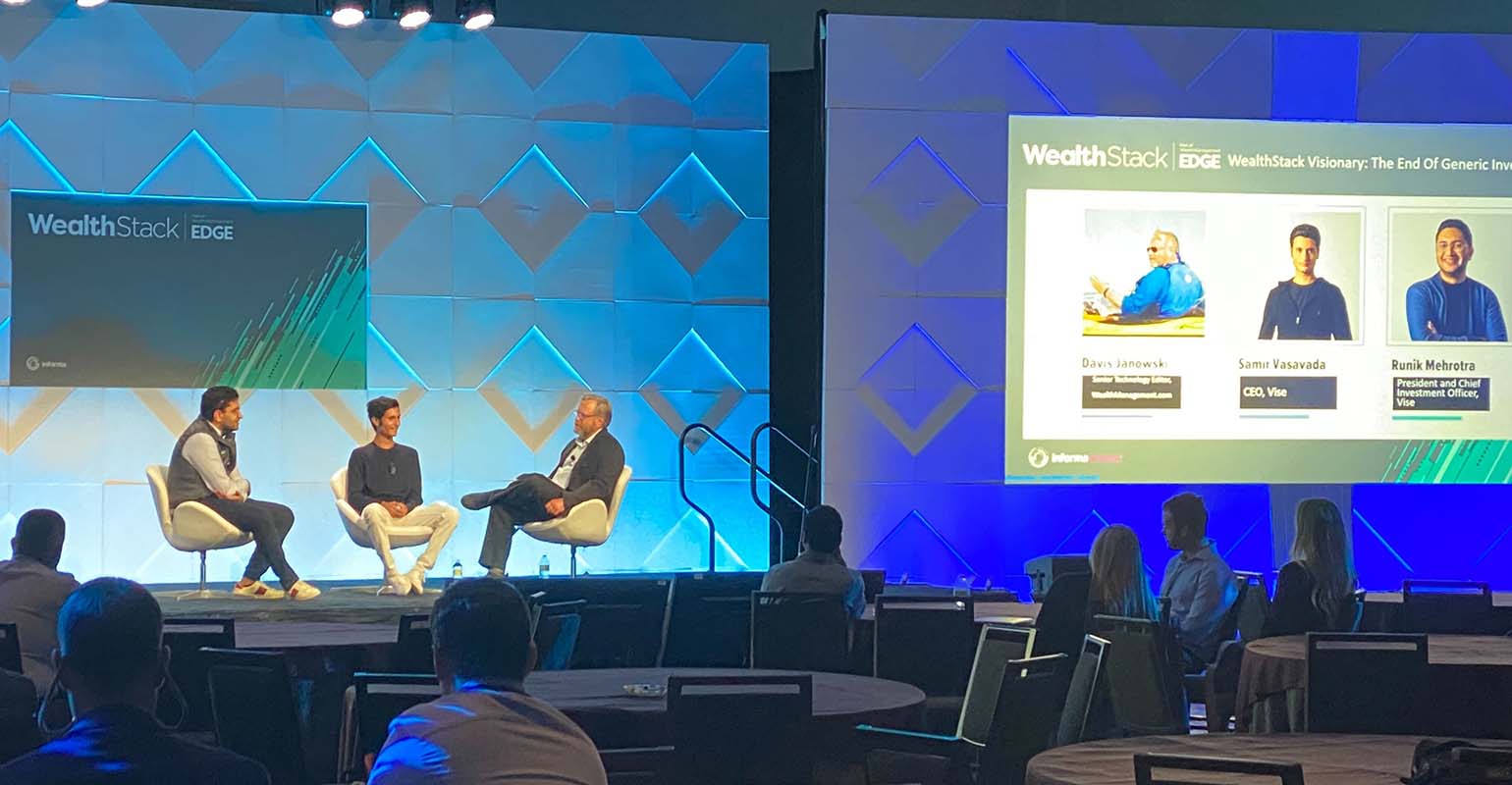
By March 2023, the founders were publicly acknowledging that they had expanded too quickly. WealthManagement.com reported cuts affecting half a 100-person workforce and a 66% reduction in burn. This was a failure of pacing: the organization had grown beyond what the business could sensibly support.
The founders’ later account goes further. In February 2026, they described rebuilding from more than 150 people to around 40, with monthly burn falling from $3 million to under $1 million. Those figures describe their retrospective account, rather than the same snapshot as the earlier reporting. They argued that management layers had slowed execution.
Their response was specific. They removed VP and Director layers, organized responsibilities around Heads and Leads, and became Co-Heads themselves. Vasavada took external functions, including sales and partnerships; Mehrotra took internal functions, including engineering and operations. The company’s proposed remedy was to shorten the distance between hearing a customer problem and fixing it.
02 / An investment model meets a real person
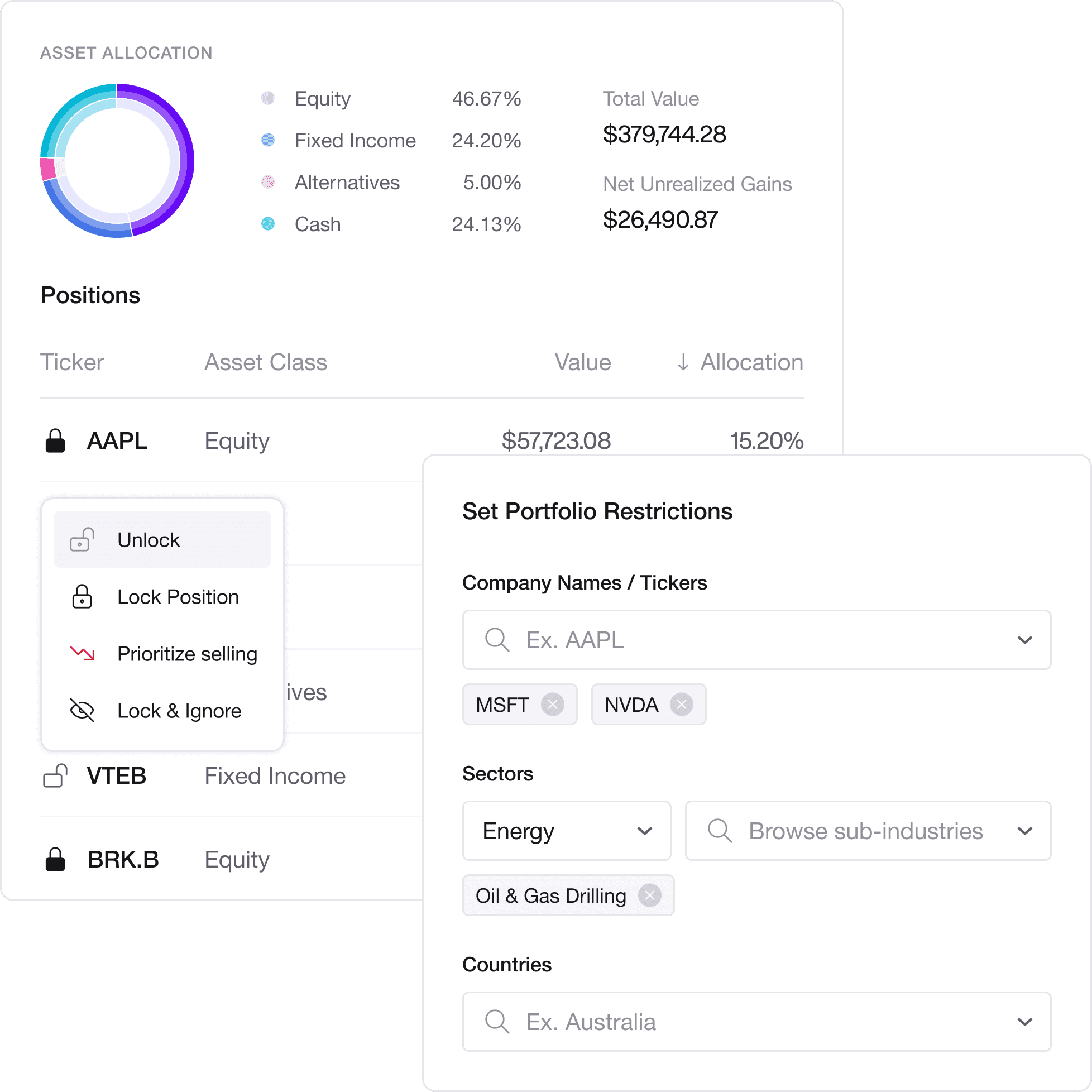
Consider an investor with a large appreciated stockholding. Selling everything to implement a model may create a tax bill. Leaving everything alone preserves the concentration. Vise lets the advisor lock the holding, construct the surrounding portfolio and establish a budget for realizing gains during a gradual transition.
Direct indexing supplies another kind of flexibility. Instead of owning only a fund wrapper, the client owns individual stocks. That allows security exclusions, factor preferences and tax-loss harvesting at the stock level. Vise says it reviews positions daily and coordinates wash-sale avoidance across accounts and households.
- 01Keep the historyImport holdings and identify restrictions.
- 02Set the limitsChoose the model and a gains budget.
- 03Manage the routeTrade, rebalance and review tax opportunities.
A firm can also bring its own investment model. Vise stores and versions it, then implements changes across linked accounts while managing each client’s tax circumstances individually. The investment team can preserve its own benchmarks and asset-class definitions. That makes the platform useful to firms that want help executing their process without handing over the process itself.
The distinction matters because investment instructions can collide. A trade that improves alignment with a model might realize gains. A loss-harvesting trade might alter exposure. Vise describes a multi-objective optimizer that weighs taxes, risk, drift, costs and client requirements together. Its competitive claim rests on reconciling those demands inside one workflow.
03 / The customer who came back
Manhattan West offers a more revealing test than a fundraising headline. The Los Angeles wealth firm was an early Vise client, then returned in December 2024. Its chief executive, Lorenzo Esparza, pointed to “The addition of fixed income solutions and support for alternatives” as capabilities that matched the firm’s needs.
A wealth platform has to accommodate the portfolio the advisor actually runs. Vise now offers municipal and Treasury portfolios, firm-created models and third-party models. Options overlays, launched in July 2025, add protection or income strategies around existing positions. Long Short, introduced that December, adds short positions that can create harvesting opportunities when stocks rise.
“The addition of fixed income solutions and support for alternatives”Lorenzo Esparza, Manhattan West CEO, on returning to Vise
The expansion continued in 2026. Alpha Architect models joined in July. August brought a Long Short overlay around existing equity holdings, a box-spread loans view and controls for cash set-asides and scheduled investing. September brought Bitwise Core and Thematic crypto model portfolios. Each addition widens the range of work an advisor can keep inside the platform.
Advertised platform assets include assets managed, aggregated, monitored or used for proposals. This is a broader measure than discretionary assets under management.
04 / The price of doing less by hand
Vise is both a technology provider and an investment-management business. Its subsidiary, Vise AI Advisors, acts as sub-advisor on managed accounts. Its March 2025 brochure disclosed a general annual sub-adviser fee of 0.25%-0.50%, subject to agreements and negotiation. On $1 million, that range means $2,500-$5,000 annually, before other applicable charges.
Different products have different thresholds. Current FAQs state no Vise minimum for Direct Indexing and $125,000 for Fixed Income. Long Short begins at $250,000 in taxable assets for lower leverage tiers, with higher tiers and custodian requirements raising the bar. Access to a third-party model carries no model access fee; underlying fund expenses remain.
Alternatives overlap rather than match perfectly: Parametric and Canvas for customized indexing; 55ip for tax-aware model implementation; Orion and Tamarac for advisory infrastructure. An advisor’s useful comparison is the actual account: what must be kept, what can be sold, which custodian holds it and how much implementation costs.
For a prospective customer, the practical exercise is to test a transition on a representative account. Include the awkward holding, the client’s exclusions and the intended cash withdrawals. Review the proposed trades and tax consequences before execution. A demonstration built around those constraints tells the advisor more than a presentation built around a freshly funded account with nothing inconvenient inside it.
The limits follow from the same particulars. Tax harvesting needs usable losses and a client tax situation that benefits from them. Leverage introduces borrowing costs and additional risk. Incorrect client constraints produce an unsuitable plan. The transferable lesson is wonderfully mundane: write down the exceptions before automating the routine. A personalized portfolio begins with taking its owner seriously.