Vinod Reddy has spent much of his career helping information get somewhere useful. Through airline software, Indian e-commerce, cloud systems and now artificial intelligence, the destination has remained recognisably human: somebody needs to make a decision, finish a task or get on with their day. The machinery changes. The unfinished business has a remarkably long life.
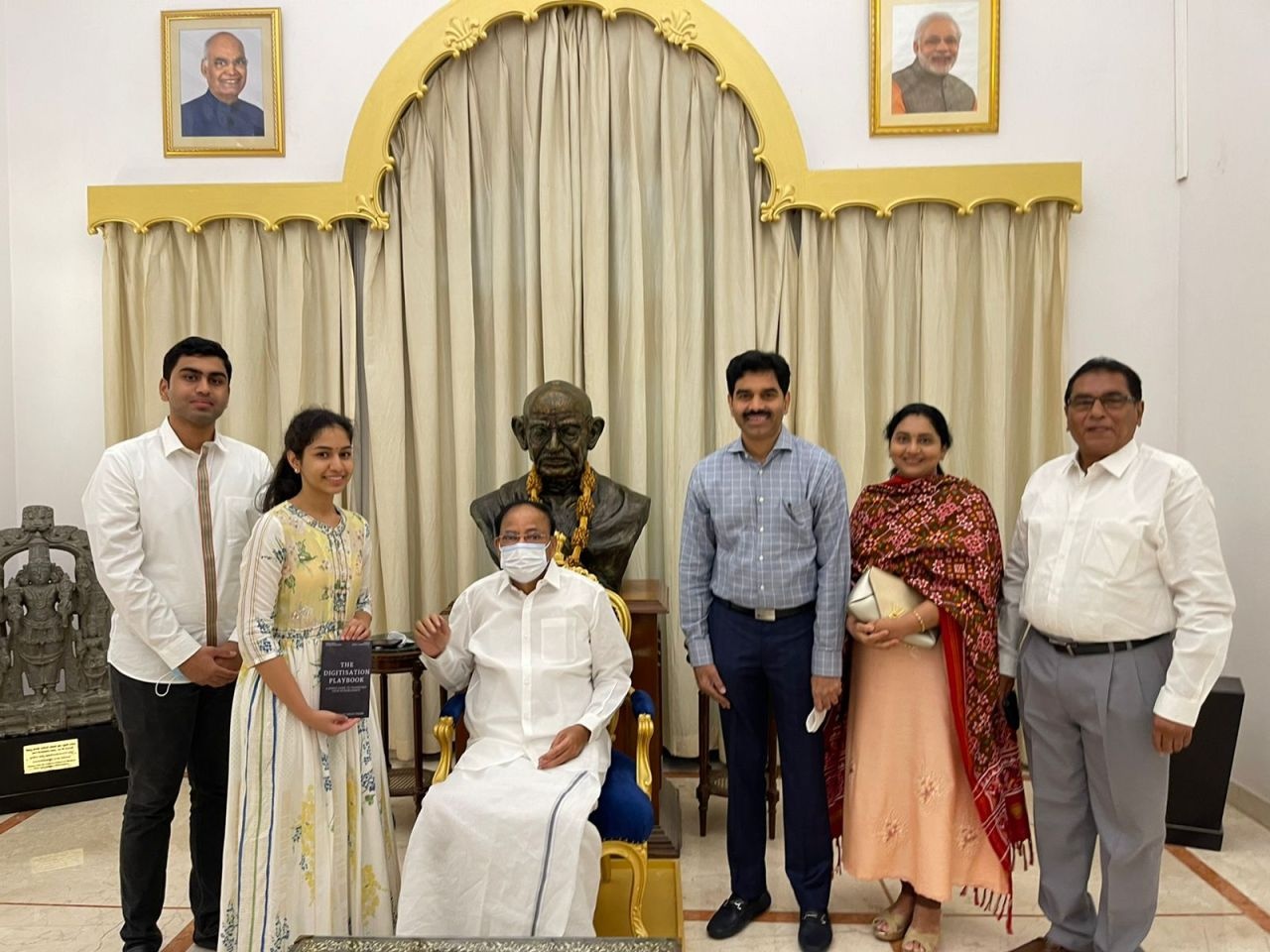
Consider one small scene away from the enterprise software vocabulary. In 2021, Reddy shared a photograph of a meeting with then Vice President of India Venkaiah Naidu. He had gone to present a book about digitising microbusinesses, co-authored by his daughter, Vinusha Narapareddy. His description was brief and affectionate: “A truly memorable moment.” For once, the family connection was more interesting than the system integration.
The episode offers a pleasant entrance to a career usually described through platforms and implementation projects. Here was the founder of CRMIT Solutions, whose working world includes large enterprises and their complicated customer records, celebrating a book concerned with much smaller businesses. Digital ambition can wear a suit, but it need not require a multinational balance sheet.
Before the cloud, there were departures
Reddy’s professional background includes technical and management roles at American Airlines, Sabre and BroadVision. His experience stretches across product development, implementation, consulting, marketing and project management. It is a career with a conspicuous amount of delivery in it. Whatever the elegance of a proposal, eventually something has to work.
At American Airlines, he served as technical lead on a project that received the Franz Edelman Award in management science and operations research. The distinction belongs to the project and its team. That distinction matters: a working system is a collective achievement, even when the biography eventually has room for only one photograph.
At BroadVision, he helped build the company’s Indian operations and global services practice. As head of service operations in South Asia, he managed more than 20 e-business implementations. In 2001, he received BroadVision’s Services Country Manager of the Year recognition for Asia Pacific and Japan. The combination of technical responsibility and regional operations would become a useful preparation for running his own business.
There is a formal computing education behind that practical experience, too. Reddy holds an MS in Computer Science and Engineering from the University of North Texas. His later work would carry him across the commercial questions surrounding software: how people adopt it, how teams support it and how an organisation knows whether its investment has earned its keep.
The railway test
Among the projects Reddy describes from his BroadVision years is an e-commerce portal for a major railway network, alongside an early mobile commerce implementation in India. The implementation received PCQuest recognition for social impact in 2004 and IT implementation in 2005. These were projects whose usefulness extended beyond an internal reporting screen.
A railway booking system provides a particularly unforgiving education in technology. A transaction has a destination outside the browser. Someone expects to travel. Seen in that light, the connection to Reddy’s subsequent interest in customer experience is easy to understand: the software has to carry the user all the way through the task.
CRMIT’s own account of its work includes e-commerce enablement for IRCTC. Reddy’s career therefore touches a familiar Indian digital experience, even if the work behind that experience is less visible than the booking itself. Enterprise software has this peculiar social arrangement: when it behaves, hardly anyone asks who implemented it.
A business built around the loose ends
Reddy founded CRMIT Solutions in 2003. His fellow founders include Venkatesan Sundaram and Naga Chokkanathan, whose backgrounds also include BroadVision. The shared professional history gives the company’s beginnings a concrete setting: people familiar with implementation work setting out to build a business of their own.
He has described CRMIT’s transition from consumer e-commerce work into business-to-business solutions as a demanding change. Contracts could involve multiple clouds, locations and currencies. Moving from domestic work to a global service business required changes to the commercial model as well as to delivery. International growth brings a rather large suitcase of administrative details.
A Salesforce partnership followed in 2017. Reddy has identified that relationship as a contributor to growth, connecting CRMIT’s expertise to customers making decisions about projects and services. His professional partnerships also encompass Tableau and MuleSoft. Across those names runs the practical business of connecting customer records, analysis and the systems around them.
His attention repeatedly returns to the incomplete edges of those systems. A customer may have a record in one application, a service history in another and information elsewhere that nobody can readily use. CRMIT’s Customer360++ approach addresses those connections. The extra plus signs may look enthusiastic; the work underneath them is painstaking.
Where the dashboard meets the doorstep
By 2019, Reddy was discussing customer information in terms of the final steps between a central system and an actual service interaction. FieldForcePro, one of CRMIT’s products, addressed work orders, scheduling, dispatch, routes and technician tracking. FieldSalesPro addressed sales activity. These are tools for the part of the business that has to leave the meeting room.
In one example he described, a media insight and information company used FieldForcePro to improve scheduling and dispatch. Reddy reported a 25 percent reduction across operating costs, fuel consumption and spare hours, alongside a 39 percent improvement in field productivity. These were results from that particular engagement, rather than a promise to every prospective customer.
The example helps explain his commercial interests more clearly than a catalogue of platform names. A dispatch decision becomes a journey; a journey consumes time; time becomes a cost or an opportunity. Reddy’s concern with connected information lives in those ordinary consequences. An elegant dashboard still has to answer the practical question of what happens next.
Earlier work with Oracle offers another view of that same preference for practical delivery. In a 2014 announcement about a packaged Oracle Sales Cloud solution for travel and transportation businesses, Reddy emphasised predictable budgets, controlled project scope and reduced integration risk. The proposal combined industry practices with a faster implementation approach. Those concerns are hardly glamorous, which is part of their appeal. A customer buying business software is also buying an expectation that the bill, timetable and finished system will bear some relationship to the original conversation. Reddy was talking about that expectation well before the current enthusiasm for AI agents.
The anniversary guest list
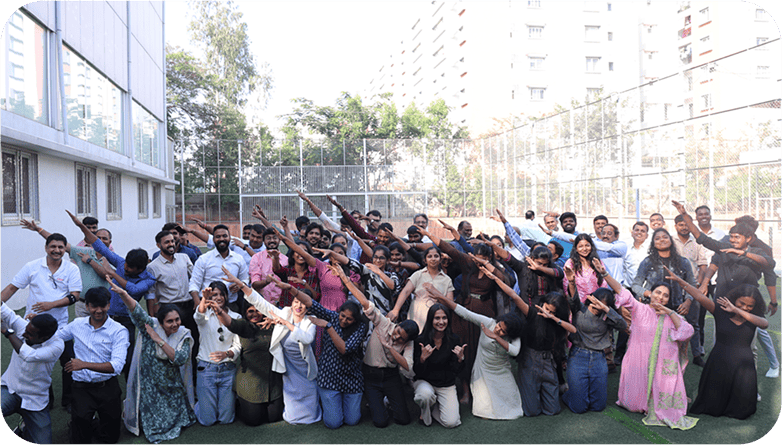
When CRMIT reached its eighteenth anniversary in 2021, Reddy’s public reflection included customers, partners, employees and former employees. He celebrated seeing them grow, develop their values and pursue higher aspirations. Including people who had already left the company gave the anniversary a welcome breadth. The guest list extended beyond the current payroll.
That emphasis had appeared earlier. In a post marking the company’s entry into its fifteenth year, he credited stakeholders, vendors, past and present employees, partners and customers. He singled out customers’ role in spreading the word about CRMIT. Relationships, in his telling, had carried the business into the wider world.
The pattern is revealing without requiring a grand theory of his personality. Reddy repeatedly describes a company through the people connected to it. His anniversaries are opportunities to acknowledge those relationships. For a founder working in customer relationship management, there is a pleasing consistency in remembering that the relationships involve people.
“A truly memorable moment.”Vinod Reddy, on presenting the microbusiness digitisation book co-authored by his daughter
AI still needs the plumbing
His approach to managed services supplies some context for that progression. CRMIT has described three parts of the work: managed capacity, managed support and managed projects. Capacity concerns the skills and time available to a customer. Support includes releases, incidents and changes to the software. Projects organise delivery around agreed outcomes. These distinctions put some substance behind the broad promise of customer success. The relationship continues after an application first goes live, through the revisions and maintenance that a working business requires. Reddy’s interests in adoption and useful data belong to that continuing relationship, where a system has to remain useful as its users and their requirements change.
The next chapter keeps returning to the foundations. In 2024, CRMIT announced a patent for a “Method & System for CRM.” Its stated applications include anticipating service requests in software support. The company also described an Enterprise Innovation Lab working with generative AI, predictive intelligence, prototypes and minimum viable products.
That September, CRMIT announced a Jaipur office as part of its expansion in data, AI and services for global capability centres. The office was intended to support Salesforce implementation, integration, customisation and managed services. For Reddy’s company, the turn toward AI therefore sits alongside an expansion of the people and delivery operations that make enterprise projects possible.
In remarks shared for Engineers’ Day in September 2026, Reddy returned to a familiar obstacle: information separated across an organisation. Before an AI agent can recommend an action, he argued, it needs accurate, connected and contextual data from systems such as CRM and ERP. The new intelligence still has to negotiate the old filing arrangements.
It is a fitting concern for someone whose career has moved from airline systems through railway commerce to customer platforms. Reddy’s vocabulary has expanded with the industry, while his recurring question remains practical: can the information help someone act? A booking completed, a technician dispatched, a business able to use what it already knows. Software earns its place in such moments. The rest can wait for the next presentation.