In 1999, Girish Avantsa sat in the bullpen of a call center in Spokane, Washington, watching a business turn human impatience into numbers. A supervisor and ten pod leads worked around him. LED displays counted the calls waiting, the time people had waited, and the time agents spent talking. Broadband customers wanted new connections or help with existing ones. The machinery of service was busy measuring itself.
He spent the week learning what drove those figures. Years later, when he returned to that memory in his writing, he kept the agents and their supervisors at the center of the picture. Software could collect more information, open more channels, and answer more questions. The people still had to make the whole arrangement work. A dashboard is a useful thing; it has yet to acquire the courtesy to apologize for keeping you waiting.
That scene provides an unusually practical introduction to Avantsa, a co-founder of PopcornApps who became CEO when the business rebranded as Accellor in 2022. His professional territory is enterprise technology, where a promising idea must survive contact with billing systems, old customizations, staff routines, and somebody’s Monday morning. His writing keeps coming back to what happens at that point of contact.
The receipt collection nobody wanted
Consider the manila envelope. Before it became an example in a 2016 argument for workplace mobility, it was Avantsa’s traveling companion. He recalled spending about fifteen days a month on the road, at home and abroad, selling software and solutions. Receipts accumulated in the envelope: meals, hotels, miscellaneous expenses. Back at the office came the matching, the expense reports, and the project codes.
He called it a “ragged manila envelope,” a small detail with the persuasive power of an entire software presentation. Anyone who has tried to decipher a faded receipt can supply the rest. Here was a technology salesman returning from selling progress, then doing clerical archaeology to recover his expenses.
His argument was that employers were moving too slowly to put useful processes on employees’ phones. People already used smartphones throughout their private lives. At work, complicated procedures and old customizations could still dictate the experience. He wanted mobile applications connected to the systems underneath them, with enough attention to each organization’s particular ways of working to make those connections useful.
“Don’t lose out on the ultimate workplace productivity tool - your employees’ smartphones.”
Girish Avantsa, 2016
Eleven call centers. One view.
The same concern appears in his account of a warranty-management project, published in January 2017. His team moved a business function for an unnamed Fortune 50 technology company from SAP to a system built around Salesforce and integrated applications. Eligibility, returns, inventory, fraud checks, and depot connections all belonged to the job. There was ample opportunity for a customer’s simple question to become an employee’s complicated afternoon.
Avantsa described agents previously moving among three applications. The replacement brought the customer and warranty claim into a single view. He reported a global launch across eleven call centers, more than 100,000 monthly transactions, and support for over 30,000 warranty claims. These were figures from his account of the project, rather than a general promise about what every installation could achieve.
The implementation took nine months, he wrote, contrasting it with similar work he remembered taking eighteen months about a decade earlier. His satisfaction was tied to the work a platform could absorb and the practical difficulty it could remove. Scale meant something because it described actual claims, actual agents, and actual systems brought into agreement.
It is a revealing choice of professional anecdote. A warranty claim is rarely anyone’s favorite part of owning a product. Making it easier is an unglamorous ambition with a very large constituency.
A new coat of paint has its limits
By January 2018, Avantsa was explaining another deceptively simple problem: moving Salesforce users from Classic to Lightning. An application could be styled to resemble the newer experience while retaining its underlying architecture. That distinction mattered because appearances could outrun the benefits available underneath.
His advice was methodical. Assess the existing configuration. Decide which customizations still earn their keep. Establish the outcomes and timetable. Introduce selected users to the change, explain the likely effects, and let their experience inform the rollout. Even a technically sensible migration had to accommodate people already trying to do their jobs.
PopcornApps had a commercial answer, too: Flash, a tool intended to automate conversion work and preserve existing custom elements. Avantsa’s discussion joined the product pitch to a larger operational argument. The interesting question was how a company could take advantage of a newer platform without casually throwing away the work embedded in the old one.
Enterprise software has a particular gift for turning yesterday’s sensible exception into tomorrow’s expensive complication. His migration advice starts by giving that history a proper examination.
The laptop shop as a software problem
His work also reached beyond the employee’s screen. Microsoft worked with PopcornApps on Synchronized Shopping, a pilot hosted at Harvey Norman’s Millenia Walk flagship store in Singapore. The premise was familiar to anyone who has attempted to buy a computer: plenty of choice, followed by a suspicion that choosing requires another computer.
The online assistant asked about a shopper’s needs and preferences, then suggested devices. A shopper pass carried the selection toward the physical store. In the showroom, a matching symbol on a phone and a device helped the customer find the recommended machine. Browsing online and handling the product in person became connected stages of the same purchase.
Avantsa, identified at the time as PopcornApps’ founder and chief operating officer, described the result as “an immersive experience of browsing, comparing, and selecting a device that makes an overwhelming task seem simple.” The sentence contains the attraction of the project: considerable coordination behind the scenes, less confusion in front of the customer.
There is a family resemblance between that shopping trip and the warranty desk. In each, the technical work has to connect several places where information lives. The person using the result should have fewer reasons to think about those divisions.
A founder’s name on a new door
On September 12, 2022, PopcornApps announced its rebrand as Accellor and an expansion of its board. Avantsa took over as CEO. Fellow co-founder Samvit Raina was chief strategy officer, and Surjeet Singh, managing partner of Turing Capital Group, joined the board alongside them.
The announcement linked the change to broader capabilities and plans to scale. Avantsa welcomed Turing Capital’s alignment with the company’s growth plans and the partners’ experience in expanding services businesses. Singh pointed to customer retention and delivery as reasons for his confidence. Raina connected the new name to the company’s expanded services.
A rebrand invites an audience to admire the lettering. This one also changed the leadership arrangements around the business. For Avantsa, the appointment placed the responsibilities of the chief executive alongside the customer and implementation concerns that run through his earlier writing.
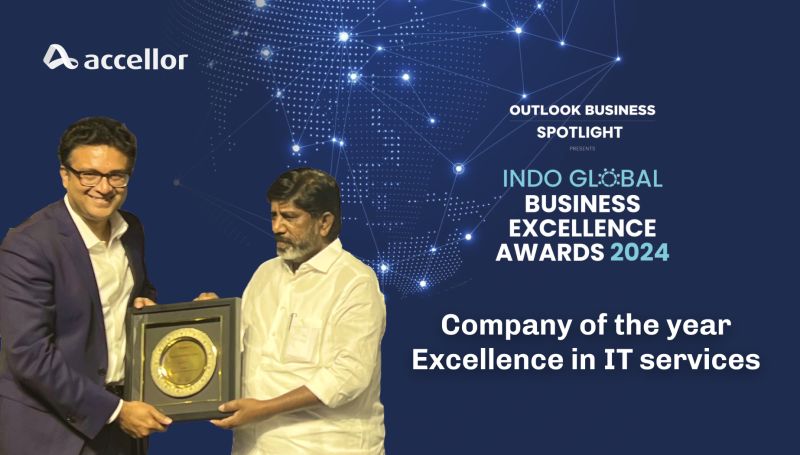
In 2024, he accepted a Company of the Year award for excellence in IT services on Accellor’s behalf at the Indo Global Business Excellence Awards hosted by Outlook Business Spotlight. The photograph records an individual receiving it; the company’s recognition belonged to a wider effort.
Credentials, with a practical examination
Avantsa’s own education includes a master’s degree in engineering from JNTU and attendance at Wharton’s Executive Advanced Management Program. His interests outside work are unusually well supplied with scoreboards: basketball, football, and cricket to follow, squash and golf to play on weekends.
His attitude toward professional scorekeeping is less accommodating. In February 2020, he published a short essay questioning the weight people give to stacks of software certifications. He began by acknowledging the effort involved, then challenged the assumption that an impressive list reliably demonstrates problem-solving ability or readiness to lead projects.
The positive case was for experience, continued learning, emotional and social intelligence, and a strong work ethic. His complaint was about the distance between passing examinations and performing useful work. A certificate can document study. A customer with a broken process will eventually ask for something more demanding.
Read beside his migration advice, the argument has a consistent standard: demonstrate what the work can do. There is little patience here for an attractive surface that has not yet proved its usefulness.
Still watching the machinery change
In December 2023, Avantsa attended Salesforce’s New York World Tour event at the Javits Center. His account noticed the unusually easy business of finding a keynote seat, then turned to the harder task of understanding product bundles and new names. He welcomed the ambition to connect AI, analytics, automation, and customer information, while acknowledging the work required to decipher the packaging.
That combination of interest and scrutiny suits the current chapter of his career. Voltron Technology now lists him as chief digital and information officer. Its business includes immersive LED technology and high-performance edge computing, bringing his digital remit into a setting concerned with visual experiences and demanding computing workloads.
The titles and technologies have changed since Spokane. The recurring question in Avantsa’s work is easy to recognize: what must happen behind the screen so that a person in front of it can get on with the job? It can begin with a phone call, a warranty claim, a laptop purchase, or an envelope full of receipts. He has spent a good deal of his professional life examining what makes each of them unnecessarily difficult.
Follow the work
PROFILE UPDATED 27 OCTOBER 2026 · PROJECT RESULTS IDENTIFIED ABOVE ARE SELF-REPORTED.