Vic Shao had a perfectly good reason to be impatient. He had helped build a business around charging electric fleets, sold it to bp, and stayed to run the fleet division. Yet the next charging project could still be held up by an answer that barely qualified as one: the power would arrive when the power arrived.
Consider the planning problem. A bus has a departure time. A charging business has salaries, equipment orders and customers. A utility upgrade has its own calendar. Bringing those calendars into agreement is part of the work of electrification, though it rarely makes the photograph.
Shao has spent much of his energy career in this awkward space between a technology’s promise and a customer’s working day. Green Charge Networks addressed electricity costs with batteries and software. AMPLY Power offered to manage charging for fleets. DC Grid later proposed a route around slow power connections. Each business began a little farther along the same troublesome cable.
Fifteen minutes can spoil a month
The young Shao was a tinkerer. His formal training included a mechanical engineering degree at the University of Virginia and an MBA at Berkeley. Before the energy companies came work on mobile and embedded products at Oracle. Software and physical machinery would both have a place in his later businesses.
He co-founded Green Charge Networks in 2009. Its territory was the commercial electricity bill, specifically the expensive consequences of drawing a lot of power at once. A business could use energy carefully for most of a month and still acquire an unpleasant demand charge during a short peak. The bill, unlike the customer, remembered that moment fondly.
Green Charge combined batteries with software to manage those peaks. Its Power Efficiency Agreement also tackled the purchase decision: the company could own and operate the storage system and share the resulting demand-charge savings with the customer. An unfamiliar piece of equipment became a financial arrangement someone could evaluate.
In 2015, a partnership with ChargePoint brought storage and networked charging together. Redwood City was the first installation. The connection between charging vehicles and managing building power was already visible: putting a charger on a site could change the bill for the whole place.
ENGIE announced an agreement to acquire 80 percent of Green Charge in May 2016. At that point, the company’s deployed and under-construction portfolio amounted to 48 megawatt-hours across more than 150 sites. The buyer was acquiring an operating approach as well as battery projects: software, ownership, optimization and a customer relationship organized around savings.
There is a practical streak in this history. An energy technology needs someone to approve the expenditure, live with the installation and understand the return. Shao’s next company would bring those concerns into a bus depot, where a driver’s shift provides a rather firm deadline for theoretical advantages.
The bus depot wants a price
AMPLY Power, founded in 2018, grew out of what Shao had noticed while working in storage: fleet operators understood diesel fueling, while electric charging introduced an unfamiliar collection of responsibilities. Utility rates, equipment selection, maintenance and site design all arrived together. Buying the vehicle was one decision. Running it created several more.
The company’s charging-as-a-service model offered to take on that complexity. It could bundle infrastructure and operations into a price linked to electric miles driven. A fleet manager could assess a transport budget rather than become an amateur specialist in every clause of an electricity tariff.
Shao’s explanation of electrical fueling costs could make a diesel buyer blink. In a 2019 interview, he illustrated the variability by comparing it with paying either $1.20 or $18 for the same gallon of gasoline. That was an analogy for electricity pricing, not an offer at a filling station. The point was how drastically the timing and management of charging could affect the result.
His enthusiasm for electric vehicles also had an ordinary origin: he liked driving one. In a 2018 essay, he recalled bringing home his first Nissan Leaf seven years earlier. The pleasure of the drive helped convince him. His business attention went to the infrastructure required for other people to make the same choice.
That essay used a wonderfully domestic comparison. Nobody wants to make a special journey to a smartphone filling station. Electricity already reaches the places where people spend time; convenient vehicle charging should take advantage of that. There was still work to do on equipment, access and standards. The appeal was in making refueling fit around life.
- Buy the vehicleA transport decision
- Make charging workA site, power and operations decision
- Run tomorrow’s routeThe customer’s actual deadline
A charging company inside an oil company
bp announced its acquisition of AMPLY in December 2021. The business served fleets operating trucks, buses, vans and other light-duty vehicles. For Shao, the acquisition offered a way to carry an approach developed in a smaller company into a much larger energy organization.
The naming changed the following year. In October 2022, AMPLY’s rebrand introduced bp pulse to the United States and wider Americas. Shao became president of the fleet division in the Americas. His responsibility belonged to that fleet business; it is a useful distinction in a company whose charging ambitions extended beyond depots.
AMPLY had built its offer around software and service, and bp described those capabilities as part of its wider expansion. An acquisition announcement can make growth sound frictionless. Shao’s career after the deal suggests that access to a larger organization still leaves plenty of stubborn work on the ground.
He left bp in January 2024. Later that year, he described the experience of working across roughly 60 construction projects and around 20 utilities. Service upgrades kept recurring. At that scale, a long and uncertain wait for power made staffing, spending and revenue plans difficult to hold together.
The cable comes with a calendar
DC Grid moved his attention from managing electricity consumption to arranging power close to the customer. Its proposed customers included electric charging hubs and data centers. The attraction was speed: modular systems that could be assembled on site offered a different project sequence from waiting for conventional utility infrastructure.
Direct current was central to the proposition. Solar generation, batteries and many electronic loads made it attractive to consider how much conversion a system actually needed. Shao wanted to simplify the route between generation and use. His compact statement of preference was: “The simpler the better.”
During its development, he explored different sources of on-site power, including renewable natural gas. The fuel brought practical questions of its own, such as delivery and supply infrastructure. Going around one obstacle can mean accepting responsibility for another. This was still an energy business, however elegant the electrical diagram.
At the public launch in December 2024, Shao compared the assembly approach to an IKEA kit. It was an unusually approachable image for industrial power equipment. Anyone who has negotiated flat-pack furniture might reserve judgment on the word simple, but the intention was clear: reduce the work that had to happen from scratch at each location.
“Over time, I built out a high tolerance for pain.”
Vic Shao, reflecting on entrepreneurship in 2024
The comparison also suited a founder who had repeatedly looked for a more manageable customer offer. First came a way to share storage savings. Then came a price for charging a working fleet. Now came a proposal to make the arrival of power less dependent on an uncertain external timetable.
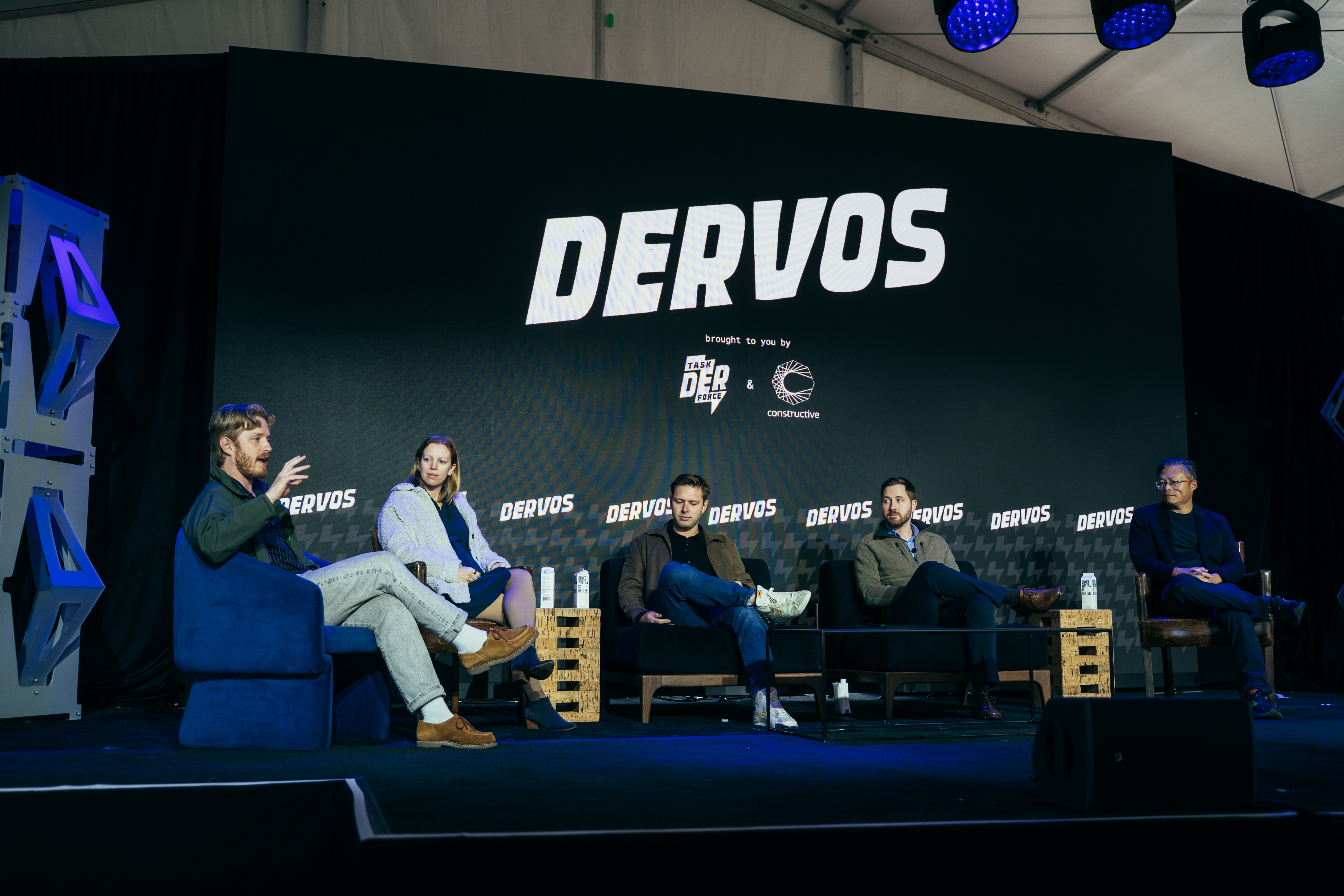
At DERVOS 2025, he joined a discussion of distributed energy and large loads with participants from Google, Tesla and Duke University. He brought an example from the charging business: power arrangements expected to serve temporarily could remain in use years later as utility timelines slipped. A bridge can become a surprisingly long place to stand.
The wider ambition remained economic. In a December 2024 essay, Shao argued that falling technology costs and deployment of established equipment could carry clean energy forward. He wanted the industry to concentrate on making projects work in the market. It was an optimistic argument from someone whose companies had spent years dealing with the details.
A surfer is allowed to wait
Then came a public revision. Shao said he had misjudged the timing for DC Grid and would park the concept, with the intention of focusing on something new in 2026. The company website now confirms the thesis is paused. His explanation used surfing: skill and determination matter, but so does reaching the wave at the right moment.
Surfing belongs among his reported outdoor interests, alongside hiking, camping and scuba diving. The analogy therefore has a little more life than the standard business metaphor borrowed from a sport nobody plays. It also leaves room for a decision that founder biographies sometimes hurry past: choosing to stop pursuing a particular plan.
His father’s advice had encouraged entrepreneurial risk, Shao recalled in 2021. He treated it as a philosophy about being willing to attempt difficult things. A paused venture adds a useful complication. Willingness to start and willingness to reassess can belong to the same person.
Across the companies, the recurring interest is recognizable. Shao keeps returning to the arrangements that let electrical equipment do useful work: the bill, the contract, the depot, the connection. Two businesses found buyers. Another thesis is waiting. The buses and data centers still need their power, and the calendar remains part of the machinery.
Follow the current
Essays, conversations and the companies along the way.
- Vic Shao on LinkedIn ↗
- DC Grid: current status ↗
- Shao’s essays ↗
- The acquisition of AMPLY Power ↗
- AMPLY becomes bp pulse ↗
- Green Charge and ENGIE ↗
- Fleet charging: the 2021 interview ↗
- The 2019 operating-cost interview ↗
- The BIG Strategy interview ↗
- His 2018 transport essay ↗
- Grist 50 profile ↗
- The advice from his father ↗
- DC Grid: the launch interview ↗
- On direct-current power ↗
- His clean-energy deployment essay ↗
- DERVOS panel recap and photograph ↗
- The DERVOS panel recording ↗
- Education and early career biography ↗
- Watch: Chicago clean-energy panel on YouTube ↗