A car parked outside a hotel is doing nothing. For Blink Charging, that is the opportunity. The driver is sleeping, eating or attending a meeting. The vehicle has hours to absorb electricity. Turn that interval into a service, and an ordinary parking space acquires a second job.
- Blink sells chargers, manages them through software and operates some itself.
- Property owners can buy equipment or share investment and operating responsibilities.
- The company is concentrating on utilization and service income after an expensive expansion.
Blink’s challenge is making those arrangements earn enough to justify the money buried beneath them. A charger needs electrical work, payment systems, maintenance and customers who return. Its story offers a useful lesson for anyone building infrastructure: installation creates an asset; repeated use determines what that asset is worth.
01 / The parking clock
Blink serves two customers at once. Drivers need electricity. Hosts need a reason to devote space, power and attention to providing it. An apartment operator might want an amenity that attracts residents. A retailer might want longer visits. A fleet manager needs vehicles ready for work.
The equipment follows the clock. Level 2 charging suits places where vehicles remain parked. DC fast charging serves shorter stops. Blink supplies both, alongside residential products and the cloud-based Blink Network, which handles station management and charging data. Hardware, software and operations meet in the same parking bay.
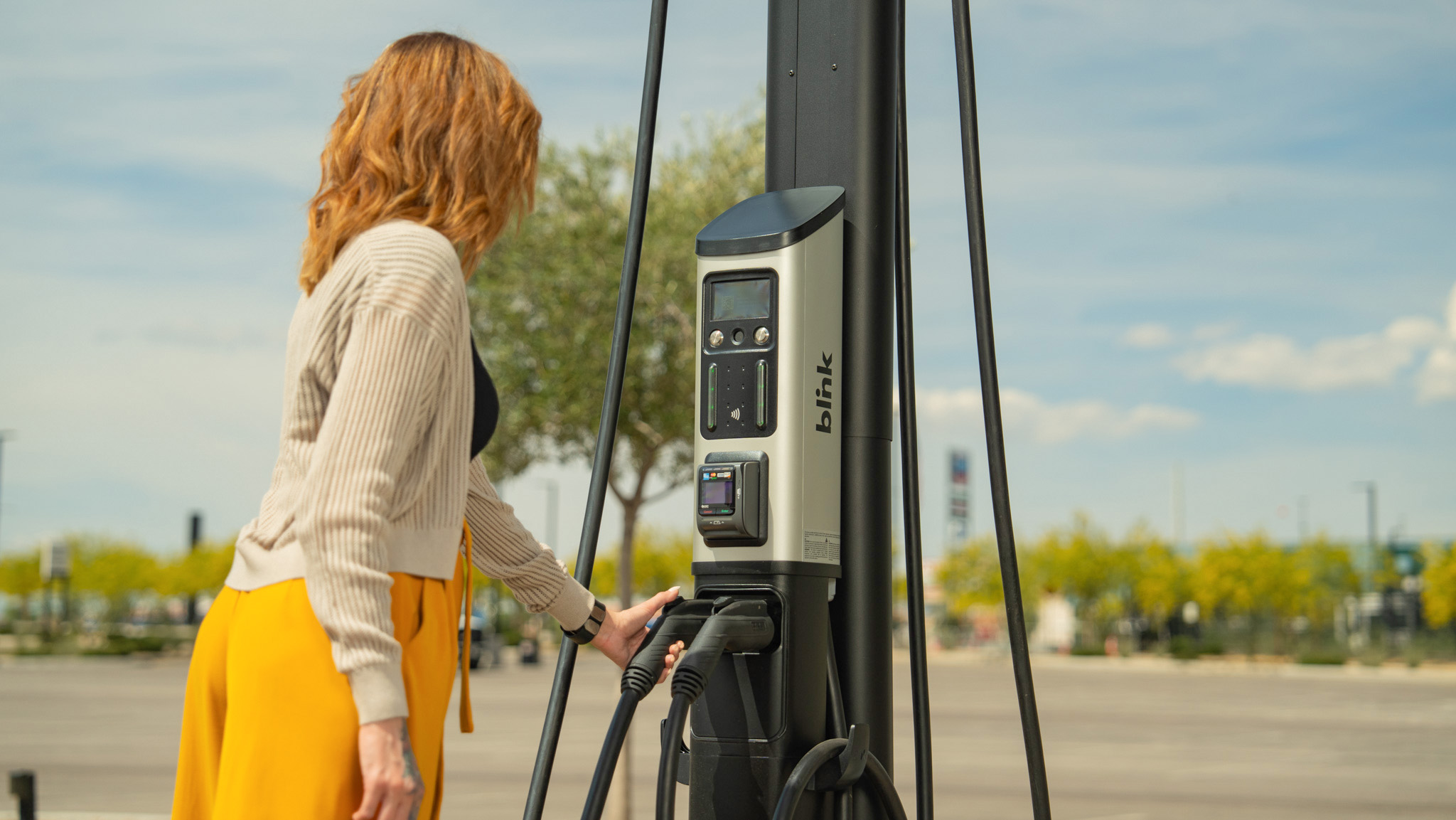
This puts Blink between several markets. ChargePoint is an alternative for networked equipment and software. Tesla, EVgo and Electrify America compete for public charging sessions. Blink’s pitch combines equipment supply with the option to own and operate infrastructure. That flexibility matters when two seemingly similar properties have very different budgets.
02 / A $200 million shortcut
Michael Farkas founded the business in 2009. In 2013, then called Car Charging Group, it acquired ECOtality’s Blink network assets out of bankruptcy for $3.3 million. The history contains an early warning: an installed network could survive while the company behind it failed.
Blink later bought more of the machinery behind the service. Its 2022 SemaConnect acquisition was announced at $200 million in cash and stock. Along with nearly 13,000 chargers and 3,800 host locations came engineering and manufacturing capabilities. Buying the company shortened the route to controlling more of the supply chain.
Expansion required outside capital. A 2021 equity offering raised roughly $232 million gross. Another offering brought $100 million gross in February 2023, approximately $95 million after underwriting discounts and before other expenses. Those are financing proceeds, not profits. The distinction matters in a business that spends money before drivers arrive.
03 / Who pays for the socket?
Blink’s commercial models divide that initial bill. Under host ownership, the property buys and installs equipment, pays network fees and controls charging prices. Under the hybrid arrangement, Blink supplies equipment while the host funds installation. Qualifying Blink-owned DC fast-charging projects shift project funding to Blink.
HOST
Installation HOST
BLINK
The practical question is whether the host wants to run a small electricity business. Keeping ownership brings control and obligations. Passing responsibilities to Blink reduces some demands on the property while changing who receives the revenue. Equipment, construction and operating terms need a site-specific quote; there is no useful universal installed price.
04 / The sale ends. The work starts.
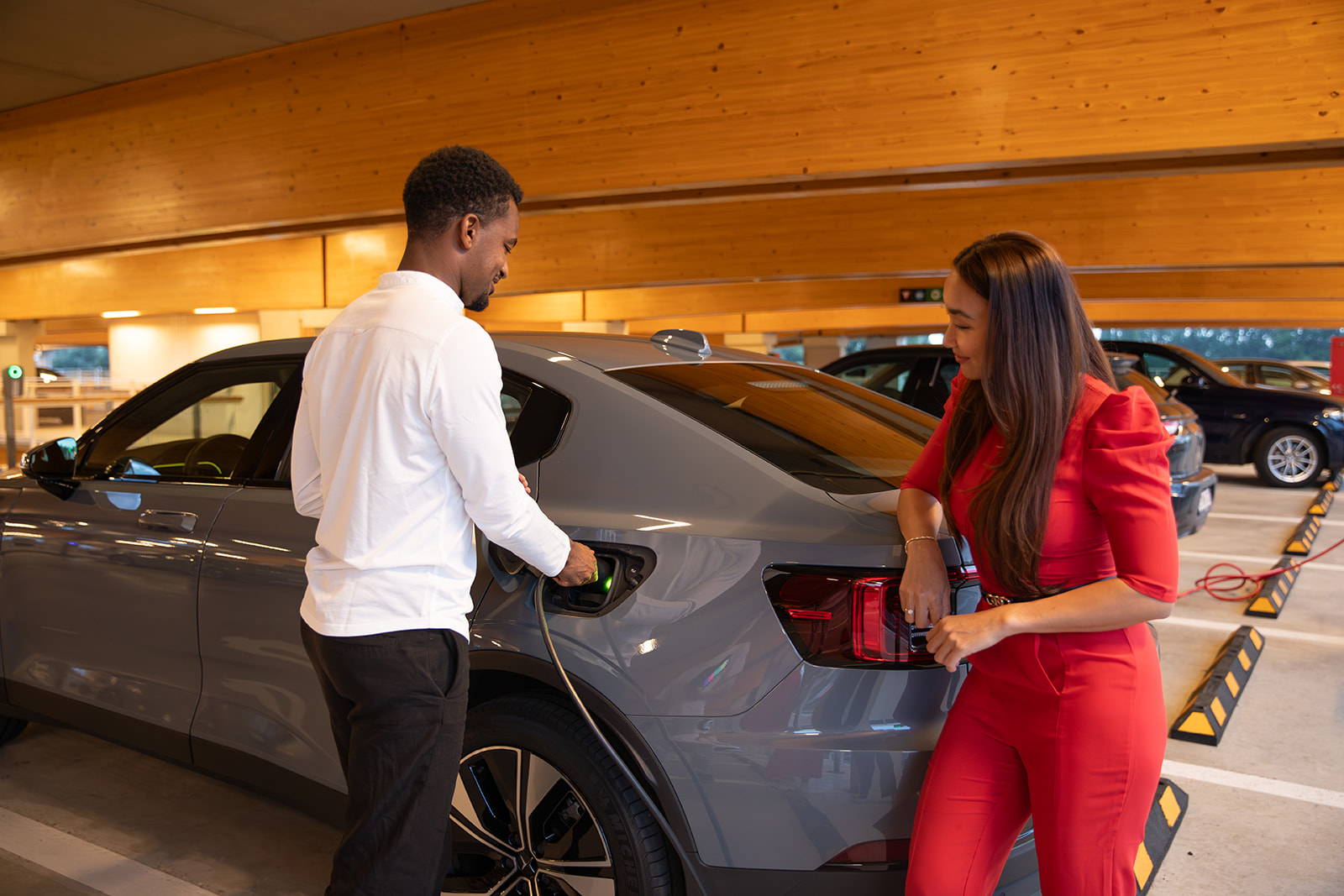
Consider Blink’s Series 8 ISO Model. Its specifications include optional card and contactless payment, remote monitoring and multiple connectivity choices. These details sound mundane until a driver cannot start a session. A functioning socket still needs a functioning commercial experience.
In June 2026, Blink announced a customer-service overhaul connecting support, onboarding and field operations through shared accountability. Its customer research pointed to demands for stronger reliability and communication. The company’s stated culture emphasizes listening and learning; this program gave those words an operational assignment.
A destination partnership makes the service concrete. In March 2025, Blink announced an agreement to supply 50 chargers for Porsche’s destination program in Mexico. Selected hotels, restaurants and retail properties would host them, with Blink handling installation, operation and maintenance. The agreement sells convenience across an entire visit.
05 / Selling less. Operating more.
In 2025, equipment revenue fell 42.5% to about $47 million. Service revenue rose 44.7% to $49.3 million. Hardware sales were weakening while the installed business produced more income. Total revenue nevertheless fell to $103.5 million, and the company recorded an $83.4 million net loss.
Management’s response became explicit in June 2026 when Blink announced the sale of car-sharing subsidiary Envoy to Blade Ranger. The rationale was focus: fewer distractions, more capital directed toward charging infrastructure.

“We are optimizing Blink around what we do best, operating high-performing charging infrastructure at scale.”
Mike Battaglia / President & CEO / June 2026
By the second quarter of 2026, services supplied 53% of revenue. Gross margin reached 38.9%, but net loss remained $6 million. Blink also cut its annual revenue outlook to $83 million-$90 million. A better revenue mix and a smaller business can arrive together. Profitability still had to follow.
06 / Make the existing power go further
EnergyConnect, launched in August 2026 at thirteen Blink-owned Florida fast-charging sites, addresses another constraint: available electrical capacity. It allocates power, balances loads and lets operators set site limits. Blink says this can reduce costs and potentially avoid some infrastructure spending. Savings were an expectation at launch, rather than a published return.
For a prospective host, the lesson is practical: match charging speed to parking time, settle ownership responsibilities and examine expected use before buying. Sparse demand, costly electrical upgrades or unreliable service can upset the economics. Software can distribute available power; it cannot manufacture customers. Blink’s next chapter depends on getting both sides of that equation to show up.