Look at the red charging cabinet outside an MG location in Thailand. The badge belongs to the carmaker. The equipment comes from EN Plus. That small mismatch explains a great deal about the charging business: the company a driver recognizes and the company that built the machinery can be different. Behind a familiar logo sits a second business, working through the less photogenic questions of power, payment, and who gets to use the socket.
- EN Plus makes AC and DC chargers, power modules, and charging software.
- Its customers can sell or operate the equipment under their own brands.
- The useful buying question: how long will cars stay, and how much power can the site spare?
EN Plus occupies that second position. Founded in Shenzhen in 2015, it supplies charging hardware and the tools for running it. Its offering stretches from portable AC boxes to DC stations, alongside Evchargo, its cloud platform and driver app. For a business entering charging, this means several linked decisions can be handled with one supplier: the box, its controls, the operator’s dashboard, and the customer’s route to starting and paying for a session.
The car park is the product brief
A hotel guest leaves a car overnight. An employee parks through a working day. A driver stopping during a journey has a different clock running. Treating those three people as the same customer produces an odd purchasing strategy: buy the largest number on the specification sheet and hope it solves the problem.
EN Plus’s range makes more sense when read as a collection of parking situations. The Memo portable box is listed at 3.5 kW. Caro Plus home wallboxes offer 7 kW or 11 kW, while Caro Pro reaches 22 kW. Turbo DC equipment comes in 60 kW and 120 kW versions. The current business range lists Rocket models reaching 300 kW. These are equipment ratings, not promises that every vehicle will charge at those speeds.
The distinction matters because charging is also a negotiation with a building. Lights, cooling, machinery, and vehicles may share the same supply. Dynamic load balancing adjusts charging output as other demand changes. It is useful precisely because a charger cannot assume all the available electricity belongs to it. Solar-compatible models add another variable: how much generation is available when the car is actually connected.
Engineers who knew the other end of the cable
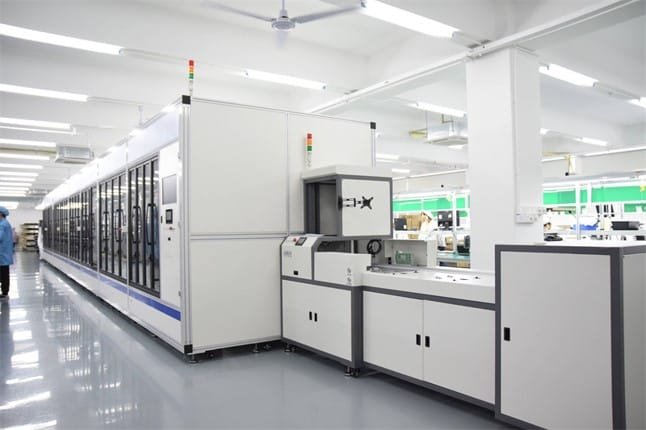
The founding team’s backgrounds help explain this attention to power. CEO Tony Jin brought experience in Eaton’s supply chain and in value engineering. CTO Eric Dai came from solar power electronics, including Zever Solar and SMA China. Inverters and charging equipment sit at different ends of the energy story, but both require careful conversion and control. EN Plus says its chargers, modules, platform, and apps are developed in-house.


There is a pleasingly domestic detail in the Caro wallbox’s 2023 Red Dot award. The jury noticed its cable storage and the ability to make charging available to additional users. A cable that has somewhere to go and a charger that more people can share are modest achievements. They address the actual encounter between a person, a wall, and a machine. Red Dot also credits Jin with the in-house design.
The software earns its parking space
Once two people share a charger, an electrical product starts becoming an administrative one. Who has permission? How is consumption recorded? Which price applies? Who notices a fault? Evchargo handles station management, monitoring, billing, and user accounts. The driver app supports finding charging locations, starting sessions, watching progress, and payment. The operator sees the same activity from the business side.
EN Plus also supports Open Charge Point Protocol, or OCPP, for communication with management platforms. CharIN describes the company as a hardware and software partner offering third-party integrations, firmware updates, and white-label supply. Protocol support is a useful starting point for integration; buyers still need to check the precise charger, firmware, and platform combination. A standard gives the parties a language. They must still agree on the conversation.
“EN+ is committed to contributing to the global transformation of vehicle electrification.”Tony Jin, CEO, in the investment announcement hosted by Eaton
The logo can belong to somebody else
EN Plus’s original design manufacturing and white-label services let customers customize equipment and present charging under their own names. Its market includes charging operators, automakers, distributors, property businesses, and fleets. The commercial logic is straightforward: a customer can build a charging offer without designing every component. EN Plus earns its place through the equipment, software, and customization behind that offer.
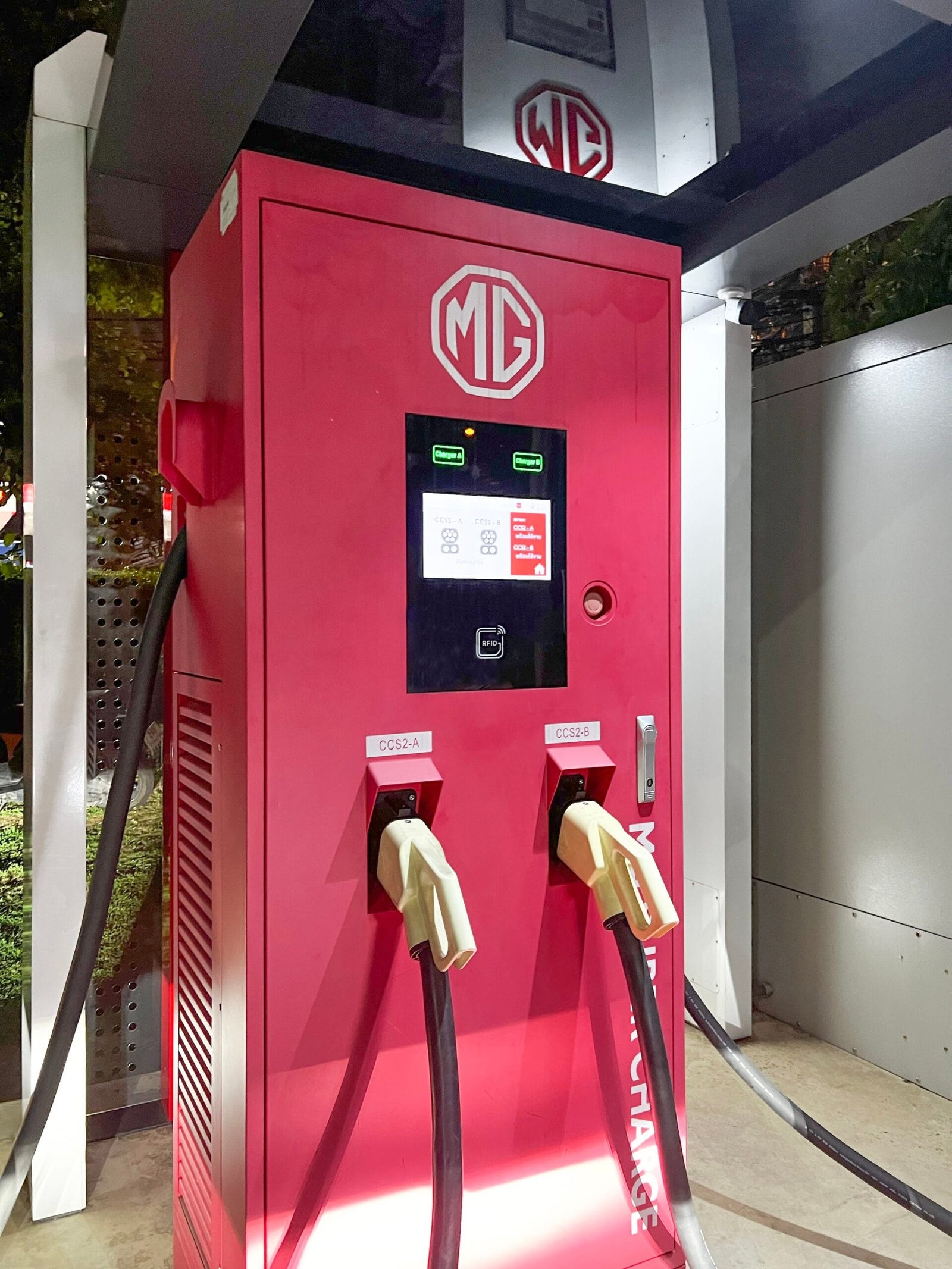
In July 2025, EN Plus reported further Turbo deployments with MG in Thailand, following a relationship it dates to 2022. That same month, it announced Honda charging cooperation in Indonesia featuring the portable Memo box, and described a Rocket installation in Denmark. Read together, the reports show a supplier adapting its range to different settings. They do not establish identical economics or performance across those projects.
Eaton’s 2022 strategic investment offers another piece of evidence. Eaton confirms the financing relationship; contemporary reporting put the Series C at more than $10 million. The stated uses were research, manufacturing capacity, and international expansion. That is capital for building the company, rather than the price of building any particular charging site.
The market position is therefore more specific than “EV charging company” suggests. EN Plus is a manufacturing and software partner for businesses that need a charging offer of their own. Its proposition rests on that combination. Buyers comparing suppliers should compare the whole scope of the contract, including integration and support, rather than treating a hardware rating as the complete product.
Buy the system around the socket
For a property owner or fleet manager, the copyable lesson is a sequence. Establish the available electrical capacity and the vehicles’ departure times. Decide who can charge and how payment works. Then select hardware and test its connection to the management platform. Charger cost belongs alongside installation, electrical work, software, and ongoing service in that decision.
The limits follow from the same logic. Load balancing shares capacity; it cannot manufacture it. Solar charging depends on suitable generation and installation. A vehicle can accept less power than a station offers. EN Plus’s interesting proposition is the combination of components needed to manage those constraints. The socket is where the driver arrives. The business has to work before that moment.
Website · Products · Evchargo · Company news
LinkedIn · X · Instagram · Facebook
Watch the controls in actionPair a charger with Evchargo ↗
Set up your charger ↗
Start a charging session ↗