Consider the charging cable. In the photographs of an electric future, it is usually a graceful line between a car and a machine. In your hand, it can be something else entirely. FLO says fast-charging cables can weigh more than 25 pounds. Before the electricity flows, someone has to wrestle the thing into place. For a driver with limited strength, that is a design problem with consequences.
- FLO makes chargers and runs the systems that keep them working.
- Its customers range from homeowners to cities and commercial property owners.
- The useful lesson: match charging to an existing habit, then fund the maintenance.
The cable comes first
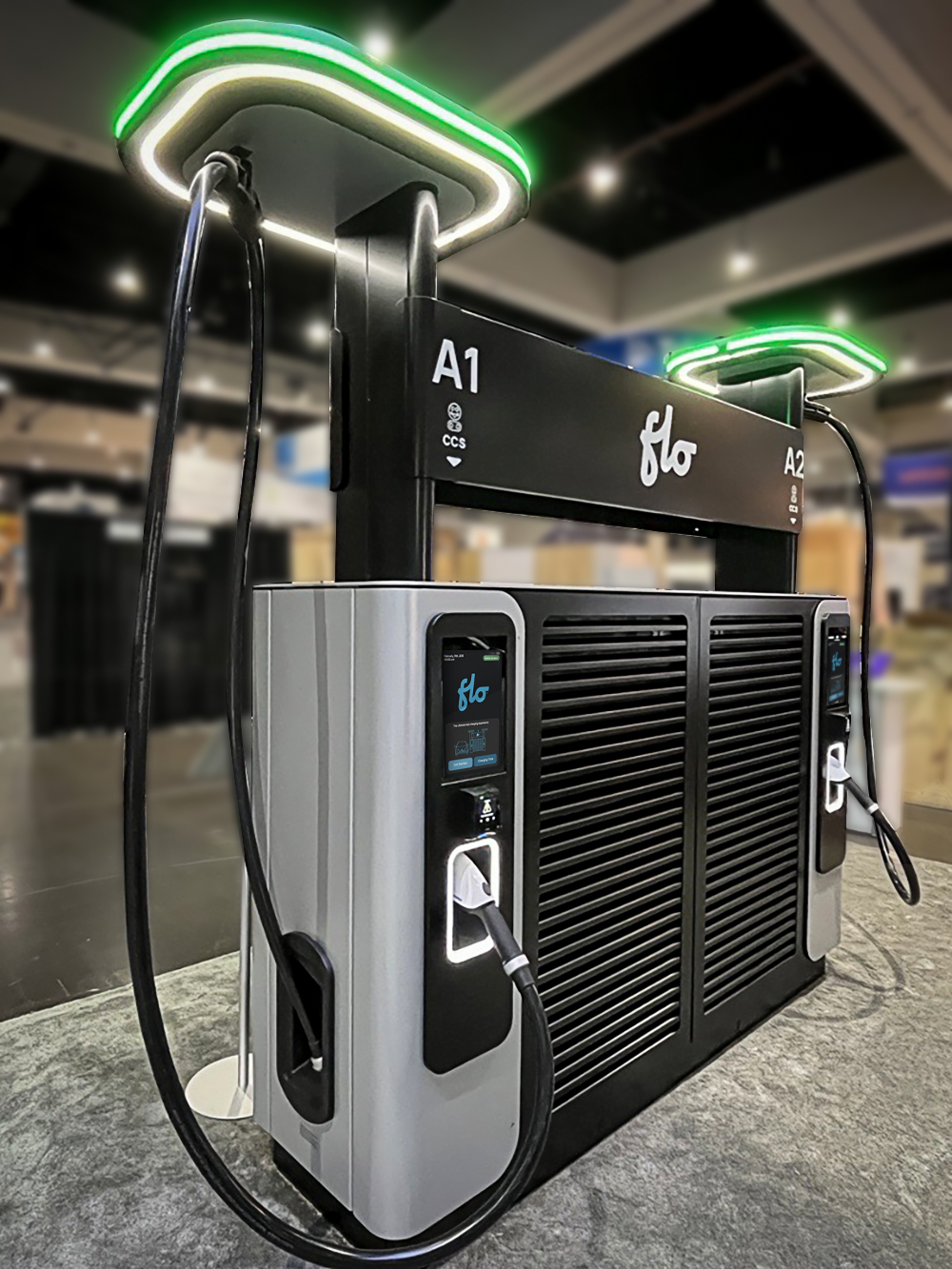
FLO’s response is called EZLift. A motorized mechanism helps extend and retract the cable on its Ultra fast charger. During charging, the system locks in place to reduce strain on the vehicle’s port. Afterward, sensors return the cable to the station, away from tires and feet. There is something pleasingly unglamorous about this: a company working on the energy transition has spent time figuring out how to tidy up a cord.
The company began as AddÉnergie in 2009, founded by Louis Tremblay and Michael Desjardins. Tremblay was still studying at Université Laval. A 2011 demonstration with car-sharing service Communauto came before a commercial installation at CEGEP de Chicoutimi. That sequence matters. Charging had to become equipment someone could use, purchase and depend on, rather than an idea that looked sensible on a slide.
A charger is a service with a metal case
Today, FLO combines charger manufacturing with software, network operations and maintenance. The customer can buy hardware and have FLO operate it, or charge at a site FLO owns and operates. Those arrangements put different people’s money into the equipment, but both give FLO work to do after the ribbon cutting. A charging session needs the hardware, communications and payment process to cooperate.
“My bread and butter is what we call uptime.”
Yann Benoit, FLO network operations, in Charged EVs, April 2025
Benoit’s operations team monitors connected chargers and sends field staff when a remote repair cannot solve the problem. Physical inspections still matter: software cannot see every damaged cable. FLO’s expertise sits in that combination of electrical equipment and continuing service. Its competitive argument is accountability across the chain. Buyers comparing it with ChargePoint or other suppliers should examine the maintenance arrangement as closely as the specification sheet.
- 01 Design
- 02 Build
- 03 Monitor
- 04 Repair
Hardware decisions meet operational feedback.
The driveway problem
The residential products serve a familiar customer: someone with a place to park and a suitable electrical supply. FLO Home X3 and X6 offer up to 12 kW; X8 reaches 19.2 kW. The app supports scheduling and remote controls. The specified operating range reaches down to -40 °C. Maximum output still depends on the installation and the vehicle’s ability to accept it. A bigger number on the box cannot enlarge the car’s onboard charger.
But a homeowner’s garage is only one charging environment. New York’s street-parking drivers present another. In 2021, FLO joined NYC DOT and Con Edison in a curbside pilot. These are Level 2 chargers: useful when a car can remain parked, rather than when its driver needs a quick highway stop. Putting charging beside an ordinary parking space makes the trip to refuel disappear into the act of parking.
of the time, the city’s 88 existing public charging points were occupied by an EV.
Occupancy measures use of the space; it is different from uptime or energy delivered.NYC’s August 2026 update reported that those points were occupied more than 70% of the time. The city also announced 600 additional points over three years. That announcement demonstrates demand for curbside charging; it does not identify FLO as the supplier of the new equipment. For a property owner, the insight is more useful than a victory lap: parking patterns can tell you what kind of charger belongs there.
Coffee is already a destination
For faster stops, FLO has the Ultra. The product entered customer deliveries in 2024. Its two ports and power-sharing design serve a different rhythm from overnight curbside charging. Speed depends on the vehicle, battery conditions and station configuration. The motorized cable helps make the powerful machine physically usable, which is an easy detail to overlook until you are standing beside it.
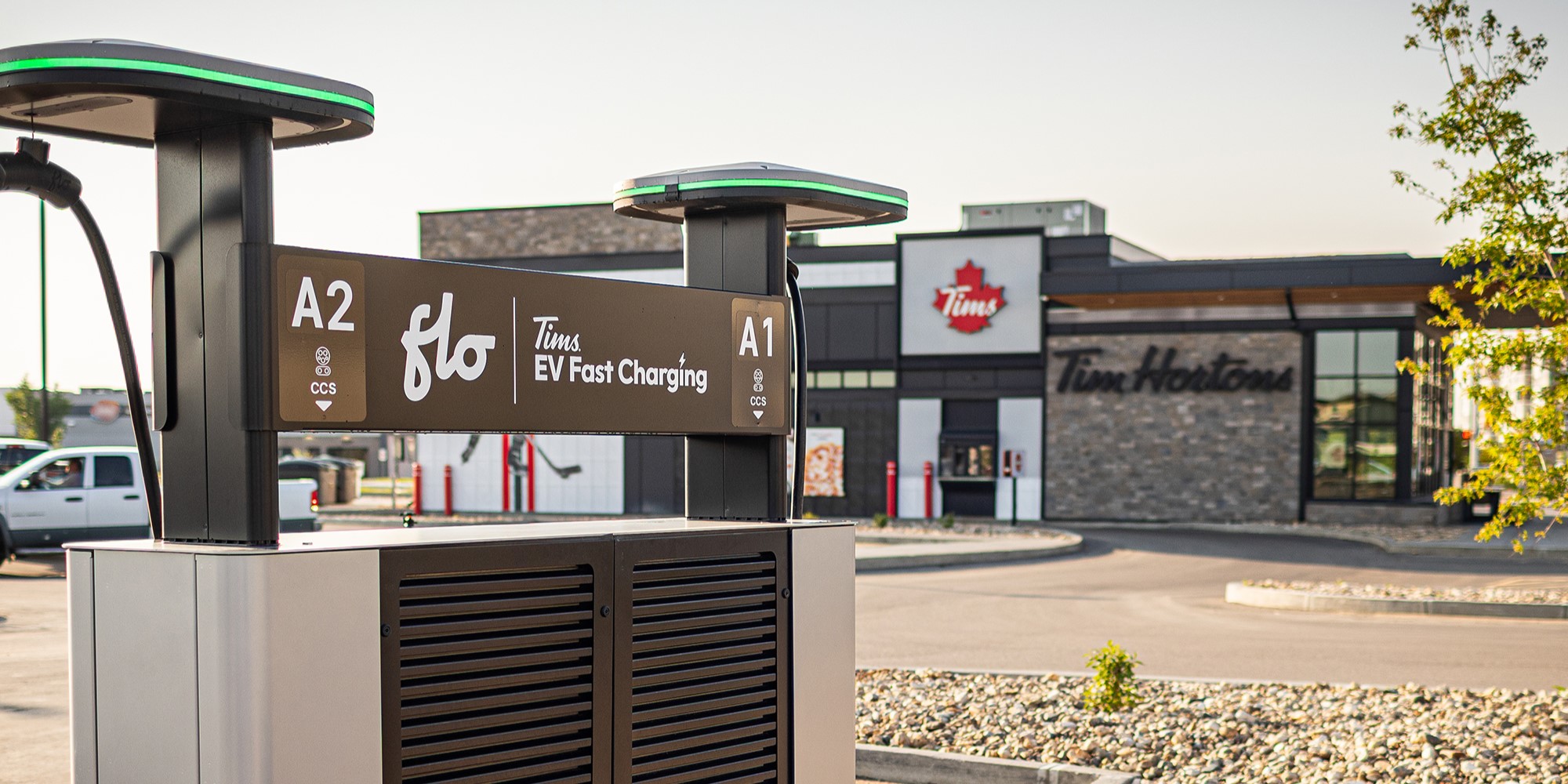
In August 2025, Tim Hortons and FLO announced a plan for fast charging at 100 Canadian restaurants by the end of 2028. The first location was already operating in Regina. The attraction is straightforward: customers have somewhere to go while the car charges. The 100-location figure remains a target. Coffee provides a reason to visit; chargers still need electricity, construction and enough paying use to support the investment.
Capital meets the real world
The investment is substantial. FLO announced C$136 million in long-term capital in June 2024, principally through Series E equity led by Export Development Canada. Separately, the Canada Infrastructure Bank initially committed a C$220 million infrastructure loan in 2023; the Tim Hortons announcement cited a C$235 million commitment. These are financing amounts, not charger prices. They explain why owning infrastructure demands more than a promising product.
Then the expansion story hit a constraint. In July 2025, FLO announced the Shawinigan plant’s closure and more than 80 layoffs across Canada and the United States. It cited trade tensions, policy shifts and market instability. The documented retreat was in manufacturing capacity. The plant had opened in 2014, when the company was approaching its first thousand installed chargers. Eleven years later, the business adjusted its footprint while continuing to pursue charging partnerships.
Borrow the habit, budget for the upkeep
Drivers can use FLO to find chargers, start sessions and check prices. Its September 2025 roaming agreement with SWTCH also lets customers use their existing app across both public networks. Rates remain station-specific. For cities and businesses, the transferable idea is to start with where cars already wait, choose power for that waiting time and make repair someone’s explicit responsibility. Sparse demand, inadequate electrical capacity or unfunded maintenance can spoil the economics. The cable is the visible beginning. Keeping the next visit ordinary is the job.