At four in the afternoon, an electric car in a Connecticut parking lot looks like a problem to the power grid. It is plugged in just as air conditioners are working hard and wholesale electricity can become expensive. Yet the car will sit there for hours. Its driver needs energy before departure, not necessarily this minute. That small distinction - between now and by morning - is the opening AmpUp built a company around.
AmpUp’s software runs EV charging stations for workplaces, apartment buildings, fleets, hotels and towns. It decides who gets access, what they pay, how much power several cars may draw at once, and whether a failing session can be fixed remotely. In Connecticut, the same system gave drivers wallet credits for allowing brief charging pauses during peak demand. The charger became a kind of negotiator.
- AmpUp sells charging management software and related support to site operators; drivers use its app to find, reserve and pay for sessions.
- Its Connecticut pilot shifted 5,450 kWh away from peak periods across more than 650 sessions, according to the company.
- The company’s edge is coordination across mixed charger hardware, property owners, drivers and utilities.
- Connecticut has invited a statewide program proposal. A full statewide rollout has not yet been announced.
The curious economics of waiting
The usual story about charging is a race to build more plugs. AmpUp’s Connecticut experiment asked a different question: what if a plugged-in car could wait? The state’s Public Utilities Regulatory Authority awarded up to $1.7 million in project funding in 2023 for a pilot that would test EV charging as flexible demand. AmpUp worked with Eversource Energy across shared and public sites, where the driver, the property owner and the utility generally have separate accounts and separate motives.
The software offered drivers a choice. Let a session pause in a peak window, chiefly from 4 to 8 p.m., and receive a credit in the AmpUp app. Site hosts could also be compensated for making their chargers available. Neither party had to manage a complicated utility enrollment at the charger. In the first reported three-month phase, AmpUp said it moved 5,450 kWh away from peak demand over more than 650 sessions, at less than 50 cents per shifted kWh. That is a program cost per unit of shifted energy, not the price of building an entire charging site.
The result is modest in the scale of a state grid and interesting in the scale of an idea. AmpUp later reported that 91% of participating drivers felt no inconvenience from the pauses; 83% said they would participate again. In July 2026, Connecticut selected Adapt & Earn as the only completed pilot in its first program cycle invited to develop a statewide scale proposal with utilities. Invitation is an important word here: the program has cleared a test, and the larger design still has to be made.
“Starting the charge just a little bit later didn’t impact me, and I still earned credits for charging as usual.”Laura Schwartz, Connecticut pilot participant
A charger is a committee of machines
AmpUp was founded in 2018 by Tom Sun and joined Y Combinator’s Winter 2019 batch. Its product, EV Cloud, is the control room for a charger network: monitoring, user permissions, pricing, payment, energy limits and reports. The driver app handles discovery, reservations and sessions. Operators choose among Starter, Core and Pro service tiers. The higher tiers add revenue controls, multiple site management, time-based rules and more advanced load management. Public list prices are not posted on the product page, so the cost to a particular customer depends on its arrangement.
Why make software the center of the business? A charging station is only useful if its physical box, network connection, property rules and driver’s payment method agree. A charger may display “online” yet fail to start a session. It may work on a bench and falter when several cars share a limited electrical panel. AmpUp says it tests candidate hardware in more than 60 real-world scenarios, including weak signal, shared load and different ways to start a session. It reports a 98.5% charging-session success rate across its network. That figure is company reported, but the choice of measure is revealing: the driver cares whether electricity flowed, not whether a dashboard glowed green.
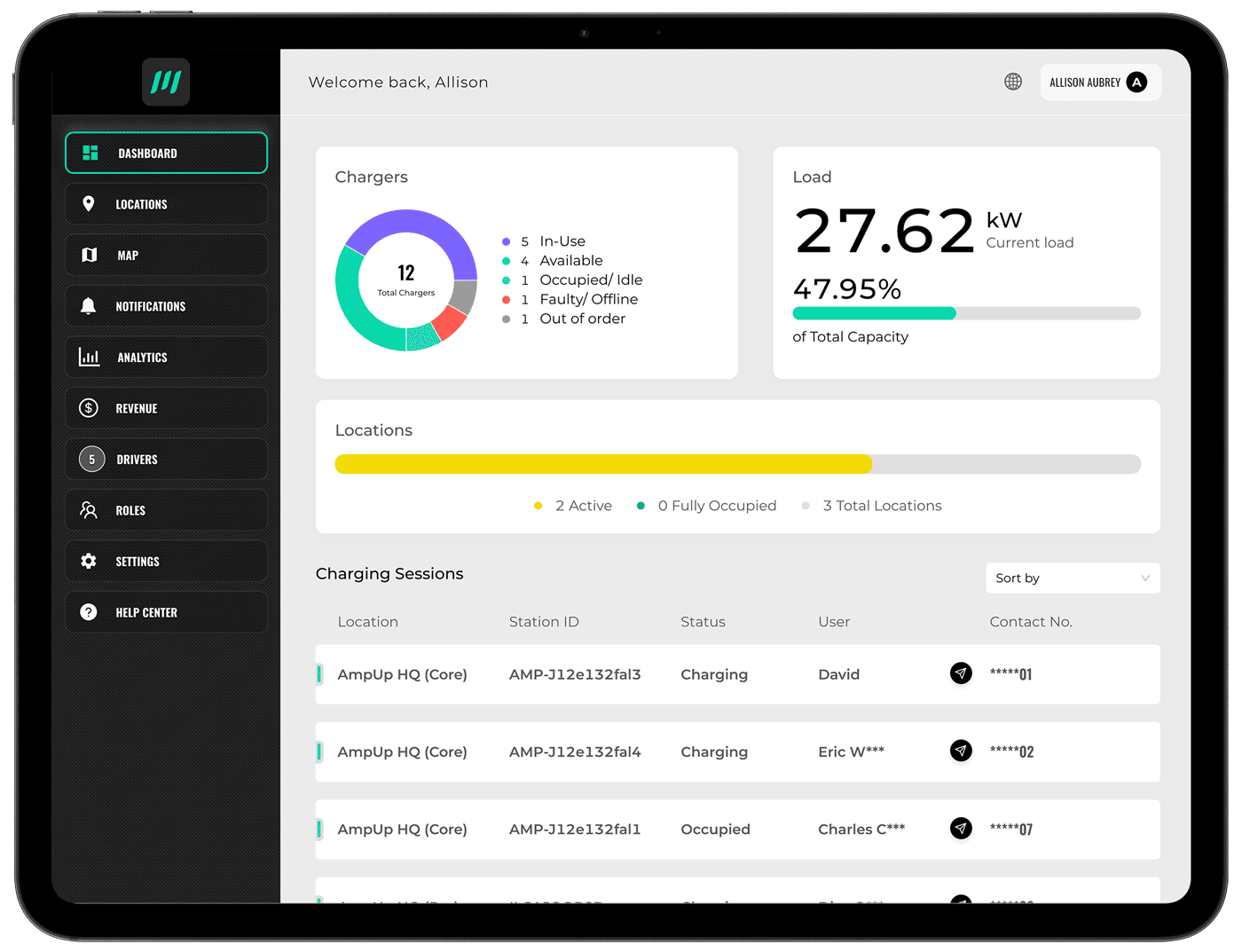
Its hardware approach is similarly practical. AmpUp says its platform supports more than 130 makes and models, using open charging protocols and testing rather than requiring one brand of charger. It worked with Leviton on four charger models and announced a Hubject integration to broaden network access. For a landlord or fleet, that flexibility matters years after installation, when a failed unit must be replaced or a new site uses a different vendor. It also sets a limit: open protocols alone cannot make unreliable hardware reliable. Someone has to test the awkward cases.
The light pole had a second job
The company’s most photogenic work is also an argument about cost. In Los Angeles, AmpUp and charger maker EVSE expanded a project with the Bureau of Street Lighting to put 150 additional Level 2 chargers on existing poles. The cable lives above the pavement and descends when activated. EVSE said the design can reduce installation costs by up to 70% compared with ground-mounted stations by avoiding some digging and wiring. That is a project-specific potential saving, not a universal quote for every city block.
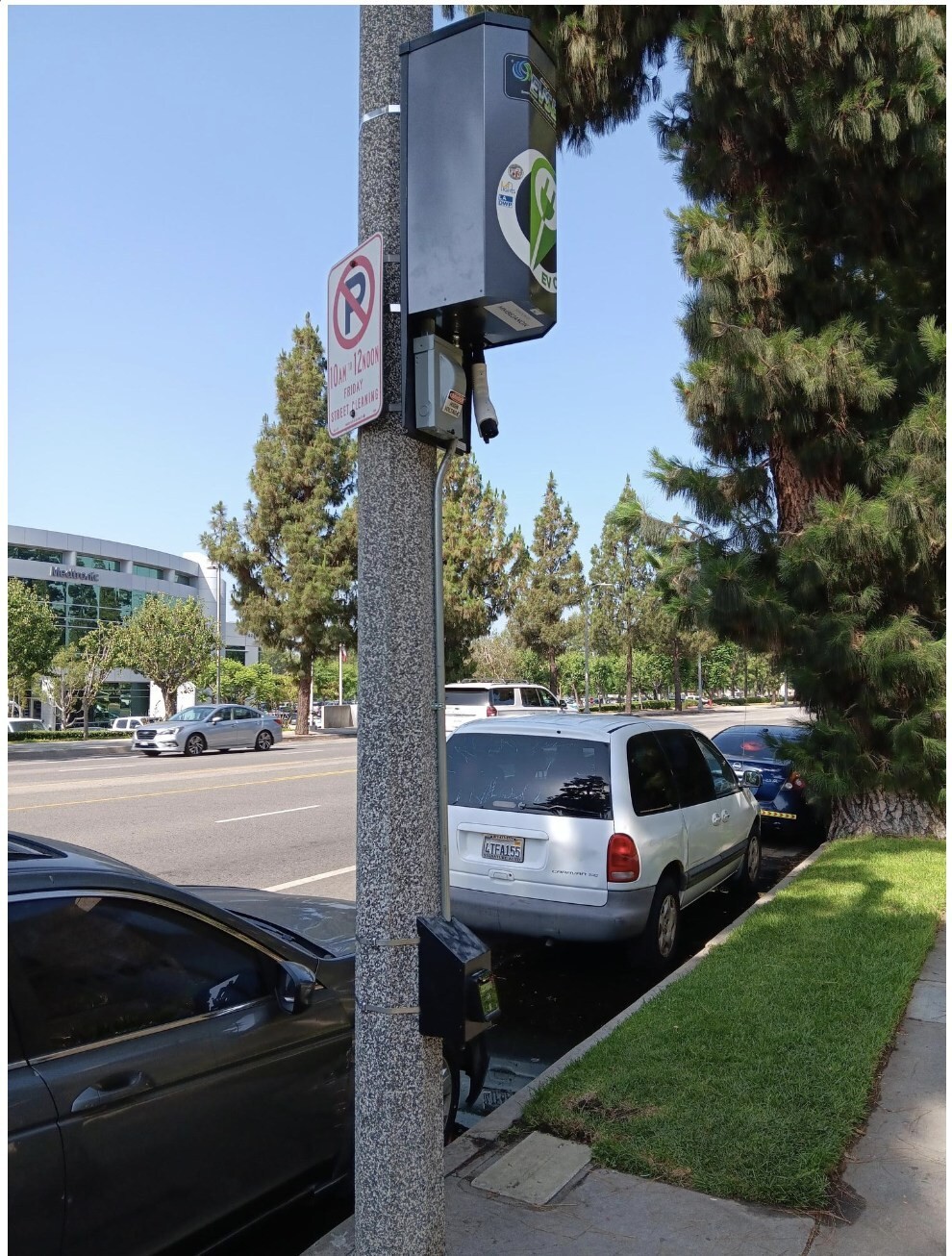
The first version of the idea appeared in Melrose, Massachusetts, with National Grid and other partners. For residents without a driveway, a public charger near a curb can matter more than another fast charger at a highway exit. AmpUp supplies the software layer that gives a municipality access controls, payments and remote oversight; the pole and retractable cable belong to the physical project. The distinction is part of its market position. It competes with proprietary charger networks and other independent software platforms, while making room for several hardware brands in one operation.
A business made of recurring small decisions
AmpUp’s customers include JLL, CBRE, Domino’s Pizza, Goodyear and Hilton. The needs differ. A hotel may want guest access and an idle fee. A fleet depot cares whether vehicles are ready for their next route. An apartment building needs fair billing among tenants and may have little spare panel capacity. AmpUp sells the software subscription and support around those problems; charging revenue and processing fees flow through arrangements that the site host can configure. Its load management can share a fixed electrical allowance among cars instead of treating every new stall as a reason to upgrade the building’s electrical service.
The company raised $15 million in a 2024 Series A led by Touchdown Ventures. It said subscription revenue had grown more than 700% over the previous two years, and in 2026 reported more than 10,000 ports deployed. Those numbers describe a growing network, though they do not prove every charger is busy. A site with a low utilization rate still has to cover hardware, installation, electricity and maintenance. AmpUp’s newer pricing recommendation engine addresses that uneasy arithmetic by using utility costs, site behavior and nearby rates to suggest what an operator might charge.

What can another operator copy? Start with the clock. Find out how long cars actually dwell, when the site pays most for electricity, and how much delay a driver will tolerate. Offer a simple reward for useful flexibility. Test a charger with several cars, weak connectivity and an impatient person, not just a technician in an empty lot. Then measure completed sessions and money saved. The Connecticut result depends on cars staying parked long enough, software that can pause them safely, and incentives that drivers understand. A roadside quick stop, where minutes are the product, gives the idea much less room.
AmpUp’s wager is that the next great charging site will not be remembered for the shape of its plug. It will be remembered because the car was ready, the bill made sense, and the grid survived another hot afternoon without asking anyone to think very hard about it.