The most instructive Verily product fits inside a contact-lens case - and does not exist. In 2014, while the company was still a project inside Google X, researchers showed off a soft lens with a tiny wireless chip and glucose sensor. The promise was irresistible: read blood sugar from tears and spare people with diabetes the finger prick. Four years later, Verily stopped the glucose program. The measurements in tears did not consistently track the measurements in blood. Biology had declined the demo.
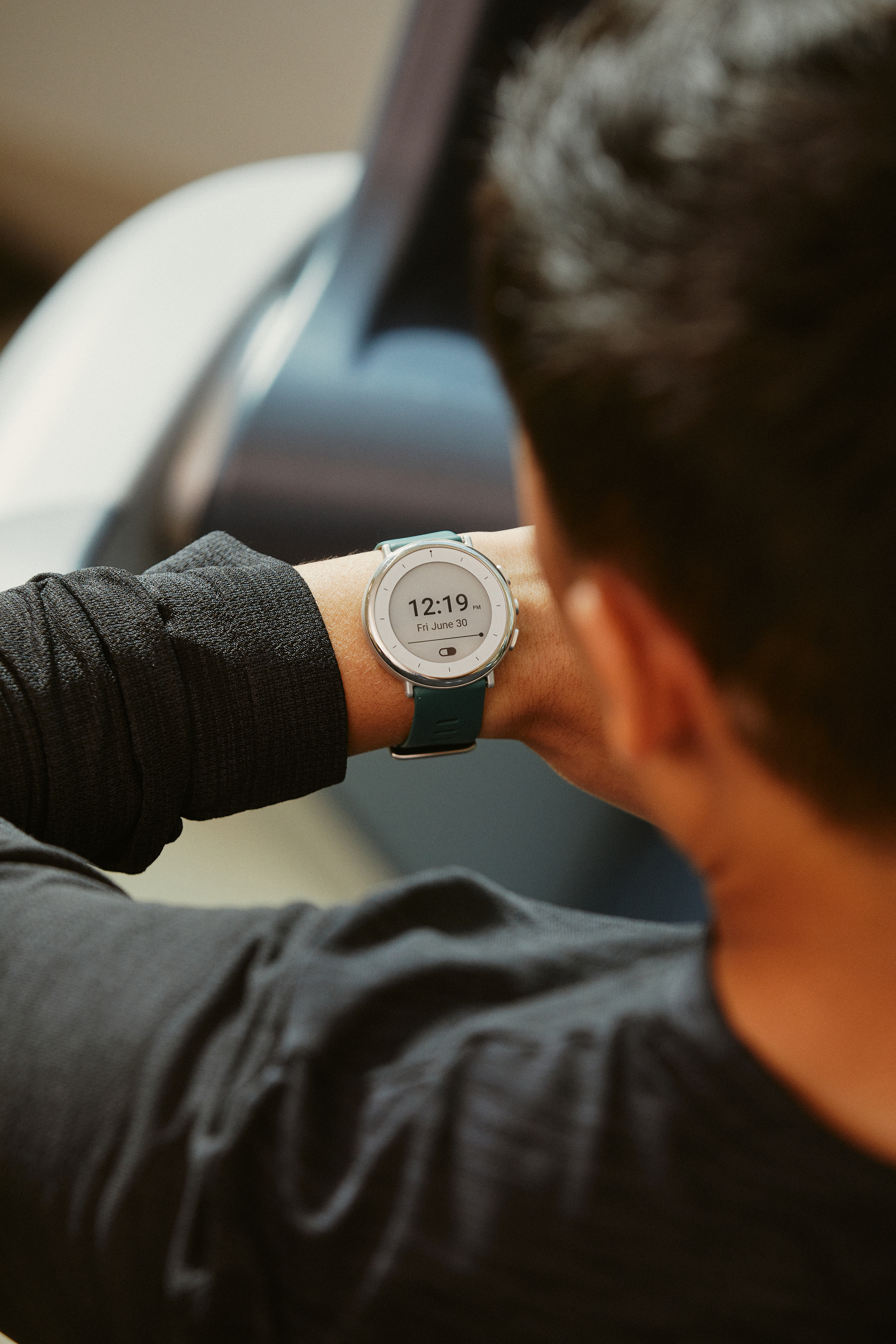
That cancellation tells the story of Verily better than a polished product reel. The company has spent a decade learning where computer-science confidence collides with health care: noisy signals, fragmented records, long validation cycles, cautious buyers and consequences that cannot be patched on Friday night. Its early portfolio sprawled across smart lenses, a clinical Study Watch, surgical robotics, retinal screening, disease-management programs and Project Baseline, an attempt to map human health with longitudinal data.
Act I / The educationA moonshot discovers gravity
Verily launched as a stand-alone Alphabet company in 2015 under founder Andrew Conrad. Its mandate was broad enough to contain nearly any experiment at the intersection of biology and computation. Capital matched the ambition. Temasek invested $800 million in 2017. Silver Lake led a $1 billion round in 2019. Existing backers added $700 million in 2020, and Alphabet supplied another $1 billion in 2022. A fresh $300 million round in March 2026 brought the disclosed total of those five financings to roughly $3.8 billion.
That is the closest honest answer to “what did it cost?” Verily does not publish a project-by-project bill, current revenue or valuation. The money financed more than failed experiments. It bought a long apprenticeship in clinical validation, regulated product design, longitudinal studies and the tedious work of asking permission before sensitive data moves. Project Baseline assembled a community of more than 500,000 people interested in research by 2021. Verily says its wider history now includes a four-year registry with 750,000 consented participants, nine years of encounters from 50,000 people with diabetes, and trial workflows across 63 U.S. health systems.
“A key challenge of biomedical AI is not just access to models - it’s transforming messy, fragmented health data into a usable format.”Verily’s current product thesis
Act II / The editThe first failure was scientific. The change of mind was financial.
The contact lens failed first in the most useful way: the underlying signal would not cooperate. Later corrections were organizational. In January 2023, Verily cut about 240 jobs, roughly 15 percent of its workforce, and largely stepped away from developing its own medical devices. Stephen Gillett, who had succeeded Conrad as chief executive, narrowed the company around precision-health products with clearer routes to customers. More job cuts and portfolio reprioritization followed in 2024.
What changed management’s mind was not one dramatic lab result. It was the accumulated mismatch between an expensive collection of bets and the need for a coherent business. The resulting idea is almost aggressively practical: Verily should be the layer that makes health data usable across research and care. In 2026, that thesis became an independent-company story. A Series X Capital-led round converted the former LLC into Verily Health Inc.; Alphabet retained a significant minority position but no longer controlled it. Notably, the round included UCHealth and the University of Colorado Anschutz - collaborators becoming owners.
The portfolio’s center of gravity
Illustrative strategic breadth, based on announced portfolio changes - not revenue share.
Act III / The handoffThe product is the space between systems
The organizing product is Pre. It ingests structured and unstructured information - records, labs, images, omics and device feeds - then puts them into a clinically informed, FHIR-native model called Syntax. Refinery handles curation and harmonization. Exchange is a catalog through which researchers discover datasets. Workbench is the governed room where they analyze them, with access policies, audit trails, lineage and tools from code notebooks to NVIDIA’s genomics and AI stack.
Around that core sit products that turn data into a job. Viewpoint helps sponsors and research sites digitize protocols, operate trials and generate evidence. Lightpath Metabolic pairs software with endocrinologists, pharmacists, physicians, nurses, dietitians and coaches for diabetes, obesity, hypertension and related conditions. Verily Me gives individuals a way to make sense of records and symptoms. Sightline tests wastewater for more than 30 pathogen targets, converting a community’s sewage into an early-warning feed.
Workbench has its strongest credibility where the scale is difficult to fake. Verily has worked with Vanderbilt University Medical Center on the National Institutes of Health’s All of Us Researcher Workbench since the program launched in 2018. The environment now serves more than 20,000 registered researchers who need to study genomic, clinical, survey and physical-measurement data without turning a national cohort into a downloadable free-for-all. The technical sell is not merely faster queries. It is the ability to associate rules with data, log what happened and let collaborators use different tools while the guardrails remain in place.
The UCHealth collaboration shows the next commercial move. Verily, the health system, the University of Colorado Anschutz and RefinedScience are building pipelines that convert clinical material into research-grade data, then applying models across oncology, cardiovascular medicine, neuroscience and other specialties. In an early acute myeloid leukemia project, the partners reported more than 95 percent accuracy and data extraction 30 times faster than manual review on complex reports. That result does not prove a general-purpose medical intelligence. It does show the kind of narrow, expensive workflow where better curation can create an obvious return: researchers spend less time transcribing documents and more time asking whether the extracted facts matter.
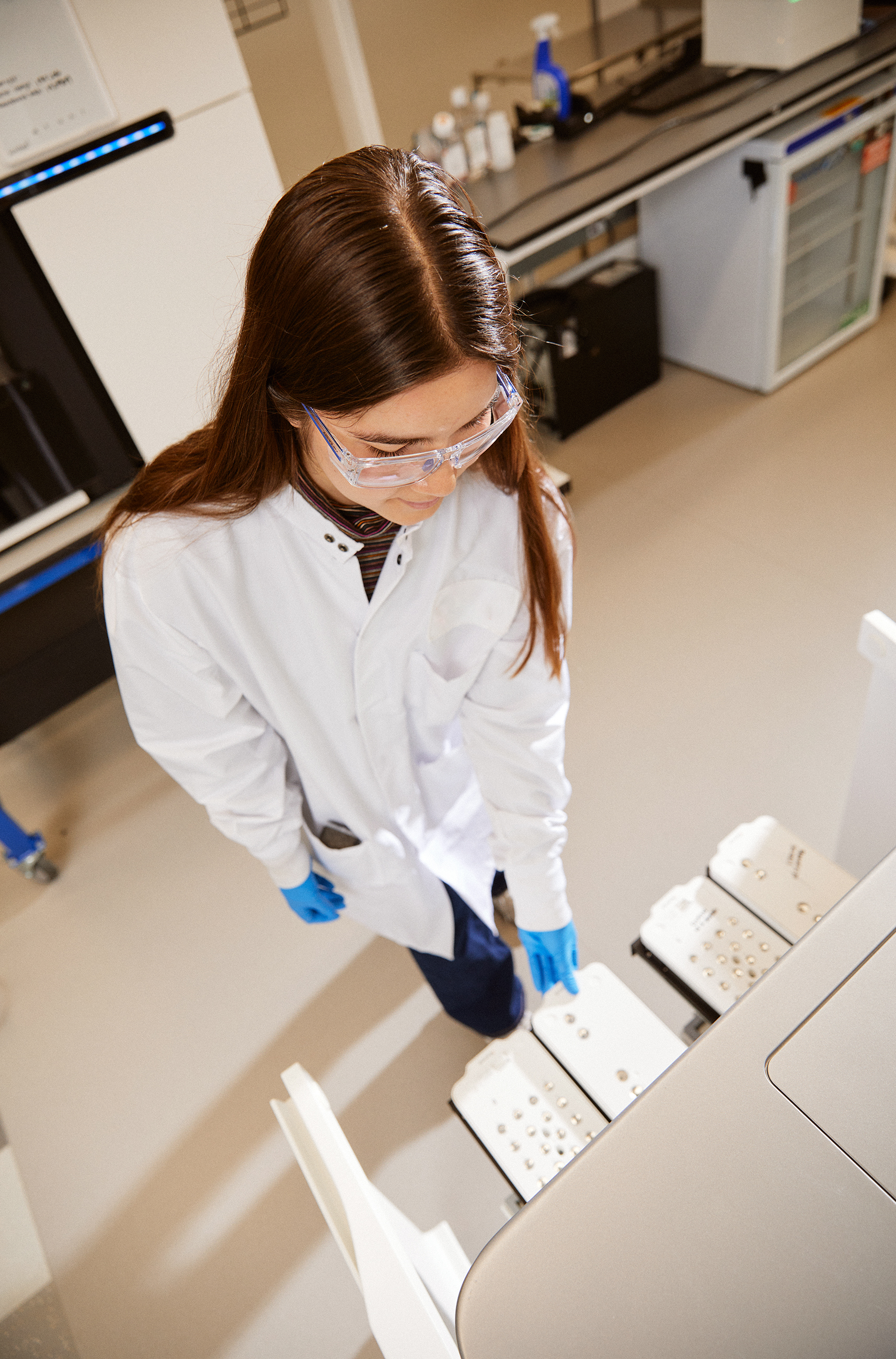
That last business produces Verily’s best small proof point. In November 2024, its assay detected influenza A(H5) in Honolulu wastewater before Hawaii had a clinical detection. Public-health and agricultural teams traced the signal to a backyard flock within 48 hours; no human cases were found. It is precision health at population scale, performed with a sample nobody wants to put on a keynote stage.
The market / Who paysFour buyers, one plumbing problem
Verily sells to health systems, drug companies, clinical-research sites, payers and governments; patients and individual researchers use the products downstream. Public prices are scarce. The commercial model mixes enterprise software, data and research services, partnerships, and care programs purchased by health plans or employers. In 2026, the company added a free Workbench and Exchange tier with ten initial data collections, then a paid professional tier and enterprise deployments. Workbench is available on Google Cloud and AWS, where Verily says it adds no markup to underlying cloud costs.
The competitor list changes with the buyer. Medidata and Veeva already live inside clinical trials. Datavant, Komodo, Flatiron and Tempus organize evidence and health data. Omada and Teladoc’s chronic-care businesses chase the benefit buyer. Palantir and the cloud providers can assemble governed data environments. Verily’s distinction is the bridge: one lineage from curation to analysis, study operations, care and public-health action. Its liability is also the bridge. A portfolio that crosses four markets can again become difficult to buy, implement and explain.
Validate the biological signal before polishing the device. Make permissions, provenance and auditability product features. Reuse one data model across several workflows. Let prospects touch a narrow free tier. Most of all, kill work that does not reinforce the spine.
The catch / Reality remainsClean data cannot make bad evidence true
Verily’s approach works when an institution has valuable data, clear authority to use it, a serious governance program and a workflow ready to absorb the output. It is especially sensible when collaborators need to analyze sensitive information without copying it among clouds, or when the same curated data can support research and care.
It will not work when records are too incomplete or biased for the question; when consent prohibits the intended reuse; when an organization has no staff to maintain mappings and policies; when clinicians must open yet another screen; or when a buyer expects an AI model to manufacture causal evidence from correlations. Interoperability standards can align fields. They cannot recover a measurement that was never taken, represent a population that was never recruited or settle who should act on an ambiguous result.
That constraint may be why the new Verily is more believable than the old one. The company no longer needs every moonshot to land. It needs to show that the expensive experience left behind a platform customers will pay to use. The contact lens promised to make measurement disappear. Pre makes the mess visible, governed and workable. In health care, adulthood often looks like accepting the mess.