An office can run out of chairs. A technology company can run out of people ready to do the work. In Mérida, Varma Buddharaju’s company encountered both questions, and its response eventually included something more substantial than a larger lease: a software engineering training institution.
Ksquare began operating in Yucatán in 2016 with four employees. The local team reached 25 in 2017, 60 in 2018 and 100 in 2019. Those are unusually helpful numbers for understanding a founder. They put people and a place into a business story that could otherwise disappear into the comfortable fog of “digital transformation.”
The arithmetic is straightforward: a twenty-fivefold increase in local headcount over three years. The harder part concerns what happens between the numbers. A new engineer needs skills suited to the assignments, colleagues who can help, and a route from classroom knowledge to the demands of a customer. Recruiting produces an introduction. The work still has to follow.
Buddharaju, based in Irving, Texas, is the founder of The Ksquare Group. His public career connects programming, business management, cricket and cross-border software delivery. The Mérida chapter gives that range a practical focus. Here was a company expanding its team while working with local institutions to prepare more people to join it.
A programmer, an MBA, and a cricket detour
His education combined a bachelor’s degree in computer science engineering at Jaya Engineering College with an MBA at the University of Texas at Arlington. He studied at Arlington from 2005 to 2007, concentrating on operations management and supply chain. The two fields concern different systems, but both demand attention to how separate parts work together.
His early employment included programmer analyst roles at Software Transformation and ePace Technologies, developing and maintaining web and database applications. Before the founder’s titles came the technical work: applications, databases, and the continuing obligation to keep them useful. That is a more concrete beginning than the executive biography’s customary declaration of a passion for innovation.
Then there is cricket. Between January 2015 and October 2018, he served as CEO of Texas Cricket Academy. That role included building relationships with local schools and cricket associations to promote youth participation. It is a pleasing interruption in a technology résumé, and a reminder that the institutions a person helps run need not all sell software.
The academy work also gives the story a second setting in Texas. Alongside his business career was an organization concerned with younger people gaining access to a game. The record establishes an operating role, with schools and associations among its relationships. The cricket belongs in the biography on its own terms; it need not be recruited as an elaborate metaphor for leadership.
Mérida gets a place on the team
In October 2018, Infolob announced the completed spin-off of Ksquare and Navivo into independent, privately held companies. Post-separation activities had begun on October 1. Buddharaju was identified as Ksquare’s CEO in the announcement, describing an offer built around full-stack development and nearshore capability.
That combination made the location of engineering talent central to the business. The company was selling the ability to build software, with delivery capacity close to its US market. A team in Mexico was part of the service itself. Keeping that team supplied with prepared engineers therefore belonged inside the operating plan.
By July 2019, Buddharaju was signing a collaboration agreement with Gildardo Sánchez Ante, rector of the Universidad Politécnica de Yucatán, with Governor Mauricio Vila Dosal witnessing the agreement. It provided for exchanges involving students and professors. The intended activities included professional placements, joint projects and visits by Ksquare specialists.
The university collaboration included knowledge exchange around software systems design, analytics and applications for the Internet of Things. These subjects gave the partnership technical substance. Students were being offered a way to connect their studies to fields the company actually worked in, while practitioners could bring questions from commercial assignments back into an educational setting.
There is a useful specificity to those arrangements. A university relationship becomes easier to understand when a student can work on a project or an experienced practitioner can spend time in the institution. The distance between knowing a subject and using it for a customer is often measured in such encounters. A signed agreement gave those encounters an organizational home.
When expansion acquired a classroom
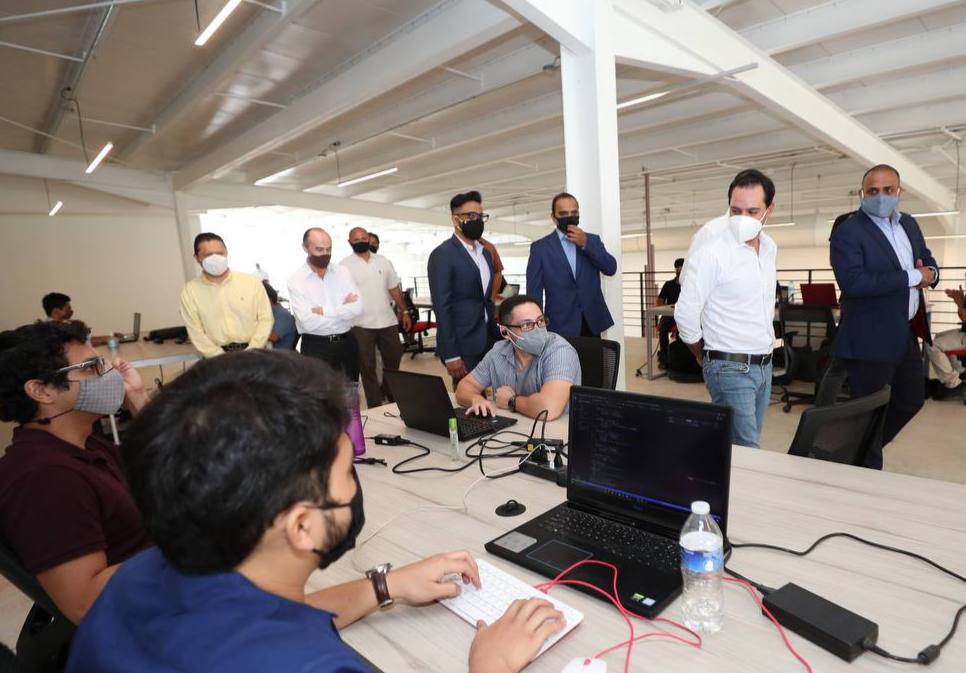
In May 2021, Vila Dosal inaugurated Ksquare’s new Mérida offices. Buddharaju described the company’s earlier surprise at the preparation and dedication of local technology workers. He also explained that available skills had needed closer alignment with the company’s requirements. Training was the response to that gap.
At the visit, he received Agreement 195, granting official recognition of validity to the software engineering specialization program at Instituto Tecnológico Superior Ksquare. The institution gave training a formal educational dimension. Employees could work toward a specialization credential as the company developed the skills its assignments required.
The announced course plan was concrete: six months, divided into four months of theory and two of practice, with two courses planned each year. It was intended to prepare professionals for Ksquare and other technology companies establishing themselves in the state. The invitation extended beyond a single employer’s immediate staffing needs.
The new office had capacity for as many as 300 people. Capacity deserves its own noun: it describes available space, rather than a count of employees already sitting in it. Even with that distinction, the building and the recognized program marked a substantial change from the four-person operation of 2016.
A classroom is an interesting addition to a growth strategy because it requires a company to engage with the preparation of future colleagues. It gives a graduate somewhere to practice and an employer a way to explain what the work demands. There is less glamour in a course schedule than in an expansion announcement, but considerably more to put in a calendar.
The company grows by adding other people’s expertise
Education was one route to a larger engineering organization. Acquisition was another. In June 2019, Ksquare announced the purchase of Great Wave Tech, a Salesforce specialist founded in 2004. The transaction brought its assets, people and customers into Ksquare, including certified technical architect Glenn Kohner.
Buddharaju’s public welcome to the Great Wave team was brief and direct: he looked forward to working with them. The acquisition expanded the company’s cloud and Salesforce services. It also added a different kind of accumulated knowledge: the experience of people who had already spent years working within a particular software ecosystem.
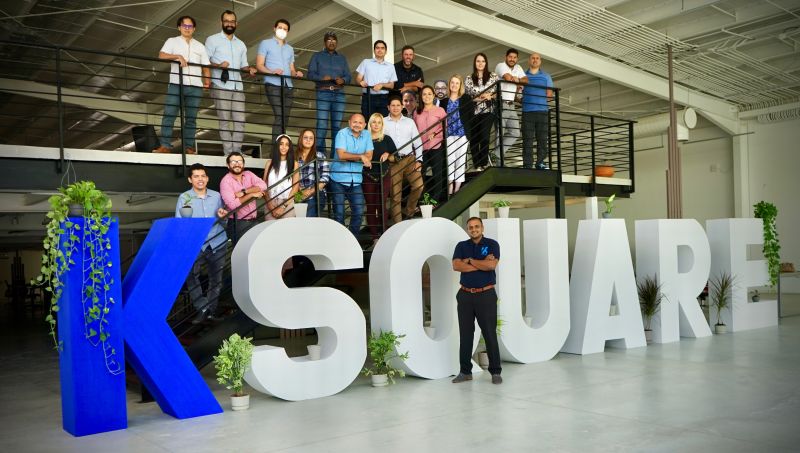
By 2021, his leadership-summit post was thanking a substantial group of colleagues gathered in Mérida, including Girish Mallampalli, Kohner, Ryan Hill and Enrique Castillejos. His message credited both the leaders and their teams. The accompanying photograph put the gathering across an office staircase, with Buddharaju standing beside the large Ksquare lettering below.
In 2022, The Ksquare Group appeared at No. 1,302 on the Inc. 5000 list. That recognition belongs to the company, with Buddharaju named under leadership. It supplies a dated business milestone alongside the local employment story. The people in Mérida and the national growth ranking describe different views of the same enterprise.
A partnership, a yacht, and the work after the invitation
In September 2023, MTX Group and Ksquare announced a partnership aimed at Latin America and the Caribbean. Their proposed combination covered customer relationship management, data and artificial intelligence, with commercial and public-sector customers among the intended markets. Both organizations were headquartered in the Dallas-Fort Worth area.
Buddharaju, identified in that announcement as Ksquare’s CEO and chairman, said the partnership would help the companies support clients and deliver meaningful outcomes for the communities they served. He also looked ahead to working with MTX founder and CEO Das Nobel on opportunities in the region.
The launch included a yacht event at Dreamforce 2023 to connect with leaders and partners. The yacht is an irresistible detail, although the proposed work had a longer itinerary: bringing together offerings and specialists across markets. Business development occasionally gets a picturesque venue. Delivery retains its appetite for schedules, technical expertise and people who answer questions.
Today, Ksquare’s institute describes a path toward becoming a Forward Deployed Engineer, with practical projects, personal support and training in AI-assisted engineering. Its company-wide offer has also moved toward enterprise AI. Those are the organization’s current programs and ambitions; they give a present-day continuation to the earlier investment in training.
The institute’s present description places education, practical experience and personalized support at the center of its program. It also describes creative problem-solving on business challenges. The language has changed with the technology: AI-assisted development and intelligent testing now appear alongside the continuing promise of project experience and a route toward professional work.
Looking across these arrangements gives the career its shape. There is an employee joining a small operation, a student entering a placement, an experienced architect arriving through an acquisition, and a partner bringing additional specialists. Each enters the organization by a different door. Buddharaju’s documented work has involved making several of those doors available.
For Buddharaju’s profile, the enduring detail remains the decision to develop a place where engineers could learn. There are several ways to describe an expanding business: countries, customers, acquisitions, office capacity. In Mérida, his story also acquired a course timetable. Six months, theory followed by practice, and a prospective colleague with somewhere to begin.
“This partnership will allow KSquare and MTX to further support our clients”
Varma Buddharaju · partnership announcement, September 2023