Vadim Rogovskiy once put a sign on his door explaining what CEO really stood for: “Chief Emergency Officer.” It was a reasonable correction. At Clickky, the mobile advertising company he founded, the job had a way of being rewritten by whatever needed attention next. An executive title suggests a person choosing the future. His alternative suggested someone trying to get through Tuesday.
By 2015, he was trying to reserve more of his day for strategy. The joke contained a practical problem that would follow him into other businesses: how much of a founder’s time disappears into keeping the machinery running? A decade later, he would be building software to take repetitive work off other owners’ desks. The old sign could almost serve as a product brief.
His career has supplied several answers, with varying degrees of permanence. There was AdCenter, which he sold. There was Clickky, which grew and eventually closed. There was 3DLOOK, which turned smartphone photographs into clothing measurements. Now there is EVE, an AI business whose own description has evolved as he has kept building. Starting over, in this story, comes with a considerable amount of carry-on luggage.
Before the smartphone fitting room
Rogovskiy began running businesses at 18. A web design studio, a gaming company and an online clothing store preceded his better-known ventures. He studied management at Odesa I. I. Mechnikov National University, graduating in 2011. The early range matters: he had already tried making things for clients, entertaining users and selling clothes before technology for fashion became his full-time occupation.
Clickburner arrived in 2010 and later became Clickky. AdCenter followed in 2011, giving businesses a route into social advertising; VertaMedia acquired it in 2014. These were overlapping experiments, rather than a tidy procession of companies with a ceremonial handover between each. The internet offered a succession of places where somebody had an audience and somebody else wanted to reach it.
Clickky moved into mobile promotion as people carried more of that audience around in their pockets. In April 2015, it announced a $2 million investment from iTech Capital for a minority stake. International expansion was part of the plan. A company built in Odesa was pursuing advertisers and developers far beyond its home market, with the operational complications that such a sentence politely leaves out.
- 2010Clickburner
Later Clickky - 2014AdCenter sold
To VertaMedia - 20163DLOOK
Co-founder - 2025Rebel launches
EVE in development
A beach, a balance sheet, a closing window
Rogovskiy also helped turn his home city into a meeting place for the industry. Clickky’s Mobile Beach Conference put mobile marketing beside the sea. The first event was scheduled for May 2015, with talks, networking and an evening programme on Odesa’s waterfront. Conference organisers generally promise a change of scenery; this one could make the promise without moving a potted plant.
The business demanded a more exacting kind of attention. Clickky’s proposition included paying for actions inside an app, bringing the advertiser’s spending closer to something a user actually did. A download alone could be an unconvincing conclusion to an expensive introduction. Registration, a purchase or another chosen action offered a different way to judge the transaction. Rogovskiy was working on a question he would revisit: where does activity turn into value?
The ending was less accommodating than the growth story. In his later account, Clickky reached $13.5 million in annual revenue in 2017. He wanted to reach $20 million before selling. Fraudulent mobile installs damaged the market, an attempted acquisition fell apart, and the business ran out of room. It closed. His retrospective judgement was that he should have sold sooner.
There is an awkward tension here for someone who has built a career on persistence. The same habit that keeps an experiment alive can keep an owner waiting past a useful exit. Rogovskiy’s experience does not produce a universal timetable for selling. It does explain why his subsequent interest in buying established businesses carries the perspective of someone who has sat on the other side of that conversation.
in Rogovskiy’s later account
before selling
One was reported revenue. The other was a hoped-for next step.
Two photographs and a year of wrong turns
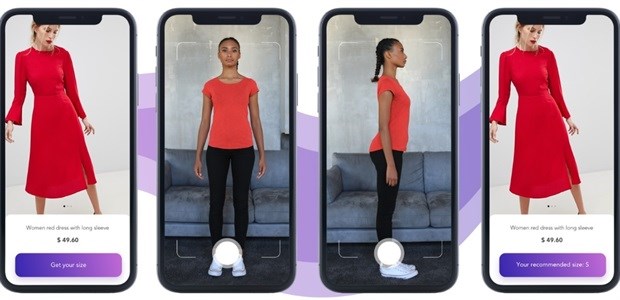
3DLOOK began in 2016, before Clickky’s reported revenue peak. The new challenge was concrete enough to explain over a shopping basket: could an ordinary phone provide measurements that would help people buy clothes that fit? A size label supplies very little reassurance when two brands disagree about what the same letter means. The team wanted useful information from the camera people already owned.
Rogovskiy has described the first year as a sequence of unsuccessful technical approaches. Engineers working with artificial intelligence, machine learning and computer vision had room to experiment, but the answer did not arrive because somebody put the right fashionable words in a pitch deck. They kept testing until they could extract measurements from smartphone images. A simple customer experience required a less simple year behind it.
He also changed how he built the organisation. After the experience of carrying responsibilities as a sole founder, he approached 3DLOOK with co-founders. Its leadership has included Alex Arapov, scientist Ivan Makeev and apparel executive Whitney Cathcart. Cathcart brought decades in fashion and retail; she initially joined as an adviser. The technical idea acquired colleagues who understood the people expected to buy it.
In May 2019, the company won the LVMH Innovation Award at Viva Technology in Paris. Bernard Arnault presented the prize, and the recognition included support through La Maison des Startups at Station F. For a business proposing to change an everyday part of shopping, the luxury group offered an unusually relevant room full of people to convince. The fitting problem had made it onto a rather well-dressed stage.

A company has people inside it
The phone-based measuring system could serve retailers, uniform suppliers and made-to-measure clothing businesses. The commercial point was to give those companies better information before a garment was ordered or produced. Fewer guesses about fit could change the work of the customer, the seller and the manufacturer. Rogovskiy was selling a way to connect a physical person to a digital transaction.
Then leadership acquired duties no product demonstration could settle. After Russia’s full-scale invasion of Ukraine in 2022, members of 3DLOOK’s team relocated to western Ukraine, Poland and the United States. By April, Rogovskiy was discussing how the company continued operating, how clients responded and what an evacuation plan meant in practice. The organisation had to keep promises while colleagues were moving across borders.
When he marked seven years of 3DLOOK in 2023, his account included hundreds of early customer calls, difficult financing moments, international hiring and the relocation of people from Ukraine. He also singled out his wife, Alina, for the support that made his work possible. A founder’s public milestone can look like a solitary achievement. His own list of acknowledgements had rather more people in it.
The company now lists him as co-founder and board member, with Katerina Galich as CEO. His relationship to the business has changed without erasing the years spent building it. That distinction matters in a career often compressed into a row of founder titles. An organisation can continue while the person who started it turns his attention to a different problem.
The investor wanted his hands back on the controls
Alongside operating, Rogovskiy became an early-stage investor and mentor. His work included WannaBiz, Geek Ventures and mentoring startup teams. By 2023, an event biography described his role at Geek Ventures as backing immigrant founders building businesses in the United States. His own route from Ukraine into the American technology world gave that focus a personal context.
The investor’s chair eventually proved an imperfect fit. “I’m the operator type,” he said in 2025. With Hanna Markouskaya, he founded Rebel Capital, a holding company for established software businesses. Its April 2025 launch announced the acquisition of Leadature, an event data capture and marketing company founded in 2007. Instead of inventing demand from scratch, they could begin with customers already paying for something.
Rebel set an ambition of $100 million in annualised revenue by 2030. That remains a target. The immediate task was more domestic: improve the way an existing business handled its work. Leadature’s long email history contained information that never made it neatly into its customer management system. An acquired company came with years of accumulated correspondence, and correspondence turned out to be useful raw material.
“I’m the operator type.”
Vadim Rogovskiy · 2025
The next opportunity was already in the inbox
EVE emerged from that work around small businesses and their communications. In an early demonstration, Rogovskiy showed an assistant that examined email history, identified opportunities and suggested follow-ups. It could draft messages using the company’s context. The appeal was easy to recognise for an owner doing sales between everything else: someone who once asked for a quote might still be worth answering.
By May 2026, he was describing a broader approach to combining email, customer records and external signals. A past conversation might become timely again when a contact changed jobs or a company announced funding. The challenge was deciding what deserved a person’s attention, and bringing it back at a useful moment. His interest in events remained, too: meeting people in person still featured in his approach to finding customers.
The current EVE website gives the assistant a more specific assignment: helping founders raise capital. It offers pitch-deck review, investor research and outreach drafted for the founder’s approval. Rogovskiy and Markouskaya are both identified as its builders. It is a new application of experience accumulated on both sides of fundraising, from asking for investment to deciding whether to provide it.
There are quieter details around this working life. Rogovskiy has climbed Kilimanjaro and supports Gladpet, which connects homeless animals with prospective owners. His mentoring profile allocates a share of its proceeds to the organisation. These interests sit beside the companies without needing to become business metaphors. Sometimes a mountain is a mountain, and a dog needs a home.
The changing products leave a recognisable concern in view. An advertiser wants a useful customer. A shopper wants a garment that fits. A business owner wants a promising conversation to survive a crowded inbox. Rogovskiy keeps building around the distance between an intention and the work required to fulfil it. Somewhere along that route, the Chief Emergency Officer has become interested in giving other people a little less reason to put the same sign on their doors.
Early inbox assistant→2026Prepare investor outreach
Current fundraising product
Different documented stages of the product, rather than simultaneous promises.
Follow the next chapter
Work, conversations and public profiles.