A dancer has to make a gesture mean something. A hand moves, a face changes, and someone watching understands. Long before Ashwini Asokan was explaining artificial intelligence to customers and investors, she was learning this older technology: how to get an idea from one human being into another.
In Chennai, she trained in classical dance and music and travelled to perform. The stage looked like a plausible future. A degree in visual communication kept her close to the creative world. Then came Carnegie Mellon, interaction design, and a question that would survive several changes of job: what happens when the things we build have to understand the people using them?
The route eventually led to Intel and then Mad Street Den, the AI company she co-founded after returning to India. It also produced a founder whose explanations of technology tend to include people, culture and work. An algorithm may be clever. Asokan has spent a career asking what anyone is supposed to do with it.
A gesture is already a language
At Carnegie Mellon, her work explored movement grammars. The phrase sounds as though a choreographer has wandered into a linguistics department, which is a reasonable place to begin understanding her career. Her academic work connected cultural identity, movement and the design of objects.
In 2005, she co-authored a paper with Jonathan Cagan called Defining cultural identities using grammars: An exploration of cultural languages to create meaningful experiences. Its premise placed everyday behavior inside a cultural setting: gestures and interactions carry learned meanings, and those meanings can inform design.
That offers a more interesting account of her background than the familiar surprise that an AI founder once danced. The two pursuits share an interest in interpretation. A movement is observable; its meaning depends on context. Designing for people means paying attention to both. Her early research gave that interest a method and an academic vocabulary.
- ChennaiDance & visual communication
- Carnegie MellonInteraction design
- IntelMobile experiences
- Mad Street DenApplied artificial intelligence
The people inside the chip company
Intel gave Asokan a place to work across disciplines. Designers, anthropologists and engineers were part of the same conversation. She moved through work on the home and mobile experiences, eventually leading the mobile innovation portfolio at Intel Labs.
Among the people she credits are anthropologist Genevieve Bell and sensing expert Lama Nachman. In her telling, seeing women doing consequential technical work expanded her sense of what she could attempt. Mentorship arrived through proximity: a team, a set of problems, the example of someone else doing the work.
Her account of those years is full of adjacent roles. She has worked as a designer, ethnographer, product manager and program manager. The list explains something about her appetite for crossing professional borders. A product moves through several kinds of expertise before it reaches a customer. She wanted to understand the journey, including the handoffs where useful ideas so often get lost.
That experience matters when considering her much-repeated point that she does not write code. She understands the systems she works with. Her contribution has centered on deciding where those systems belong, what experience they should create, and how people will use them.
Before the pitch, pick up a pencil
Asokan was writing about these questions while the Indian startup scene was arguing over the importance of design. In a 2014 column, she described the reactions that followed any mention of user research: groans, eye rolls, requests for reading lists, arguments over who owned the discipline.
She had little patience for the territorial dispute. The practical question was how a team could understand an experience well enough to improve it. Her proposed conversation concerned ordinary people using technology, including the context around a screen and the habits a product might have to accommodate.
Another essay made the case for studying people before building. Observe a setting. Ask questions. Find out which beliefs, preferences and constraints shape a decision. The warning was against quietly rewriting the evidence to suit a favorite idea. A founder carrying a camera still has to resist becoming the hero of every photograph.
Her instructions for turning ideas into prototypes were similarly down to earth. Sketch a scenario. Consider what happens when the experience fails. Draw a storyboard, then wireframes. Artistic ability was optional; understanding the situation was essential. A rectangle could stand in for a phone. Nobody needed to postpone the company until the drawings were fit for a gallery.
“Why won’t you need AI?”
Asokan, recalling her early response to prospective customers
The customer declined to be inevitable
Leaving Intel brought those ideas into a harsher classroom. Asokan and her husband, neuroscientist Anand Chandrasekaran, returned to India and began building Mad Street Den in Chennai. His technical background and her experience in product and design gave the venture different ways to examine the same problem.
She has been frank about an early mistake: assuming careful research and a product built around customer problems would bring buyers along. People asked why they needed AI. Her response could amount to wondering why they would ever do without it. The customer, inconveniently, remained entitled to an answer.
Learning sales changed her understanding of the work. It required attention to trust, relationships and intent. Those concerns sound familiar beside her design practice, but selling placed a commercial consequence on understanding them. A persuasive technological future had to become a purchase someone could justify in the present.
Mad Street Den’s ambition was broad. Choosing a first market would give that ambition a practical boundary: enough room to learn, and a sufficiently specific customer to tell whether the product helped.
Why the experiment went shopping
Vue.ai launched in 2016 as the company’s retail vertical. Retail offered repeated, visible work: product images to inspect, catalogues to organize, items to describe, recommendations to make. The business had plenty of decisions that began with looking at something.
The proposition could therefore be explained without a tour of a neural network. Upload a catalogue; receive structured information that would otherwise require people to examine images individually. Asokan described the broader opportunity in terms of saving staff time and automating workflows. Fashion was part of the business, alongside furniture, home goods and adjacent categories.
In a 2020 conversation, she explained the choice as a way to learn how to build applications, sell AI and demonstrate value before moving into other industries. A defined market supplied feedback. The team could find out which claims survived contact with an actual organization, including its existing processes and purchasing decisions.
This gave a company with general ambitions a particular place to practice. A catalogue is a less theatrical demonstration of intelligence than a talking robot. It also comes with a department that needs the job finished.
Product images enter the system.
Visual attributes become usable data.
Cataloguing, discovery and recommendations.
A short vocabulary for a noisy industry
At Mind the Product, Asokan organized the AI conversation under three memorable headings: “Brains, Bots, and Bullshit.” The phrasing had the useful quality of fitting on a slide while leaving very little room to hide behind it.
Her argument addressed a peculiar tension. People feared machines becoming powerful enough to take over, while finding the AI products in front of them frustrating and limited. Product teams had a job in that gap. They needed to shape applications around use, meaning and the effects on people.
That position also widened responsibility beyond the engineering team. Questions about how a product behaves, what it encourages and where it belongs deserve attention during development. They cannot all wait for the launch presentation. Her recurring insistence on product thinking gives AI a demanding audience: the person expected to use it on an ordinary working day.
A bigger table requires chairs
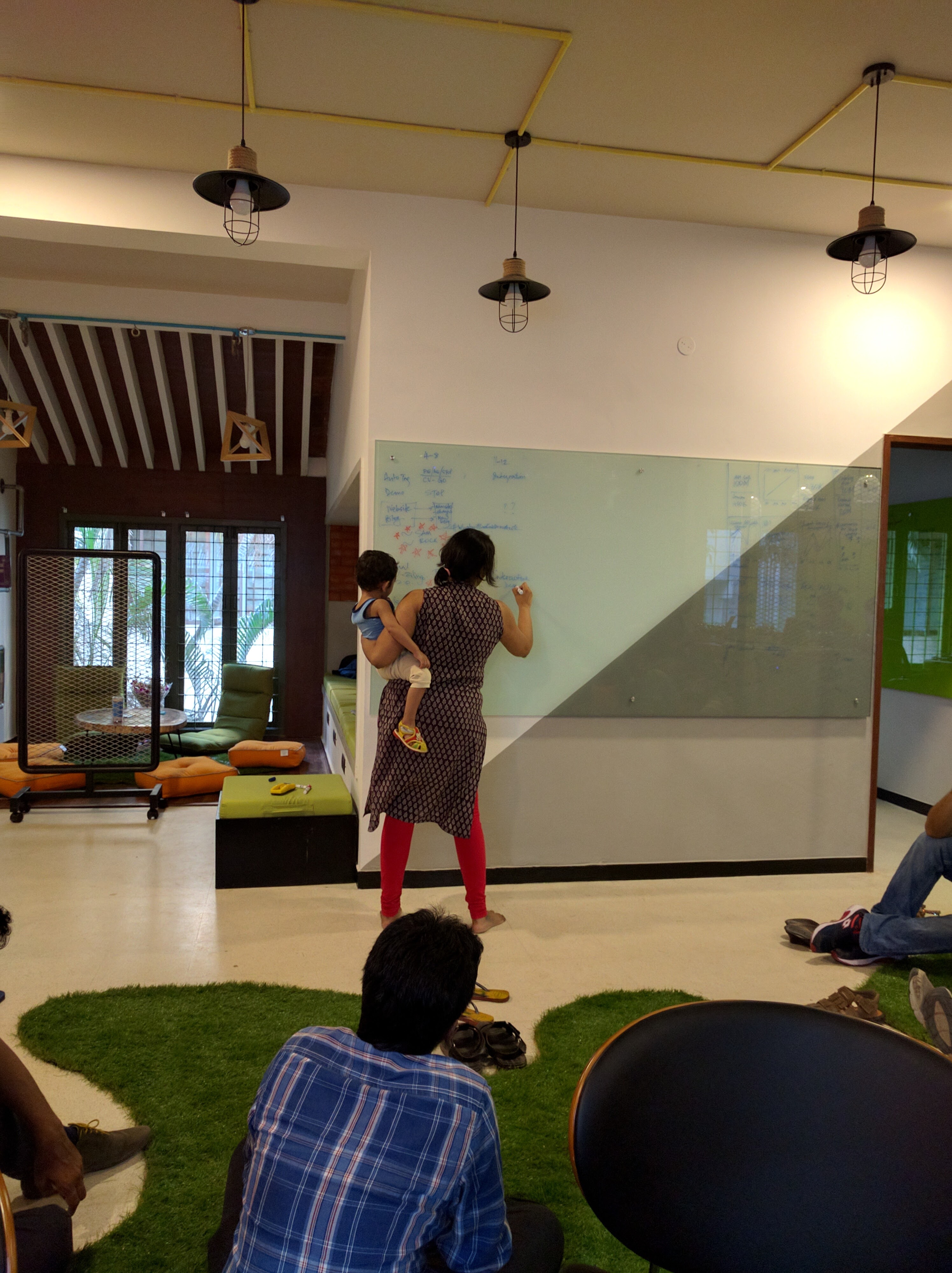
The same attention to context appears in Asokan’s arguments about women at work. She has challenged the idea that equal opportunity can be declared while the practical arrangements stay untouched. Office choices, childcare and the assumptions built into a working day affect who can remain in the room.
Her community work provided another place to change those arrangements. At SaaSBoomi, she pushed for support for founders beyond the earliest stage. Avinash Raghava describes her recruiting experienced founders into a network where they could help each other as well as newer entrepreneurs.
She hosted the community’s first women-founders session in 2023. By August 2025, Raghava credited her with helping increase women’s participation from below 3 percent to 15 percent. His portrait also supplies a less public side of her directness: humor, warmth and an ability to challenge someone without humiliating them. The disagreement was meant to move the work forward.
Knowing when to leave the room
In 2025, Mad Street Den was sold to M2P Fintech. By July 2026, Asokan was discussing her departure and the decisions behind the sale. She described sharing the outlines of acquisition offers with the leadership team and inviting a vote on the buyer.
“We sold to the company the team picked,” she said. The farewell gathering took place in December 2025. A company built through years of work had reached a transition; the people involved had helped choose its direction.
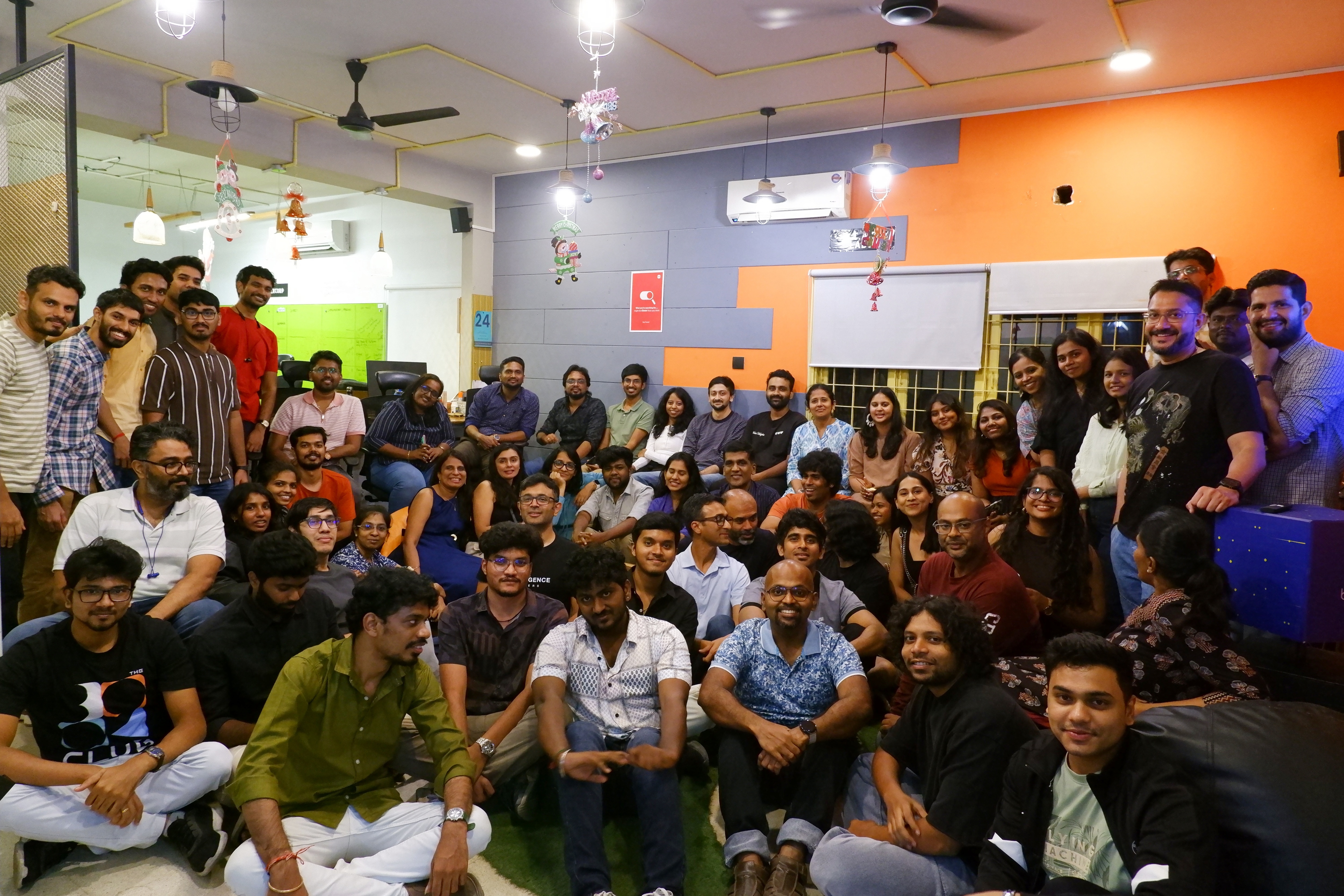
Asokan continues to write publicly. Her essays move between technology and questions of growth, uncertainty and learning. Even the titles resist staying in a single professional department. Her career has involved enough of those departments to make the habit understandable.
There is a consistent question underneath the changing settings. On a stage, inside a research team, across a sales conversation or among founders, someone has to understand what matters to the other people present. Asokan keeps bringing that question into rooms full of technology. It has proved a durable piece of equipment.