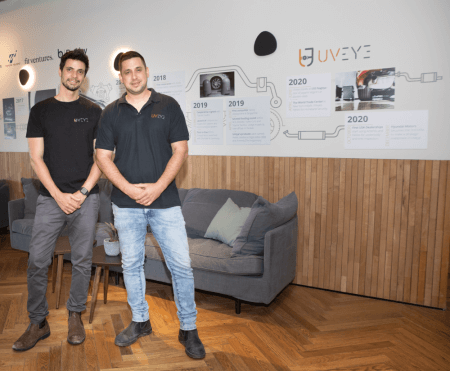
The first UVeye machine had a grim assignment: find the bomb under the car. At secure facilities in Israel, guards still crouched over mirrors and handheld equipment, trying to inspect a dirty, shadowed undercarriage without holding up traffic. Brothers Amir and Ohad Hever believed cameras and computer vision could do the looking faster. In 2016, they founded UVeye and released Helios, a drive-through underbody scanner designed to flag whatever did not belong - explosives, weapons, drugs, an unfamiliar object bolted to the chassis.
Then the scanner began noticing the ordinary. Oil leaks. Rust. Broken parts. Missing parts. The objects were not security threats, but they were evidence of a vehicle's condition, captured consistently while the car was already moving. That accidental dataset changed the size of the business. A border crossing might inspect a car occasionally; a dealership, factory, auction or delivery depot must assess vehicles all day.
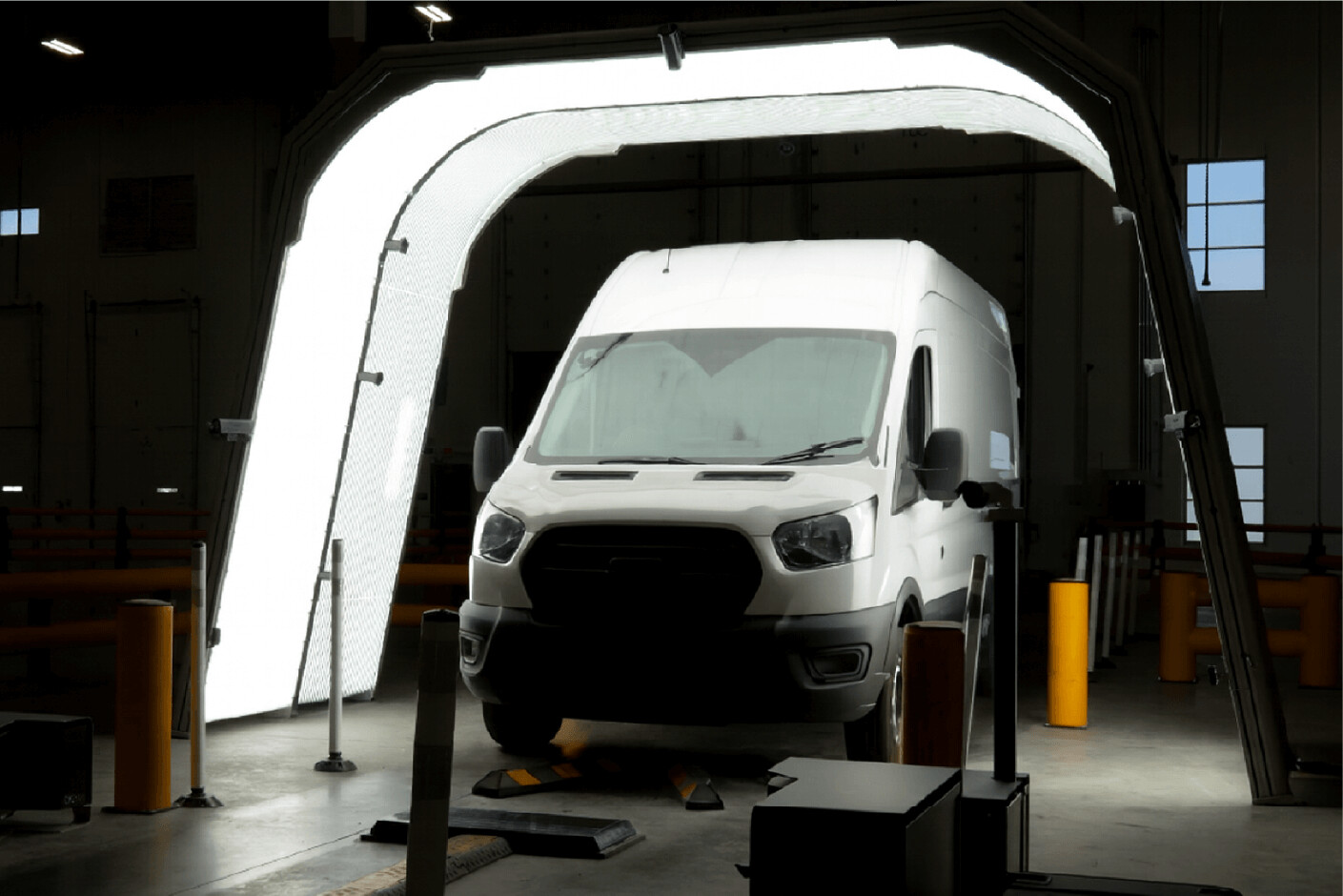
UVeye did not abandon security so much as reuse its peculiar advantage. It had learned how to photograph an awkward machine from hostile angles, at speed, in repeatable lighting. The company wrapped more cameras around the vehicle, trained models to recognize damage and turned a checkpoint appliance into what it calls an "MRI for vehicles." The phrase is sticky because it makes an industrial contraption legible: drive through, get a condition report.
The pivot was hiding in the pictures
Atlas, launched in 2018, scans the exterior for dents and scratches. Artemis followed in 2019 to inspect tread depth, sidewalls and wear patterns. Atlas Lite shrank the exterior rig for dealership lanes in 2022. Apollo added cabin imaging in 2023. Together the products create views above, below, around and inside a vehicle. The software highlights possible defects, sends alerts and produces a visual record employees can show a customer or compare with an earlier scan.
One car, four sets of eyes
The initial commercial customers were manufacturers. Skoda installed a system in a plant in 2018. Toyota Tsusho, Volvo and Hyundai became partners or investors. The pandemic forced another expansion. As factory activity slowed, UVeye pursued the aftermarket: dealerships, used-car auctions and fleets. These sites had something the product needed - a steady line of vehicles and a costly decision attached to every inspection.
“We started gathering and seeing the wear and tear, then introduced it mainly to car manufacturers. They were really excited.”Amir Hever, co-founder and CEO, describing the shift from security
That move explains who pays. A dealership can use the same scan at service check-in, during a trade appraisal, before a used car goes online and when a loaner returns. A fleet can catch a worn tire before a delivery van leaves. An automaker can document a defect at a factory or port. A rental company can compare the vehicle at pickup and return. The output is not just an image. It is evidence placed beside a transaction.
The business is a lane, a model and a monthly bill
UVeye is a hybrid of industrial hardware and enterprise software. It installs proprietary camera and sensor systems, connects them to the customer's operating software and charges recurring fees under contracts with scan limits, service and support. Public terms say pricing is confidential; there is no honest menu price to quote. A 2024 General Motors promotion offered participating dealers credits of up to $2,500 per month toward a UVeye subscription, useful context but not a list price.
The cost is larger than the invoice. A site needs a suitable lane, infrastructure, installation, calibration, training and enough traffic to make a permanent scanner sensible. UVeye must manufacture and finance equipment before subscription revenue compounds. That helps explain its capital stack: a $100 million Series D in 2023, followed in January 2025 by $41 million of equity and a debt facility of up to $150 million. CEO Amir Hever said the money would help deploy nearly 700 systems during 2025.
The recurring appeal is measurable at the customer level, though the best numbers come from UVeye's own case studies. Team Toyota of Princeton reported a 15 percent increase in service work within three months and $100,000 in recommended alignment repairs over 90 days. Tom Wood Automotive reported total service revenue up 12 percent and policy spending down nearly 40 percent. BMW of Honolulu reported tire sales up 25 percent and alignment sales up 41 percent. These are selected outcomes, not controlled experiments, but they reveal the purchase logic: find work, save inspection time and keep photographic receipts.
What broke first was not the camera
UVeye's original security product did not publicly collapse. The narrower market simply exposed a larger one. The more instructive failure appeared later, where detection met consumer billing. Hertz began deploying UVeye scanners at U.S. airports in 2025. Renters soon complained about unexpected charges, unclear before-and-after images and a dispute process that felt remote from the people at the counter.
In one widely reported case, a renter received a $440 demand after a scanner flagged a one-inch wheel scratch. The repair itself was listed at $250; the remaining $190 came from processing and administrative fees. Other customers disputed whether a mark was new, real or billable. Hertz waived charges in at least one case covered by CBS News, while saying that more than 97 percent of 675,000 scanned rentals produced no billable damage. Members of Congress asked the company to explain the fees, notification and appeal process.
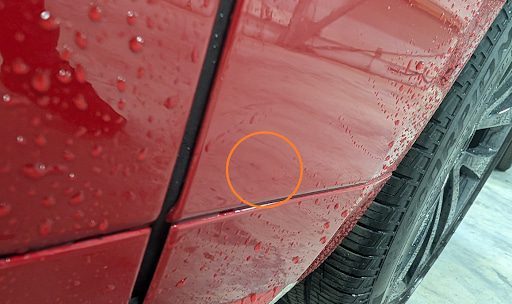
The distinction matters: UVeye supplies the inspection technology; its customer defines damage thresholds and handles the commercial decision. But to a renter, the scanner, the rental brand and the invoice arrive as one system. A technically correct flag can still produce a miserable experience if the customer did not see the entry scan, cannot understand the comparison or has no obvious human reviewer. AI detection and fair adjudication are separate products. The rental rollout demonstrated what happens when the first races ahead of the second.
The sharpest camera cannot answer the policy question: Which scratch matters, who caused it and what should happen next?
Why the system is different
UVeye's closest alternatives split into two camps. ProovStation and DeGould also build fixed imaging systems. Ravin AI, Tractable, Monk, PAVE and Inspektlabs lean more heavily on ordinary cameras or guided phone capture. Then there is the incumbent bundle: a walkaround, a flashlight, a lift and a tread gauge.
A fixed UVeye lane is expensive and inflexible compared with a phone. It also controls the conditions that make comparisons useful: angle, distance, speed, light and image quality. Every vehicle moves through roughly the same photographic ritual. The combined suite sees tires and underbody areas that a casual walkaround skips, while integrations push the results into dealer-management, appraisal and inventory systems. Its growing archive - UVeye says it analyzes 5.2 billion images annually - improves both model training and historical comparisons.
The company is now stretching that data beyond inspection. BDC Booster helps dealerships turn findings into service outreach. UV360 repurposes exterior scans into standardized listing photography. A 2026 integration with Cox Automotive's vAuto sends condition intelligence into appraisal, pricing and inventory workflows. At JLR's three U.S. seaports, reports can be compared with factory records to determine whether a defect appeared before shipping, in transit or at the port. One scan begins to feed many departments.
Where it works
- Hundreds of vehicles follow one predictable lane
- Every caught defect changes a valuable decision
- Past and present scans can be compared
- The report reaches staff while the customer is present
Where it stalls
- Low-volume sites cannot spread the physical cost
- The location lacks space or stable infrastructure
- A mobile photo workflow is good enough
- Flags trigger charges without review or a clear appeal
The part worth copying
Founders should not copy the scanner. They should copy the sequence. UVeye entered through a problem with obvious urgency, built a system that generated unusually consistent data and watched for valuable information the original buyer did not request. It then followed the data into a higher-frequency workflow and integrated the result with the software where decisions were already made.
The UVeye playbook, without the cameras
- Enter through a painful inspection nobody enjoys doing.
- Standardize the capture conditions before polishing the model.
- Study the by-products your system notices accidentally.
- Move toward the workflow that repeats most often.
- Deliver evidence at the moment money or responsibility changes hands.
- Build the appeal and human-review layer before automation creates conflict.
The playbook fails when the physical footprint exceeds the value of the decision, when every location behaves differently, or when customers need remote flexibility more than consistent imagery. It also fails socially when an operator treats a model's flag as a verdict. In those settings, a guided phone inspection and a trained human may be cheaper, friendlier and sufficient.
UVeye occupies a useful middle ground in automotive technology. It does not make cars autonomous. It makes their condition machine-readable. That is less cinematic and easier to sell: dealerships want service evidence, fleets want fewer surprises, manufacturers want repeatable quality control and ports want a timestamp. The product succeeds when all four can use the same pictures.
The company's next chapter depends on how well it handles the consequence of seeing more. More detections can mean safer tires and fewer missed defects. They can also mean more disputes, more explanations and more responsibility for the systems built around the scan. UVeye has already taught cameras to look beneath the car. The harder engineering problem is making everyone on both sides of the report feel that they were shown the same thing.
Explore and watch