Udo Waltman learned an early rule in hospitality: never walk with empty hands. His parents ran a hotel and a swimming pool, and he grew up around businesses where a customer’s needs could interrupt whatever you were doing. The lesson was practical. If you were going somewhere, make the journey useful. Carry something. Notice what needed doing. A hotel offers rather few opportunities to hide behind a strategy presentation.
He joined Search in the spring of 2005. There, his responsibilities came to span a laboratory, training and consultancy. He described enthusiasm and sharing knowledge as central to his work, and traced his approach to customers back to those early hospitality lessons. Technical expertise had to travel: between colleagues, between disciplines, and out to the person paying for it.
That background gives a useful way into Waltman’s later career at Sansidor. He would become responsible for buying businesses, but much of his thinking concerns what happens once the buyer has put down the pen. How do people work together? Who makes decisions? How much of a company can change before the qualities that made it worth buying begin to disappear?
“Loop nooit met lege handen.”
Udo Waltman’s early hospitality lesson
“Never walk with empty hands.” - translated from Dutch
The announcement nobody applauded quite enough
Waltman has a story about an earlier acquisition that punctures the usual celebration. Management had prepared an upbeat presentation for 300 employees. A new owner would open possibilities; familiar names, locations and working arrangements would provide reassurance. The directors expected the announcement to feel momentous. The audience received it with considerably less excitement.
His account is frank about the mismatch. The employees had missed the months of anticipation and negotiation. Management had lived inside the deal; everyone else had continued doing their jobs. Then came the emphatic assurance that little would change. It was hardly surprising that employees found other things to think about. In Waltman’s telling, that evening’s football match could be just as interesting.
There is a neat management lesson here: months of private excitement cannot be transferred in one public meeting. A transaction has several starting dates. Lawyers have one. Owners have another. Employees may begin only when the announcement reaches them. Treating those clocks as synchronized invites disappointment.
Waltman compared integration with a relationship, progressing from discovery and infatuation to marriage and everyday adjustment. He also acknowledged that his own side had clung too tightly to its identity after a sale. His reflections leave room for necessary change. Keeping a business recognizable does not remove the buyer’s obligation to explain what will be different.
An acquisition meeting with a small zoo
To explain seller motivations, Waltman devised an animal cast: cheetah, shrew, bee, swan and giant panda. It is an unusually lively way to discuss a subject normally furnished with spreadsheets. Each animal stands for a different intention, and each intention changes what a sensible deal should look like.
The cheetah wants to sell and leave promptly. The shrew wants to maximize the immediate proceeds. The bee wants to remain busy in the business while receiving help with supporting functions. The swan places continuity first. The panda represents a distinctive enterprise that needs outside support. Waltman cautions that real owners can combine several of these motives.
The exercise asks both parties to say what they mean before a contract gives their misunderstandings legal stationery. A seller who wants to stay involved should explain the work they hope to do. A buyer should explain the responsibilities it expects them to retain. Goodwill helps, but goodwill cannot settle an unanswered question about who is in charge.
The animals are useful because they make a discussion of money and attachment less ceremonious. Selling an enterprise can mean relief, ambition, exhaustion, continuity or several of these together. Waltman’s framework treats those motives as part of the transaction. The personality at the table belongs in the conversation alongside the numbers.
The dangerous convenience of “synergy”
Waltman also has reservations about a word beloved of acquisition presentations: synergy. He argues that it can encourage companies to turn inward, generating internal sales discussions and lists of supposed opportunities while losing sight of the customer. His test is whether customers want the combined offering and employees see a reason to cooperate.
He allows for practical gains. Shared purchasing can help; a joint recruitment campaign may achieve more than two smaller efforts. Yet he warns against using optimistic assumptions about collaboration to justify an acquisition price. The benefits that sound persuasive during negotiations still have to survive ordinary working days.
This is an uncomfortable position for anyone hoping a diagram will do the work of a relationship. An arrow connecting two companies can be drawn in seconds. Getting two teams to understand one another’s services takes longer. A central instruction to cross-sell cannot supply knowledge that the person making the call does not possess.
The consequence of his argument is a demanding standard for management. Collaboration should earn its place through usefulness. An owner’s preference for independence deserves attention, and so does a customer’s preference for fewer conversations and a broader service. Leadership has to make those interests meet without assuming that the acquisition has already accomplished it.
“We are not in the business of restructuring, we primarily aim to build together.”
Udo Waltman, 2023
Keep the name. Make the introductions.
Sansidor gave Waltman a setting in which to put these ideas to work. He became its director in June 2020, after roughly two decades in the testing and inspection sector. An early stage of its expansion saw a group of ten small and medium-sized businesses, five of which had joined in 2022.
The arrangement preserved operating companies while providing support in areas such as personnel, finance and marketing. Waltman described keeping the central team away from primary operations, where the acquired businesses had greater expertise. Customers could access a wider set of services through relationships they already knew. He likened his own job to a playground: a chance to grow a small business in a familiar sector.
As acquisition targets became larger, the promise still required careful handling. In 2023, Waltman described looking beyond businesses with 15 to 25 employees toward candidates with 50 to 75. He emphasized well-run companies ready for another stage of growth and the importance of realistic expectations. Autonomy and support had to be understood before the deal, then made tangible afterward.
One tangible device was remarkably modest. In a 2024 post, he described encouraging colleagues to show what they did through photographs and videos in Sansidor’s communication app. February Fridays became occasions for displaying work to colleagues. The point was to make services familiar enough that people would naturally think of one another when a customer needed help.
It is easy to overlook the difficulty of that task. A network can acquire a company’s shares without acquiring an understanding of its daily work. Introductions, demonstrations and shared experience make the new relationship usable. Waltman’s approach gives the meeting after the acquisition a purpose beyond congratulating everyone on the acquisition.
Even the CEO has to answer questions
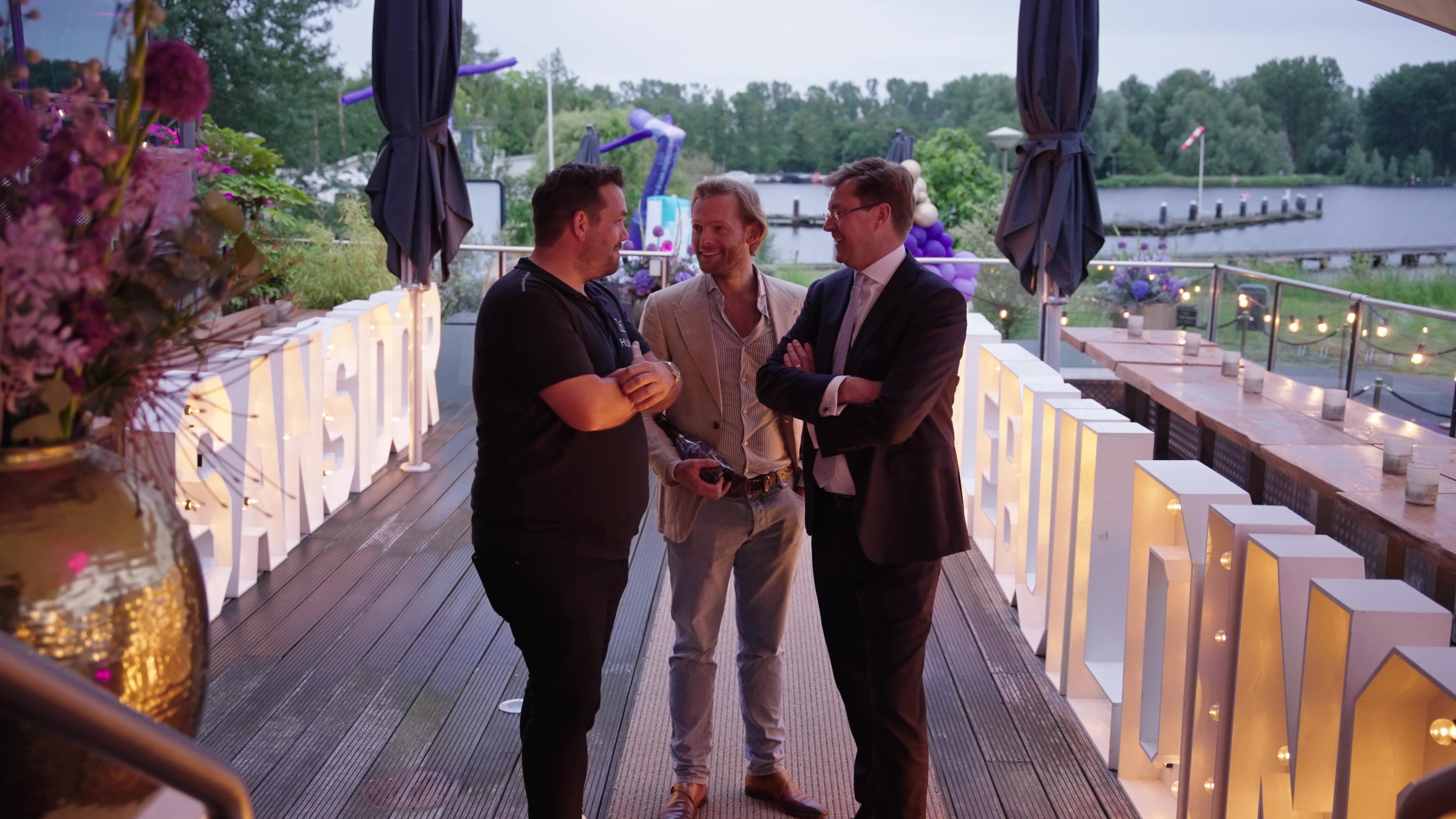
There was another complication in Sansidor’s independence model: some selling owners and managers also became participants in the wider group. At a Sansidor Experience gathering, Waltman described a reversal of roles. People the executive team ordinarily guided could, in their capacity as investors, ask that team to account for its decisions.
He presented that arrangement with a mixture of affection and realism. Local autonomy, central support and a large group of opinionated entrepreneurs made for a delicate balance. After the intensive session came food and beer. The account makes the governance visible: colleagues could share the evening while having distinctly different rights to ask difficult questions.
The balance mattered as the ownership structure changed. IK Partners acquired a majority stake in September 2024, investing alongside HC Partners, company founders and management. Its stated plans included broader services, greater cooperation between businesses and international expansion. These ambitions put more weight on the same question Waltman had been asking: how does a larger organization help people do better work?
The acquisition of HumbleBuildings supplied one answer. In a May 2025 conversation with founder Gerard Lokhorst, Waltman contrasted Sansidor’s recurring technical assignments with HumbleBuildings’ more strategic approach to building advice. He saw scope for learning in both directions, including how technical services were presented to customers. He also emphasized the personal connection between the teams.
By March 2026, additions included DLR Eurlicon, with expertise in building-related transport systems, and CH Brandbeveiliging, a fire protection business. EN Vastgoed followed in September, bringing property advice and inspection capabilities. Their announcements repeated the commitment to familiar teams and local identity. Each addition widened the offering and increased the work of keeping the network coherent.
The next inspection: his own role
Waltman’s concern for people also appears in his industry columns. Writing about technical examinations in 2025, he objected to questions whose complicated wording could obscure the knowledge they were meant to test. Capable tradespeople, he argued, should be assessed on their craft. An exam that rewards decoding a sentence can become an obstacle to the profession it is supposed to strengthen.
In another column, he examined the friction between installers and inspectors. One does the work; the other arrives to assess it. The arrangement can feel hierarchical, particularly when professional pride is involved. Waltman urged respect for both kinds of expertise and attention to the applicable standards. There is a consistent interest here in how useful cooperation gets derailed by the way people encounter one another.
His September 2026 announcement turned the question of fit toward himself. Waltman said Sansidor’s next phase called for a different kind of leadership and that he had discussed his departure with the supervisory board. He named Frank Weermeijer as interim CEO from 1 October. In the same message, he thanked colleagues and investors and looked forward to following the company’s development from the sidelines.
The statement gave a sense of the distance traveled: he recalled arriving at a business with 50 full-time-equivalent positions and leaving a group with more than 1,000 colleagues. Those are different measures, but together they convey a change in scale. He also referred to 30 acquired businesses. The organization he was assessing had become a different leadership assignment.
He recalled joining at 50 FTE. FTE and headcount are different measures; no growth ratio is implied.
His explanation fits the questions that run through his work. What is needed now? What does each person want to contribute? Which responsibilities belong where? A network built around entrepreneurs requires repeated answers as it grows. Waltman had spent years asking owners to be clear about their future roles. When the question reached his own desk, he answered it by making room.