Tyler Winklevoss knows what it means to finish sixth. At the 2008 Beijing Olympics, he and his identical twin, Cameron, rowed the United States men’s pair into the final and came home without a medal. There is a certain usefulness in this detail. Money can make a life look inevitable in retrospect; a results sheet is less accommodating. Sixth is sixth, even if Hollywood eventually takes an interest.
Today Tyler is co-founder and chief executive of Gemini, the cryptocurrency business he built with Cameron, its president. The titles matter. So does the distinction between a successful early investment and the daily business of keeping a financial institution working. Buying bitcoin can be a declaration of faith. Running an exchange means answering for the plumbing.
His public life has furnished him with an unusually crowded cast: Mark Zuckerberg, a Harvard classmate who became a legal adversary; Divya Narendra, a fellow founder; Cameron, the partner in almost everything; and, eventually, the regulators and customers whose approval no founder can simply award himself. Tyler’s story becomes more interesting when the familiar Facebook opening credits stop rolling.
Two seats, one direction
Born in Southampton, New York, on August 21, 1981, and raised in Greenwich, Connecticut, Tyler arrived at Harvard with a brother who was also his rowing partner. He graduated in economics in 2004. Their senior-year Harvard eight went undefeated domestically, winning the Eastern Sprints, the national IRA championship and the Harvard-Yale race. The sport offered a pleasingly direct arrangement: the clock kept the minutes, and nobody needed a pitch deck.
The brothers won Pan American Games gold in the eight and silver in the coxless four in 2007. Beijing followed a year later. Then came Oxford: Tyler earned an MBA at Saïd Business School in 2010 and rowed in that year’s Boat Race. Oxford lost to Cambridge. An education in competition, it seems, comes with compulsory practical examinations.
A pair has no spare passenger. Each rower’s timing reaches the other through the boat, and an individual flourish can be expensive. That makes an appealing image for the Winklevoss partnership, though a business is obliged to carry rather more people. Employees, shareholders and customers have their own destinations. Keeping two brothers aligned is only the beginning.
Undefeated domestically
Gold + silver
Sixth place
The settlement was an opening balance
At Harvard, Tyler, Cameron and Narendra founded HarvardConnection, later renamed ConnectU, in 2003. Their dispute with Zuckerberg over the development of Facebook became the episode by which much of the public first learned their surname. A 2008 settlement delivered $65 million in cash and Facebook stock. The number is often treated as Tyler’s personal cheque; it was the settlement involving all three founders.
The story acquired a second life in The Social Network. Film has a magnificent advantage over the people it depicts: it gets to choose where to end. The brothers still had the comparatively untidy task of deciding what to do next. The question was what he would build beyond a dispute that the public already knew.
Winklevoss Capital, established with Cameron in 2012, gave them a new vehicle. Early-stage investing meant choosing other people’s ideas as well as defending their own. That same year, on a holiday in Ibiza, they first heard about bitcoin. The setting has the air of an implausible financial seminar. Yet the subject stayed with them after the holiday ended.
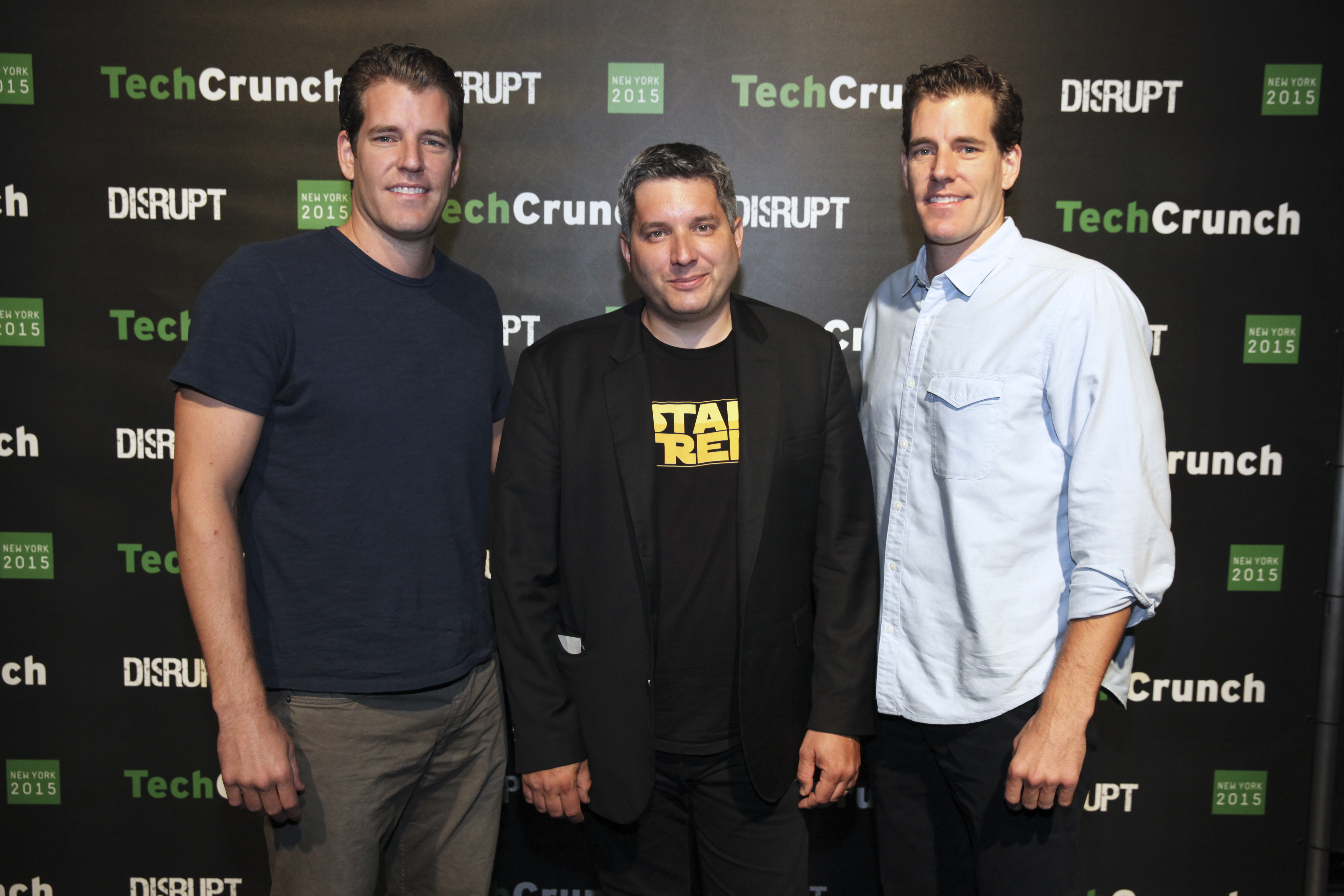
An Ibiza conversation, a New York problem
The appeal was partly practical. Tyler later recalled the absurdity of trying to move money overseas for accommodation while bank hours and holidays delayed the transfer. Email could arrive promptly; the money required a more leisurely social calendar. Bitcoin suggested a financial network built for the internet rather than reluctantly attached to it.
“Imagine if your email worked on bank hours,” he said. It is a useful entrance to his thinking, because it begins with an inconvenience rather than a price prediction. The question was how money might travel, settle and be held when its underlying network did not require a bank to open on Monday morning.
There was still the awkward matter of acquiring and protecting the asset. A promising protocol did not automatically produce an exchange that an individual could understand or an institution could approve. Tyler’s explanation of Gemini repeatedly returned to that gap: people needed a usable way into the system, with custody and rules they could evaluate.
The brothers founded Gemini in 2014. In October 2015 it announced a New York trust-company charter and opened for trading that month. The choice to build under supervision was central to the proposition. Crypto could be radical in its machinery while the place that held customers’ assets submitted to very familiar questions about controls and responsibility.
“Imagine if your email
Tyler Winklevoss · on international payments
worked on bank hours”
Respectability has operating costs
Tyler’s argument for regulated exchanges was more worldly than the caricature of the crypto enthusiast fleeing every institution. Large investors had risk officers, legal obligations and difficult questions. They were unlikely to send money somewhere simply because the founder found the future persuasive. Gemini would have to speak their language and survive their scrutiny.
That is why the Earn crisis belongs near the centre of his story. Gemini Earn allowed customers to lend crypto through Genesis Global Capital. When Genesis suspended redemptions in November 2022, Earn customers could no longer withdraw the assets they had lent. The distance between an exchange balance and a lending exposure became painfully consequential.
New York’s financial regulator found that Gemini had failed to conduct adequate due diligence and monitoring of Genesis. Its 2024 settlement imposed a $37 million penalty and required a $40 million contribution toward customer recovery. A separate settlement with New York’s attorney general required approximately $50 million in further restitution and barred Gemini from operating crypto lending programs in the state.
Gemini neither admitted nor denied the attorney general’s allegations in that settlement. Between May and June 2024, Earn investors received 100 percent of their loaned crypto assets back in kind. Those words matter: the recovery returned the crypto itself, rather than fixing reimbursement to an earlier dollar price. It also followed a long period in which customers lacked access.
The return of the assets was a substantial outcome. The findings about oversight remain part of the record. A company selling confidence must be assessed by what happens when confidence is least convenient. For Tyler, the ambition to give crypto a more dependable home had become a test with consequences far beyond his own holdings.
Wall Street supplies a new stopwatch
On September 12, 2025, Gemini began trading on the Nasdaq Global Select Market under GEMI. The offering had been priced at $28 a share. A business created to bring people into crypto had entered one of the established institutions of capital raising. The symmetry was tidy; the obligations would be less decorative.
A listing gives a founder another audience and another clock. Public investors expect financial reporting, explanations of strategy and evidence that expenses can lead somewhere useful. The early bitcoin investor can wait for his thesis to come around. The public-company chief executive has a reporting calendar, and it is remarkably indifferent to conviction.
In February 2026, Tyler and Cameron announced a reworking of Gemini around a narrower geographic focus and greater emphasis on prediction markets. They said the company would reduce its workforce by roughly 25 percent and exit the United Kingdom, European Union and Australia. International operations, they explained, had brought complexity without enough demand to justify it.
The announcement also described broader use of AI and a push toward an app spanning money and markets. These were management’s plans and beliefs, with execution still to follow. There is a special discipline in reading a founder’s future tense as future tense. An ambition can be clear, specific and sincerely held while the commercial result remains open.
- 2008Beijing Olympics
Men’s pair final - 2015Gemini opens
New York trust charter - 2025Nasdaq listing
Ticker: GEMI - 2026Gemini 2.0
A change of course
The microphone is his
There is another Tyler, or at least another place to see him: Mars Junction, the rock band he started with Cameron during the pandemic. Tyler sings; Cameron plays guitar. For someone whose public identity is so often doubled, the microphone supplies a neatly individual assignment. No amount of synchronisation can make your brother sing your line.
In a 2022 essay about the band, Tyler described the experience as “exhilarating, terrifying, vulnerable, rewarding, and fun.” The admission gives the polished executive biography a welcome crease. Founders tend to present uncertainty as something they have conquered. A singer, approaching a live audience, has considerably less room to maintain the fiction.
The band also makes his appetite for public performance visible in a different register. An investor can communicate through a portfolio; a chief executive can delegate a presentation. Taking the lead vocal is a more exposed bargain. It would be unwise to make a management theory out of a rock band, but it is a useful reminder that a person can want something without first being certain of applause.
A new filing, an old habit
By October 2026, the Winklevoss orbit had another proposed financial product: a Zcash ETF. A preliminary registration statement filed on October 6 named Gemini as custodian and proposed the ticker WINK. A filing is a proposal, with regulatory and launch steps still ahead. It nevertheless extended the effort to give digital assets familiar financial packaging.
Tyler’s career has kept returning to that junction between a new network and an established institution. HarvardConnection met a university and the courts. Rowing took him through Harvard, the Olympics and Oxford. Bitcoin led to a chartered exchange, then to a listed company. Each offered a different definition of winning, and each imposed rules he did not write.
The enduring question is how well the operator can serve the people who arrive after the early investor. They need an account that works, a risk explained plainly and a business that can keep its promises through an unfriendly market. Tyler has the titles, the history and another strategy to execute. The next result will require more than a memorable opening scene.
Follow the next stroke
WATCH, LISTEN & READ
- Watch: Tyler on building Gemini (2021)
- Listen: Bitcoin and banking hours (2016)
- Read: The road from rowing to bitcoin (2019)
- Read: Tyler on starting Mars Junction (2022)
- Read: Gemini’s 2026 strategy
- Explore: Olympic results
- Read: Earn recovery and settlement record
- Read: New York regulator’s Earn findings
- Read: October 2026 Zcash ETF filing
Sidebar photograph: GabrielF · CC BY-SA 3.0. Original image, April 2012.