The machine has stopped. The explanation arrives later. In one manufacturing engagement described by TVS Next, operators recorded idle time manually and chose codes to explain the loss. The factory already practiced total productive maintenance. It had procedures. What it lacked was a consistent, timely account of what those procedures were supposed to improve.
- TVS Next connects enterprise software, data, and AI to everyday business operations.
- NexOps gives its manufacturing work a repeatable software foundation.
- The buying decision turns on integration, usable data, and who acts on the result.
This is an unusually helpful way into a technology consultancy. Forget the sprawling vocabulary for a moment. A stopped machine creates a loss. A late explanation makes that loss harder to prevent. TVS Next works on that interval: collecting information, connecting systems, and putting the answer where someone can use it.
A factory family tree
The TVS Next brand dates to 2016. Its name carries an older industrial association through the TVS group. There is also a corporate wrinkle: a 2017 subsidiary report identifies TVS Next Private Limited as formerly Blisslogix Technology Solutions Private Limited. The brand birthday and the predecessor’s history are separate things.
That background gives its positioning some texture. Plenty of consultancies can discuss manufacturing. TVS Next presents precision, quality, and continuous improvement as inherited habits. Heritage alone cannot establish that a software project will work. It does, however, explain why a company offering AI consulting spends so much time talking about production losses.
Its wider market includes financial services, healthcare, agriculture, energy, and retail. Buyers can bring it an application that needs modernizing, a fragmented data environment, or a customer journey that has become awkward. The offering combines advisory work with engineering and ongoing operations. In practical terms, the company can help decide what to change, build the change, and support it afterward.
Software with a wrench attached
NexOps makes that combination concrete. The manufacturing accelerator connects operational technology with enterprise systems. Machine information, production records, quality data, and business context can then be considered together. The aim is to help a plant move from noticing a problem to organizing a response.
In the downtime engagement, TVS Next put an AI agent inside NexOps and used Snowflake for the data backend. Operators’ entries and loss codes became material for analysis, recommendations, and projected equipment-effectiveness improvements. The interesting change was a feedback path: an explanation could inform an intervention, whose outcome could be tracked.
TVS Next announced a broader Snowflake manufacturing collaboration in January 2026. It became a Select services partner, with plans for joint selling and manufacturing accelerators. The commercial logic is straightforward: build specialized services and applications on an established data platform. Customers still need the integration work that makes the combined system useful.
The company also offers NexDox for document understanding and workflows, and NexSign for governed signing. One deals with extracting and managing information; the other connects approvals, identity, records, and traceability. These products address different departments, but share a familiar enterprise problem: information gets stranded between systems and people.
Forty minutes, recovered
A vehicle-inspection case provides a sharper illustration. TVS Next describes an automotive business constrained by technician availability, parking space, and uncertain inspection schedules. A drive-through approach helped with space but left accuracy and speed unresolved. The bottleneck had survived a change in the physical process.
TVS Next introduced imaging, computer vision, and automated repair job cards. It reports inspection time falling from 45 minutes to five and inspection cost per vehicle falling by half. These are company-reported results for that engagement, rather than a forecast for every buyer.
The revealing detail is the unfinished work. Some undercarriage defects needed further development. Tires initially lacked machine-vision capability and used a Bluetooth inspection method. The lesson for a buyer is to ask which defects a system handles, under which conditions, and where a different tool or human judgment remains necessary.
The people inside the system
Managing Director and CEO Vinod Krishnan describes the delivery model in human terms:
“Small, experienced teams work alongside our customers”Vinod Krishnan / TVS Next
A developer interview supplies a less polished detail. Alongside daily standups and monthly retrospectives, the employee described a quarterly week without a sprint, reserved for work that had been parked or deprioritized. That is one person’s account, but a useful glimpse of how a team can make room for maintenance and learning.
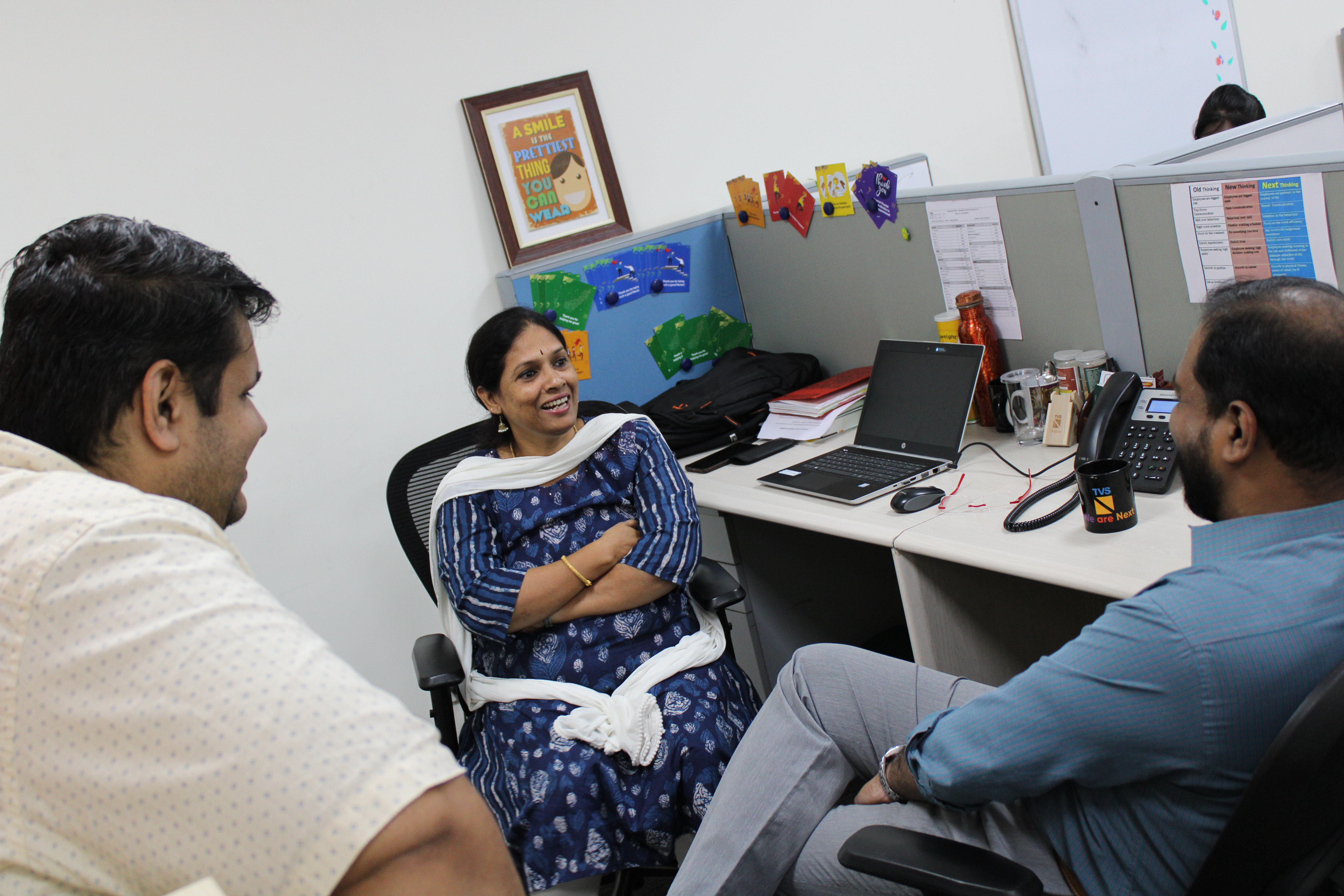
Human participation is also embedded in the customer systems. An operator supplies context about a stoppage. A technician receives a repair recommendation. A manager chooses what happens next. Better information has value when these people can understand it, trust it, and use it within their working day.
Start with the loss
TVS Next sells scoped B2B engagements. Its contact process moves from consultation to an agreed plan, team structure, milestones, and delivery cadence. A useful budget therefore begins with the workflow: integration effort, data preparation, implementation, and ongoing support all deserve attention alongside the software.
For a buyer, the alternatives include a large systems integrator, a digital engineering specialist, an industrial software vendor, or an internal team. TVS Next’s proposition joins consulting and delivery with reusable accelerators. The practical test is whether that combination fits the existing systems and the operational problem.
The transferable move is modest: choose a loss you can measure, establish the baseline, and name the person responsible for responding. Poor records will weaken the analysis. Recommendations without an owner will wait. A company considering TVS Next can start with one production line or one document workflow and judge the result before expanding. The machine’s explanation should arrive in time to matter.