In a 2012 presentation, V2Solutions described an early relationship building a digital lyrics catalog that supplied iTunes. It also did video metadata tagging. Think about the work concealed inside those phrases: names that must match, records that must agree, information that must arrive where somebody can use it. A song is entertainment. Getting its data straight is a job.
- Builds software and connects cloud, data, and customer systems.
- Serves startups and enterprises; V2Force is its Salesforce practice.
- Sells engineering and ongoing operations, with AI increasingly part of delivery.
That old presentation is a useful introduction to a company whose current vocabulary includes agentic AI, application modernization, and cloud engineering. The words have changed. The underlying assignment remains recognizable: take information scattered across a business and make it support something people can actually do.
A spreadsheet in the family tree
The media work was wonderfully specific. V2Solutions offered to clean missing or incorrect data, register catalogs with the Entertainment Identifier Registry, match titles, and map registry identifiers to a customer’s internal identifiers. Its full-service model included resolving escalations. Even a catalog needs someone to handle the awkward cases.
Today, that combination of engineering and detailed information work appears across its service menu. Teams develop applications, modernize older systems, build data pipelines, and test releases. Content specialists annotate, verify, enrich, and moderate information. Salesforce specialists configure the systems that sales and service employees use. The breadth becomes easier to understand when you follow the work from raw information to a functioning customer experience.
The lender with too many tools
Consider an unnamed American mortgage lender in one of V2Solutions’ published cases. Loan processing, reporting, and prospecting lived in separate tools. Performance information sat across customer-management software, lending systems, Snowflake, partner sites, and spreadsheets. Producing a useful report required people to assemble the picture manually.
V2Solutions audited the tools and workflows, migrated data, built prospecting pipelines, and developed an in-house portal using .NET and MongoDB. Loan-officer workflows and performance dashboards came together. The company reports 35% cost optimization, partly from removing recurring external-platform fees, and a 60% improvement in operational efficiency. These are vendor-reported results for that engagement.
reports · spreadsheets
shared prospecting data
workflows + dashboards
The economics deserve a second look. Removing a license transfers responsibility to whoever owns the replacement. A custom portal needs maintenance, testing, and people who understand it. For a buyer, the useful comparison is total operating effort over time: software fees, integration work, support, and the human cost of reconciling records.
Make the feedback loop shorter
A separate mortgage-testing case provides a smaller, sharper example. V2Solutions describes generating API test templates from Swagger definitions and using Playwright automation, BrowserStack, and continuous integration. Endpoint coverage increased from 21 to 41. The reported automated API regression run took under two minutes, enabling daily checks in place of infrequent manual runs.
A reported expansion in one mortgage QA engagement. The practical gain: a broader check that fits into the working day.
The interesting change is frequency. A check that takes too much effort becomes an event someone schedules. A check that runs routinely becomes part of how a team works. Developers receive feedback earlier; quality specialists can spend more time investigating difficult behavior. Faster execution matters because it changes when people learn something has broken.
Its (AI)celerate program packages this delivery approach into requirements, design, development, and testing accelerators. The offering includes human validation gates and audit controls. A buyer evaluating it should ask which stages will change in their project, what evidence each gate requires, and who approves a release.
The people behind the plumbing
Founded by Vijay Shah in 2003, V2Solutions operates across the United States and India. Public customer testimonials include Faithlife and Sheeva.AI. Its V2Force practice displays customers including The Athletic and Imperfect Foods. The audience spans organizations building a new product and established businesses trying to get more from systems they already own.
“They consistently are flexible when changes take place.”
Celeste Fiorillo · Director of Ecommerce, Faithlife
Customer testimonial published by V2Solutions
That flexibility is a telling thing for a customer to praise. Integration work exposes assumptions: a field means different things to two departments, a workflow has an exception, a requirement changes. A service relationship has to absorb those discoveries. V2Solutions’ combination of software, data operations, and Salesforce expertise gives it several ways to address them within one engagement.
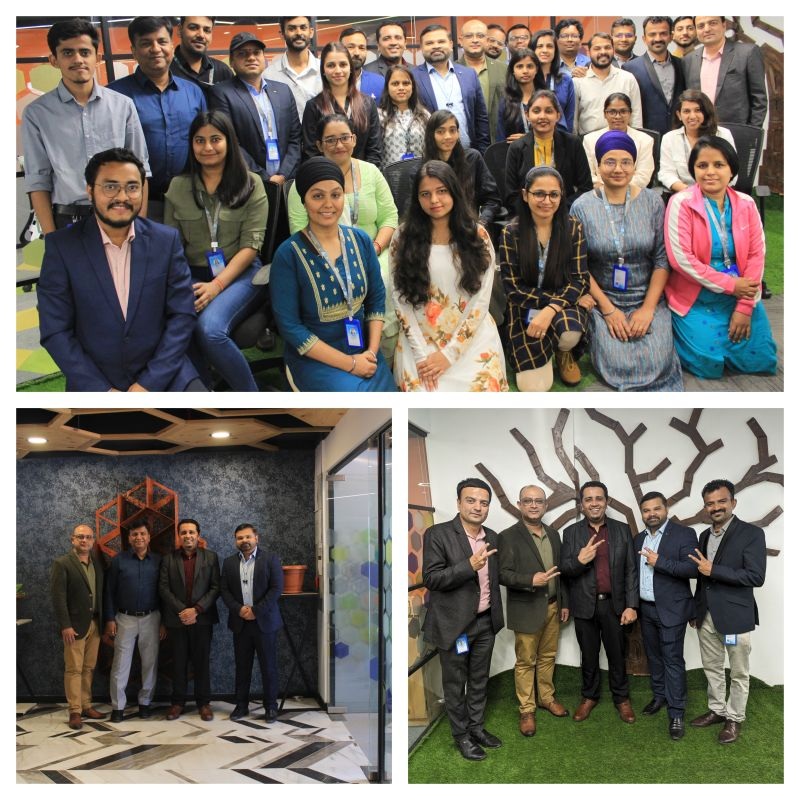
Employees are called “Vibrants.” Its Great Place To Work India profile describes more than 80 hours of annual learning, role mobility, and well-being programs. Those details fit the demands of a services business: expertise must keep moving as customer platforms change. The workplace certification offers an external recognition alongside the company’s own description of its culture.
Start with one broken handoff
V2Solutions sits in the digital engineering services market, where a buyer can also choose an internal team, a specialist consultancy, or a larger engineering provider. Its proposition is the range of connected work it can take on: design, implementation, data preparation, testing, and continued support. That suits projects whose problems cross departmental and technical boundaries.
The commercial relationship needs the same clarity. V2Solutions offers project work alongside managed operations and support. Its contact process asks buyers to describe the project and budget. Before signing, a customer can turn that brief into a practical agreement: what gets delivered, which systems remain dependencies, who maintains the result, and how acceptance will be measured. That is especially useful when several service teams share responsibility for one outcome.
A virtual veterinary-care case makes the limit clear. V2Solutions describes unclear escalation paths, inconsistent experiences across devices, and poor visibility into cost per case. Its response included role definitions, rules-based triage, shared records, subscriptions, and reporting. Automation depended on deciding who could act and when a licensed professional had to take over.
There is a practical lesson here for anyone considering the company: bring a troublesome workflow to the conversation. Name the systems, the waiting points, and the person responsible for each decision. Agree on the measurement before expanding the work. The lyrics catalog needed clean identifiers. The lender needed connected records. Your business will have its own version of that small, consequential gap.