The first useful thing to know about Turtle Wax is that the turtle came later. In the 1930s, a would-be chemist named Ben Hirsch mixed liquid auto polish in the bathtub of his Chicago home. His wife, Marie, helped fill the bottles. He called the stuff Plastone, carried it to filling stations by streetcar, and practiced a sales technique with the clarity of a magic trick: polish one fender in a parking lot, then wait for the owner to notice how dull the rest of the car looked.
That demonstration contains nearly the whole business, eight decades early. Car-care chemistry is invisible until it works. The clean half, the bright reflection, and the tight beads of rain are evidence that needs no explanation. Turtle Wax grew by putting that evidence within reach of ordinary drivers - first with bottled polish, then with paste wax, wash-and-wax, scratch removers, headlight kits, ceramic sprays, graphene formulas, and enough microfiber accessories to furnish a small laundry.
Today Turtle Wax is a privately held company based in Lombard, Illinois, with approximately 230 employees in supplied company data. It sells in more than 120 countries. Its products sit in the broad middle of the automotive appearance market: more specialized than household cleaner, less expensive and less intimidating than a professional detailing appointment. That middle is crowded, but it is enormous. Cars get dirty everywhere.
A chemistry lesson disguised as a chore
Wax once supplied the category's simple verb. Modern shelves require a glossary. Ceramic usually points to silicon-dioxide-based protection. Graphene evokes a microscopic carbon lattice. Hydrophobic polymers repel water. Compounds remove a fine layer of damaged finish so scratches and oxidation look less severe. Iron remover attacks embedded brake and rail dust. Each term can signal performance, but each can also produce the uneasy feeling that one wrong wipe will make an expensive problem worse.
Turtle Wax's product design is largely an exercise in reducing that anxiety. Hybrid Solutions Ceramic Spray Coating promises the visible gloss, slickness, chemical resistance, and water behavior associated with a coating, but arrives in a spray bottle priced around the cost of lunch. Ceramic Polish & Wax combines correction and protection. Inside Job cleans, conditions, deodorizes, and protects several interior surfaces in one pass. Wax & Dry Plus turns the drying step into the waxing step. The naming is not subtle, and that is the point.
The catalog covers virtually every visible part of a vehicle: painted panels, glass, uncoated metal, plastic trim, leather, vinyl, fabric, carpet, wheels, tires, and cloudy headlight lenses. Heavy-duty cleaners solve the ugly jobs. Restoration compounds address age. Detailers handle the quick pass before a drive. Kits bundle the sequence for a novice. The company's how-to library and YouTube channel then explain what the packaging cannot.
“How you treat your car reflects how you show up in the world.”Turtle Wax, You Are How You Car campaign
The business of an achievable after
Turtle Wax operates a classic repeat-purchase consumer model. A bottle empties, a towel wears out, winter salt returns, and the car eventually loses its just-detailed gloss. Revenue comes through mass merchants, auto-parts chains, ecommerce marketplaces, international distributors, and Turtle Wax's Shopify store. Walmart gives the brand household-scale reach. AutoZone and O'Reilly place it beside the tools and replacement parts that signal a customer willing to do the work. Direct ecommerce supports kits, education, email marketing, and loyalty rewards.
Prices create a ladder rather than a wall. A basic wash or spray wax can cost less than ten dollars. Hybrid Solutions products commonly occupy the low teens to the mid-twenties, with more expensive kits grouping the routine. This structure lets an occasional washer enter cheaply and an enthusiast trade upward without leaving the brand. The company does not need everyone to become a paint-correction obsessive. It needs a customer to finish one job, like the result, and develop a second problem worth solving.
How the repeat-purchase ladder works
There is an important boundary in the corporate story. Turtle Wax sold its professional-products operation to Transchem in 2013. Turtle Wax Pro still serves tunnel, touchless, and self-serve car washes, but Transchem manufactures and distributes those chemicals under the licensed name. The Turtle Wax profiled here is primarily the consumer brand - the bottle on the shelf and the parcel on the porch - rather than the soap system humming behind a commercial wash arch.
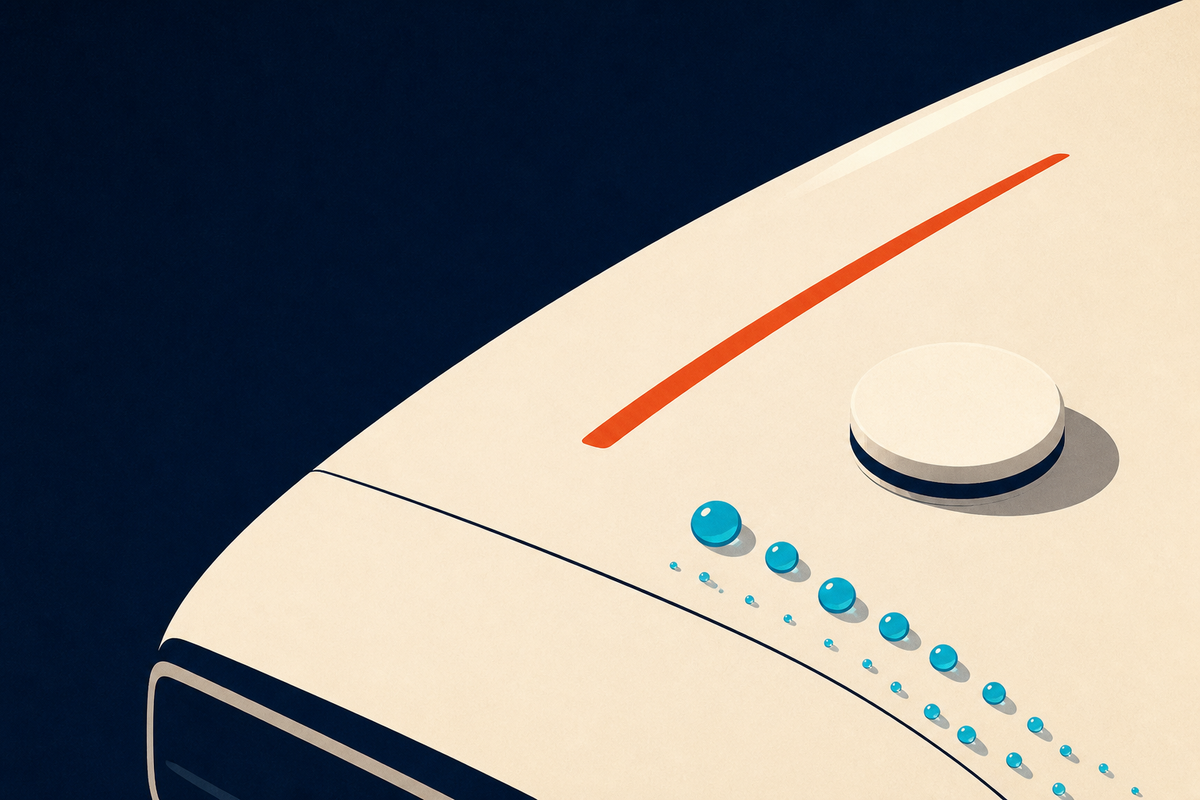
Where an old brand finds new gloss
Turtle Wax competes with Meguiar's, Armor All, Mothers, Chemical Guys, Griot's Garage, and 3M in mainstream retail. Specialist names such as Adam's Polishes, CARPRO, Gyeon, SONAX, and Ceramic Pro pull enthusiasts toward deeper systems and professional-grade coatings. A paid detailer competes for the same outcome with less consumer labor. The automated wash competes on speed. The kitchen cabinet competes through a dangerous abundance of improvised cleaning advice.
The company's distinction is not a monopoly on any single ingredient. Competitors sell ceramic sprays and graphene formulas too. Turtle Wax instead combines broad recognition, global shelf space, approachable prices, a full-surface catalog, and nearly 80 years of accumulated permission to touch the paint. Hybrid Solutions is the clearest expression of that position: detailer-coded performance without the specialist initiation ceremony.
That position also explains the content strategy. Car care is made for short video because transformation is immediate and tactile. Foam crawls down a door. Oxidized plastic darkens. Water snaps into beads. A collaboration with Los Angeles artist Mister Cartoon, launched in 2023 and extended with new products in 2024, attached the brand to lowrider craft and car-as-canvas identity. In 2025, BBC Studios Digital Brands and Turtle Wax produced Speed Cleans, a five-part Top Gear YouTube series in which teams tackled eccentric, filthy vehicles under a four-hour deadline.
One episode sent a $500,000 electric Rolls-Royce Spectre across a salt lake before the cleanup. Another began with a Ford F-150 Raptor R coated by a punishing desert race. These are extravagant versions of Hirsch's polished fender: make the contrast unavoidable, then let the audience imagine a smaller version in its own driveway.
Car care as self-portrait
In June 2025, Turtle Wax launched You Are How You Car across the United States, United Kingdom, and India. The campaign gave cars human faces and treated cleaning as personal grooming. It was odd on purpose, but the underlying research was conventional and useful. In a Harris Poll commissioned by the company, 75 percent of licensed American drivers surveyed said they wanted their vehicle to reflect the best version of themselves; only 18 percent strongly felt that it already did.
That gap is the market in miniature. Turtle Wax does not sell transportation. It sells a small correction between the car one has and the car one would rather be seen driving. For an enthusiast, that correction can mean depth of gloss and tight hydrophobic behavior. For a parent, it may mean erasing a juice spill and an old smell. For the owner of a ten-year-old commuter, a headlight kit or trim restorer can produce the rare pleasure of reversing time for twenty minutes.
The newest chapter is operational as much as promotional. Laurie King, who joined Turtle Wax in 2006 and rose through sourcing, manufacturing, supply chain, and operations, became chief executive in 2025. In 2026 the company named TRAPO its official distributor in Malaysia, a reminder that global consumer brands are built through shelves and local execution as much as campaigns. New Hybrid Solutions products such as Pure Bead and Wax & Dry Plus continue the familiar formula: a visible benefit, fewer steps, a name that explains the trick.
Turtle Wax's longevity is sometimes presented as a story of invention, and it is. Yet the more durable expertise may be translation. The company translates surface science into verbs, professional aspiration into mass-retail prices, and maintenance into a result worth photographing. The formula first mixed in a bathtub has changed beyond recognition. The moment of proof has not. Somewhere, one fender still looks better than the other three.