At ten years old, Troy Lerner had a lawn-mowing business in Denver's Washington Park neighborhood. Like any respectable young proprietor, he made flyers and distributed them. There was only one complication: the advertising interested him more than the lawns. Some children discover vocation with a chemistry set. Lerner found his somewhere between a handbill and a patch of grass that still needed cutting.
The episode is almost too tidy as an origin story, except that his career has resisted tidy beginnings ever since. He did not found Booyah Advertising in a garage, invent an ad format over breakfast, or sell a company before learning the location of the supply closet. He joined an existing business, built a division inside it, ran that operation for thirteen years, and eventually bought it. His route to ownership was a long apprenticeship conducted in public.
That feels appropriate for someone whose preferred metaphor is walking. Lerner has trained for a 60-mile ultramarathon. He finished the 2011 Bear Chase 50K in 5 hours, 13 minutes, and 7 seconds. His advice about business uses the same unit of progress: one foot, then the other. It is not an electrifying slogan. It is a durable one.
A Denver story, several generations deep
Lerner's attachment to Denver is not the vague affection of someone who owns a fleece vest. His family roots in the city reach back several generations. He has lived blocks from his great-grandmother's former home and attended the same high school as his parents and grandparents. Then he left Colorado for the University of Virginia, where he studied economics and American government from 1994 to 1998. He returned promptly.
His first post-college office was a family friend's basement. The startup was small enough that its youngest employee became the default manager of the digital work, advertising included. Lerner became a partner and helped pivot the company toward website templates. It grew to more than 70,000 customers before it was sold. The experience supplied an early education in the broad job description: when the work needs doing, title and specialty are poor excuses.
After the sale, Lerner joined Avenue A/Razorfish. In 2005 he left to build the agency-services arm of Booyah Networks, a Boulder ad-tech company founded four years earlier. Booyah's original pay-per-click traffic business had prospered through deals with Yahoo and AOL, but Google's rise was changing the economics. The company needed another act. Lerner's assignment was to help write it.
The useful art of saying no
By 2008, Lerner had developed a sales philosophy at odds with the eager handshake. His secret, he said, was saying no more often than yes. The agency needed assignments that would last and clients it could genuinely help. Taking whatever appeared at the door was an efficient way to acquire work that made everyone miserable.
This was not ascetic theater. Lerner recorded $1.86 million in personal sales in 2007, with $2.1 million projected the following year. The numbers give his selectivity some weight. A refusal can be commercial discipline: protect the team's attention, protect the client's money, and avoid promises that enthusiasm cannot keep.
The same practicality shaped Booyah's encounter with programmatic advertising. By 2012, outside companies managed much of the agency's automated media buying. Booyah was paying for the privilege while remaining distant from the data. So it built an in-house trading desk. Lerner was openly skeptical of fashionable technology, yet the useful evidence changed his position. Closer control meant lower friction and a clearer view of campaign information.
His conclusion was sharp: scale can become innovation's enemy. Booyah did not build the desk merely to collect margin on media. It wanted its planners and buyers closer to the tools. The skeptic had not become a zealot. He had become persuaded, which is a more valuable condition.
Operator first, owner later
By 2018, Booyah's agency had more than 50 employees and a full-service offer. Its original founders, Mike Shehan and Steve Swoboda, were focused on the video-advertising company that had been spun out as SpotX. Lerner and the agency team had already been running their side of the house. That year, Lerner and longtime colleague Dan Gallagher bought Booyah.
The chronology is the point. Lerner did not acquire a blank canvas. He acquired responsibility he had been carrying for years. Ownership formalized an operating relationship built through changing platforms, clients, hires, and budgets. In an entrepreneurial culture entranced by beginnings, his was a story of staying long enough for stewardship to become equity.
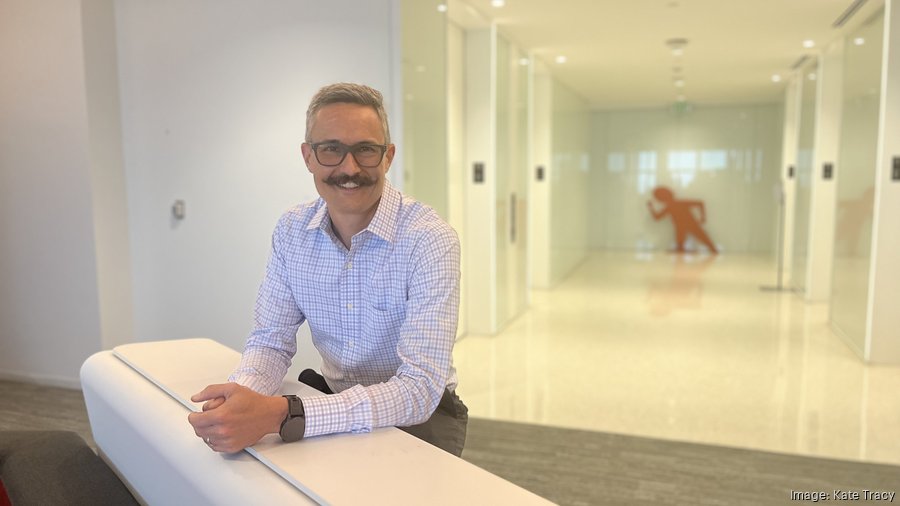
He also carried forward lessons from the basement years. Act now. Try before declaring something impossible. Do not overvalue specialization. The resulting culture sounds less like a collection of departments than a standing invitation to raise a hand. Lerner describes leadership as a team sport, with decisions explained openly enough that people can commit to the same result.
Recognition followed. In 2020, Booyah ranked first in the small-company category of Denver's Top Workplaces program, and Lerner was named its top small-company leader. In 2022 he was selected for the Colorado Titan 100 and became an EY Entrepreneur Of The Year Mountain West finalist. His public response to the Titan recognition included a joke about strutting like a first-time rodeo winner and maintaining his celebrated mustache with a comb carved from the femur of a vanquished foe. Executive solemnity survived the incident.
The correction is part of the job
The more revealing leadership episode arrived without a trophy. At the start of the pandemic, Booyah laid off about 20 percent of its staff. The decision proved too severe. Within eight weeks, the agency began calling people back, and Lerner later described the cut as an over-correction. Owning the mistake did not reverse the disruption, but it demonstrated the transparency he asks of himself.
Then a frantic hiring market exposed another problem. Booyah's interview process had become an obstacle course: technical interviews, a two-hour panel, a substantial project and presentation, sometimes a case study, followed by internal meetings. The agency believed this thoroughness was how it found excellent people. Candidates, meanwhile, were accepting other offers.
Lerner shortened the panel to an hour, reduced the assignments, and cut the internal choreography. The principle was not speed for its own sake. It was a willingness to notice when rigor had hardened into ritual. A process can be carefully designed and still become wrong.
Make the office worth arriving at
Booyah's post-pandemic office debate followed the same pattern. Employees had worked productively at home, and Lerner worried that a forced return would provoke a deserved backlash. The company approached the move carefully, then chose new space in Denver's Wells Fargo Center. There were private offices with doors, rooms for collaboration, a large kitchen, parking, and a gym. Ordinary comforts, perhaps, but ordinary comforts occupy most working days.
Lerner said the result improved morale, recruiting, and client impressions more than he expected. His reasoning was direct: an agency sells the expertise of its people, so an environment where experts want to spend their careers is part of the product. The office must earn the commute. A lively kitchen can reveal more about a culture than a compulsory attendance report.
Today Lerner remains Booyah's CEO. He serves with the Young Presidents' Organization and, for the 2026-27 academic year, on the University of Denver Daniels College of Business marketing advisory board. His curiosity travels beyond advertising: he holds an Amateur Extra radio license and a NOAA storm-spotter certification. Both pursuits reward attention, signal, and a willingness to keep learning, which makes them suspiciously on brand.
The digital-advertising vocabulary surrounding his work keeps changing. Search expanded into social, programmatic, retail media, connected television, and the next collection of initials. Lerner's durable contribution is less technical. Explain the machinery. Admit uncertainty. Choose work carefully. Revise the plan when reality objects. Keep moving.
That childhood flyer was not prophecy. It was practice. The ten-year-old preferred presenting the service to performing it; the adult learned that a good agency must do both. The distance between those two lessons took decades, a few reinventions, one acquisition, and many ordinary mornings. One foot followed another. Eventually, he owned the place he had been helping to build.
Continue exploring