Imagine a radio station has just put its morning show online. The presenter is entertaining. The stream sounds clean. Listeners arrive. Somewhere between the traffic report and a rather serious discussion of sandwiches, a commercial break opens. Who gets that space? What should they pay? How does anyone prove that an audience was there?
These questions sound like housekeeping. They are also the business. Triton Digital sells the machinery that lets audio publishers answer them: delivery infrastructure, publishing software, audience measurement and advertising systems. The listener may never encounter its name. The person responsible for paying the presenter has rather more reason to know it.
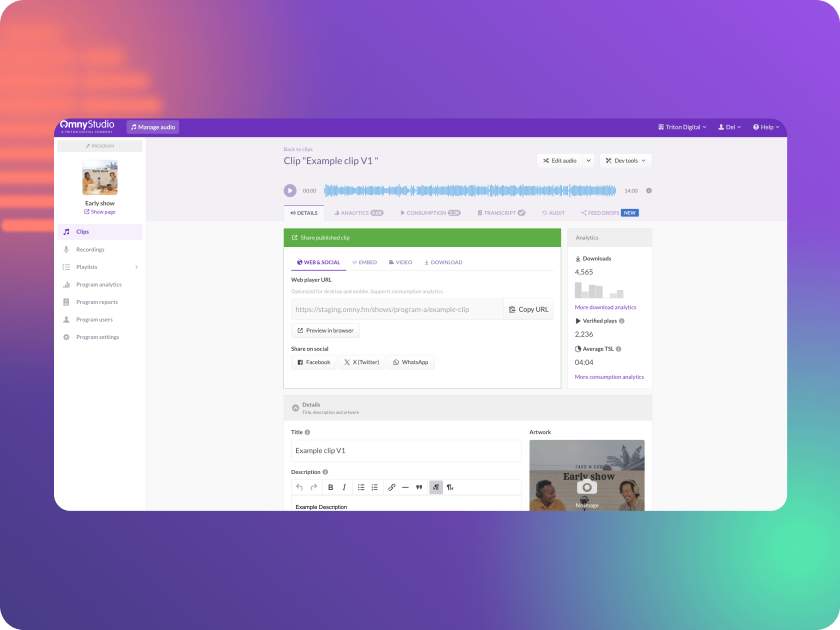
- It moves the audio: streaming infrastructure and Omny Studio podcast publishing.
- It counts the audience: Webcast Metrics, Podcast Metrics and Demos+.
- It sells the space: ad serving and a marketplace connected to more than 60 buying platforms.
- The ownership has a price: iHeartMedia bought Triton for $230 million in 2021.
Two radio rivals find another business
Neal Schore and Mike Agovino founded Triton in 2006. Both came from radio; they had been competitors. Their opportunity was to help broadcasters and webcasters distribute programming online and on mobile devices, insert advertising and measure engagement. It was a business built around other people’s voices.
There is something deliciously practical about that choice. A station already possesses presenters, listeners and a local identity. Moving onto a connected device introduces a fresh set of jobs. Someone must deliver the stream, account for consumption and make its commercial inventory usable. Triton positioned itself in those jobs, close enough to the programming to be necessary without having to produce every program.
The product sequence makes the strategy visible. Webcast Metrics arrived in 2008. The a2x programmatic marketplace followed in 2013. Triton Ad Platform launched in 2015. Each addition dealt with another transaction between content and money. In 2019, acquiring Omny Studio brought enterprise podcast publishing into the company’s portfolio.
One recording. Several jobs before it becomes a business.
An ad break becomes an inventory problem
In broadcast radio, an advertiser can buy a spot in a schedule. Digital audio introduces impressions, targeting rules and delivery decisions. The same program can carry different advertising for different listeners. A campaign must reach the intended audience without exhausting its budget, colliding with a competitor or promising more inventory than a publisher has.
Triton Ad Platform, or TAP, brings campaign scheduling, creative assets, competitive separation and reporting together. Its server-side insertion works across live streams, on-demand audio and podcasts. Forecasting considers historical impressions, break patterns, competing campaigns and frequency caps. This is the unromantic arithmetic that helps a sales promise survive contact with actual listening.
The marketplace supplies another part of the equation: buyers. Agencies can access participating inventory through systems they already use, including The Trade Desk, Amazon DSP and Google Display & Video 360. Publishers shown on Triton’s marketplace page include Audacy, Prisa Radio, Bell Media and iHeartMedia. The company says it operates in more than 80 countries. Its customer is often a media business; its usefulness extends to the buyer on the other side.
This breadth is Triton’s practical distinction. AdsWizz also offers insertion, campaign management and a supply-side platform. Spotify’s Megaphone combines enterprise podcast publishing with monetization. Triton’s proposition brings broadcasting, streaming and podcast operations into a broad portfolio. Buyers should compare the particular workflow they need, rather than declare a winner from a list of logos.
A download is a clue, not a biography
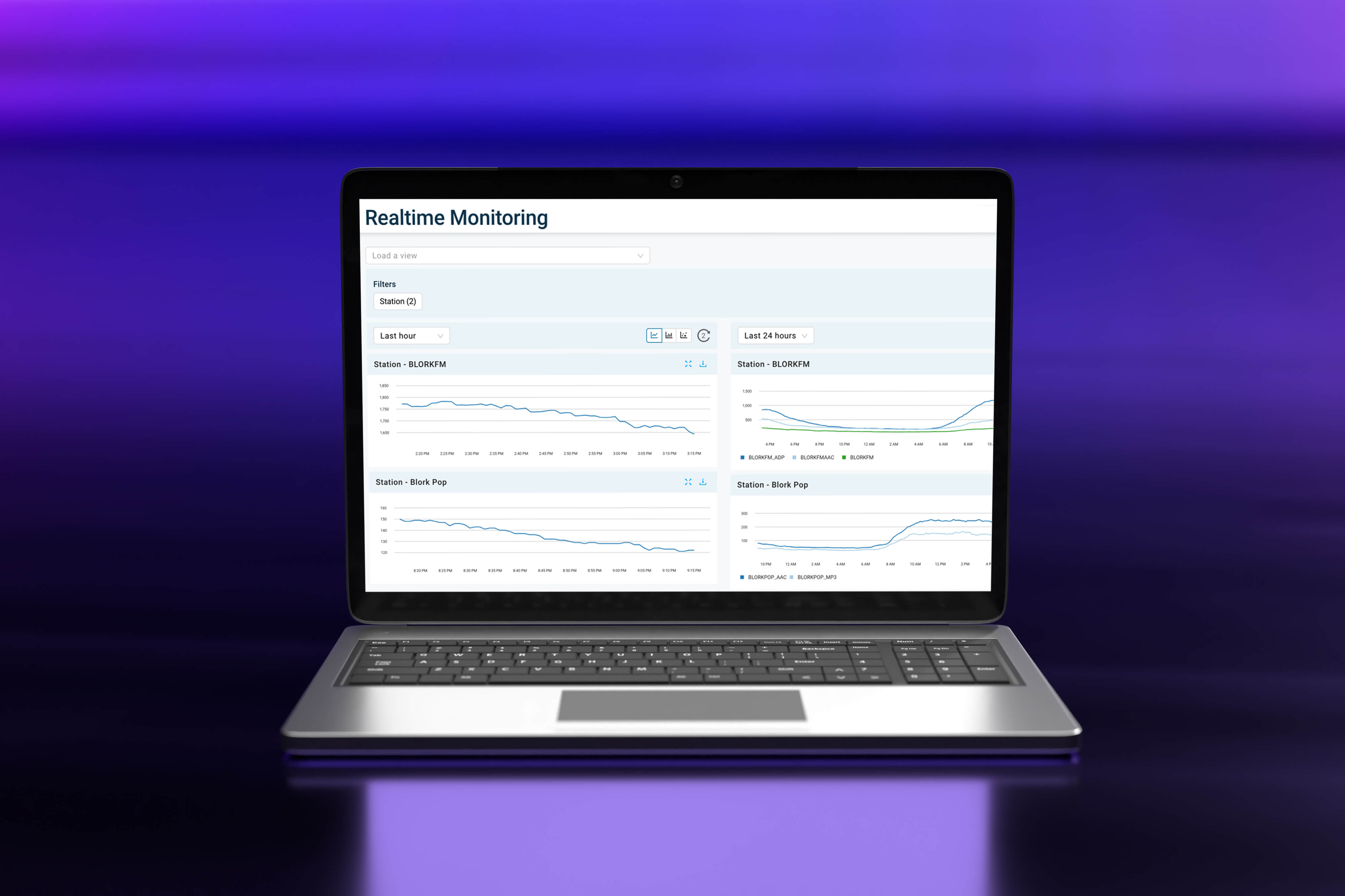
Audience measurement has its own division of labor. Webcast Metrics describes streaming consumption across devices, geography and distribution platforms. Its live tools let a publisher inspect audience fluctuations and stream health. A producer sees a change; an operations team can investigate whether the stream is behaving. A counter becomes useful when somebody knows what to do next.
Podcast Metrics handles podcast consumption, with reporting by episode, date, device and location. Demos+, developed with Signal Hill Insights, adds audience profiles through census and survey-based research. It asks questions a server record cannot answer on its own: demographics, purchase intent, lifestyle and media behavior.
The distinction matters. A download count is not a portrait of a listener, and neither is proof that an advertisement caused a purchase. These tools address different questions. Keeping those questions separate is a habit any publisher can copy, even before buying a new system.
The episode has already left the building
One of Triton’s revealing lessons concerns timing. In a July 2024 account of the Sounder acquisition, Sharon Taylor explained that waiting for a published RSS feed to be analyzed can miss valuable early downloads. Omny instead sends an episode for analysis before publication, so the ad server can use the returned information.
The weak point is a score that arrives too late or sits in a dashboard without governing delivery. Taylor also reconsidered her expectations about context: a hockey “shootout” should not automatically suggest ammunition. A word list can be admirably literal and commercially unhelpful.
“I thought this was all table stakes before we acquired Sounder, but I was wrong.”Sharon Taylor, July 2024
The lesson is to place analysis before the decision it must influence. Publishers still need suitable content, appropriate settings and an understanding of what their advertisers accept. Automated classification assists that work; it cannot supply the commercial judgment by itself.
The connection now reaches further into buying. In May 2026, Triton announced Sounder.AI contextual and brand suitability segments inside The Trade Desk. Episode topics can inform inventory selection before a bid. September release notes added Sounder categories and Demos+ segments to TAP targeting, forecasting and reporting. The direction is consistent: carry useful information to the place where someone spends money.
The price of the plumbing
The ownership transactions provide unusually concrete numbers. Scripps bought Triton for $150 million in 2018 and sold it to iHeartMedia for $230 million, with the transaction closing on March 31, 2021. Those are acquisition prices. They tell us what successive owners paid for the company, rather than what it costs a station to use the software.
One published Australian community-radio arrangement offers a glimpse of customer economics. CBAA’s TAP terms specify $0.70 for every thousand directly served ads. For programmatic revenue, stations retain 60%, Triton receives 30% and CBAA 10%. Those terms belong to that program. Sounder’s documentation separately specifies per-minute usage charges. The business combines software access, measured usage and participation in advertising revenue.
What makes an arrangement worthwhile depends on the publisher’s economics. Triton’s marketplace writing argues that a negotiated campaign, an auction purchase and backfill have different roles. A high rate on a handful of impressions may contribute less cash than broader demand. Direct commitments also bring relationships and delivery obligations. A publisher should protect those promises while using other demand to fill remaining capacity.
That suggests a better question than “Which platform offers the highest CPM?” Ask what is left after fees, how much inventory actually sells and whether existing commitments still get delivered. Automation helps execute a sales strategy. It does not invent an audience, guarantee buyer demand or make every unsold slot valuable.
A rival’s host can still carry your ad
Ownership makes this company especially interesting. Triton belongs to iHeartMedia, a content publisher, while supplying other publishers and connecting multiple buying platforms. Compatibility matters. Its documentation even describes serving Triton advertising into Megaphone inventory, provided the necessary commercial agreements and configuration are in place. Competition in one part of the business can coexist with cooperation in another.
That is where Triton fits: between the production of audio and the commercial systems that support it. Omny’s video capabilities show the work expanding as podcasts acquire pictures. Publishers continue to need distribution, measurement and monetization, even when the thing being distributed changes shape.

The careers page describes a multilingual team, remote flexibility, training and hackathons. That is the employer’s account of its culture, but the product history supplies a more concrete portrait of its expertise: stream delivery, measurement methodology and ad operations, accumulated around audio’s recurring chores.
For a publisher, the useful starting point is the chore causing the most trouble. Is publishing slow? Is audience reporting inconsistent? Is the sales team promising inventory it cannot deliver? Triton offers tools for each. The company’s story is a reminder that a business can be built by attending closely to the work everyone else would prefer to skip. The microphone gets the applause. The ad break helps settle the bill.
Keep listening
Explore the tools, follow the company and watch its product videos.