In April 2019, Boston had a snowstorm and JetBlue had a choice. The prevailing forecast kept snow falling until eleven the next morning. Tomorrow.io, then called ClimaCell, put the end at eight. Three hours sounds modest until you attach airplanes, crews and passengers to it. JetBlue’s venture arm later estimated that the better call avoided eight cancellations and saved $100,000 that day.
- Weather intelligence earns its keep by changing an operational decision.
- Tomorrow.io connects forecasts to assets, alerts, reports and workflows.
- Its satellite program buys better observations. Its software makes them useful.
That account contains the company’s proposition in miniature. Weather has a price. A more useful warning gives someone a chance to change it. The commercial question is wonderfully practical: what will you do differently before eight o’clock?
The forecast needs a job
Founded in 2016 by Shimon Elkabetz, Rei Goffer and Itai Zlotnik, Tomorrow.io grew around that question. Elkabetz’s company biography describes weather-related near-death experiences during eleven years in the Israeli Air Force. Forecasting was personal before it became a business. The founders combined aviation experience, research leadership and software engineering; Zlotnik had worked at Apple.
The product today is an enterprise Resilience Platform: maps, monitored locations, weather thresholds, notifications and reports. An airport needs to know about lightning near people working outside. A delivery operator needs to understand which routes will deteriorate. An energy team cares about conditions at particular assets. The same sky produces different jobs.
Customers include JetBlue, Lufthansa, Uber, Shipt, FOX Sports and Ford Performance. The business sells enterprise software, premium capabilities, API access and data services. Developers can start with a free Weather API tier; larger organizations negotiate enterprise terms. A consumer app sits alongside the business products. The company occupies the intersection of commercial meteorology, operational software and space infrastructure.
“Tomorrow.io has allowed us to unify operations under a single global standard”Dirk Dewald, Senior Director at Lufthansa
Company-published customer testimonial
First, measure the missing sky
There is an awkward limitation to any forecast: the model needs a picture of the atmosphere to begin with. Oceans and regions with sparse ground instruments leave gaps in that picture. Tomorrow.io decided to collect observations itself. It announced its space ambitions in 2021 and launched two precipitation-radar pathfinders in 2023. Microwave sounders followed, measuring atmospheric temperature and moisture through clouds.

By October 20, 2026, the company reported seventeen satellites launched, including fifteen sounders. Count matters, but cadence matters more: how long does a location wait between observations? Tomorrow.io says its fleet reached a sixty-minute global revisit in January and now runs below that interval. More frequent measurements can refresh the starting conditions supplied to forecasting models.
That combination distinguishes its approach: proprietary sensing, forecasting and decision software inside one business. Buyers still have alternatives, including The Weather Company, DTN and AccuWeather for enterprise services, and OpenWeather for APIs. Tomorrow.io’s bet is that owning more of the chain will make the final recommendation more useful. Ownership alone does not establish forecast superiority.
Government evaluation is part of that process. In June 2026, NOAA awarded a $7.3 million contract to assess Tomorrow.io’s microwave sounder observations, including data quality, forecasting impact and operational readiness. The distinction matters: a contract to evaluate data is evidence of a serious test, not a declaration that every weather problem has been solved.
The expensive route to tomorrow
Hardware complicates the software story. A planned merger with Pine Technology would have taken Tomorrow.io public. In March 2022, the parties terminated it, citing market conditions. Pine’s subsequent SEC filing records a $1.5 million expense reimbursement, paid in July. The listing route closed before the first satellite launches.
February + May 2026
Disclosed September 2026
Financing and a supplier contract are different measures. These amounts are not a combined project budget.
The company kept raising private capital: a $77 million Series D in 2021, an $87 million Series E in 2023 and a Series F expanded to $210 million in May 2026. DeepSky, its next constellation, is designed around five instruments per spacecraft. York Space Systems disclosed a $187 million contract for its initial phase. This is a substantial commitment to gathering the raw material of forecasts.
Fewer alarms. More decisions.
The software has its own observation problem: people cannot act on everything they see. Tomorrow.io’s July 2026 release described a storm crossing five hundred sites and potentially generating three notifications per location. Grouped alerts changed the unit from individual site to group. The product lesson is easy to borrow: design around the decision a person can actually make.
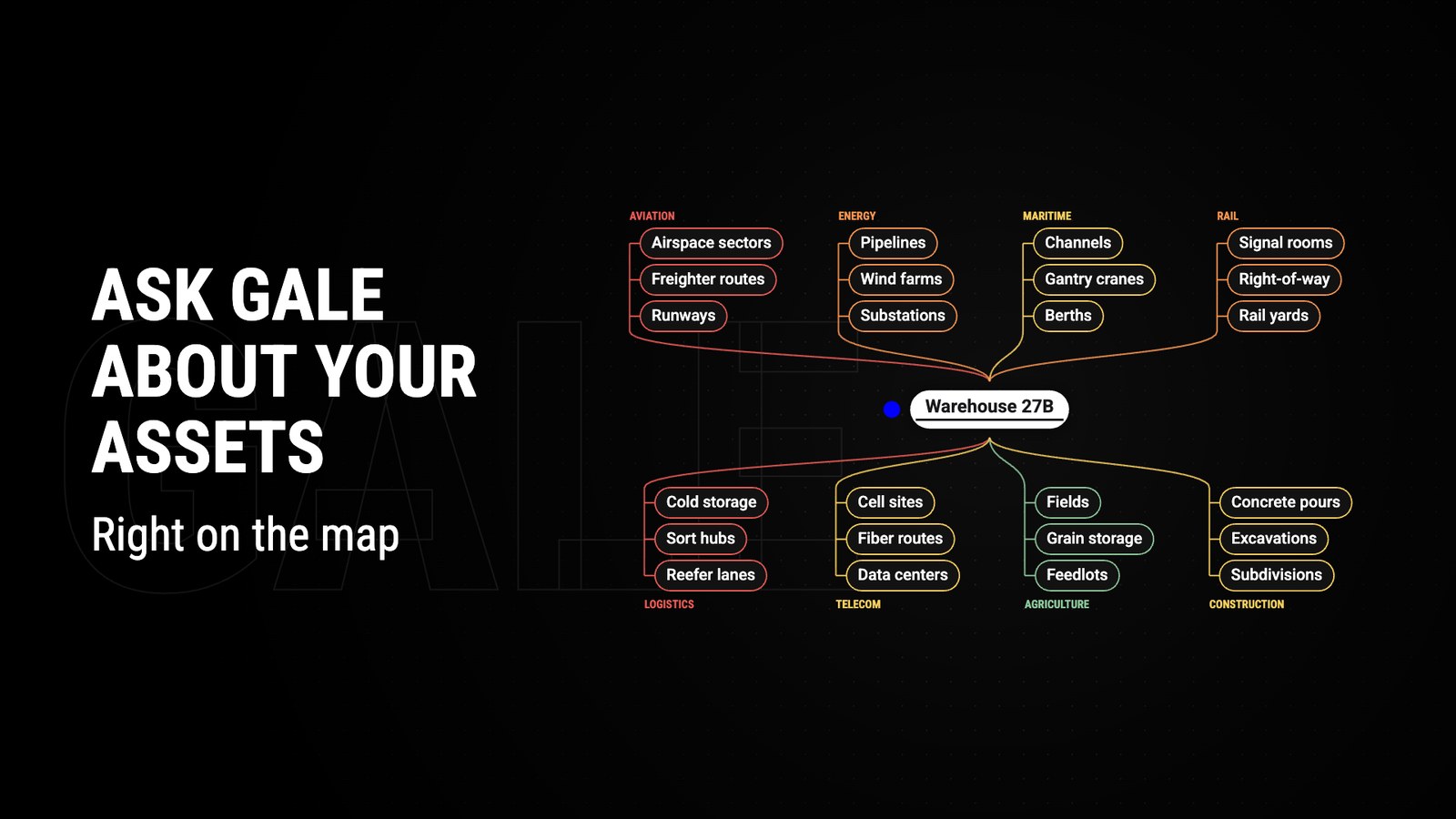
Gale, the company’s conversational weather agent, can create monitors and reports and log operational decisions. The October Q3 release extended questions about customers’ assets and made answers easier to turn into shareable reports. That development reveals a changing interface: the map remains, but users can begin with a question about a warehouse or fleet.
The warning still needs a human
There is a useful discipline here for any operations team. Pick one weather-sensitive decision. Define the threshold, the responsible person and the action available before conditions arrive. Test it against actual events. JetBlue’s venture arm described a five-city trial before the later rollout. Evidence came from operating through weather, not admiring a dashboard.
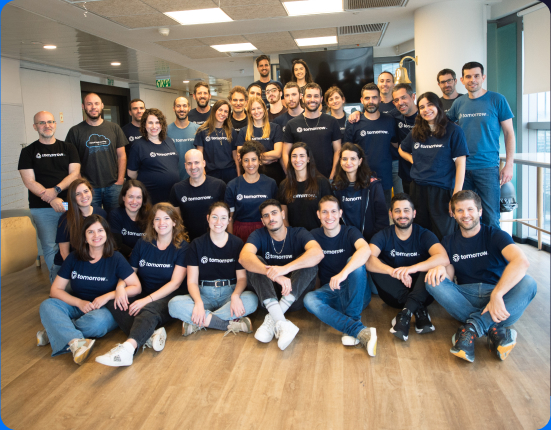
The company’s published values emphasize ownership, persistence and empathy. Those are employer statements, but the product requires a similar combination from customers: someone must own the response, keep testing it and understand the people whose work an alert interrupts. Implementation is an operating habit as much as a software purchase.
The limits are equally concrete. A warning has little value when no one can change staffing, routing or timing. Forecasts retain uncertainty; data delivery can falter. On October 22, the company’s status page recorded a twenty-three-minute precipitation-data incident affecting real-time information and downstream products. A customer still needs fallback procedures. Tomorrow.io can help buy time. The customer has to decide how to spend it.
Follow the weather trail
Explore the products, the people and the next launch.