In 1962, a Pennsylvania gas company bought something peculiar from a graduate student: three months of winter forecasts. The price was $150. Joel Myers, studying meteorology at Penn State, had found a customer whose interest in the temperature extended well beyond choosing a coat. Cold weather meant demand for heating. Knowing about it early had a dollar value.
- For you: forecasts, radar, precipitation timing, and alerts.
- For businesses: site-specific warnings, data, and meteorologists.
- The idea: information earns its keep when it changes a decision.
That small transaction contains the idea behind AccuWeather. A forecast becomes more valuable when somebody can act on it. The gas company could prepare. A ski resort could plan. Decades later, a factory could decide when to shelter workers. The weather was the input; a better decision was the product. The contract also posed a lasting test for the business: could a customer explain what the forecast helped them do differently before winter arrived?
01Free was a formidable competitor
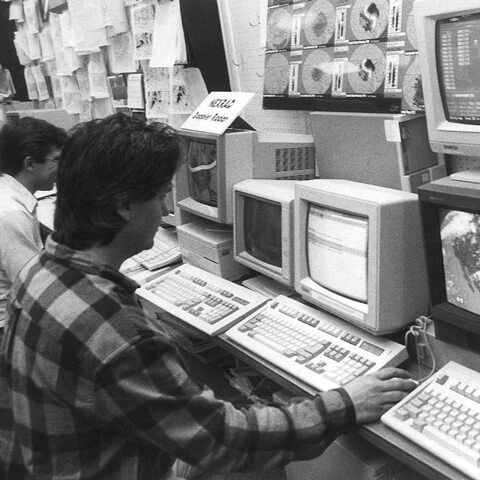
Myers faced an awkward sales problem: government forecasts already existed, and customers could get them free. In his account of the early years, he called 25,000 business prospects and heard no 24,900 times. Treat those as the founder’s recollection, rather than an audited sales ledger. The friction is easy to understand. Paying for a forecast required believing the extra detail would change an outcome.
His answer was specificity: a forecast for the customer’s location, delivered frequently, looking further ahead. Early expansion followed businesses exposed to winter, including ski resorts and snowplowing companies. The lesson is useful for anyone selling information. Find the decision for which a slightly better answer earns its fee. A general claim to better data leaves the buyer doing the arithmetic.
02A thermometer cannot tell you everything
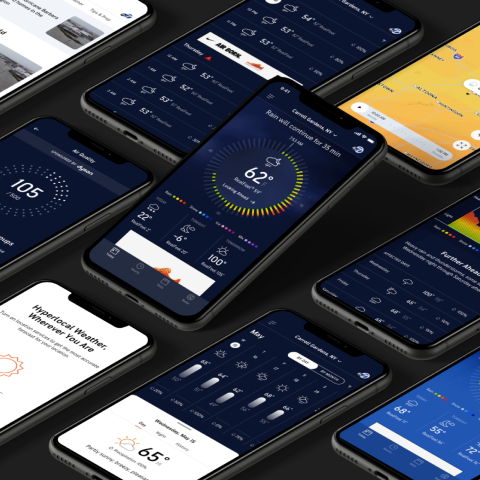
Most people meet AccuWeather through a screen. Its free app and website offer forecasts, radar, weather reporting, and alerts. MinuteCast forecasts precipitation minute by minute, including expected start and end times. RealFeel translates several atmospheric factors into a temperature meant to describe how conditions feel. One helps you time your departure; the other helps you dress for it.
These are acts of translation. A temperature reading and an uncomfortable afternoon are related, but they are different pieces of information. In 2019, AccuWeather applied similar thinking to hurricanes with RealImpact. Its scale considers flooding rain, storm surge, wind, and economic effects. A storm with a modest wind category can still create a serious flooding emergency. The number on the label can hide the problem on the ground.
Acquisitions have widened the picture. AccuWeather bought air-quality specialist Plume Labs in a deal closed in December 2021 and announced in January 2022; the price was undisclosed. An earlier partnership had already brought Plume’s pollution data into AccuWeather forecasts. That progression matters: the companies worked together before AccuWeather bought the capability. Weather planning could now account for the air people would breathe.
03The customer who needs a human
For a business, the useful forecast may arrive as a warning tied to a particular site, a data feed, or a conversation with a meteorologist. AccuWeather for Business offers location-specific alerts, weather integrations, and round-the-clock meteorologist access. Its advertised customer industries include manufacturing, healthcare, retail, insurance, and energy. The company says it serves more than half of the Fortune 500.
The customer accounts it publishes show what buyers value. QuikTrip describes using weather relationships to inform merchandise decisions. Shaw Industries describes reducing unnecessary shelter time. Those are customer testimonials, not controlled experiments, but they expose an overlooked cost: a warning can be expensive even when everyone stays safe. Stopping work too often has consequences. So does restarting too soon.
A workable approach is to connect a forecast to a rule: when this hazard reaches this site, this person takes this action. That is our reading of the product’s practical value. Without an owner, a threshold, and enough time to respond, an elaborate weather dashboard can become an expensive thing to watch.
04One forecast, several ways to get paid
AccuWeather has several revenue paths. Advertising supports consumer reach; paid app subscriptions remove ads and add features. Businesses purchase services and data. Publishers and broadcasters license weather content and presentation tools. Developers buy API access, with plans distinguished by call allowances, forecast depth, and available data. Enterprise arrangements are sold through consultation.
The consumer app is free to download. Its paid upgrades are offered in-app. The developer service advertises a 14-day trial and bills overages by usage. This makes a pilot possible before a larger commitment, although integration still takes work. A buyer has to map locations, choose useful variables, deliver alerts, and decide who responds. The commercial test is whether those changed decisions justify the total cost.
“My main competitor, the U.S. government, gave its product away for free!”
JOEL MYERS / INTERVIEW WITH ADAM MENDLER
05Accuracy needs a postcode and a clock
AccuWeather competes with The Weather Company in consumer forecasts and commercial data, and with industrial providers such as DTN. Free public weather services remain an alternative for many needs. AccuWeather’s distinguishing package combines its own branded forecast tools, human interpretation, media distribution, and business services. That package is more informative than an unqualified claim to be the most accurate.
Accuracy depends on the variable, location, period, and forecast horizon. A ForecastWatch overview for 2021-2024, commissioned by The Weather Company, ranked that competitor first overall. AccuWeather publicizes different evaluations, including a Kantar analysis of the 2024 hurricane season. A purchasing team should test the forecasts against its own sites and decisions. A global trophy does not settle whether tomorrow’s loading dock will be icy.
There is a separate question of trust. In 2017, a researcher found the iOS app sent location-related information through Reveal Mobile’s software, including Wi-Fi identifiers when location permission was denied. AccuWeather removed the software after the controversy. EPIC subsequently challenged its location-data practices. For a service built around knowing where people are, privacy choices belong beside the forecast.
06The next screen may be a conversation
Distribution keeps changing. AccuWeather announced a Perplexity partnership in June 2025, then launched an app inside ChatGPT in March 2026. Its developer documentation, updated September 2026, also describes an MCP server for AI clients. The interface can change from a chart to a question while the company keeps supplying the underlying weather information.
That brings the story back to the gas company. Ask what happens next, then decide what to do. AccuWeather’s enduring opportunity sits in the distance between those two acts. Its value depends on closing that distance before the weather arrives.